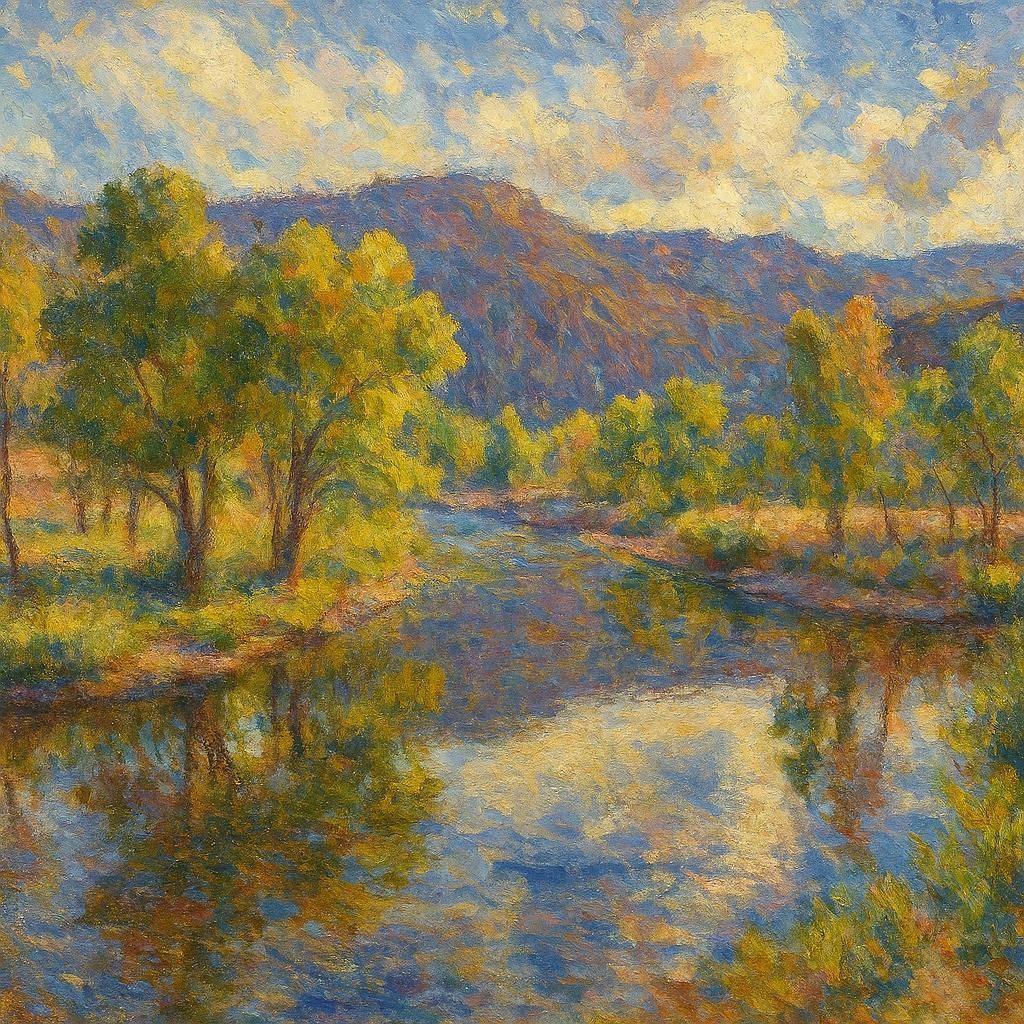
Fort Collins is one of those rare cities that reads like a college-admissions pitch almost by accident. Colorado State University anchors its intellectual life. Companies like Hewlett Packard, Intel, and AMD cluster around the campus. The Cache la Poudre River, Colorado’s only designated Wild and Scenic waterway, runs through town. And in historic Old Town, dozens of craft breweries fill converted industrial spaces. Together, these features create an unusual combination: serious research infrastructure, technical industry presence, and a place-rooted culture that translates well to selective college applications.
That said, proximity to a major research university does not automatically help. Admissions offices know that Fort Collins students live beside CSU. What distinguishes applicants is not geography, but what they do with it. Students who treat Fort Collins as a backdrop rather than a resource will, consequently, look like any other well-credentialed applicant from a mid-sized Western city.
Fort Collins in the National Admissions Landscape
Colorado occupies a moderately competitive position in selective college admissions. The state is not as overrepresented as Massachusetts or Connecticut. It is also not as advantaged as rural states with tiny applicant pools. Fort Collins, notably, is a college town with above-average educational attainment and an ambitious student culture. Admissions officers see plenty of Colorado applicants: strong GPAs, AP rosters, outdoor resumes. What they see less frequently is evidence that a student engaged substantively with what this specific city offers.
The local flagship anchor also deserves attention. CSU is an excellent university, and it makes geographic and financial sense for many Fort Collins students. However, families sometimes default to CSU simply because it is familiar. In doing so, they close off options that might suit a student better. A student with research ambitions might find a stronger fit at MIT, Carnegie Mellon, or Michigan. One interested in public policy could thrive at Georgetown. CSU should appear on lists where it genuinely belongs. It should not crowd out consideration of schools that might challenge a student more.
For students targeting highly selective schools, Early Decision carries real strategic weight. Colorado applicants do not compete as a regional cohort at most national universities. Consequently, the boost from a binding commitment can matter at the margin. Students should choose ED targets carefully, but dismissing the option entirely is a strategic error.
What Fort Collins Offers: From a College Admissions Standpoint
Fort Collins generates a thematic range that most cities its size cannot match. CSU’s research enterprise draws more than $440 million in annual funding. It spans atmospheric science, agricultural biology, energy engineering, veterinary medicine, and fermentation science. Additionally, the Poudre River corridor supports an active coalition of environmental monitoring organizations. Larimer County runs a funded, paid-internship pipeline for high school students. And the brewing industry, which produces the majority of beer made in Colorado, gives students interested in food science, sustainability, and entrepreneurship a live case study minutes from their schools.
For admissions purposes, these assets matter most when students engage with them in sustained, self-directed ways. A student who spent two summers tracking water quality in the upper Poudre watershed tells a different story than one who lists “outdoor recreation” under activities. Depth and continuity, as always, outperform breadth.
Research Opportunities at and Near CSU
SciVet and the Natural Sciences Education and Outreach Center
CSU’s Natural Sciences Education and Outreach Center runs SciVet, a residential summer program for high school students. Participants spend five days on campus in science investigations, with one dedicated afternoon offering exposure to CSU’s veterinary college. The residential option costs $1,800; the commuter option costs $1,200. Full scholarships are available. Eligibility requires students to be at least 15 years old by June 1. The January application deadline rewards early planners. Local students can attend as commuters, competing alongside participants from across the country.
GoGetMath@CSU
CSU’s Department of Mathematics offers GoGetMath@CSU, a free five-day non-residential summer program. It is open to high school students entering grades 10 through 12 in fall. The program runs in June on the Fort Collins campus and covers cryptography, data science, image processing, fractals, and graph theory. Activities include computer labs and collaborative projects. There is no cost to attend.
ME Summer STEM Programs
CSU’s Department of Mechanical Engineering runs interactive summer programs for middle and high school students. Participants build and test engineering designs, use 3D printing facilities, and work alongside ME faculty. Sessions run at both the Fort Collins campus and CSU Spur in Denver. Limited scholarships are available for students with demonstrated financial need.
Colorado Science and Engineering Fair
The Colorado Science and Engineering Fair (CSEF) is held annually at CSU, typically in April. High school students qualify through their regional fair and then compete in 12 research categories. Moreover, the top five senior division projects receive trips to the Regeneron International Science and Engineering Fair (ISEF). For Fort Collins students, the local setting provides a real advantage. They can visit the venue beforehand, speak informally with CSU faculty judges, and submit projects with regional relevance, whether environmental, agricultural, or engineering in focus.

The Poudre Watershed: Environmental and Policy Angles
The Cache la Poudre River watershed drains approximately 1,889 square miles above Fort Collins and supplies water to more than 400,000 Front Range residents. It is, notably, the only river in Colorado to hold the federal Wild and Scenic designation, covering 75 miles of the corridor. As a result, the Poudre sits at the intersection of water rights, agricultural demand, climate-driven snowpack variability, and conservation policy. For students interested in environmental science or natural resources law, it is a research laboratory with live stakes.
The Coalition for the Poudre River Watershed (CPRW) runs a Community Science Water Quality Monitoring Program in partnership with CSU and the Colorado Department of Public Health and Environment. Community science volunteers have gathered over 900 water samples to date. Students who contact CPRW about contributing to monitoring work, or who design independent projects aligned with its methodology, can build a portfolio grounded in a specific, well-documented system. In short, this is hands-on environmental research that is locally embedded and nationally legible on a college application.
For students oriented toward policy, Larimer County’s water management context offers a further angle. Colorado’s prior-appropriation doctrine, combined with Front Range growth and climate variability, makes water allocation debates acutely practical. A student who understands both the science and the legal framework of western water law can, consequently, write essays of unusual specificity.
Larimer County CareerRise: A Funded Internship Pipeline
Larimer County Economic and Workforce Development runs CareerRise, which connects high school students ages 16 through 18 with paid summer internships at local employers. Placements span manufacturing, technology, engineering, healthcare, and natural resources. Applications typically open in late March for internships beginning in June. Recent CareerRise positions have included engineering internships at Woodward, a global aerospace and industrial components company headquartered in Fort Collins. Additionally, roles in manufacturing, IT, and operations have appeared at other Northern Colorado firms.
Furthermore, the inCompass Fast Track program serves high school seniors facing financial hardship. Eligible seniors complete a paid, 350-hour internship at $17 per hour with a local employer in a field aligned with their interests. The program requires Larimer County residency and is funded through the Workforce Innovation and Opportunity Act. For eligible students, a placement in manufacturing or natural resources management can anchor an application narrative around real professional growth.
Fort Collins’ technology sector adds informal opportunity as well. HP, Intel, and AMD maintain significant facilities in the city. Local network connections, through teachers or CSU contacts, can open doors that formal program listings miss. Students interested in tech-industry experience should approach school counselors and CSU’s K-12 outreach offices directly.

The Brewing Industry as Academic Context
The Fort Collins craft brewing ecosystem is not merely a cultural landmark; it is an industrial cluster with genuine academic depth. CSU’s Fermentation Science and Technology (FST) program is one of the few undergraduate programs in the country focused on the use of microorganisms in food and beverage production. The program grew directly from a collaboration with Doug Odell of Odell Brewing. Odell began guest-lecturing at CSU in 2003 and allowed students to brew on a commercial scale at his brewery. He also donated the system used in the university’s first Brewing Science and Technology class. In 2014, Odell Brewing contributed $100,000 to equip the FST brewing lab. The connection between CSU and the local brewing community is structural, not anecdotal.
High school students cannot enroll in FST coursework. However, the program’s presence creates a surrounding culture of guest speakers, industry events, and open tours. Attentive students can access these on their own initiative. Students interested in biology, chemistry, sustainability, or entrepreneurship can, additionally, use the brewing industry as primary research material. For example, the water efficiency of local breweries offers a compelling angle: Odell uses under 3.2 gallons of water per gallon of beer, compared to an industry average of 5 gallons. Similarly, the social history of Fort Collins, which began as a dry agricultural colony in 1872 and became Colorado’s brewing capital a century later, provides rich material for essays about place, policy, and cultural change.
Students who write analytically about the fermentation science–water policy–sustainability nexus that Fort Collins uniquely concentrates will stand out from those describing a generic “passion for science.” That specificity, moreover, signals exactly the kind of engaged, place-rooted thinking that selective admissions readers are looking for.
Denver and Boulder: Expanding the Regional Map
Fort Collins sits about 65 miles north of Denver and 45 miles north of Boulder. Both cities, in turn, offer research environments that ambitious Fort Collins students should consider. Boulder is home to the National Center for Atmospheric Research (NCAR), a federally funded facility that conducts world-class research in climate science, meteorology, and Earth-Sun interactions. NCAR’s formal internship programs, including SOARS and SIParCS, are designed for undergraduates and graduate students. However, the facility offers public education programs, guided tours, and community events accessible to high school students. For a student interested in atmospheric or climate science, a substantive visit to NCAR, combined with independent coursework and local research, builds a more coherent narrative than simply noting its existence.
CU Boulder also offers summer research experiences for motivated high school students through faculty mentorship arrangements. Students should contact CU’s research and outreach offices directly to learn about current availability. Together, Fort Collins, Boulder, and Denver form a research corridor that few student populations in the Mountain West can match.

Writing About Fort Collins with Precision
Essays from Fort Collins students frequently reference the mountains, outdoor recreation, and a general sense of community pride. These are legitimate subjects. They require sharper focus to stand out among thousands of applicants who also hike and ski in Colorado.
More distinctive material lies in the specific textures of this city. Old Town Fort Collins is a National Register historic district. Its brick facades were photographed in the 1950s by Fort Collins native Harper Goff, who used them as the architectural model for Disneyland’s Main Street USA. By Goff’s own account, the city hall and bank building at Disneyland were copied from Fort Collins. The Cache la Poudre River takes its name from a story about French fur trappers who cached gunpowder (poudre) along its banks during a mountain snowstorm. And, as noted above, Fort Collins began in 1872 as a dry agricultural colony that explicitly discouraged alcohol. It became Colorado’s brewing capital roughly a century later. These layers of irony and historical continuity give students rich, specific material to draw on.
The more productive essay question is not “what does Fort Collins mean to me” but “what specific moment or question here have I been thinking about ever since?” Whether that moment involves a water quality reading from the Poudre, a visit to the CSEF, a CareerRise internship, or a conversation with a CSU researcher, the specificity will, in the end, resonate more than any description of mountain scenery.
A Final Note on Profile and Place
Fort Collins offers more than most cities its size. The research infrastructure is real, the internship pipelines are funded and active, and the local environmental and industrial context provides genuine subject matter for both academic work and compelling essays. Furthermore, the city’s position between the Rockies and the plains gives it an ecological and historical complexity that rewards close attention.
Those advantages only amplify what is already there. Students who pursue depth, write with precision, and engage Fort Collins as an intellectual resource rather than a scenic backdrop will give selective college admissions readers something worth remembering. Geographic context does not substitute for a strong profile. It sharpens one. That distinction, moreover, is one every Fort Collins student can act on today.
If you are a Fort Collins student ready to turn your local advantages into a competitive application, the team at College Transitions can help. Our experienced advisors work with students across the country to identify programs, sharpen essays, and build strategies that reflect who they actually are. Learn more about our college admissions consulting services.
Additional Resources
- Case Study: How One Fossil Ridge Student Used Fort Collins’ Brewing Culture to Earn Admission to Selective Colleges
- Top High Schools in the Fort Collins, CO Area: How They Compare for College Admissions
- College Admissions from Fort Collins, CO: What Applicants Need to Know
- Best Summer Programs in Denver — 2026