The Bucks County Admissions Landscape
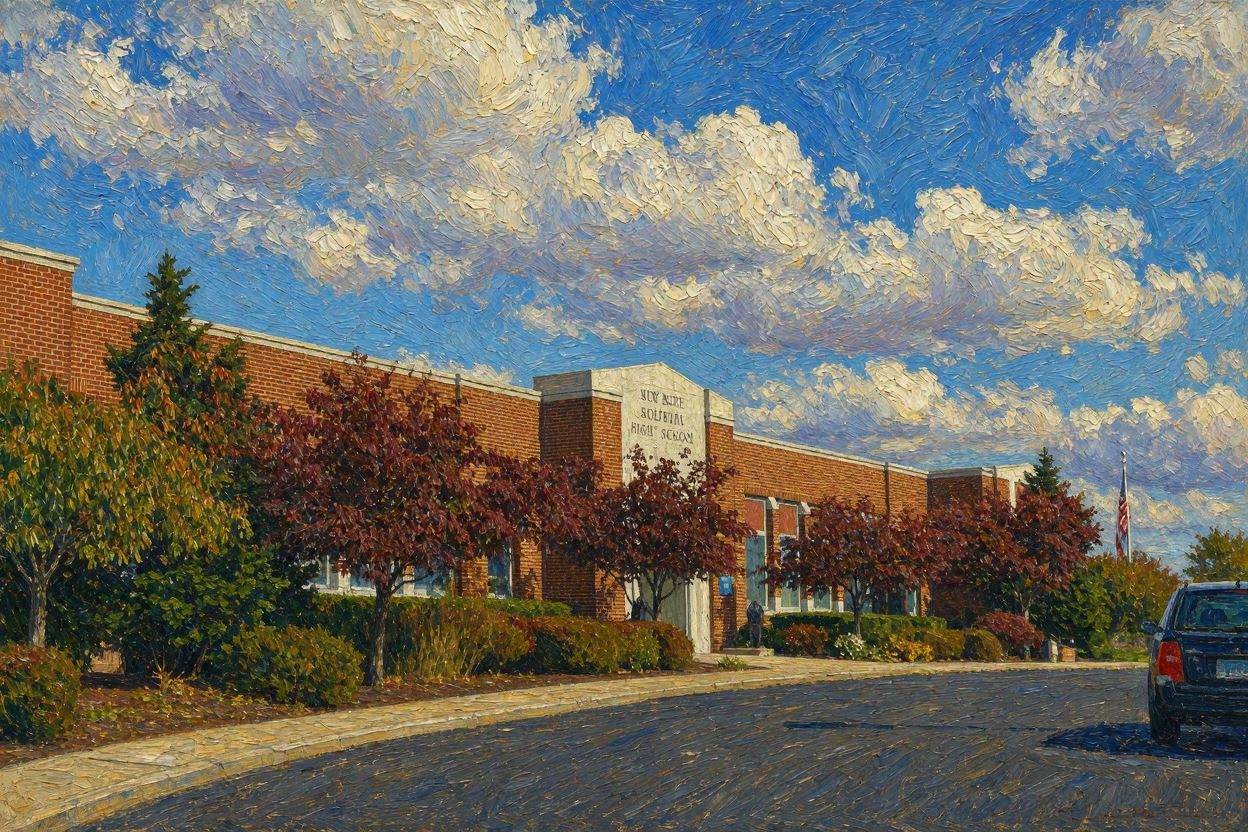
Bucks County sends a competitive, well-resourced applicant pool to selective colleges every year. New Hope-Solebury High School currently ranks fourth among Pennsylvania public schools and 308th nationally, per U.S. News & World Report’s recent rankings. Seventy percent of its students take at least one AP exam. Central Bucks East ranks 14th in the state. Council Rock North sits at 22nd, and Central Bucks West and Central Bucks South follow close behind. Consequently, a student from any of these districts competes against thousands of similarly prepared applicants. Importantly, that crowded field rewards specificity over polish. Admissions officers read hundreds of suburban Philadelphia applications each cycle, and generic leadership narratives blur together fast. Students who tie their academic identity to something distinctly local tend to stand out. That is precisely the strategy that helped one New Hope-Solebury senior turn a county landmark into an engineering application.
Meet Fiona: Building an Identity Around Doylestown Clay
Fiona grew up nine miles from Doylestown, the Bucks County seat. She passed the Moravian Pottery and Tile Works on family trips without giving it much thought. Then, during a sophomore chemistry unit on materials, that changed. A field visit revealed that the handmade tile-making process Henry Chapman Mercer developed in 1912 still runs today, using local clay and his original glaze techniques. Fiona started asking practical questions: what makes a fired glaze crack, why do clay bodies shrink unevenly, and how modern materials science might explain a century-old craft. That curiosity, paired with strong coursework, became the backbone of her application strategy. Working with College Transitions, she translated a genuine local interest into a coherent narrative, rather than a scattered list of activities. That coherence is where many capable Bucks County applicants lose momentum.

1. Choosing a Major Rooted in Bucks County’s Own Backyard
Fiona settled on materials science and engineering, with a specific focus on ceramics. She realized the Moravian Pottery and Tile Works offered a living laboratory few other applicants could claim. Instead of pursuing a broad “STEM” label, she narrowed her intended major early. That decision shaped three years of coursework, extracurriculars, and essay material around one throughline. Notably, it also solved a common weakness in Bucks County applications: an unfocused list of accomplishments with no unifying thread.
Why This Major Made Sense
- Bucks County is home to the only county-owned tile works in the country, a National Historic Landmark still producing hand-glazed ceramics
- Alfred University’s Inamori School of Engineering, one of only two U.S. programs offering a ceramic engineering degree, gave Fiona a realistic and specific target
- The major connected chemistry, art history, and local economic identity in a way generic engineering interests rarely do
2. Building the Test Score Foundation
Fiona focused on the SAT. Her sophomore-year diagnostic score landed at 1300, driven largely by a weaker math section. She subsequently worked through targeted algebra-based practice, since ceramic engineering programs weigh quantitative preparation heavily. By fall of junior year, her score had risen to 1490. That improvement mattered less for its size and more for what it signaled: sustained, methodical effort applied toward a specific goal. Furthermore, her AP Chemistry and AP Calculus BC grades reinforced the profile colleges look for in a STEM-intending applicant.
3. Deepening Extracurriculars Around Ceramics and Materials
Rather than joining unrelated clubs to pad a resume, Fiona built her extracurricular record around one interest. First, she joined New Hope-Solebury’s chemistry club. Later, she led its lab-safety training for underclassmen. Fiona also began volunteering as a demonstration assistant at the Moravian Pottery and Tile Works on weekends, where she helped visitors understand the kiln-firing process. This consistency, rather than breadth, is what admissions readers notice. Instead of six barely related activities, her file showed one interest pursued with escalating responsibility across three years.
4. Adding Independent Research
During junior year, Fiona designed an independent research project. It compared the glaze chemistry documented in the Moravian Pottery and Tile Works’ own historical process records to modern low-fire ceramic glazes. First, she worked informally with her AP Chemistry teacher on the comparison. She then consulted published conservation literature from the site’s nonprofit operator, TileWorks of Bucks County, to ground her findings in verifiable data rather than guesswork.
Research Project Scope
- Documented firing temperatures and glaze compositions used in Mercer’s original 1912 process
- Compared shrinkage and crack-resistance outcomes against two modern low-fire glaze formulations
- Presented findings at New Hope-Solebury’s spring STEM symposium, with feedback from a visiting Bucks County Community College chemistry instructor
5. Entering Materials Science Competitions
Fiona competed in the Materials Science event at the Pennsylvania Science Olympiad state tournament. This Division C event tests students on the chemical, physical, and mechanical properties of metals, ceramics, and composites. She and her partner placed among the top teams at states. That result validated the technical depth behind her independent research. Additionally, the competition pushed Fiona to translate her narrow local research interest into broader materials science fluency, which strengthened both her coursework and her essays.
6. Writing a Personal Statement Grounded in Doylestown Clay
Fiona’s personal statement opened not with an achievement but with a failed glaze test: a tile that cracked in the kiln because she misjudged the clay body’s shrinkage rate. From that single failure, she traced her growing fascination with the chemistry hidden inside a craft most visitors treat as quaint. The essay avoided generic language about passion. Instead, it stayed specific to temperatures, timing, and texture. This precision, more than any dramatic arc, is what made the essay memorable. College Transitions worked with Fiona through several drafts to strip out abstract claims and replace them with concrete, sensory detail rooted in her actual research.
7. Using EA and ED Strategically
Fiona applied Early Action to Penn State’s College of Engineering and Rutgers’ School of Engineering. Both are strong materials science programs with realistic admit rates for her profile. In fact, she earned acceptances to both by December of senior year, and those results gave her confidence heading into her top-choice decision. Fiona also applied Early Decision to Alfred University’s Inamori School of Engineering, home to the New York State College of Ceramics and one of only two ceramic engineering programs in the country. Alfred admitted her that December, closing out her college search months ahead of her classmates.
Why Fiona’s Strategy Worked
- Two EA acceptances validated her profile
- Her ED choice matched an unusually specific major to an unusually specific program
- Every application component, from essays to activities, reinforced the same coherent story
What This Means for Bucks County Students
Fiona’s path holds a broader lesson for students across New Hope-Solebury, Central Bucks East, Central Bucks West, Central Bucks South, Council Rock North, Council Rock South, and Pennsbury alike. A hyper-local, specific interest can outperform a generic list of impressive-sounding activities. Bucks County offers genuine, underused material for this kind of narrative, from its industrial history to its arts institutions.
- Identify a truly local resource, landmark, or industry before defaulting to a generic extracurricular list
- Let one specific major or interest shape research, competitions, and essays, rather than pursuing breadth for its own sake
- Early EA acceptances offered reassurance while her binding ED decision was still pending
- Work with an advisor who can help translate a niche local interest into a coherent, essay-ready narrative
College Transitions helps Bucks County families identify these kinds of distinctive local narratives early, well before junior year, so that course selection, activities, and research build toward one coherent application instead of a last-minute scramble.