
The Inland Empire’s College Admissions Landscape
A Crowded, Competitive Region
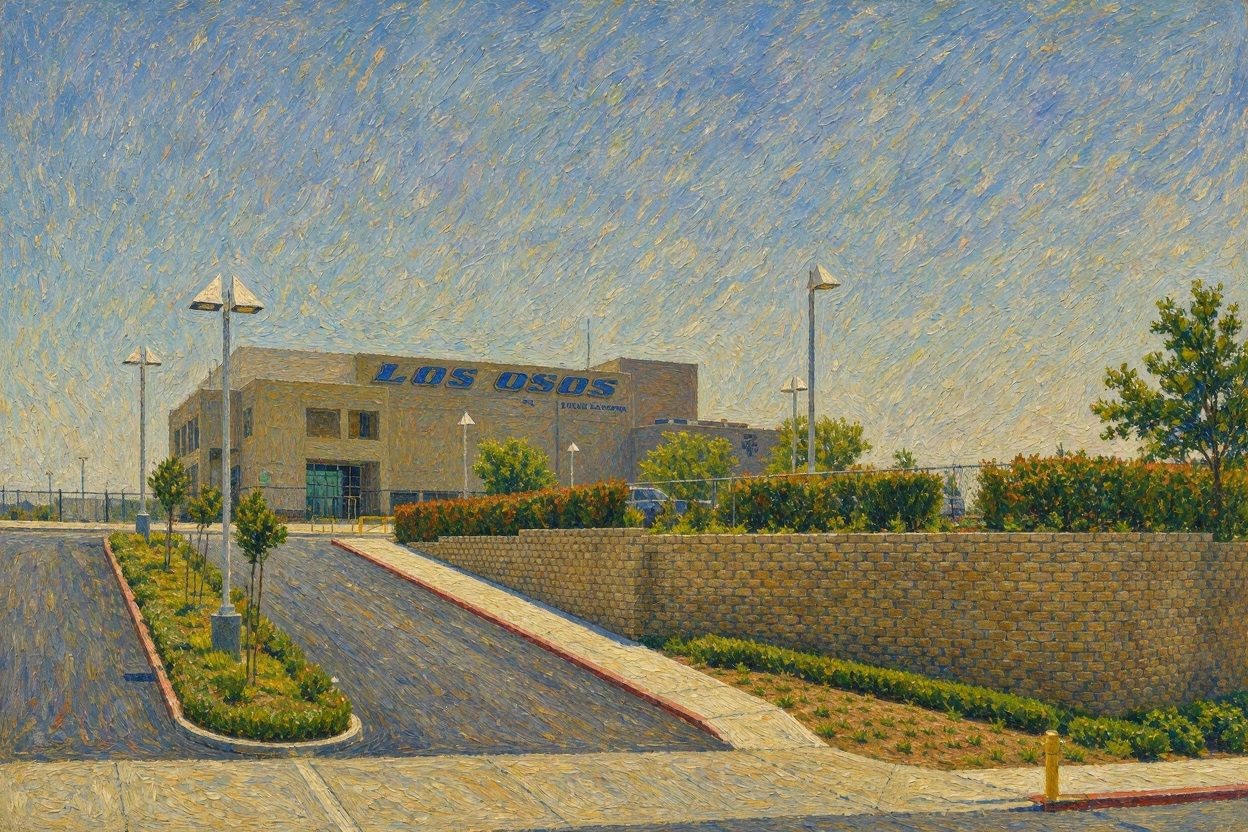
Stretching across Riverside and San Bernardino counties, the Inland Empire sends tens of thousands of graduates into the college admissions cycle each year, and the competition among them keeps intensifying. Los Osos High School in Rancho Cucamonga ranks 184th in California and 1,152nd nationally according to U.S. News & World Report, with 52% of students taking at least one AP exam. Nearby Etiwanda High School and Rancho Cucamonga High School post similarly strong outcomes. However, families here often assume selective admission requires leaving the region’s identity behind.
Turning Regional Identity into an Advantage
That assumption misreads what admissions officers actually reward. Selective colleges consistently favor applicants who turn their specific circumstances into evidence of intellectual direction. For a growing number of Inland Empire students, that circumstance is the region’s status as the nation’s largest inland logistics hub, complete with the air quality consequences that come with it. The most successful applicants from this region are not the ones distancing themselves from the warehouses and truck corridors surrounding their neighborhoods. Instead, they are the ones asking hard questions about them. This case study follows one such student and the strategy that turned a local environmental challenge into a differentiated, research-backed application.
Meet Diego: A Los Osos High School Student
Diego grew up in Rancho Cucamonga within sight of the San Gabriel Mountains, though smog frequently erased them from view. He attended Los Osos High School, where a 95% graduation rate and a broad AP catalog gave him room to build a rigorous course load. Diego noticed early on that his daily bike route to school ran parallel to a freight corridor feeding the region’s warehouse district. That observation, paired with a strong aptitude for chemistry and statistics, eventually shaped an entire admissions strategy. Working with College Transitions, Diego translated a hometown frustration into a coherent academic identity built around environmental engineering and air quality science.

Step 1: Choosing a Major Rooted in Place
Diego’s counselors at College Transitions pushed him past a generic “STEM” label toward something admissions readers could not mistake for anyone else’s story. He settled on environmental engineering, with a specific focus on atmospheric monitoring and freight-related air pollution. Riverside and San Bernardino counties sit within the South Coast Air Basin, which regularly records some of the worst ozone levels in the country. Diego’s neighborhood sat directly along the logistics corridor connecting Ontario International Airport to warehouse clusters throughout the region. His major choice was not abstract; it grew directly from a landscape he had spent his whole life inside.
Why This Major Made Sense
- Ties directly to the South Coast Air Basin’s documented ozone and particulate matter challenges
- Connects to UC Riverside’s Center for Environmental Research and Technology (CE-CERT), a regional research hub
- Reflects a personal, place-based motivation rather than a borrowed interest
- Offers a clear throughline for essays, research, and extracurricular choices
Step 2: Improving Test Scores Through Structured Practice
Diego’s early diagnostic SAT score of 1230 reflected strong verbal instincts but inconsistent math pacing. Diego and his College Transitions advisor built a testing improvement plan. Over five months, he worked through timed data-analysis modules twice weekly, targeting the exact question types costing him the most points. His final score reached 1470, a jump large enough to place him competitively at his target engineering programs. Above all, the improvement mattered because it validated the quantitative rigor his intended major would require. A strong verbal score alone would not have supported an engineering application; the math gains closed that gap.
Step 3: Deepening Extracurriculars Around One Throughline
Rather than joining a wide assortment of unrelated clubs, Diego concentrated his time. He co-founded a student Air Quality Monitoring Club at Los Osos, partnering with a science teacher to install a low-cost particulate sensor near the school’s athletic fields. Diego also volunteered with a community group participating in California’s AB 617 Community Air Protection Program, which funds local air monitoring in overburdened neighborhoods across San Bernardino County. Notably, both activities reinforced the same message: Diego was not simply interested in environmental science in theory. He was actively measuring the problem in his own community, building technical skills alongside civic ones.

Step 4: Adding Independent Research
With guidance from his College Transitions research advisor, Diego designed an independent project analyzing two years of publicly available South Coast Air Quality Management District monitoring data alongside regional freight volume records. He compared ozone and PM2.5 spikes against truck traffic patterns near the SR-60 and I-15 corridors. The project required Diego to learn basic statistical modeling in Python, a skill he had not previously used. Subsequently, he presented preliminary findings to his school’s science department and refined his methodology based on their feedback.
Research Project Scope
- Two years of South Coast AQMD ozone and PM2.5 monitoring data
- Freight volume estimates near the SR-60/I-15 warehouse corridor
- Basic regression modeling built in Python
- Written summary reviewed by Los Osos High School science faculty
Step 5: Entering Competitions to Validate the Work
Diego entered his research into the California Regional Junior Science and Humanities Symposium (JSHS), a nationally recognized competition open to high school researchers. He advanced to the regional finals, where judges praised the project’s use of real, local data over hypothetical scenarios. That result gave Diego something many applicants lack: independent, third-party validation that his research held up outside his own high school. Furthermore, the experience sharpened his ability to explain complex environmental data to a nontechnical audience, a skill he later leaned on while drafting his college essays.
Step 6: Writing a Personal Statement Grounded in Observation
Diego’s personal statement opened not with a dramatic turning point but with a simple, recurring image: riding his bike past idling delivery trucks on his way to school, watching the mountains disappear behind a haze that had become background noise to his neighbors. From there, the essay traced how that daily observation evolved into curiosity, then data collection, then a technical research question. Admissions officers responded to the specificity. Instead of claiming to want to “save the environment,” Diego described one measurable local problem he intended to study more rigorously in college. That precision distinguished his essay from broader, less grounded statements on similar themes.
Step 7: Using EA and ED Strategically
Diego applied Early Action to the University of Maryland and Virginia Tech, both strong environmental engineering programs with generous EA timelines. He simultaneously applied Early Decision to Northwestern University’s McCormick School of Engineering, his clear first choice given its environmental engineering track and proximity to Chicago’s own air quality research community. Because Diego’s major, research, and personal statement all reinforced the same narrative, his EA and ED applications read as one coherent profile rather than three separate pitches. Diego was accepted EA to both Maryland and Virginia Tech in December. His ED acceptance to Northwestern arrived shortly after.
Why Diego’s Strategy Worked
- A single, place-based major anchored every component of his application
- Local research replaced generic extracurricular breadth with demonstrated technical skill
- Competition results provided outside validation of his independent work

What This Means for Inland Empire Students
Diego’s path illustrates a broader lesson for students at Los Osos, Etiwanda, Rancho Cucamonga, Alta Loma, and Chino Hills high schools: the Inland Empire’s logistics-driven economy is not an obstacle to selective admissions. It is a source of authentic, differentiated material that few other applicants can genuinely claim. Students in the region should consider:
- Identifying a specific local phenomenon, rather than a general subject area, to anchor their major
- Seeking out regional resources or local research partnerships
- Building extracurriculars and research around one throughline instead of a scattered list
College Transitions works with Inland Empire families throughout this process, from identifying a differentiated major to connecting students with regional research opportunities.

