The Villages’ Unusual Admissions Landscape
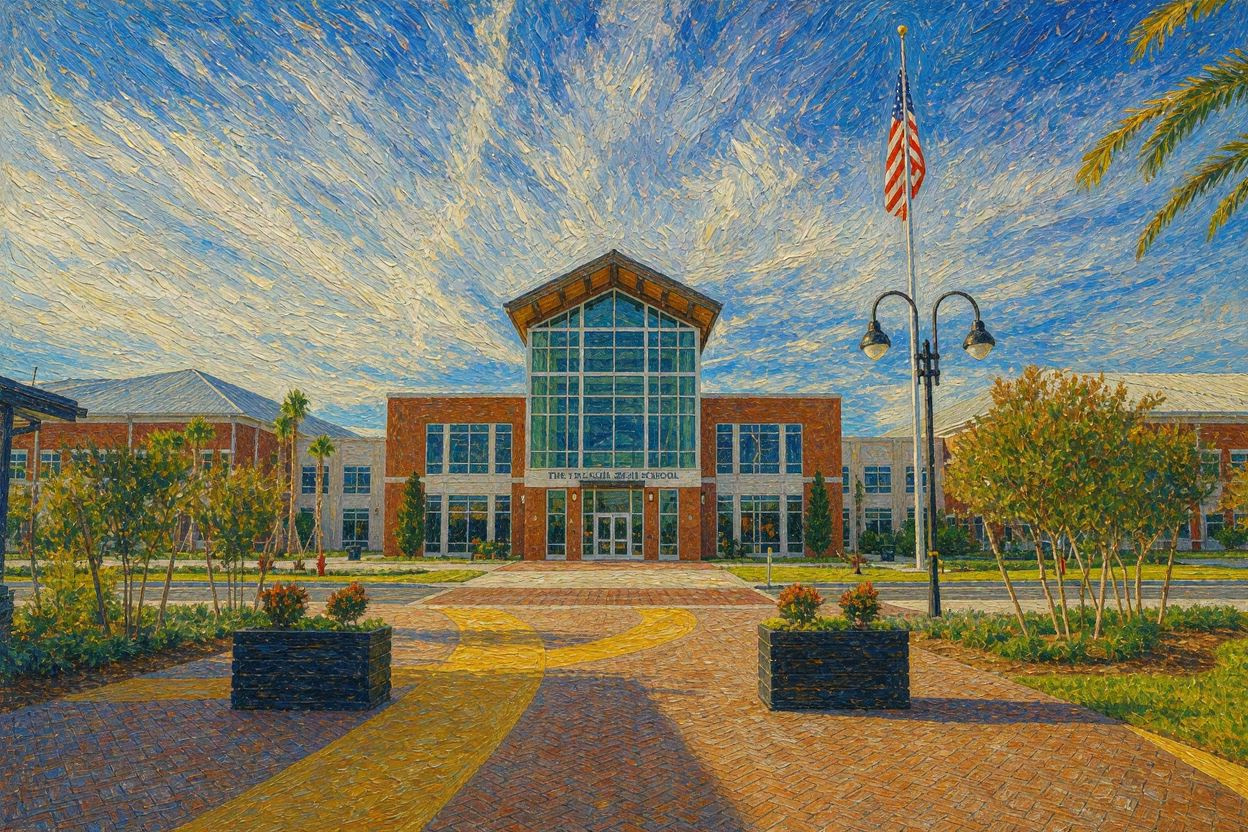
The Villages spans Sumter, Lake, and Marion counties. Its high school options reflect that unusual geography. Villages Charter School enrolls roughly 1,300 high schoolers. It ranks 92nd among Florida’s public high schools, according to U.S. News & World Report. That places it well ahead of South Sumter High School at 297th and Wildwood Middle/High School at 509th. Notably, admission to Villages Charter depends on parent employment within the retirement community itself. That single detail shapes exactly which families walk its halls. Furthermore, The Villages houses far more residents over 55 than under 18. Its schools therefore serve a small, closely connected population supporting a local economy built almost entirely around senior living. That imbalance, however, created an unusual opportunity for one ambitious student.
Meet Vera: A Student Who Saw Opportunity in an Unlikely Place
Vera enrolled at Villages Charter School already aware of something specific. Her parents’ jobs, like most classmates’ parents’ jobs, existed because of the retirees surrounding her. Consequently, she noticed the region’s defining institution early: UF Health The Villages Hospital. This 304-bed acute care center was built specifically to serve one of the oldest populations in the country. Rather than treating that fact as background noise, Vera decided to study it directly. She set her sights on a college major built around the science and administration of aging. She began working with College Transitions the summer before junior year to map out exactly how to get there.

Step 1: Choosing a Major Rooted in Local Reality
Vera selected gerontology and health services administration. Few of her classmates had even heard of the field. The choice grew directly from her surroundings. UF Health The Villages Hospital runs a cardiac program performing more than 5,000 catheterizations annually. It also holds recognition as both a Primary Stroke Center and a Chest Pain Center, distinctions earned by serving an unusually senior patient base. Importantly, Vera’s College Transitions advisor helped her see that this local specialization could become a genuine academic differentiator. It was not a niche interest colleges might overlook.
Why This Major Made Sense
- Both of Vera’s parents worked in Villages-adjacent healthcare and hospitality roles, giving her firsthand exposure to aging-services logistics
- The Villages’ population skews older than almost any community in America, making gerontology a lived reality rather than an abstract interest
- Florida’s senior population keeps growing, giving the major long-term relevance beyond her hometown
Step 2: Building a Score That Matched Her Ambition
Vera’s first SAT practice test produced an 1190, a score reflecting strong reading skills but a shaky math foundation. Over sixteen months she worked through targeted algebra and data-analysis drills. She met weekly with a tutor her College Transitions team helped select. Her score climbed steadily, and by fall of senior year she posted a 1410. That jump mattered, since gerontology and public health programs increasingly weigh quantitative reasoning alongside verbal skills. After all, the field depends heavily on interpreting health outcomes data. Notably, Vera’s math subscore improved more than any other section, a detail she highlighted in her applications.
Step 3: Deepening Activities Around a Single Thread
Instead of scattering her energy across unrelated clubs, Vera concentrated her extracurricular life around health and aging. She joined Villages Charter’s Health Sciences academy, one of seven specialized tracks the school offers juniors and seniors. Meanwhile, she volunteered weekly at a Villages-area assisted living facility. Additionally, she helped organize a peer program pairing charter school students with residents for a weekly technology-help session. Her College Transitions mentor encouraged her to document that initiative carefully for later essays.
Step 4: Adding an Independent Research Project
Vera used publicly available Centers for Medicare & Medicaid Services quality data for her next step. She compared stroke response times at UF Health The Villages Hospital against national benchmarks. Her project asked a specific question: did serving an unusually senior population change how quickly the hospital moved patients from arrival to treatment? Ultimately, she found the hospital’s door-to-treatment times consistently outperformed national medians. She connected that result to the facility’s designed specialization in senior emergency care. Her College Transitions advisor pushed her to frame the project’s real-world stakes clearly. Raw data alone, after all, rarely impresses admissions readers.
Research Project Scope
- Analyzed three years of publicly reported CMS stroke-care quality metrics
- Compared UF Health The Villages Hospital against state and national benchmarks
- Presented findings to her Health Sciences academy cohort and a hospital administrator
Step 5: Entering a National Competition
Vera entered HOSA-Future Health Professionals’ Public Health competitive event. She presented her stroke-care research at the state leadership conference and placed among the top finishers in her category. That result validated months of independent work. Furthermore, the competition forced her to defend her methodology under direct questioning. This sharpened the same analytical instincts her eventual coursework would demand. She later described the experience as more useful preparation than any single class.
Step 6: Writing a Personal Statement Grounded in Place
Notably, Vera’s personal statement opened not with a hospital statistic but with her grandmother’s neighbor. That neighbor was a Villages resident she had come to know through her volunteering. She used the relationship to explain why aging services felt personal rather than academic. Her College Transitions writing coach helped her cut several early drafts that leaned too heavily on data. Instead, he steered her back toward the human story anchoring her interest. The final essay balanced both elements, opening with a specific person and closing with the broader systems Vera hoped to improve.
Step 7: Applying Strategically Across EA and ED
Vera applied Early Action to the University of Florida’s Health Administration program and the University of South Florida’s public health track. Both schools offered programs that matched her research interests, making them natural fits. Simultaneously, she applied Early Decision to Miami University in Ohio, home to the Scripps Gerontology Center. That program is one of the country’s most established undergraduate gerontology majors. Each application reinforced the same story: a student whose hometown had already handed her a research question most applicants would never encounter. Miami University and her EA schools accepted her, confirming that her strategy resonated broadly.

What This Means for Students Near The Villages
Vera’s path shows that a school’s ranking matters less than how deliberately a student uses their surroundings. Villages Charter School, South Sumter High School, and Wildwood Middle/High School all serve students within a community defined by its senior population. Each offers a real foundation for building a focused, distinctive application, whatever a student plans to study. Students nearby should therefore consider:
- Treating local employers, institutions, and community needs as research resources, not just sources of activities
- Building activities around a single, locally grounded interest rather than a scattered resume
- Working with an experienced advisor to turn local exposure into a clear, compelling academic profile
College Transitions specializes in helping students in unconventional communities like The Villages identify the differentiated stories admissions committees rarely see.