
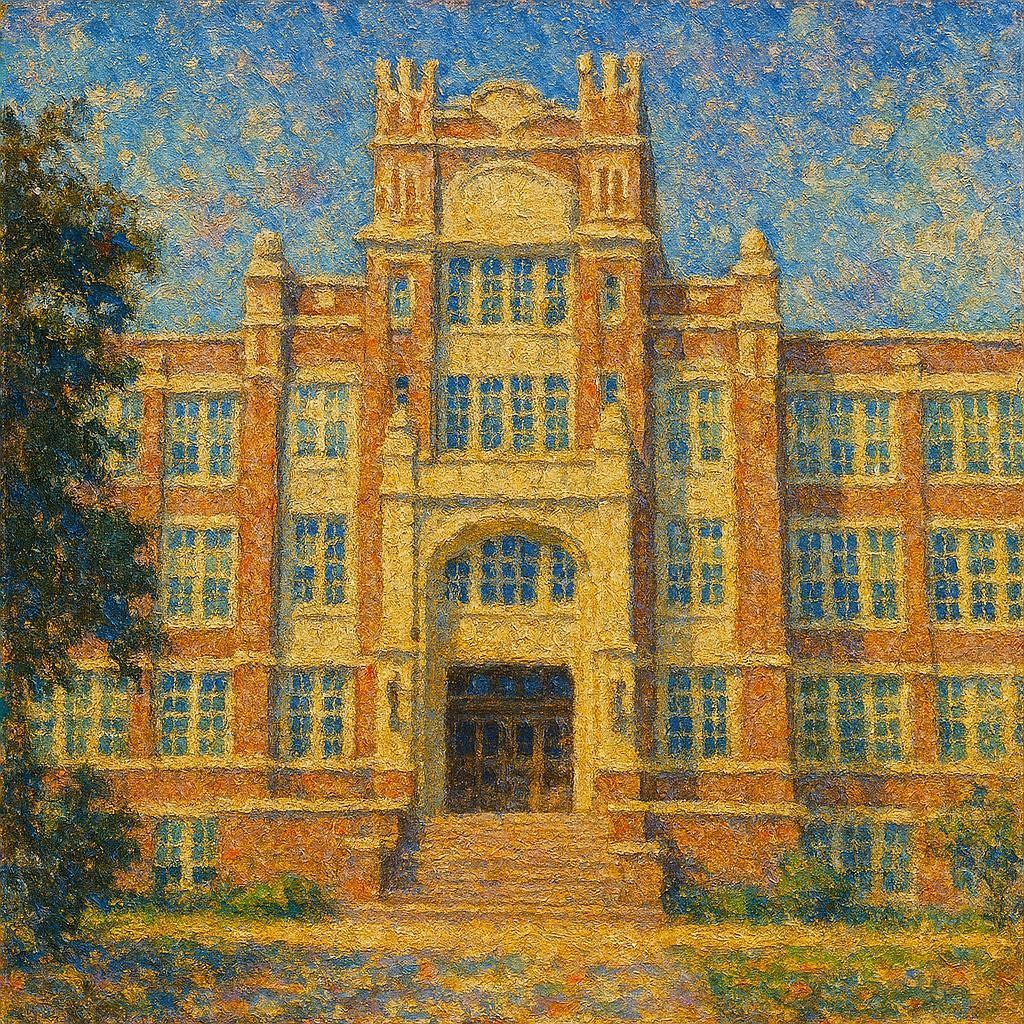
Families across the Baton Rouge metro know that selective college admissions grow more competitive every year. High-achieving students at schools like Baton Rouge Magnet High School, Liberty Magnet High School, LSU Laboratory School, Zachary High School, and Dutchtown High School often graduate with strong AP records and impressive GPAs. Yet many find themselves asking the same question: when so many applicants look alike on paper, what actually sets a student apart?
Today’s case study follows Dominique, a student from Baton Rouge Magnet High School. Through deliberate planning and an unusually grounded sense of purpose, she earned:
- Early Action acceptance to Louisiana State University Honors College
- Early Action acceptance to the University of Miami
- Early Decision acceptance to Tulane University
Her story offers a roadmap for Baton Rouge families who want to understand how local context, taken seriously, can become the most powerful differentiator in a competitive applicant pool.
Meet Dominique: A Capable Student Without a Clear Focus
When Dominique began working with College Transitions in the spring of her sophomore year, she was already performing well at one of Louisiana’s most academically rigorous public schools.
Baton Rouge Magnet High School (BRMHS) ranks fifth in Louisiana and approximately 278th nationally among more than 17,000 ranked public high schools, according to U.S. News & World Report. The school enrolls approximately 1,600 students in grades 9 through 12. Its graduation rate stands at 99%, far above Louisiana’s statewide average of 83%. Notably, the AP participation rate at BRMHS reaches 87%, and the school offers 52 honors and Advanced Placement courses. Those courses include AP Chemistry, AP Environmental Science, AP Biology, AP Statistics, and AP Human Geography, among many others. Furthermore, BRMHS earned a place on the 2025 AP School Honor Roll for expanding access to college-level coursework. The school also produced 16 National Merit Semifinalists in a recent graduating class, more than most Louisiana public schools.
Dominique had earned mostly A grades in honors science and AP coursework. Interest in biology and the natural world was genuine. Her extracurricular record, however, was thin: sporadic attendance at the school’s environmental club, with no leadership or research credentials to point to. Additionally, she lacked a coherent narrative that could communicate, in admissions terms, who she was and why that mattered.
Our first task was to help her find that narrative. Importantly, it needed to be grounded not in aspiration, but in the specific place she had grown up.

1. Choosing a Strategic Major: Environmental Public Health
Many Baton Rouge students interested in science gravitate toward pre-med or biology. Those paths are crowded and difficult to differentiate. Others, instead, pursue environmental science in a general sense, without connecting it to the region’s particular economic and public health realities. We therefore encouraged Dominique to consider a more targeted direction.
Why Environmental Public Health Made Sense
- Baton Rouge anchors the northern end of a roughly 85-mile petrochemical corridor along the Mississippi River, an area containing more than 200 fossil fuel and industrial facilities known informally as “Cancer Alley” since the 1980s.
- Industrial pollution’s health consequences are not abstract for Louisiana residents; they are visible in community health data, EPA risk assessments, and family experience across the region.
- Environmental public health connects Dominique’s science strengths to epidemiology, policy, and community advocacy, an interdisciplinary path well suited to her interests.
- Notably, Tulane University, one of her target schools, houses a nationally accredited undergraduate public health program and the Tulane Environmental Law Clinic, making the major an authentic fit.
- The major, furthermore, differentiated her clearly from the larger pool of general science applicants she would otherwise resemble.
Admissions readers respond to students who present a specific, coherent academic direction. This framework gave Dominique exactly that. Moreover, it made every subsequent decision in her application more purposeful.
2. Raising Her ACT Score: From 25 to 29
Louisiana has offered the ACT free to all high school juniors since 2013, and scores on the exam are required for eligibility for the Taylor Opportunity Program for Students (TOPS), Louisiana’s flagship merit scholarship. Dominique’s initial composite score of 25 was solid. However, it was not competitive for her most selective targets. Tulane’s admitted students typically score between 31 and 34. Even LSU’s Honors College draws from Louisiana’s upper academic tier.
We designed a focused preparation plan targeting the areas with the most room to grow:
- Science and data interpretation passages on the Reading section
- Algebraic reasoning and functions in the Mathematics section
- Logical structure and argumentation in the English section
- Full-length timed practice under realistic conditions, with systematic error review by category
Over two additional sittings, Dominique raised her composite score to 29. That improvement strengthened her standing at both LSU and Miami. Consequently, her applications carried a meaningfully stronger quantitative signal than her initial baseline would have permitted. The improvement itself demonstrated to admissions committees a willingness to invest serious, sustained effort in growth.
3. Deepening Her Extracurricular Commitment: From Attendee to Advocate
Dominique had attended environmental club meetings sporadically through freshman and sophomore year. That interest was authentic. Her involvement, however, would not have registered as meaningful to a selective admissions reader. Accordingly, we worked with her to convert passive engagement into documented, community-facing leadership.
What Dominique Did Differently
- At BRMHS, she proposed and organized an air quality awareness event, partnering with an environmental monitoring professional to explain industrial emissions data to her peers.
- Additionally, she launched an after-school reading group focused on Louisiana environmental health issues, facilitating weekly discussions for 12 students over one full semester.
- Working with a community organization in the Scotlandville neighborhood, she helped distribute air quality monitoring information and health resources to nearby residents.
- Throughout the process, she documented outcomes carefully and submitted a summary to the East Baton Rouge Parish School System sustainability office.
This transformation gave Dominique a real leadership story: not a list of activities, but initiative with measurable outcomes. Moreover, it gave her specific, concrete material for her personal statement and supplemental essays that no other applicant could replicate.

4. Adding a Research Experience with Genuine Scope
To deepen Dominique’s environmental public health profile beyond club work, we helped her design an independent research project. Specifically, she drew on publicly available data from the U.S. Environmental Protection Agency’s AirToxScreen database and Louisiana Department of Environmental Quality monitoring records.
Project Focus
Cumulative Cancer Risk Estimates From Industrial Air Emissions in East Baton Rouge Parish: A ZIP Code-Level Analysis
Dominique examined:
- Estimated cancer risk levels by ZIP code using EPA AirToxScreen data
- Correlations between industrial facility density and elevated risk in specific neighborhoods
- Demographic composition of the highest-risk ZIP codes, using U.S. Census income and race data
- Gaps in community-facing reporting on local air toxics information
Working from those data sources, she produced a written summary report along with data tables and visualizations. Subsequently, she submitted the project to the Louisiana Academy of Sciences Student Research Symposium and received recognition as a participant. The project gave her a citable, concrete accomplishment. It also sharpened the public health vocabulary she used across all of her application essays, making her supplemental responses sharper and more credible.
5. Entering Competitions for External Validation
Selective colleges value intellectual engagement that extends beyond a single campus. Accordingly, we encouraged Dominique to enter competitions that reinforced her environmental public health direction and provided third-party recognition.
- Envirothon, Louisiana regional competition, environmental health and policy round: participant and team science lead
- American Public Health Association Student Assembly Essay Contest: submission on industrial permitting and community health outcomes in Louisiana river parishes
- National Environmental Health Science and Protection Accreditation Council Student Poster Award: submitted a condensed version of her ZIP code-level research findings
Each entry reinforced her narrative. None contradicted it. That consistency helped admissions readers form a clear, coherent picture of a student pursuing a genuine intellectual interest, not assembling a disconnected resume.
6. Crafting a Personal Statement Rooted in a Specific Moment
Dominique’s early essay drafts were earnest but diffuse. She wrote about wanting to protect the environment and help underserved communities. Those goals are admirable. They also appear in thousands of applications each year and do not distinguish one student from another. Instead, we pushed her toward something far more specific and far more local.
Her final personal statement began with a memory from eighth grade: driving with her mother down River Road south of Baton Rouge, watching refinery towers pass against the sunset, and asking why the air smelled different there. The explanation came simply: it was the plants. From there, the essay traced what happened next: not a dramatic awakening, but a slow, incremental discovery. She wrote about what it meant to move from that simple answer toward a more complicated one. Over time, the same view she had always found beautiful became something she felt compelled to understand analytically.
The essay was quiet, precise, and entirely her own. It connected naturally to her interest in environmental public health without announcing it directly. Consequently, that restraint made it more persuasive than any direct statement of purpose could have been.

7. Using Early Action and Early Decision Strategically
Early Action Schools
- Louisiana State University Honors College: accepted
- University of Miami, Department of Public Health Sciences: accepted
The LSU Honors College offered Dominique a small-seminar academic environment within a major research university, with direct access to LSU’s research programs in environmental and chemical engineering. Miami’s public health program, additionally, offered a strong undergraduate curriculum alongside connections to subtropical environmental health research, a genuinely different geographic context that would broaden her professional perspective.
Early Decision School
- Tulane University, School of Public Health and Tropical Medicine, Undergraduate Public Health: accepted
Tulane was Dominique’s first choice, and she could document exactly why. Its undergraduate BSPH program is among a small number of nationally accredited programs of its kind. Its New Orleans location, furthermore, places students at the downstream end of the same industrial corridor Dominique had spent two years studying. The Tulane Environmental Law Clinic offered real possibilities for collaboration between law and public health students. Additionally, Tulane’s commitment to community-engaged scholarship aligned directly with the advocacy work she had done in Baton Rouge. Applying Early Decision demonstrated genuine commitment to those reasons. Her acceptance arrived in mid-December.
Why Dominique’s Strategy Worked
- She identified a specific, place-rooted academic identity early and built every element of her application around it.
- Through focused, systematic preparation, she raised her ACT score into a meaningfully more competitive range.
- Passive club attendance became, subsequently, documented community leadership with measurable outcomes.
- An independent research project demonstrated analytical initiative and reinforced her declared major.
- Competition entries added external recognition without contradicting her narrative.
- Her personal statement was specific, locally grounded, and genuinely memorable.
- Strategic use of Early Action and Early Decision, finally, maximized her outcomes at schools where her profile fit authentically.
Dominique did not try to appear well-rounded. Above all, she tried to appear coherent, and she succeeded.
What This Means for Baton Rouge-Area Families
Baton Rouge students attend some of Louisiana’s most academically serious high schools. According to U.S. News, BRMHS ranks fifth in the state with an 87% AP participation rate. Liberty Magnet ranks eighth, with 100% AP participation. LSU Laboratory School ranks tenth in Louisiana. The academic baseline across these schools is high, and that is precisely the challenge: at selective colleges, strong grades and a rigorous curriculum are the minimum expected, not the competitive advantage.
Standing out, therefore, requires more. For Baton Rouge students specifically, something genuinely rare is available. The industrial geography of this region, its environmental health disparities, and its proximity to one of the most consequential pollution stories in the United States are not liabilities. In the right hands, they are credentials. Students who engage with that context seriously (through research, public health, policy, law, or investigative journalism) can build profiles that applicants in most other cities simply cannot replicate.
To compete at selective colleges, Baton Rouge students need:
- A clear and specific academic direction, ideally rooted in the region’s distinctive context
- Extracurricular depth with documented, community-facing outcomes
- At least one independent research or project-based experience with analytical rigor
- External validation through competitions or recognized programs
- Essays that are specific, personal, and locally grounded
- Strategic use of Early Action and Early Decision, used in combination with a well-defined narrative
Additional Resources
- Top High Schools in the Baton Rouge, LA Area: How They Compare for College Admissions
- College Admissions in Baton Rouge: What Louisiana’s Capital City Gets Right (and Where Students Need to Plan Ahead)
- Between the River and the Research Labs: How to Get into Top Colleges from Baton Rouge
- Best Colleges in Louisiana — 2024

