
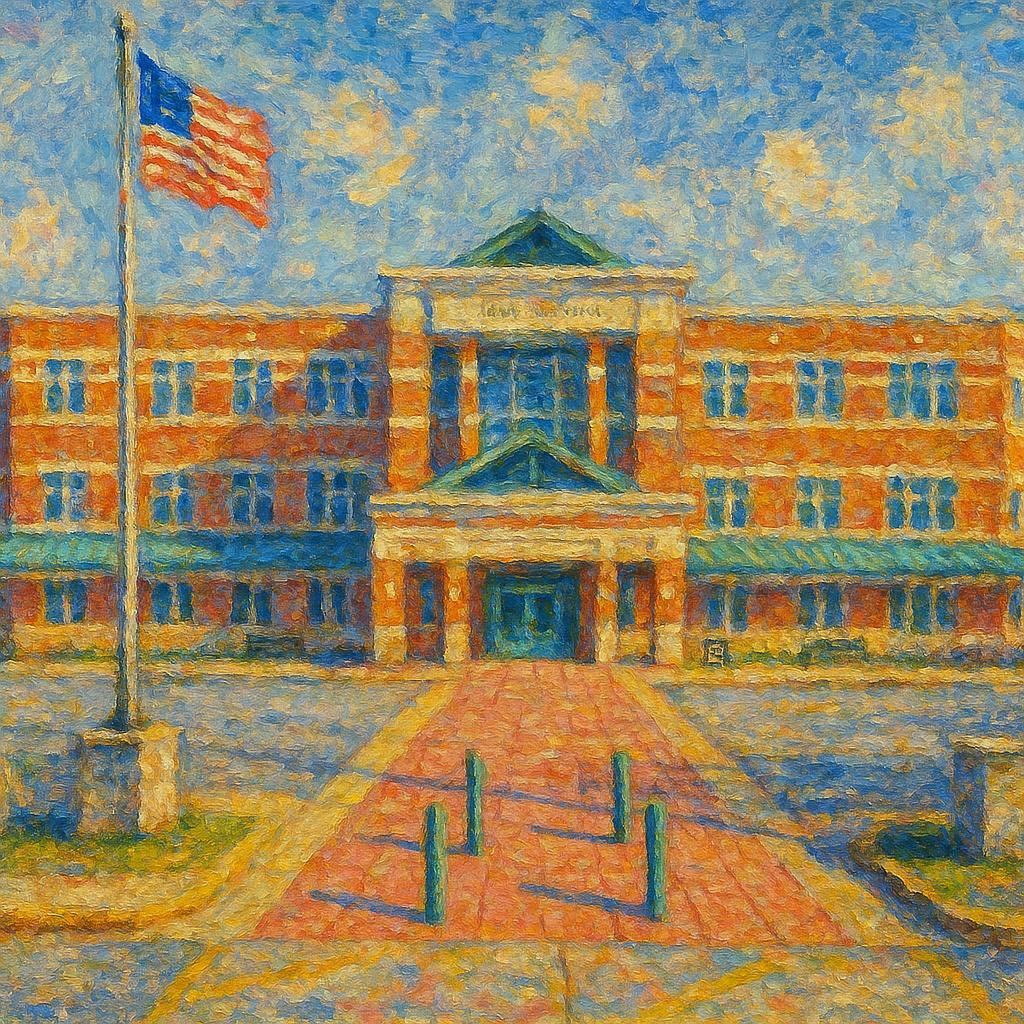
Families raising college-bound teenagers in Bethesda, Maryland compete in one of the most academically saturated markets in the country. Indeed, Walt Whitman High School ranks 2nd in Maryland and 130th nationally, according to U.S. News & World Report. Notably, the school’s AP participation rate sits at 85% across 29 AP courses. Nearby, Walter Johnson High School holds the 14th spot in Maryland. Meanwhile, Bethesda-Chevy Chase High School sits at 20th, and Winston Churchill High School, in neighboring Potomac, ranks 8th statewide. Consequently, a Bethesda applicant rarely stands out through grades alone. Thousands of equally qualified neighbors apply to the same selective universities every cycle.
However, Bethesda offers something few other suburbs can claim. Specifically, the city sits in direct, walkable proximity to institutions that actually regulate American medicine. The National Institutes of Health, for instance, anchors Bethesda’s southern edge. Walter Reed National Military Medical Center sits along Rockville Pike, and the broader I-270 corridor running north toward Rockville and Gaithersburg houses more than 140 life sciences companies. For a student willing to look past the obvious “pre-med” label, that density of federal health infrastructure becomes a genuine strategic advantage.
Meet Devon: Turning Proximity into a Differentiated Major
When Devon began working with College Transitions in the spring of sophomore year, he attended Walt Whitman High School and held a 3.85 unweighted GPA. His course load included AP Biology and AP Chemistry, and his grades were genuinely strong. Even so, his extracurricular profile looked like dozens of others. Specifically, he had logged a few science club meetings, one volunteer shift at Suburban Hospital, and a vague interest in “becoming a doctor someday.” Whitman alone sends hundreds of pre-med-track applicants to selective colleges each cycle. Therefore, Devon’s file, as it stood, did nothing to separate him from that crowd.
His first SAT attempt, taken in the fall of junior year, produced a 1310. That score was respectable but would not carry a generic biology applicant into the nation’s most selective programs. Our first task was not fixing his test scores. Instead, we needed to find an angle only a student living in Bethesda’s specific federal health ecosystem could authentically claim.
Why a Differentiated Angle Mattered
- Pre-med and biology remain the most oversubscribed intended majors among Montgomery County applicants to selective schools.
- Bethesda’s concentration of FDA-adjacent, NIH-adjacent, and Walter Reed-adjacent institutions is not replicated in any other suburb.
- Admissions officers at research universities increasingly look for applicants who understand the policy side of science, not only the laboratory side.
- A regulatory science angle let Devon connect his coursework, research, and essays into one coherent, locally rooted narrative.

1. Choosing a Strategic Major: Regulatory Science and Health Policy
Rather than declaring a broad biology or pre-med intent, we guided Devon toward regulatory science. Specifically, this interdisciplinary field studies how drugs, vaccines, and medical devices move from laboratory research to public availability. Notably, few applicants nationally even know the term exists. Fewer still can claim that the agency at the center of the field, the FDA, reviews many of its oncology applications less than ten miles from their childhood bedroom.
Devon’s specific interest sharpened around pediatric oncology drug approval. Specifically, he had volunteered briefly at a children’s hospital, and he noticed how slowly some new cancer treatments reached young patients compared to adult populations. Consequently, that observation, paired with his geographic access to the federal apparatus governing those timelines, gave him a thesis no generic “I want to help people” essay could match.
2. Strengthening the Academic Record: SAT Improvement
Devon’s initial 1310 needed to climb if his regulatory science narrative was going to be paired with quantitative credibility. Accordingly, over ten months, he worked through a structured prep plan emphasizing data analysis and reading comprehension. Those two sections connect most directly to the kind of clinical-trial literature he would eventually need to interpret. His score rose to 1480 on his second attempt: a 170-point gain reflecting genuine skill growth rather than simple test familiarity. Moreover, that improvement mattered specifically because his target programs combine rigorous quantitative requirements with policy coursework. Admissions committees there scrutinize math and reading scores with particular care.
3. Deepening Extracurricular Involvement
Devon restructured his extracurricular commitments around the regulatory science thread, rather than scattering his energy across unrelated clubs. Specifically, he became president of Whitman’s Science Olympiad team, with a specific focus on the Disease Detectives event. That event tests students on epidemiology and outbreak response. Additionally, he joined Whitman’s Health Occupations Students of America chapter, where he eventually placed at the state level in the Medical Innovation category. Each activity reinforced the same throughline: drug development, clinical evidence, and the regulatory systems connecting the two.

4. Adding Independent Research
Devon’s most significant credential came through the FDA’s Oncology Center of Excellence Summer Scholars Program. This six-week program was created specifically for high school juniors and seniors interested in the cancer drug development pathway. Importantly, the program is selective, and it gives particular consideration to students from backgrounds underrepresented in science and engineering. Devon’s accepted application examined pediatric dosing trials and the FDA’s accelerated approval pathway for rare childhood cancers.
What the Research Experience Provided
- A structured introduction to the full drug development pipeline, from pre-clinical research through FDA review and post-market monitoring.
- Direct exposure to FDA scientists and regulatory reviewers, several of whom became informal mentors.
- A final presentation requirement that forced Devon to translate technical material for a non-specialist audience, a skill that later strengthened his personal statement.
- Above all, a credential admissions readers immediately recognized as rare, since few applicants nationally have direct FDA program experience.
5. Entering Competitions
Devon channeled his research into ScienceMontgomery, the Montgomery County science and engineering fair. The fair operates as an official Regeneron ISEF affiliate, open to students in grades 6 through 12 across the county. His project analyzed accelerated approval timelines for pediatric oncology drugs over the previous decade, and it won first place in the Behavioral and Social Sciences category. The win qualified him to advance toward the Regeneron International Science and Engineering Fair, widely regarded as the most prestigious pre-college research competition in the world. Subsequently, that placement gave his application a verifiable, juried result instead of a self-reported research summary.
6. Crafting a Compelling Personal Statement
Devon’s personal statement opened not in a laboratory, but on the Capital Crescent Trail. He had passed the NIH campus on his bike hundreds of times without registering what actually happened inside its buildings. Specifically, he used that contrast, between physical proximity and intellectual distance, to frame his own awakening to regulatory science. The essay then moved through his OCE Summer Scholars experience and his ScienceMontgomery project. It closed with a specific policy question Devon wanted to study in college: how should regulatory agencies weigh speed against certainty when children’s lives are at stake? Importantly, the essay never claimed expertise Devon did not have. Instead, it demonstrated curiosity sharpened by real access.

7. Applying Early: A Strategic EA and ED Plan
Devon applied Early Action to the University of Maryland’s Public Health Science program and to Georgetown University’s Healthcare Management and Policy concentration. Both offers arrived in December. He applied Early Decision to Johns Hopkins University, targeting its Public Health Studies program. His essay cited Hopkins’s Bloomberg School of Public Health and its proximity to federal health agencies as a natural extension of the access he had already built in Bethesda. Subsequently, his Early Decision application was accepted in mid-December, and Devon committed shortly afterward.
Why Devon’s Strategy Worked
- He replaced a generic pre-med narrative with a specific, defensible field that almost no other applicant could claim with equal authenticity.
- Notably, he paired geographic access with verified credentials, rather than relying on proximity alone.
- Throughout, he built a coherent thread connecting his coursework, research, competition results, and essay into a single narrative.
- Above all, he used Early Decision deliberately, targeting a program where his specific interest matched the school’s documented strengths.
What This Means for Bethesda Families
Bethesda’s competitive intensity is not going away. Neither is the sheer number of strong students at Whitman, Walter Johnson, Churchill, and Bethesda-Chevy Chase. Families navigating this market should keep a few principles in mind:
- Differentiation matters more than credentials alone. A student with a specific, defensible interest will outperform an equally accomplished peer whose profile lacks a clear narrative.
- The region’s density of federal agencies, research institutions, and private-sector employers creates access across virtually every discipline; the key is identifying which programs are genuinely open to high schoolers and pursuing them early.
- County-level competitions, dual enrollment options, and Montgomery County’s extensive magnet and specialized program offerings are underused by students who focus exclusively on GPA and test scores.
- Selective schools read Bethesda transcripts with awareness of the local academic environment. A rigorous course load is expected, not exceptional, so what happens outside the classroom carries significant weight.
College Transitions works with Bethesda-area families to build differentiated, narrative-driven strategies: from major selection through application and essay coaching.

