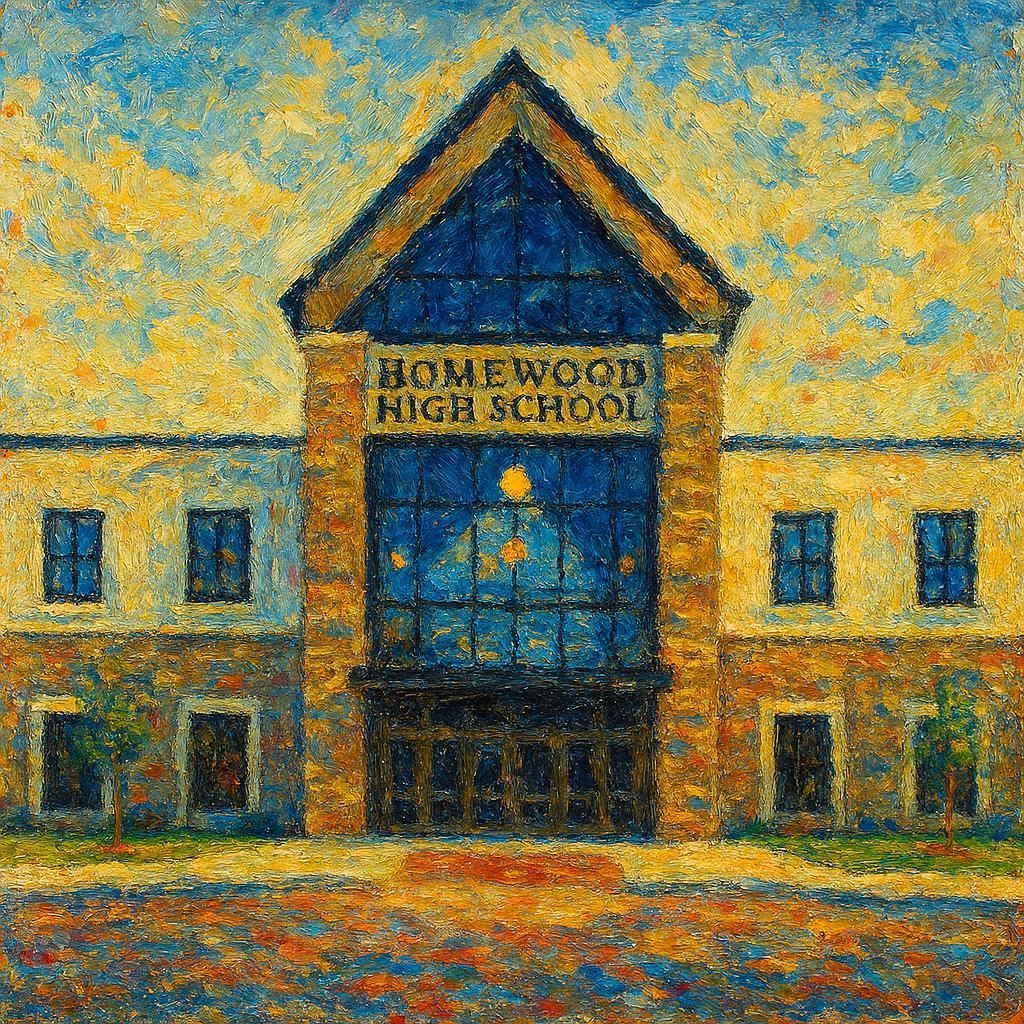
Families across the Birmingham metro area know that selective college admissions have grown more competitive every year. High-achieving students at schools like Homewood, Mountain Brook, Vestavia Hills, Hoover, Spain Park, and Hewitt-Trussville often carry strong grades and heavy AP course loads. However, many still find themselves asking the same question: how does a strong student truly stand out in a metro area this saturated with high performers?
Today’s case study highlights Amara, a student from Homewood High School. Because of deliberate planning and strategic positioning, she earned:
- EA acceptance to American University, School of Public Affairs
- EA acceptance to Davidson College
- ED acceptance to Emory University
Amara’s story is a roadmap for Birmingham families who want to understand what moves the needle at selective colleges. A strong transcript opens the door; a focused strategy, above all, is what gets a student through it.
Meet Amara: A Strong Student Without a Defined Direction
When Amara began working with College Transitions in the spring of her sophomore year, she already had genuine strengths. Notably, she attended Homewood High School, which U.S. News & World Report ranks second in Alabama and 363rd nationally among more than 17,900 ranked public high schools. According to the school’s official profile, Homewood enrolls roughly 1,308 students and posts an AP participation rate of 67%, while its graduation rate consistently stays above 90%.
Overall, Amara earned A and B grades in her honors social studies and English courses. Additionally, she was an occasional member of her school’s civics club and had developed a genuine curiosity about Birmingham’s civil rights history after a field trip to Kelly Ingram Park. Yet, like many motivated students in a metro area full of strong public schools, she had not yet channeled that curiosity into anything cohesive or distinctive.
Therefore, our first goal was to help her find a clear academic identity that she could build everything else around.
1. Choosing a Strategic Major: Political Science with a Concentration in Public History
Many Birmingham students with an interest in social studies declare general political science or history. However, those paths are common and, consequently, harder to differentiate. After reviewing Amara’s coursework, activities, and long-term interests, we guided her toward a more targeted direction.
Why This Major Made Sense
- It connected her interest in Birmingham’s civil rights history with a rigorous, archive-based academic framework.
- It gave her a unifying theme across activities, research, essays, and supplemental responses.
- It set her apart from generalist political science applicants across the Southeast.
- It aligned authentically with programs at her target schools, including Emory’s Department of History and American University’s School of Public Affairs.
Importantly, admissions readers respond to students who present a clear and authentic academic direction. This framework gave Amara exactly that. It also made every subsequent decision in her application more coherent.
2. Improving Her ACT Score: From 26 to 32
Amara’s initial ACT score of 26 was solid, but not yet competitive for schools like Emory, where admitted students typically score well above the national average. Alabama juniors take the ACT statewide, giving students a reliable early baseline.
We built a focused preparation plan that emphasized:
- Close reading of dense nonfiction and historical passages
- Grammar and rhetorical skills tied to the English section
- Data interpretation and science reasoning under timed conditions
- Weekly review of missed items by category
By early fall of her senior year, Amara had raised her score to 32. That improvement strengthened her standing at every school on her list. Furthermore, it demonstrated to admissions committees a willingness to invest serious effort in academic growth, a quality that selective colleges actively value.
3. Deepening Her Commitment: From Club Member to Project Leader
Amara had attended civics club meetings and occasionally helped with voter registration drives. Her involvement was genuine but passive. Therefore, we worked with her to shift from a participant to someone with a documented contribution.
What Amara Did Differently
- She proposed and led a student-run walking tour project connecting Homewood students to the Birmingham Civil Rights District.
- She partnered with her school’s social studies department to create a discussion guide used in three classrooms.
- She organized a panel discussion with two local historians about how Birmingham’s civil rights landmarks are preserved today.
- She documented the project and presented outcomes to her school’s administration.
As a result, this transformation gave Amara a real leadership story, not just meeting attendance but initiative with measurable results. It also gave her specific, concrete material for her personal statement and supplements.
4. Adding a Major-Aligned Research Experience
To deepen Amara’s public history narrative beyond classroom and extracurricular work, we helped her design an independent research project using primary sources held by the Birmingham Public Library’s Department of Archives and Manuscripts.
Project Focus
Framing the Movement: Local Versus National Newspaper Coverage of the 1963 Birmingham Campaign
Amara examined:
- The Civil Rights Movement Scrapbooks, comparing Alabama coverage against national coverage of the same events
- Selected items from the Bull Connor Papers, held in the Archives’ civil rights collection
- Oral history interviews from the Andrew M. Manis collection related to Reverend Fred Shuttlesworth
- Differences in tone, word choice, and framing between local and out-of-state newspaper accounts
She produced a written analysis and a source comparison chart. Subsequently, she submitted the project to Alabama History Day, where it advanced past the regional round. The project gave her a concrete, citable accomplishment. It also, importantly, sharpened the analytical language she used across her application essays.
5. Entering Competitions for External Validation
Selective colleges value evidence of intellectual engagement beyond the classroom. Consequently, we encouraged Amara to enter competitions that reinforced her public history and civic policy direction.
- Alabama History Day, the state affiliate of National History Day: advanced to state finals
- C-SPAN StudentCam documentary competition: regional entry submitted
- Presidential 1776 Award online civics challenge: completed
Each entry reinforced her narrative. That consistency strengthened how admissions readers perceived her overall profile.
6. Crafting a Personal Statement Rooted in a Specific Observation
Amara’s early essay drafts were earnest but generic. She wrote about wanting to honor the sacrifices made during the civil rights movement and wanting to help others understand history. However, those sentiments appear in thousands of applications from students across the South each year. Therefore, we pushed her toward something far more grounded and specific.
Her final personal statement focused on a single moment in the Archives reading room. While reviewing a scrapbook clipping, she noticed that a local 1963 headline described a protest as a “disturbance,” while a wire-service clipping pasted on the facing page called the same event a “demonstration.” She wrote about what that single word swap revealed: not abstract lessons about bias, but how the language chosen by an editor decades ago still shapes what a city remembers about itself.
The essay was precise, locally rooted, and entirely her own. It connected naturally to her interest in public history without announcing it. Notably, that restraint made it more effective than any direct statement of purpose could have been.
7. Using Early Action and Early Decision Strategically
Early Action Schools
- American University, School of Public Affairs: accepted
- Davidson College: accepted
These Early Action choices gave Amara strong options secured before winter break. Because of American University’s location in Washington, D.C., its policy-focused curriculum offered meaningful proximity to national civic institutions. Meanwhile, Davidson’s small seminar format and strong history department were a genuine fit for her intellectual style.
Early Decision School
- Emory University: accepted
Emory was Amara’s top choice. Its Department of History, the civil rights holdings at its Rose Library, and its Atlanta location, itself deeply tied to the civil rights movement, made it an authentic match. Applying ED demonstrated real commitment and gave her a meaningful advantage in a selective applicant pool.
Her acceptance arrived in mid-December, ultimately the result of two years of consistent, focused work.
Why Amara’s Strategy Worked
- She identified a specific public history and civil rights policy identity early and built every element of her application around it.
- She raised her ACT score into a competitive range for her target schools.
- She transformed passive club membership into documented, community-facing leadership.
- She completed an independent archival research project that demonstrated real intellectual initiative.
- She entered competitions that added external recognition and reinforced her narrative.
- She wrote a personal statement that was specific, local, and genuinely memorable.
- She used Early Action and Early Decision to maximize her admissions outcomes.
Amara did not try to do everything. Instead, she did the right things, consistently and intentionally.
What This Means for Birmingham Families
Birmingham is home to several of Alabama’s most academically strong public high schools. According to U.S. News, Homewood ranks second in Alabama with a 67% AP participation rate. Meanwhile, nearby Mountain Brook ranks fourth in the state, and Vestavia Hills ranks fifth. Hoover, Spain Park, and Hewitt-Trussville also post strong statewide rankings. Consequently, the concentration of high-performing public schools across the metro area raises expectations for every applicant who hopes to stand out beyond it.
In that environment, strong grades and course rigor are the baseline, not the competitive advantage. Instead, standing out at selective colleges outside Alabama requires more. Specifically, it requires:
- A clear and authentic academic direction
- Extracurricular depth, not just breadth
- At least one self-driven research or archival project
- External validation through competitions or recognition
- Essays that are specific, personal, and locally rooted
- Smart use of Early Action and Early Decision
This is the work College Transitions specializes in, and it is the work that made Amara’s outcome possible.