
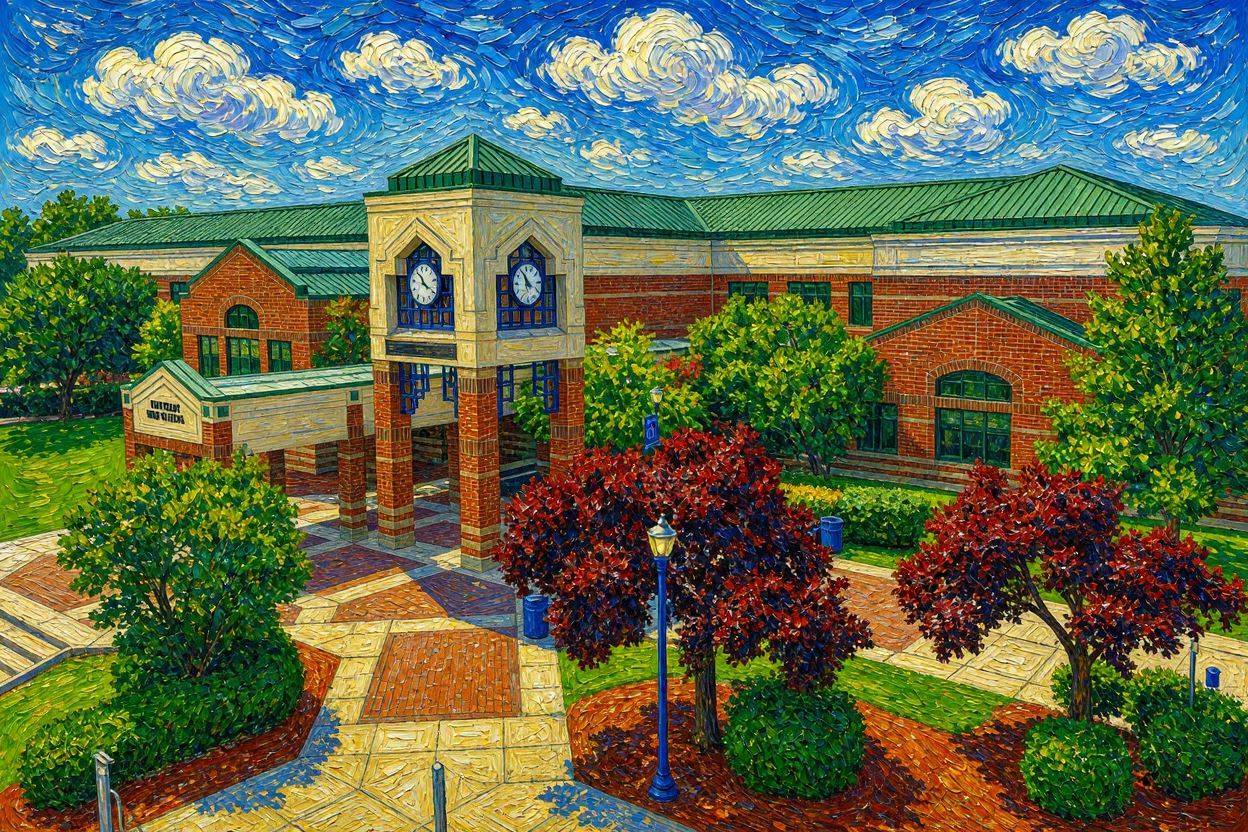
The Boise Metro’s Competitive Landscape
The Boise metro area sends more applicants to selective engineering programs each year. Consequently, competition inside the Treasure Valley has intensified. Timberline High School, part of the Boise School District, ranks seventh among Idaho high schools per U.S. News & World Report. Its Advanced Placement participation rate stands at 68%. Meanwhile, Boise Senior High School, Borah Senior High School, Eagle High School, and Centennial High School also send graduates into competitive STEM programs. However, Timberline’s AP breadth, together with a senior graduation rate near 90%, has made it a steady source of admits to national engineering schools. Importantly, the region’s identity has shifted over the past decade. Micron Technology, headquartered just outside Boise, employs thousands of local engineers. As a result, the company has turned the Treasure Valley into one of the country’s fastest-growing semiconductor hubs. Consequently, students across the district have started building applications around materials science and advanced manufacturing. Notably, that shift is exactly what shaped one recent Timberline graduate’s path to Carnegie Mellon.
Meet Silas
Silas grew up watching cranes rise over Micron’s Boise campus. Meanwhile, he spent his summers hiking the volcanic rimrock above the Boise River. Those two landscapes, one industrial and one geological, eventually merged into a single academic identity. Silas enrolled at Timberline High School with an early interest in chemistry. However, a sophomore-year unit on crystal structures reframed his curiosity toward materials science. Specifically, he grew fascinated by the physics of semiconductor materials. He began reading about Micron’s memory chip fabrication process. Subsequently, he wanted to know why certain materials fail under thermal stress while others survive for decades. Instead of treating that curiosity as a passing hobby, Silas built his entire high school record around it.
Why This Major Made Sense
- Boise’s economy is anchored by semiconductor manufacturing; therefore, Silas had direct access to industry professionals, plant tours, and mentors.
- The region’s volcanic geology, including obsidian formations in the Owyhee foothills, gave him an early, tangible entry point into materials properties.
- Boise State’s Micron School of Materials Science and Engineering, funded partly by a $25 million gift from Micron, offered a nearby model for undergraduate study in the field.
With that foundation in place, Silas turned it into a deliberate, seven-step admissions strategy.

Step 1: Choosing a Major Early
Silas committed to materials science and engineering, with a semiconductor focus, at the start of junior year. Therefore, every later decision, from coursework to competitions, reinforced that single narrative.
Step 2: Improving Test Scores
Silas first took the SAT in the fall of junior year and scored 1290. He then completed a structured ten-week prep plan focused on the math section, and that section produced his largest gains. By his final sitting in the fall of senior year, he had raised his composite to 1490. That jump meaningfully strengthened his applications.
Step 3: Deepening Extracurriculars
Silas founded Timberline’s first Materials Science Club and recruited classmates to build and test simple composite materials using donated lab supplies. Additionally, he joined the school’s Science Olympiad team, competing in events tied to chemistry and engineering design.

Step 4: Adding Research
Working with a Timberline chemistry teacher, Silas arranged an independent-study research project. The project examined how repeated thermal cycling affects the durability of solder joints in electronic packaging. Importantly, that question came directly from conversations with Micron engineers. He logged data across several months and subsequently presented preliminary findings to his club.
Step 5: Entering Competitions
Silas qualified for the Idaho State Science and Engineering Fair with his thermal cycling project, advancing to the state level as a junior. He also placed at a regional Science Olympiad tournament in the materials science event. Notably, both results gave him concrete evidence to cite in his applications.
Step 6: Writing a Personal Statement
Rather than opening with a generic passion statement, Silas structured his essay around a single afternoon. In it, he compared obsidian shards from the Owyhee foothills to silicon wafers from a Micron plant tour. That juxtaposition explained why materials science, not engineering broadly, captured his attention. Throughout, the essay stayed grounded in specific, sensory detail.
Step 7: Using EA and ED Strategically
Silas applied Early Action to Georgia Tech and the University of Michigan. Both offer strong materials science programs with non-binding timelines; therefore, he could compare offers before committing. He then applied Early Decision to Carnegie Mellon University, his clear first choice. Above all, Carnegie Mellon’s Materials Science and Engineering department, plus its proximity to major semiconductor employers, made the decision straightforward.
Why Silas’s Strategy Worked
- His major, research project, extracurriculars, and essay all reinforced the same narrative instead of appearing disconnected.
- Importantly, he used Boise’s actual economic and geological identity rather than a generic “I love STEM” framing.
- His test score improvement demonstrated growth, not just a high final number.
- Notably, his EA applications to Georgia Tech and Michigan gave him leverage and confidence before he submitted his binding ED application.
- Silas secured EA acceptances to Georgia Tech and the University of Michigan, followed by an ED acceptance to Carnegie Mellon University.

What This Means
Silas’s outcome illustrates a broader trend across the Boise metro. Traditional public high schools, including Timberline, Boise Senior, Borah, Eagle, and Centennial, can all produce standout applicants. However, that outcome depends on students building a genuine, place-specific narrative rather than a generic one. Above all, students should keep several ideas in mind.
- Local industry and geography can serve as authentic material for a differentiated major and essay.
- A single-narrative strategy, connecting major, research, and extracurriculars, carries more weight than a broad activity list.
- Score improvement across multiple sittings matters more to admissions readers than one strong result.
- Strategic use of EA and ED can maximize both leverage and certainty in the admissions process.
Students in the Treasure Valley weighing a similar path can benefit from expert guidance. Ultimately, College Transitions has helped students across Idaho translate a regional identity, whether industrial, geological, or cultural, into a cohesive college application.

