The Charleston, South Carolina College Admissions Landscape
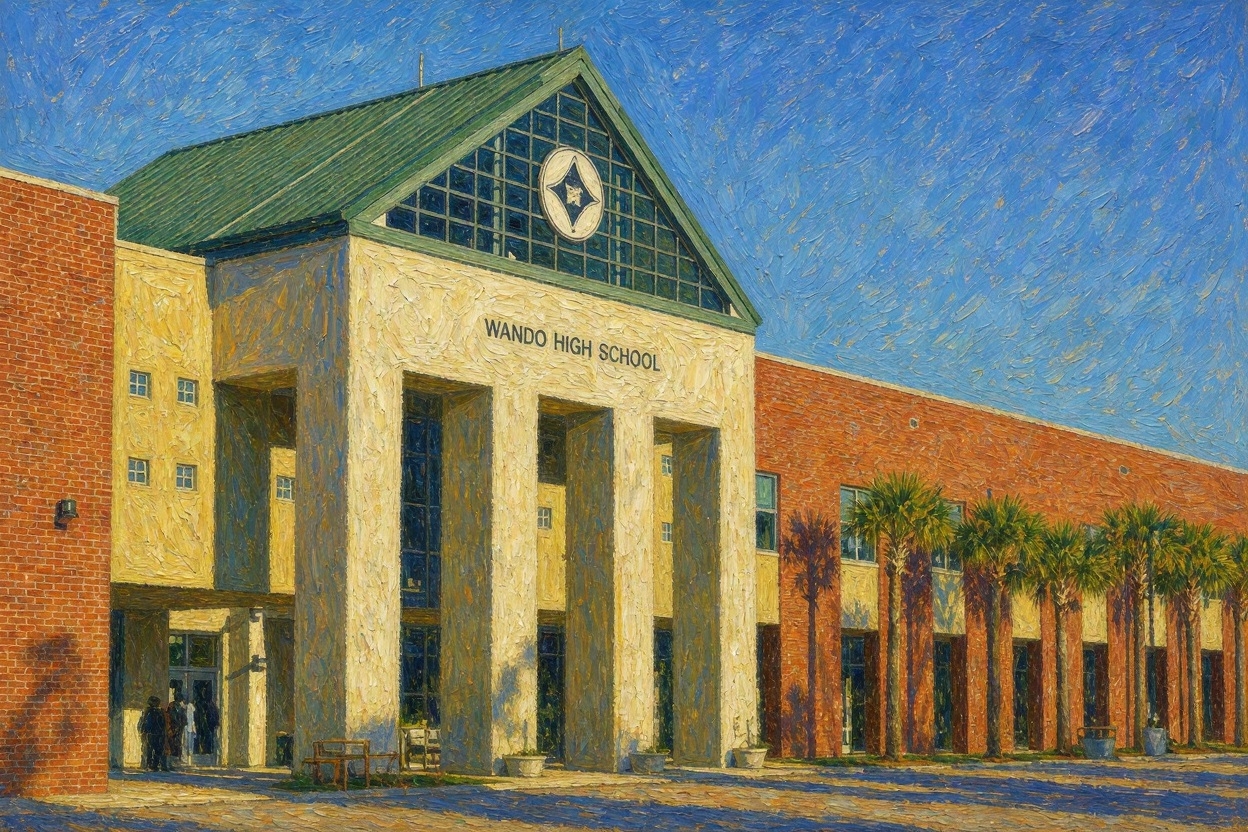
Charleston County sends a competitive applicant pool to selective colleges every year. Academic Magnet High School, a specialized public school, currently ranks 23rd nationally according to U.S. News & World Report. Charleston School of the Arts and Lucy Garrett Beckham High School also post strong statewide results. However, most Charleston-area applicants come from large, traditional zoned high schools rather than magnet campuses. Wando High School in Mount Pleasant, ranked 10th in South Carolina by U.S. News, is the clearest example. Wando enrolls roughly 2,700 students, making it one of the largest high schools in the state. Consequently, students there must work deliberately to stand out. Admissions officers pay close attention to how Wando applicants use their time. Importantly, a large zoned school can still produce highly differentiated applicants; Wando’s 52% AP participation rate and 94% graduation rate prove the point. This case study follows Delaney, a Wando senior. Her engineering interests grew directly out of a problem Charleston knows better than almost any other American city: rising water on a 300-year-old peninsula.
Meet Delaney: A Wando High School Student with a Plan
Delaney grew up watching Charleston’s peninsula flood during routine high tides, long before any storm arrived. Her family often drove into downtown Charleston and hit flooded intersections near the Battery on a schedule tied to the moon, not the weather. That pattern eventually became the foundation of her entire academic profile. Working with College Transitions, Delaney turned a familiar local frustration into a specific, differentiated major and a coherent four-year strategy.

Step 1: Choosing a Major Rooted in the Charleston Peninsula’s Future
Delaney chose civil and environmental engineering, with a specific focus on coastal flood resilience. Charleston’s historic peninsula sits where tidal flooding, aging drainage infrastructure, and strict preservation rules all converge. Protecting it requires engineers who understand both water and history. Notably, the city’s ongoing Low Battery seawall reconstruction gave Delaney a real, local project to study. Instead of a generic “engineering” interest, she built her profile around one specific question: how does a historic coastal city keep functioning as the water rises?
Why This Major Made Sense
- Directly tied to a problem unique to Charleston’s geography and history
- Connected coursework, research, and extracurriculars around one theme
- Gave admissions readers a specific, memorable identity beyond generic STEM interest
Step 2: Raising SAT Scores Through Structured Practice
South Carolina administers the SAT as its statewide accountability test. Delaney therefore focused her preparation there rather than on the ACT. She took her first official SAT in the fall of junior year and scored 1310. Subsequently, she completed a structured ten-week program built around timed math practice and evidence-based reading strategies. Her score rose to 1500 by the following spring. That 190-point gain mattered because it signaled sustained growth, not a single strong result.
Step 3: Deepening Extracurricular Involvement
Delaney joined Wando’s engineering pathway courses and eventually became president of the school’s Technology Student Association chapter. She also volunteered with Charleston Waterkeeper, a local nonprofit that monitors water quality in the harbor and nearby tidal creeks. Additionally, she organized a peer tutoring program pairing upperclassmen in AP Physics with struggling underclassmen. Each activity reinforced the same throughline: technical skill applied to a local environmental problem. Above all, her advisor emphasized depth over breadth, so Delaney trimmed unrelated clubs instead of collecting titles.

Step 4: Adding Independent Research
Delaney pursued independent research using NOAA’s Charleston Harbor tide gauge, one of the longest continuously operating tide stations in the country. She analyzed over a century of tidal data to model the local rate of relative sea-level rise. Subsequently, she compared her findings against the city’s published stormwater drainage capacity.
Research Project Scope
- Downloaded and cleaned over 100 years of NOAA tide-gauge records for Charleston Harbor
- Calculated the local rate of relative sea-level rise using linear regression
- Compared findings against city drainage infrastructure reports and flood-frequency maps
- Presented results at her school’s spring research symposium
Step 5: Competing at the Future City Competition
Delaney’s team entered the Future City Competition, a national contest challenging students to design a sustainable city around a real infrastructure problem. Her team’s proposal centered on adaptive stormwater systems for historic coastal neighborhoods. Notably, the design drew directly from her tide-gauge research. The team advanced to regional finals, giving Delaney a concrete, judged demonstration of the interest she had built for two years. Furthermore, the competition introduced her to practicing engineers who later wrote supplemental letters supporting her applications.
Step 6: Writing a Personal Statement Rooted in Place
Rather than opening with a dramatic turning point, Delaney’s personal statement described a quiet, recurring image. Her mother’s car idled in front of a flooded Broad Street intersection, waiting for the tide to drop. From there, she traced how that ordinary inconvenience became a research question and eventually a career direction. Her College Transitions advisor pushed her through four drafts to strip out generic engineering language. Instead, the essay stayed anchored in specific Charleston details throughout. As a result, the final draft read as authentic rather than assembled for admissions purposes.
Step 7: Applying EA and ED with a Unified Strategy
Delaney applied Early Action to NC State University and the University of Florida. Both offer strong civil engineering programs with generous merit consideration. Simultaneously, she applied Early Decision to Lehigh University’s P.C. Rossin College of Engineering, her clear first choice given its coastal and geotechnical research strengths. Every application, from short answers to supplemental essays, reinforced the same flood-resilience narrative. Lehigh admitted Delaney in December.

Why Delaney’s Strategy Worked
- A single local problem anchored her major, research, extracurriculars, and essays
- Real data from a named local institution, NOAA’s tide gauge, gave her research credibility
- Test scores showed clear improvement over time rather than one flat result
- College Transitions helped translate a personal observation into a structured four-year plan
What This Means for Charleston-Area Students
Delaney’s path offers a broader lesson for students at Wando, Lucy Garrett Beckham, James Island Charter, and West Ashley. A distinctive profile does not require a magnet school or a rare opportunity. Instead, it requires noticing something specific about home and following it seriously. Charleston’s flooding challenges, working waterfront, and preservation rules offer endless raw material for that kind of specificity. Students who build around a real local question consistently stand out to admissions readers, more so than students with a generic interest area. College Transitions works with Charleston-area students to identify that kind of question early and build a coherent plan around it.