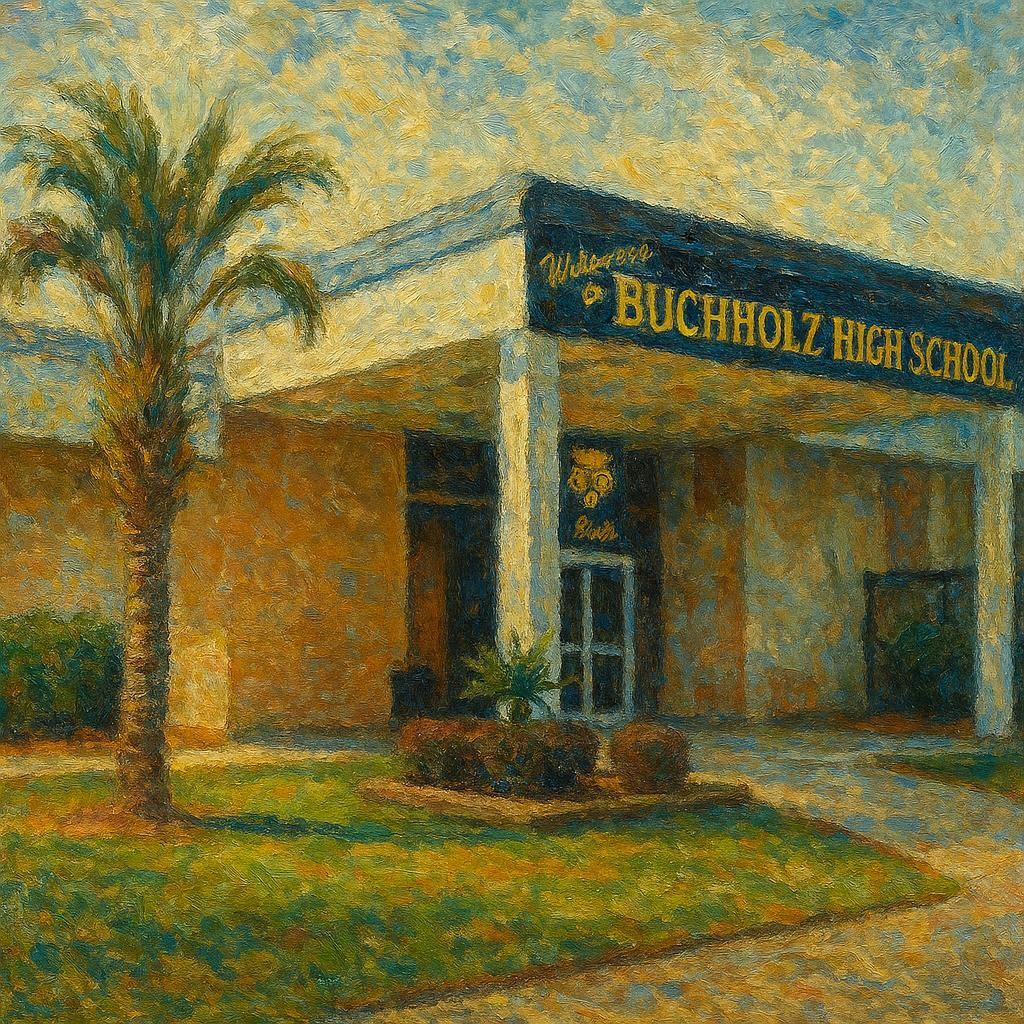
Families across Gainesville and Alachua County know that selective college admissions have grown more competitive every year. High-achieving students at schools like Buchholz, Eastside, Gainesville High, and P.K. Yonge often carry strong grades and heavy AP schedules, all while living next door to a major research university. Yet many still ask the same question: how does a strong student stand out in a city already saturated with academic ambition?
Today’s case study highlights Wren, a student from F.W. Buchholz High School. Through deliberate planning and strategic positioning, she earned:
- EA acceptance to the University of Florida, Wildlife Ecology and Conservation
- EA acceptance to North Carolina State University, Fisheries, Wildlife, and Conservation Biology
- ED acceptance to Cornell University, College of Agriculture and Life Sciences
Wren’s story offers a roadmap for Gainesville families who want to understand what actually moves the needle at selective colleges. A strong transcript opens the door; a coherent strategy is what gets a student through it.
Meet Wren: Strong Grades, No Clear Direction Yet
When Wren began working with College Transitions in the spring of her sophomore year, she already had real strengths to build from. She attended F.W. Buchholz High School, which U.S. News & World Report ranks 52nd in Florida and 847th nationally among more than 17,900 ranked public high schools. According to the school’s official profile, Buchholz enrolls roughly 2,440 students across grades 6 through 12, posts a 96% graduation rate, and reports a 70% AP participation rate. Additionally, Buchholz offers nearly 30 AP courses, along with the Academy of Entrepreneurship and the Academy of Finance as specialized career pathways.
Wren earned consistent A and B grades in honors biology and environmental science. However, she had only logged a handful of weekend hours at a local nature park and had not yet connected that interest to anything sustained or distinctive. Importantly, like many motivated students in a college town built around a major land-grant research university, she had access to resources most applicants nationally simply do not have. Consequently, the challenge was not opportunity. It was focus.
Therefore, our first goal was to help Wren find an academic identity specific enough to build an entire application around.

1. Choosing a Strategic Major: Wildlife Ecology and Conservation
Many science-minded students in Gainesville gravitate toward pre-med tracks or general biology, both heavily represented paths nationally. After reviewing Wren’s coursework and her early interest in the wetlands near her home, however, we guided her toward something narrower and more authentic to where she actually lived.
Why Wildlife Ecology and Conservation Made Sense
- It connected directly to Paynes Prairie Preserve State Park and the spring-fed waterways that define Gainesville’s natural landscape.
- It gave her a single throughline across research, extracurriculars, and essays.
- It distinguished her from the much larger pool of pre-med and general biology applicants from Florida.
- It aligned with concrete academic programs at her eventual target schools, including UF’s own Department of Wildlife Ecology and Conservation.
Admissions readers respond to applicants who present a specific, well-supported direction rather than a broad interest in “science.” This framing gave Wren exactly that. Subsequently, it clarified every decision that followed.
2. Improving Her SAT Score: From 1180 to 1340
Wren’s initial SAT score of 1180 was workable but not yet competitive for a program like Cornell’s College of Agriculture and Life Sciences, where admitted students typically post composite scores well above 1400. Fortunately, Buchholz offers the PSAT to sophomores and juniors each fall, which gave Wren an early diagnostic baseline before her first official sitting.
Accordingly, we built a structured preparation plan emphasizing:
- Data analysis and scientific-reading passages, an area well-suited to her ecology focus
- Algebra and advanced math review targeting her specific gap areas
- Full-length timed practice tests under realistic conditions
- Weekly error review sorted by question type rather than overall score
By the fall of her senior year, Wren had raised her score to 1340. That gain strengthened her position at every school on her list. Furthermore, it signaled to admissions committees a capacity for sustained, deliberate effort, a trait selective programs consistently reward.
3. Deepening Her Commitment: From Casual Visitor to Habitat Monitor
Wren’s early involvement with Paynes Prairie amounted to occasional weekend walks, genuine but unstructured. Therefore, we worked with her to convert that interest into something with measurable output.
What Wren Did Differently
- She enrolled as a volunteer wildlife monitor with Alachua Conservation Trust, logging bird and amphibian sightings along a fixed transect.
- She proposed a gopher tortoise burrow survey to her school’s environmental club and recruited six classmates to help conduct it.
- She presented her transect data to a Buchholz biology class, walking peers through basic population-monitoring methods.
- She maintained a thirteen-month observation log, later used as supporting material in her research project.
This shift gave Wren a genuine leadership narrative, not simply attendance but sustained, documented contribution. Notably, it also supplied specific, concrete material for her personal statement.

4. Adding a Major-Aligned Research Project
To extend Wren’s wildlife ecology narrative beyond volunteer fieldwork, we helped her design an independent research project using her own transect data alongside publicly available records from the Florida Fish and Wildlife Conservation Commission.
Project Focus
Gopher Tortoise Burrow Density and Human Trail Proximity in Paynes Prairie: A Comparative Habitat Analysis
Wren examined:
- Burrow density across plots at varying distances from established hiking trails
- Seasonal variation in observed tortoise activity near high-traffic park sections
- Correlations between disturbed ground cover and burrow abandonment
- Comparisons with published FWC data on gopher tortoise habitat preferences statewide
She produced a written report and a set of habitat maps, then submitted the project to the Alachua Regional Science and Engineering Fair, an ISEF-affiliated competition, where it advanced from the regional round. As a result, she gained a citable, externally validated accomplishment, and the field-based language from the project later sharpened her essays considerably.
5. Earning External Validation Through a Residential Research Program
Selective colleges look for evidence of intellectual engagement beyond the classroom and beyond a single research project. Accordingly, we encouraged Wren to pursue something more immersive heading into her senior year.
She applied to and was accepted into the University of Florida Student Science Training Program, a seven-week residential research program for rising seniors who work directly alongside a UF faculty mentor. Wren spent the summer paired with a researcher in UF’s Department of Wildlife Ecology and Conservation, contributing to an ongoing study of wetland amphibian populations. She completed weekly lab notes, presented a research poster, and delivered two oral presentations to program faculty and peers. Ultimately, the experience confirmed her academic direction and gave her a substantive, specific story for her supplemental essays.
6. Crafting a Personal Statement Rooted in a Specific Observation
Wren’s early essay drafts described a generic love of nature and a desire to protect Florida’s wild spaces. However, those sentiments appear in thousands of applications from students across the state every year. Instead, we pushed her toward something far more precise.
Her final personal statement centered on a single afternoon during her transect survey, when she found a gopher tortoise burrow collapsed at its entrance, just steps from a newly widened section of trail. Rather than writing about environmental loss in the abstract, she wrote about the gap between a park’s conservation mission and the incremental human pressure that quietly works against it. The essay was specific, locally grounded, and unmistakably her own. In fact, it connected naturally to her research interests without ever stating them directly, which made it considerably more effective than a straightforward purpose statement would have been.

7. Using Early Action and Early Decision Strategically
Early Action Schools
- University of Florida, Wildlife Ecology and Conservation: accepted
- North Carolina State University, Fisheries, Wildlife, and Conservation Biology: accepted
These EA results gave Wren two strong, secured options before winter break. UF’s program offered proximity to the exact ecosystems she had already studied, along with continued access to the faculty mentor from her SSTP summer. Meanwhile, NC State’s program added a complementary fisheries and aquatic focus that broadened her long-term options.
Early Decision School
- Cornell University, College of Agriculture and Life Sciences: accepted
Cornell was Wren’s top choice from the outset. Its Department of Natural Resources and the Environment offered the specific combination of field ecology and policy coursework she wanted, and its research stations gave her a credible path toward graduate-level conservation work. Therefore, applying ED signaled genuine commitment and gave her a meaningful edge in a highly selective applicant pool.
Her acceptance arrived in mid-December, the product of more than two years of focused, consistent work.
Why Wren’s Strategy Worked
- She identified a specific, locally rooted academic direction early and built every element of her application around it.
- She raised her SAT score into a range competitive for highly selective programs.
- She converted passive interest into sustained, documented fieldwork.
- She completed an independent research project with a citable, externally validated outcome.
- She earned a competitive residential research placement that reinforced her narrative.
- She wrote a personal statement that was specific, local, and genuinely her own.
- She used Early Action and Early Decision to secure strong outcomes across her full list.
Wren did not pursue every opportunity available to her. Instead, she pursued the right ones, deliberately and in sequence.
What This Means for Gainesville Families
Gainesville is home to several of Alachua County’s most academically ambitious public high schools. According to U.S. News, Buchholz ranks 52nd in Florida with a 70% AP participation rate. Nearby Eastside High ranks 124th in the state, and P.K. Yonge Developmental Research School ranks 48th, though its selective admissions process sets it apart from the area’s traditional public schools. Overall, the University of Florida’s presence shapes the academic culture across all of these schools, raising baseline expectations for rigor and achievement.
In that environment, strong grades and a full AP schedule are simply the starting point, not the differentiator. Standing out at selective colleges outside Florida requires more. Specifically, it requires:
- A specific, authentic academic direction rather than a broad interest area
- Documented fieldwork or extracurricular depth, not just participation
- At least one self-driven research project with an external outcome
- A competitive program or fair that validates the work to outside readers
- Essays that are precise, locally grounded, and personally distinctive
- Deliberate use of Early Action and Early Decision
This is the work College Transitions specializes in, and it is the work that made Wren’s outcome possible.