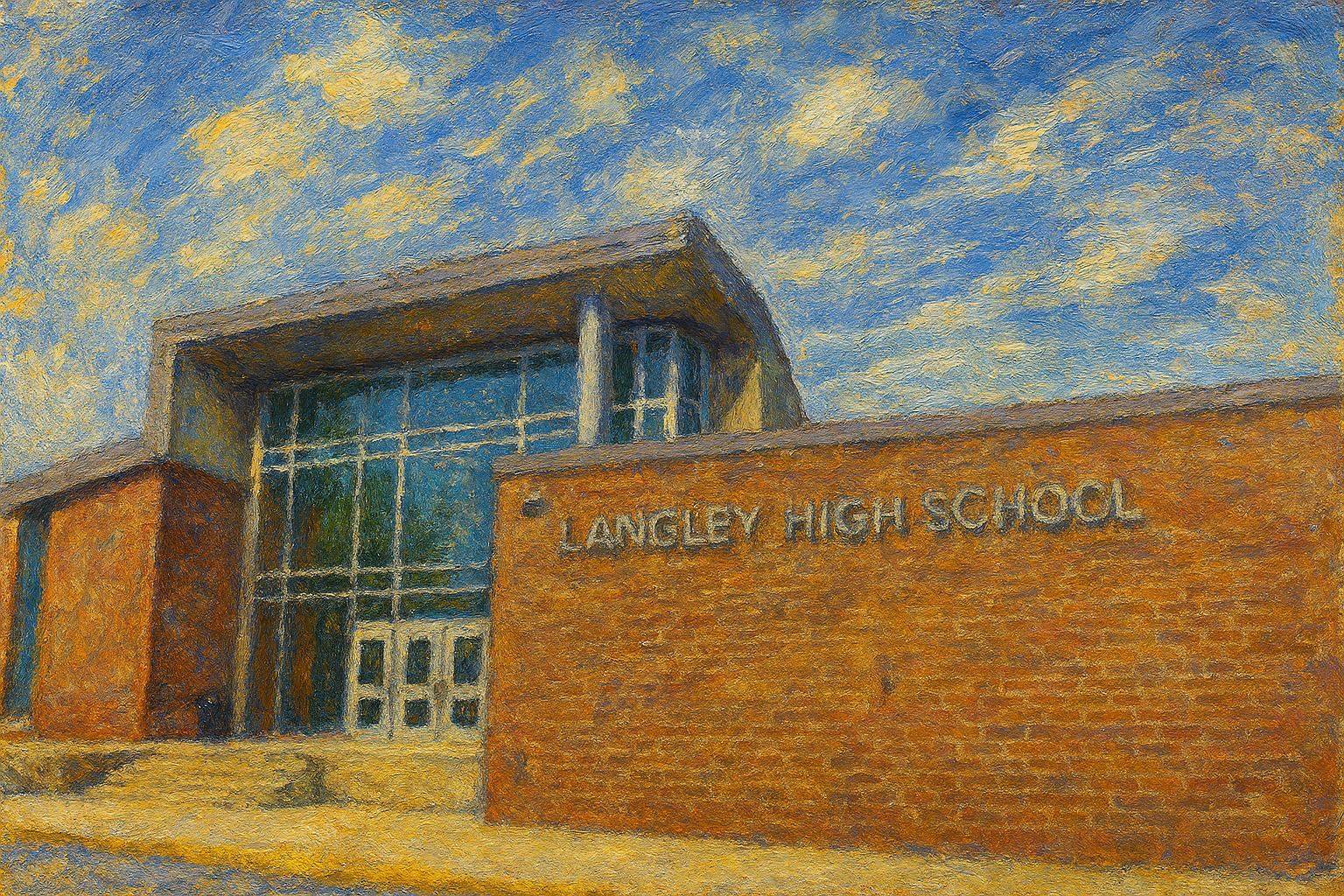
Families across Great Falls know that selective college admissions have grown more competitive every year. Notably, high-achieving students at Langley High School, the anchor school for this rural pocket of Fairfax County, often carry strong grades and a full course load. However, many parents still ask the same question: how does a student from an outstanding district stand out further?
Today’s case study highlights Sawyer, a student from Langley High School in the Great Falls attendance area. Through deliberate planning and strategic positioning, he earned:
- EA acceptance to the University of Virginia
- EA acceptance to William & Mary
- ED acceptance to Roger Williams University
Sawyer’s story, above all, offers a roadmap for Great Falls families who want to understand what actually moves the needle at selective colleges. A strong transcript opens the door; a focused strategy is what gets a student through it.
Meet Sawyer: A Strong Student Without a Defined Direction
When Sawyer began working with College Transitions in the spring of his sophomore year, he already had genuine strengths. He attended Langley High School, which U.S. News & World Report ranks third in Virginia. Additionally, the school’s official profile shows that Langley enrolls more than 2,000 students and sends over 95% of graduates to four-year colleges. Furthermore, the school offers more than 20 AP courses, along with Multivariable Calculus and Linear Algebra for its most advanced math students. In the 2024-2025 school year, Langley honored 68 National Merit Commended students. It also produced 19 semifinalists, a notable showing even by Northern Virginia standards.
Sawyer earned A and B grades in his honors humanities and science courses. He had grown up hearing family stories about Great Falls before the newer subdivisions arrived. Occasionally, he tagged along to community events at the Great Falls Grange. However, like many motivated students in a high-achieving pyramid, he had not yet channeled that background into anything cohesive. Our first goal, therefore, was to help him find a clear academic identity to build everything else around.

1. Choosing a Strategic Major: Historic Preservation and Cultural Landscapes
Many students with an interest in local history default to a general history or political science major. Those paths are common among Northern Virginia applicants and, as a result, harder to differentiate. After reviewing Sawyer’s coursework, activities, and long-term interests, we guided him toward a more targeted direction.
Why Historic Preservation Made Sense
- It connected his family’s roots in Great Falls to a rigorous academic framework with real career pathways.
- It gave him a unifying theme across activities, research, essays, and supplemental responses.
- It set him apart from the wave of government and international relations applicants common near Washington, D.C.
- It aligned authentically with programs at his target schools, including Roger Williams University’s Historic Preservation major and UVA’s architectural history offerings.
Admissions readers, importantly, respond to students who present a clear and authentic academic direction. This framework gave Sawyer exactly that. It also made every subsequent decision in his application more coherent.
2. Improving His SAT Score: From 1310 to 1460
Sawyer’s initial SAT score of 1310 was solid. However, it was not competitive for a school like William & Mary, which enrolls students with middle-50% scores roughly in the 1350-1510 range. Notably, Langley’s school profile shows that the district offers the PSAT to all juniors, giving students an early baseline for planning.
We built a focused preparation plan that emphasized:
- Evidence-based reading with an emphasis on historical and argumentative passages
- Advanced algebra, data analysis, and geometry review
- Timed, full-length practice under realistic conditions
- Weekly review of errors by category and skill type
By early fall of his senior year, Sawyer had raised his score to 1460. That improvement, in turn, strengthened his standing at every school on his list. Furthermore, it demonstrated to admissions committees a willingness to invest serious effort in growth, a quality that selective colleges actively value.
3. Deepening His Commitment: From Occasional Volunteer to Archive Builder
Sawyer had attended a few Grange hall events and helped set up chairs for community meetings. His involvement was genuine but passive. Instead, we worked with him to shift from an occasional presence to someone with a documented contribution.
What Sawyer Did Differently
- He proposed and led an oral history project, interviewing eight longtime Great Falls residents about the community’s shift from farmland to estate subdivisions.
- He digitized and transcribed the interviews, then donated the archive to the Great Falls Historical Society.
- He organized a walking tour connecting the Grange, the Forestville Schoolhouse, and the Great Falls Village Centre for incoming middle schoolers.
- He presented his findings at a Celebrate Great Falls Foundation community meeting.
This transformation gave Sawyer a real leadership story, not merely event attendance, but initiative with measurable results. It also gave him specific, concrete material for his personal statement and supplements.

4. Adding a Major-Aligned Research Experience
To deepen Sawyer’s preservation narrative beyond community volunteering, we helped him design an independent research project. He used publicly available Fairfax County planning records and Virginia Department of Historic Resources documentation.
Project Focus
Cluster Zoning and Cultural Landscape Loss: A Case Study of the 2012 Brooks Farm Rezoning in Great Falls, Virginia
Sawyer examined:
- The original agricultural zoning designation of the 52-acre Brooks Farm parcel
- Public hearing records and community testimony surrounding the proposed rezoning
- Comparable cluster-zoning outcomes in nearby Fairfax County communities
- The role of conservation easements in preventing similar rezonings elsewhere in the county
He produced a written report along with a map layering zoning history over current parcel data. Subsequently, he submitted the project to the Virginia Junior Historian competition and received recognition as a regional finalist. The project gave him a concrete, citable accomplishment. It also sharpened the policy-focused language he used across his application essays.
5. Entering Competitions for External Validation
Selective colleges value evidence of intellectual engagement beyond the classroom. Therefore, we encouraged Sawyer to enter competitions that reinforced his preservation-focused direction.
- Great Falls Historical Society Jean Tibbetts History Award (regional recipient)
- National History Day, Virginia state contest, documentary category (state qualifier)
- C-SPAN StudentCam documentary competition (honorable mention)
Each entry reinforced his narrative. None contradicted it. Consequently, that consistency strengthened how admissions readers perceived his overall profile.
6. Crafting a Personal Statement Rooted in a Specific Observation
Sawyer’s early essay drafts were earnest but generic. He wrote about loving history and wanting to protect the past for future generations. However, those sentiments appear in thousands of applications from students near Washington, D.C. each year. We pushed him, instead, toward something far more grounded and specific.
His final personal statement focused on a single afternoon inside the Great Falls Grange, the last unaltered grange hall standing in Virginia. He was helping fold chairs after a community meeting when he noticed the original bead-board ceiling. It had been cut nearly a century earlier from timber at a local sawmill that no longer exists. He wrote about what that detail made him think. Not about nostalgia in the abstract, but about how one unremarkable building can outlast every farm and family that built it, provided someone chooses to keep it standing.
The essay was precise, locally rooted, and entirely his own. It connected naturally to his interest in preservation without ever announcing it. That restraint, ultimately, made it more effective than any direct statement of purpose could have been.

7. Using Early Action and Early Decision Strategically
Early Action Schools
- University of Virginia (accepted)
- William & Mary (accepted)
These Early Action choices gave Sawyer strong options secured before winter break. UVA’s architectural history offerings and its proximity to Monticello and other preservation landmarks were a genuine fit for his intellectual style. Meanwhile, William & Mary’s historic Williamsburg campus and strong American studies program offered a related but distinct academic path.
Early Decision School
- Roger Williams University, Historic Preservation (accepted)
Roger Williams was Sawyer’s top choice. Its Historic Preservation major, notably one of the oldest undergraduate programs of its kind in the country, paired classroom study with field-based workshops in New England towns. Applying ED, therefore, demonstrated real commitment and gave him a meaningful advantage in a selective applicant pool.
His acceptance arrived in mid-December, the result of two years of consistent, focused work.
Why Sawyer’s Strategy Worked
- He identified a specific historic preservation identity early and built every element of his application around it.
- He raised his SAT score into a competitive range for his target schools.
- He transformed passive community attendance into documented, archive-building leadership.
- He completed an independent research project that demonstrated intellectual initiative.
- He entered competitions that added external recognition and reinforced his narrative.
- He wrote a personal statement that was specific, local, and genuinely memorable.
- He used Early Action and Early Decision to maximize his admissions outcomes.
Sawyer did not try to do everything. Instead, he did the right things, consistently and intentionally.
What This Means for Great Falls Families
Great Falls sits within the Langley High School pyramid, which U.S. News ranks third in Virginia. Nearby, McLean High School and Oakton High School also draw from the same competitive Northern Virginia landscape. The area’s proximity to Washington, D.C. shapes an academic culture where strong grades are simply the starting point.
In that environment, standing out at selective colleges requires more. Specifically, it requires:
- A clear and authentic academic direction
- Extracurricular depth, not just breadth
- At least one self-driven research or project experience
- External validation through competitions or recognition
- Essays that are specific, personal, and locally rooted
- Smart use of Early Action and Early Decision
This is the work College Transitions specializes in, and ultimately, it is the work that made Sawyer’s outcome possible.