Families across Greenville County know that admission to selective engineering programs has grown more competitive. High-achieving students at Riverside, Wade Hampton, Mauldin, Greenville Senior High Academy, and J.L. Mann often arrive with strong GPAs and several AP courses. However, many still wonder how a student from the Upstate stands out against applicants from larger tech hubs.
Today’s case study follows Nolan, a student from Riverside High School in Greer. Notably, his strategy embraced what makes Greenville distinctive: an international automotive corridor anchored by BMW, Michelin, and Clemson’s International Center for Automotive Research (CU-ICAR). Rather than presenting a generic engineering profile, Nolan built a focused narrative around automotive systems and advanced manufacturing. Above all, it was a story rooted in his own hometown’s industrial identity.
Nolan’s outcomes:
- Early Action acceptance to Clemson University (Mechanical Engineering)
- Early Action acceptance to Georgia Institute of Technology
- Early Decision acceptance to Carnegie Mellon University (Mechanical Engineering)
Nolan’s case offers a model for Upstate families. It shows how a region built around manufacturing, rather than an Ivy League backyard, can become a genuine admissions advantage.
Meet Nolan: An Engineer Shaped by the Upstate’s Industrial Landscape
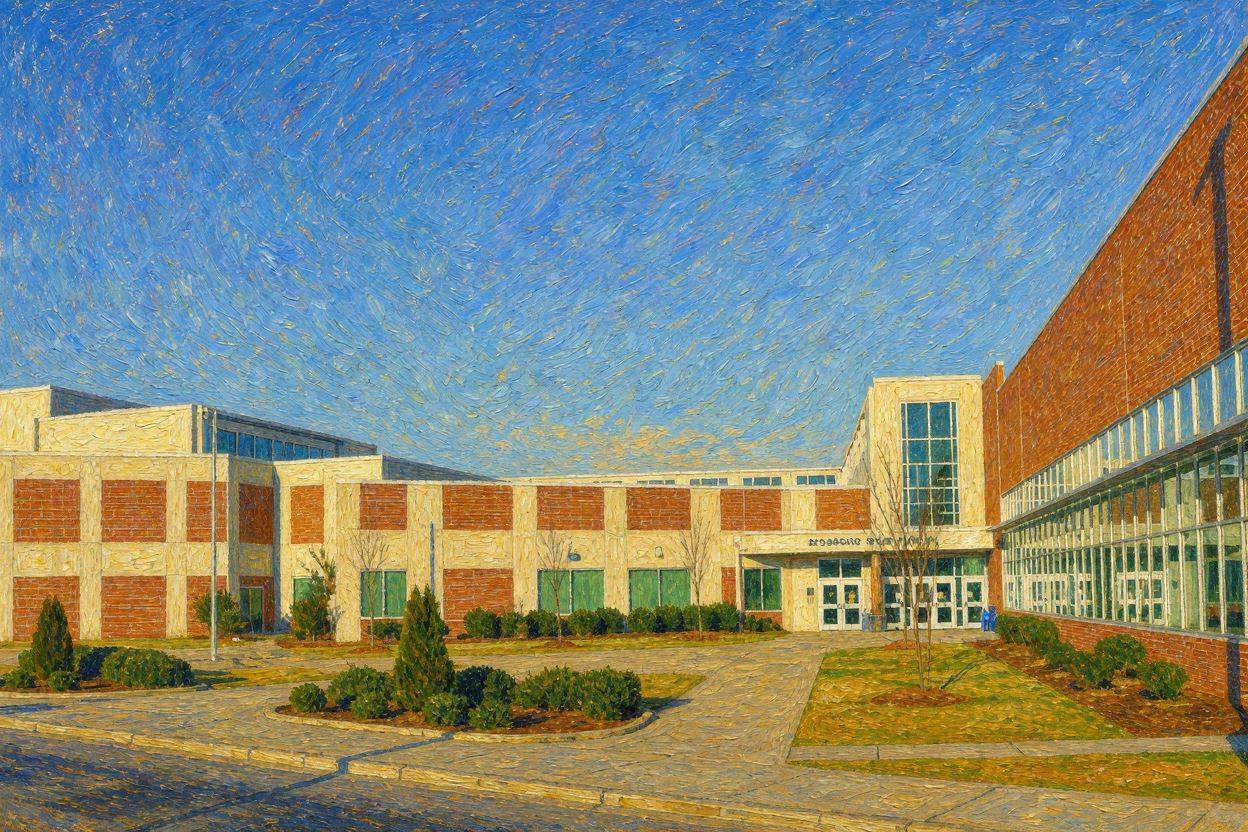
Nolan began working with College Transitions during the fall of his sophomore year. At the time, he was enrolled at Riverside High School in Greer, which U.S. News & World Report ranks 13th among South Carolina’s public high schools and 1,390th nationally. According to U.S. News data, Riverside carries a 52% AP participation rate, well above many comparably sized Upstate schools. Additionally, the school enrolls approximately 1,839 students in grades nine through twelve. It also maintains a graduation rate near 93%, exceeding the state average. Furthermore, Riverside offers AP coursework across mathematics, science, English, and history, alongside dual enrollment options. Consequently, Nolan arrived with a strong academic foundation, though his extracurricular profile still needed a defining thread.
Nolan had genuine strengths from the start. Notably, his GPA placed him in the top decile of his class. He had completed AP Physics and AP Calculus with strong results. Instead of video games, he tinkered with small engines in his family’s garage. Meanwhile, he had also grown up watching BMW-badged vehicles roll through the Upstate toward the Port of Charleston. Greenville’s identity as a global manufacturing hub was not an abstraction to him; it was the backdrop of daily life. Still, his activity list read like a checklist rather than a narrative. Consequently, Nolan and his counselor recognized that his profile needed a sharper, more authentic throughline.
Why Mechanical Engineering Made Sense in Greenville
Several factors made mechanical engineering, with a concentration in automotive systems, an authentic fit:
- Greenville sits at the center of an international automotive cluster anchored by BMW Manufacturing and Michelin North America
- Clemson’s CU-ICAR campus, headquartered in Greenville, houses the nation’s first graduate automotive engineering department
- The region’s advanced manufacturing workforce need connected Nolan’s interest in machines to a tangible, local career pathway
- His hands-on tinkering background gave him a natural foundation for coursework in materials and systems
With that foundation established, seven concrete steps turned Nolan’s interest into a competitive application.
1. Choosing a Major Rooted in Local Industry
Nolan began by anchoring his intended major to something authentically his own. Rather than declaring a broad interest in engineering, he committed to mechanical engineering with a concentration in automotive systems. This choice reflected Greenville’s identity as a manufacturing corridor. Notably, it was not a generic pre-engineering label borrowed from a brochure. Admissions officers respond to specificity. A differentiated major signals genuine intent rather than exploratory interest. Subsequently, every activity and essay reinforced that single thread, giving his application a coherence that generic STEM profiles often lack.
2. Improving Test Scores
Nolan’s initial SAT score, taken in the spring of sophomore year, landed at 1290. He worked through a structured, module-based prep plan focused on algebra-heavy math sections. Additionally, he retook the exam twice, improving steadily each time. By the fall of senior year, his final score reached 1480. That was a meaningful jump, and it strengthened his candidacy at highly selective programs. Importantly, Nolan treated test prep as a time-boxed project rather than a background worry and scheduled dedicated study blocks around his robotics season.
3. Deepening Extracurriculars Through Robotics
Instead of joining several loosely related clubs, Nolan concentrated his energy on one activity. He joined GreenVillains Team 281, South Carolina’s oldest FIRST Robotics Competition team. He progressed from a general member to leading the drivetrain subteam. There, he learned machine tool operation, mechanical design, and basic programming. Furthermore, he took on a mentorship role for younger teammates during his senior season. This depth mattered more than breadth. Admissions officers could trace a clear line from his robotics leadership back to his stated major.

4. Adding Academic Research
Nolan applied to and completed Clemson’s Summer Scholars Mechanical Engineering course. It is a one-week residential program for rising eleventh and twelfth graders, held on Clemson’s main campus. The course covered fluid mechanics, iterative design, and structural optimization through hands-on challenges. Notably, Nolan drew explicit connections between each project and automotive applications. He documented these connections in a research summary, which he later referenced in his supplemental essays:
- Modeling-assisted structural optimization applied to lightweight vehicle components
- Iterative prototyping methods relevant to drivetrain component testing
- Fluid mechanics principles connected to aerodynamic and thermal management systems
This credential gave his application a documented engineering experience beyond typical coursework.
5. Entering Competitions
Beyond Team 281’s regular season, Nolan entered the SkillsUSA Robotics and Automation Technology competition. The event emulates an industrial manufacturing process using programmable logic controllers and an industrial robotic arm. He and a teammate placed among the top finishers at the South Carolina state conference. This competition mirrors the exact skill set Upstate automotive suppliers look for. Subsequently, Nolan’s essays cited this experience directly, giving readers concrete evidence of applied skill rather than abstract enthusiasm.
6. Writing a Personal Statement Grounded in Place
Nolan’s personal statement opened with a childhood memory. Specifically, he recalled counting BMW-badged sedans on I-85, unaware the plant producing them sat fifteen minutes from his house. The essay traced how that early curiosity evolved into technical vocabulary. Eventually, it grew into a documented engineering credential from Clemson. Rather than listing accomplishments, the essay showed how Greenville’s industrial landscape shaped his intellectual identity. Admissions readers, consequently, encountered a voice specific to the Upstate.
7. Using Early Action and Early Decision Strategically
Nolan applied Early Action to Clemson University and Georgia Institute of Technology. Both offer strong mechanical engineering programs with non-binding early rounds. Importantly, this let him compare outcomes before committing further. He then applied Early Decision to Carnegie Mellon University, a binding choice reserved for his clear first choice. Carnegie Mellon’s acceptance rate for engineering applicants sits in the mid-teens; the binding commitment signaled genuine, demonstrated interest.
Why Nolan’s Strategy Worked
Several elements combined to make Nolan’s application effective:
- A single, differentiated major concentration tied every activity and essay together
- Verified, high-school-eligible coursework at Clemson gave him a documented credential
- Competition results in both FIRST Robotics and SkillsUSA provided evidence of applied skill
- A personal statement grounded in Greenville’s specific industrial geography
- Strategic early-round applications that balanced ambition with self-awareness
What This Means for Greenville Families
Nolan’s outcome offers lessons for families at Riverside, Wade Hampton, Mauldin, Greenville Senior High Academy, and J.L. Mann alike. Greenville’s identity as a manufacturing hub is not a limitation to work around. Instead, it is a genuine asset admissions officers respond to when students engage with it directly. Therefore, families throughout the Upstate should consider the following:
- Identifying local industry, research, or cultural assets that connect authentically to a student’s intended major
- Treating test preparation as a scheduled project rather than a constant background stressor
- Using early application rounds strategically, reserving binding commitments for a genuine first choice
College Transitions works with Upstate families to identify these place-based opportunities. Additionally, we help build application strategies that reflect individuals and their interests, rather than relying on generic profiles.