The Hamilton County Admissions Landscape
Hamilton County sends an unusually deep bench of applicants to selective colleges each year. Walnut Hills High School, an application-only Cincinnati Public Schools campus, sits first in Ohio according to U.S. News & World Report and draws students from across the county through competitive testing. However, several traditional, non-selective districts nearby post rankings nearly as strong. Wyoming High School ranks sixth in Ohio; Indian Hill High School ranks seventh; Madeira High School ranks eighth. Mariemont, Sycamore, and Turpin round out a cluster of small, high-performing public schools within a twenty-minute drive of one another. Notably, most of these districts operate only one comprehensive high school, so families cannot simply switch buildings within the same system to chase a stronger transcript. Consequently, colleges evaluating a Hamilton County applicant already expect rigor. Admissions officers instead look for something a rank cannot show: a student whose interests, activities, and essays cohere into an authentic, place-rooted story.
Meet Greta: Building a Path from the Little Miami Valley
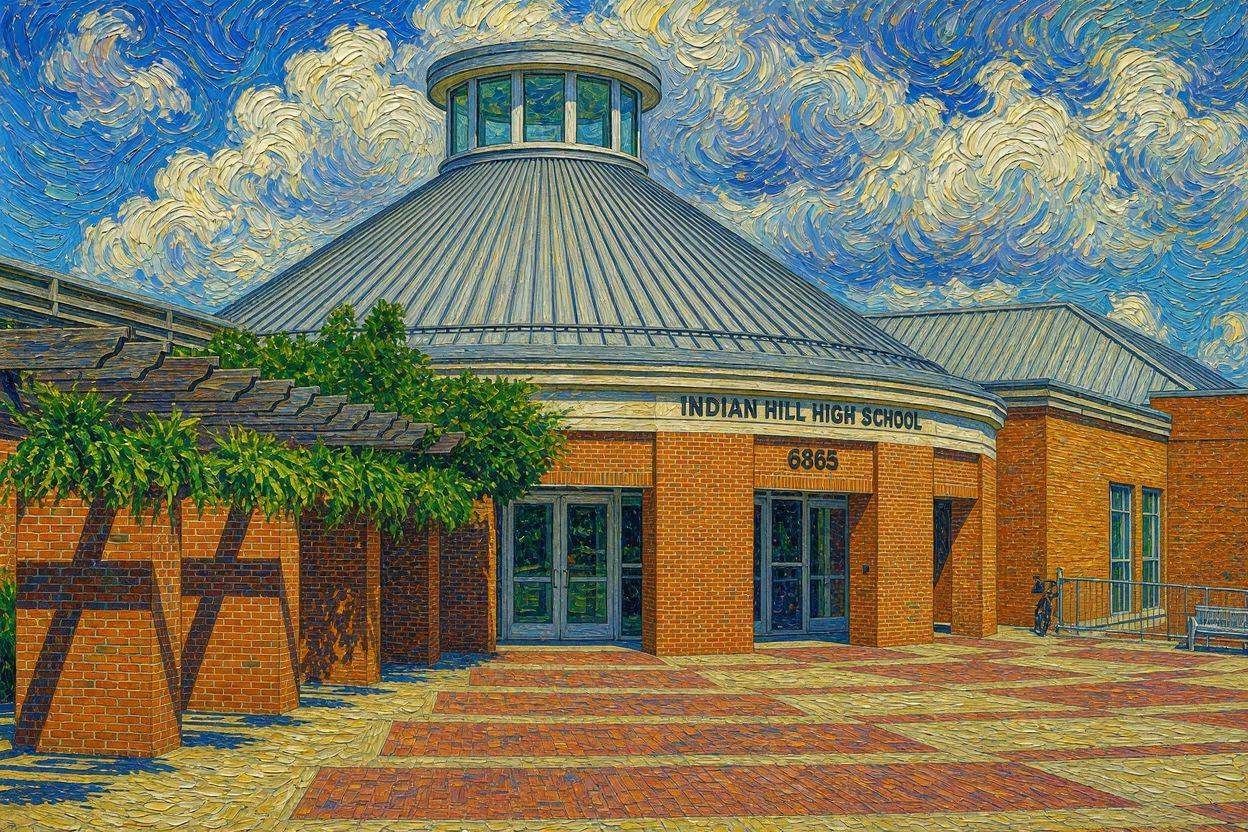
Greta grew up minutes from the Little Miami River, a federally designated National Scenic River that borders the Indian Hill Exempted Village School District. She attended Indian Hill High School, the district’s only comprehensive public high school and, per U.S. News, the highest-ranked traditional public school in Hamilton County, ranked 222nd nationally out of 17,901 ranked schools. Indian Hill posts an 84% AP participation rate and a graduation rate above 95%, according to the school’s official U.S. News profile. Greta’s interest in conservation began with something ordinary: wading in the river’s tributaries and noticing how few salamanders she found compared to what field guides described. That small observation eventually became the spine of her entire application.
Step 1: Choosing a Differentiated Major
Greta settled on conservation biology, with a concentration in wildlife reproductive genetics, rather than a broader “environmental science” label. The distinction mattered. Furthermore, it let her build a coherent narrative around one endangered species native to her own watershed: the eastern hellbender, a giant salamander whose Ohio populations have collapsed due to sedimentation in rivers like the Little Miami. Cincinnati is home to the Cincinnati Zoo & Botanical Garden’s Center for Conservation and Research of Endangered Wildlife (CREW), a globally recognized reproductive science program. Its proximity gave Greta something most applicants lack: a credible local reason for choosing this specific major.
Why This Major Made Sense
- Rooted in a species and watershed she could observe firsthand, not one borrowed from a textbook
- Connected directly to a world-renowned local institution, CREW, giving her essays specificity
- Distinguished her from the area’s more common pre-med and business applicants
- Gave every later activity, from research to competitions, a single throughline
Step 2: Raising Her Test Scores Through Targeted Practice
Ohio does not administer the ACT statewide, so Greta focused entirely on the SAT. Her sophomore-year diagnostic score landed at 1290. Instead of generic tutoring, she built a study plan around her weakest section, math, and layered in weekly timed practice tests. By the fall of senior year, her score had climbed to 1520. Importantly, that improvement mattered because it signaled sustained effort rather than a single strong sitting. Additionally, her science subscore rose enough to reinforce the STEM narrative running through her application.
Step 3: Deepening Extracurricular Involvement
Rather than joining unrelated clubs to pad a resume, Greta concentrated her time. She co-founded a stream-monitoring group that tested water quality at three Little Miami access points each month. In addition, she volunteered at the Cincinnati Zoo as a teen docent, leading public talks about amphibian decline. Notably, both activities reinforced the same species-and-watershed focus that anchored her intended major, so admissions readers saw depth instead of a scattered list.

Step 4: Adding an Independent Research Project
Through a teacher connection, Greta began an informal mentorship with a CREW research scientist during the summer before senior year. The project examined how sediment levels in Little Miami tributaries correlated with declining hellbender egg viability, using water samples she collected herself alongside published CREW genetic-banking methods.
Research Project Scope
- Collected and logged monthly water-quality samples from three tributary sites over eight months
- Compared her sediment data against published Ohio Division of Wildlife hellbender survey records
- Learned genome-banking and cryopreservation techniques used in CREW’s endangered-species lab
- Produced a written research report reviewed by her mentor scientist before submission to competitions
Step 5: Entering Competitions
Greta submitted her research to the Ohio Academy of Science district competition, where it earned a superior rating, and subsequently advanced to the state event. She also entered a regional Regeneron-affiliated science fair. Losing at state in an earlier round taught her to tighten her data visualizations; she revised the project before her second submission and placed within the top tier of her category. That persistence became a recurring theme in her recommendation letters.
Step 6: Writing a Personal Statement Rooted in Place
Her personal statement opened not with an abstract concern for the environment but with a single specific afternoon: wading calf-deep in a Little Miami tributary, turning over a flat rock, and finding nothing where a hellbender should have been. From there, she traced her growing fascination with reproductive science as a tool for reversing that absence. Admissions readers responded to the essay’s restraint; it never claimed to save a species, only to understand one small piece of why it was disappearing.
Step 7: Using EA and ED Strategically
Greta applied Early Action to the University of Michigan and the University of Wisconsin-Madison, two schools with strong wildlife ecology and environment programs, to build confidence and gather admissions data before her binding decision. Both offers arrived by December, sending her a clear signal that her profile was competitive at peer institutions. She then applied Early Decision to Cornell University’s College of Agriculture and Life Sciences, targeting its Department of Natural Resources and the Environment, and was admitted.
Why Greta’s Strategy Worked
- A single, place-specific major tied every essay, activity, and research project together
- EA offers from Michigan and Wisconsin validated her strategy before her ED decision was final
- Her research showed initiative beyond coursework, using a real local institution as a resource
- Her essay stayed concrete and specific instead of reaching for broad environmental claims
What This Means for Hamilton County Families
Greta’s path illustrates something families across Wyoming, Madeira, Mariemont, Sycamore, and Turpin should take seriously: a strong school profile is a starting point, not a strategy. Hamilton County’s cluster of high-ranking, single-high-school districts means admissions officers already expect rigorous transcripts from this area. Consequently, differentiation has to come from elsewhere. Above all, students benefit from choosing a specific, defensible interest early and building every subsequent activity, essay, and research project around it, rather than accumulating unrelated achievements. Local institutions, whether a museum, a research center, or a watershed, can supply the kind of authentic material that generic environmental or STEM narratives lack. For Hamilton County families navigating this process, College Transitions works with students throughout the region to translate a genuine local interest into an application strategy that colleges notice.
Additional Resources
- Hamilton County’s High School Landscape: A Market of Small Districts and One Large Exception
- Cincinnati’s Suburbs Have an Admissions Edge Most Families Overlook
- Beyond Ohio State: Building a College Application from Hamilton County’s Companies, Museums, and Labs
- Cincinnati College Admissions Counseling