Arlington County, Virginia is unlike any other county in America. Covering just 26 square miles, it is the smallest self-governing county in the country. Yet within those 26 square miles sit the Pentagon, Amazon’s national headquarters, one of the densest concentrations of federal contractors in the world, and some of the most sought-after public high school seats in Virginia.
For college applicants, that context creates a paradox. On one hand, Arlington students enjoy extraordinary academic resources and real-world proximity to power. On the other hand, the very intensity of that environment means the local applicant pool is exceptionally competitive. Students from Washington-Liberty High School, Yorktown High School, Wakefield High School, and H-B Woodlawn Program arrive at the process with strong grades, high test scores, and well-stocked extracurricular profiles. Standing out requires more than doing everything well. It requires building a story that is impossible to replicate anywhere else.
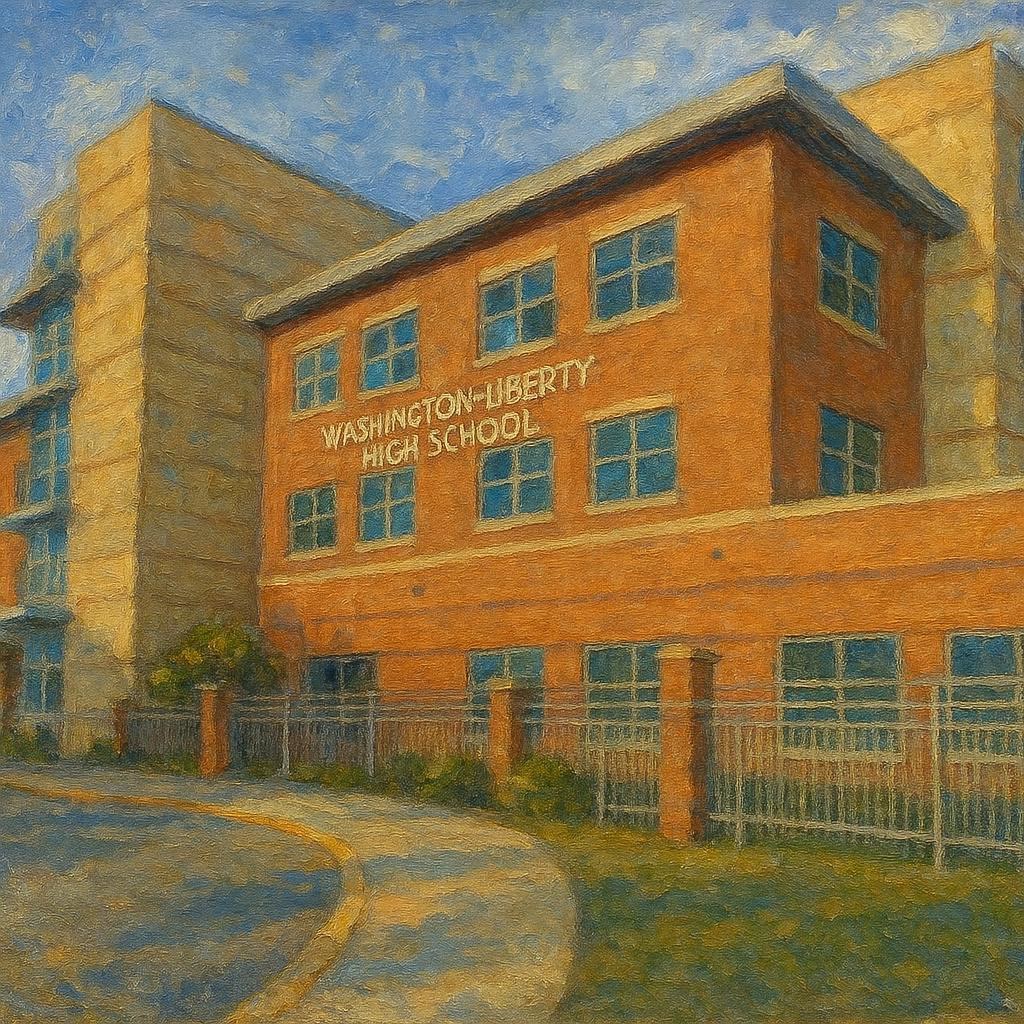
Today’s case study follows Marcus, a student at Washington-Liberty High School, ranked 24th in Virginia by U.S. News & World Report. By the end of his senior year, Marcus had earned:
- Early Action acceptance to George Washington University (Elliott School of International Affairs)
- Early Action acceptance to American University (School of Public Affairs)
- Early Decision acceptance to Georgetown University (Walsh School of Foreign Service, International Politics major)
Marcus’s story is a practical blueprint for Arlington families navigating a high-stakes admissions environment where nearly every competitor has access to the same ZIP code advantages.
Meet Marcus: A Strong Student in the Shadow of the Pentagon
When Marcus began working with College Transitions in the spring of his sophomore year, he had genuine academic strengths and a setting unlike any other student in the applicant pool.
He attended Washington-Liberty High School, which, according to U.S. News & World Report, holds an AP participation rate of 76% and is the only school in Arlington County to offer both the Advanced Placement and International Baccalaureate programs. Marcus was enrolled in the IB Diploma Programme and carrying a near-perfect GPA in a demanding course load that included IB History of the Americas, IB Economics, and IB Theory of Knowledge.
His SAT score, however, was 1380. That placed him below the median for his most selective target programs. Furthermore, his extracurricular profile, while strong on paper, lacked the specificity and depth that distinguishes a standout application from a competitive one. He had participated in Model UN since freshman year, volunteered occasionally with a local refugee resettlement organization, and attended several Congressional internship information sessions. Admissions readers at Georgetown or GWU would see a capable, well-positioned student. They would not yet see a story.
His family’s connection to Arlington was deeper than most. His father had retired from the Army after a 20-year career, much of it in roles connected to the Pentagon. Marcus had grown up listening to dinner table conversations about defense policy, military logistics, and the gap between how Washington makes decisions and how those decisions land on the people living with their consequences. That background was an asset. The challenge was teaching him how to use it.

1. Choosing a Differentiated Major: International Security and Conflict Resolution
Many IB students from the D.C. metro default to political science, international relations, or government as declared majors. All three are common, heavily competed, and harder to differentiate at schools where those programs attract the best-qualified applicants in the country.
After reviewing Marcus’s IB coursework, family background, genuine intellectual curiosity, and the specific resources available to him in Arlington, we guided him toward a more targeted direction.
Why International Security and Conflict Resolution Made Sense
- His father’s military career gave him an insider’s perspective on defense institutions that most 17-year-olds simply do not have. That perspective is the raw material of authentic application writing.
- The major bridges policy, military strategy, and human geography in a way that political science alone does not. It is specific enough to differentiate, yet broad enough to connect to strong programs at all three target schools.
- It positioned Marcus as a student who had grown up inside the system he wanted to study: not as a detached observer of Washington policy, but as the son of someone who had carried it out.
- It aligned directly with Georgetown’s Walsh School of Foreign Service, which consistently ranks among the top five undergraduate international affairs programs in the country, and with GWU’s Elliott School, which draws heavily on its proximity to federal agencies and think tanks.
- Most importantly, no student from Ohio, California, or Texas could credibly claim the same combination of lived proximity and inherited institutional knowledge that Marcus brought to this subject.
This framing gave Marcus a unifying thread that ran through every element of his application.
2. Raising His SAT Score: From 1380 to 1490
Marcus’s initial SAT score of 1380 was respectable for a Virginia student. However, it was not yet competitive for Georgetown’s Walsh School, where enrolled students typically score in the 1400–1550 range, or for the merit scholarship consideration at American University’s School of Public Affairs.
Virginia does not administer the SAT or ACT as a statewide graduation requirement, so students must test independently. Marcus had taken the SAT once in the spring of his sophomore year and treated it as a baseline. We built a structured preparation plan around his specific weak areas:
- Evidence-based reading, particularly with complex historical and policy-oriented passages
- Advanced algebra and data analysis
- Time management across all four sections under full test conditions
Additionally, we scheduled two official test dates in his junior year to allow for genuine improvement between attempts. By October of his junior year, Marcus had raised his score to 1490. That 110-point gain placed him solidly inside the competitive range at every school on his list and removed any concern that his test scores would weaken an otherwise strong academic profile.
3. Deepening His Extracurricular Involvement: From Participant to Policy Architect
Marcus had been a member of Washington-Liberty’s Model UN program since his freshman year. His involvement was consistent but not distinctive. He attended conferences, wrote position papers, and earned a handful of delegate awards. Admissions readers at selective schools see hundreds of Model UN participants each cycle. Participation alone does not move the needle.
We worked with Marcus to shift from passive involvement to structural leadership with a locally grounded mission. He ran for and won the position of Secretary-General of W-L’s Model UN program in the spring of his junior year. From there, he redesigned the club’s conference preparation process around a curriculum he developed himself, one that required delegates to research not only their assigned country’s official position but also how U.S. defense and foreign aid policy had shaped that country’s geopolitical situation.
The curriculum drew directly on resources available within walking distance of his school: Congressional Research Service reports, Stimson Center publications, and briefings published by the Center for Strategic and International Studies, all institutions headquartered within a few miles of the Pentagon. Furthermore, he organized a field component in which W-L delegates visited the Pentagon Memorial and conducted structured reflection assignments connecting the memorial’s history to their UN committee topics.
That initiative transformed an extracurricular into an educational program with genuine civic purpose, and it gave Marcus a leadership contribution that only an Arlington student could have designed.

4. Adding a Research Component: A Defense Spending Analysis
To push Marcus’s profile beyond leadership and into original intellectual work, we helped him design an independent research project using publicly available data from the Office of the Secretary of Defense, Congressional Budget Office, and the Government Accountability Office.
Project Focus
Shifts in U.S. Defense Contracting Concentration in the Arlington-Pentagon Corridor, 2010–2024: Economic and Policy Implications
Marcus examined:
- Contract award data across the top 20 defense contractors operating in the Arlington–Northern Virginia corridor
- Changes in contracting concentration before and after the 2011 Budget Control Act sequestration
- The relationship between Pentagon workforce fluctuations and residential displacement patterns in adjacent Arlington neighborhoods
- Policy implications for how defense-dependent communities plan for fiscal uncertainty
He presented his findings at a regional social science symposium hosted by George Mason University and open to advanced high school students. The project gave him a citable piece of original analysis rooted entirely in his own backyard. It also deepened his fluency in defense budget policy at a level most undergraduates never reach.
His faculty contact at GMU provided a letter of support that added a dimension of external credibility to his application.
5. Entering Competitions That Reinforced His Identity
We identified three competitions that would allow Marcus to demonstrate applied analytical and policy thinking in formats that admissions readers recognize.
The first was the National Security Essay Competition sponsored by the Truman National Security Project, in which Marcus submitted a 2,500-word paper analyzing hybrid warfare tactics and U.S. policy response frameworks. His submission earned honorable mention. The second was the National Economics Challenge, where his performance in the microeconomics section placed him in the top fifth of Virginia competitors. The third was the Congressional App Challenge, through which Marcus developed a data visualization tool mapping DOD contract awards in Virginia by congressional district over a 10-year period. His tool was selected as a district winner by his local representative.
Taken together, these entries demonstrated that Marcus was not simply interested in defense and security policy. He was producing original work in the field.
6. A Personal Statement Built Around a Specific Arlington Moment
Marcus’s early essay drafts read like position papers. He wrote about caring deeply about U.S. foreign policy and wanting to reform the way the Department of Defense evaluates mission outcomes. The writing was sophisticated but impersonal. It could have been written by any ambitious student who had spent time on the internet.
We pushed him to write from a specific moment, one that only he could describe.
His final personal statement focused on a Saturday afternoon when he was 14. His father, recently retired, took him to the Pentagon Memorial for the first time. Marcus had lived in Arlington his entire life but had never walked the memorial’s grounds. He wrote about standing at the bench for a passenger on Flight 77, reading the name, looking back across the Potomac toward the Washington Monument, and realizing for the first time that the Pentagon was not a symbol to him the way it was to everyone else. It was a building his father had driven past every morning for six years. Its decisions had shaped every school he had attended, every family dinner he could remember, and every career path he was now considering.
The essay did not argue for any policy position. Instead, it explored what it means to grow up inside an institution’s shadow and decide, deliberately, to study how that institution works rather than simply accept it as background. That restraint made it far more compelling than any policy argument could have been.

7. Using Early Action and Early Decision Strategically
Timing was critical in Marcus’s strategy. We evaluated his full target list and identified which programs would offer a meaningful advantage at the EA stage.
Early Action to George Washington University
GWU’s Elliott School consistently draws heavily from the D.C. metro area, and Marcus’s Arlington background and defense policy focus positioned him as an ideal fit. Applying EA also allowed his application to reach readers before the regular pool expanded in January. He earned Early Action admission.
Early Action to American University
American University’s School of Public Affairs offered a strong policy program with direct ties to federal agencies and think tanks, two assets that aligned with Marcus’s research experience and career direction. The EA round at AU is meaningfully less competitive than RD, and his profile read clearly in that context. Consequently, he earned Early Action admission there as well.
Early Decision to Georgetown University
After careful deliberation, Georgetown’s Walsh School of Foreign Service emerged as Marcus’s clear top choice. Walsh is among the most selective undergraduate international affairs programs in the country. Its International Politics major offered exactly the combination of security studies, policy analysis, and historical depth that Marcus had been building toward. Applying ED signaled genuine first-choice commitment and gave his application a meaningful advantage in a pool where nearly every candidate is academically exceptional. He was admitted in mid-December.
Why Marcus’s Strategy Worked
- He identified a specific and authentic academic identity rooted not in what Arlington offers everyone, but in what his own family’s relationship to the Pentagon offered him alone.
- He raised his SAT score into the competitive range for every school on his list.
- He transformed a common extracurricular into a locally grounded educational program with original curriculum design.
- He produced an independent research project using publicly available defense data that no student without Arlington’s specific vantage point could replicate.
- He entered competitions that generated external recognition for original analytical work.
- He wrote a personal statement rooted in a specific Arlington memory that could not have been written by anyone else.
- He used Early Action and Early Decision to maximize his admissions outcomes across his full target list.
Above all, Marcus did not try to write a generic international affairs application. He wrote an Arlington application, and that distinction made all the difference.
What This Means for Arlington Families
Arlington’s admissions environment is genuinely competitive. Parents here often overestimate the advantage of proximity to Washington and underestimate the disadvantage of competing against hundreds of other students with that same proximity. A ZIP code is not a differentiator. What a student does with the resources that ZIP code provides is what separates the strongest applications from the rest.
According to U.S. News & World Report, Arlington County’s four public high schools each offer distinct strengths. Yorktown ranks 11th in Virginia with a 71% AP participation rate. Washington-Liberty ranks 24th in Virginia with a 76% AP participation rate and the county’s only IB Diploma Programme. Wakefield ranks 87th in Virginia and offers both AP and IB coursework alongside a career and technical education pathway. H-B Woodlawn Program serves students seeking a smaller, discussion-based academic environment.
In that landscape, a student who builds a genuinely specific narrative, one rooted in lived experience rather than geographic proximity alone, can stand out sharply at the most selective universities in the country. However, doing so requires more than strong AP and IB transcripts. It requires:
- A clear and authentic academic direction that no other student can replicate
- Extracurricular depth with original leadership contributions
- An independent research or policy project tied to local institutions and data
- External recognition through competitions or published work
- Essays that are specific, personal, and impossible to replicate
- Smart use of Early Action and Early Decision to maximize admissions results
This is exactly the work College Transitions specializes in. Schedule a consultation today and let’s build a plan that turns your student’s Arlington context into a genuine competitive edge.