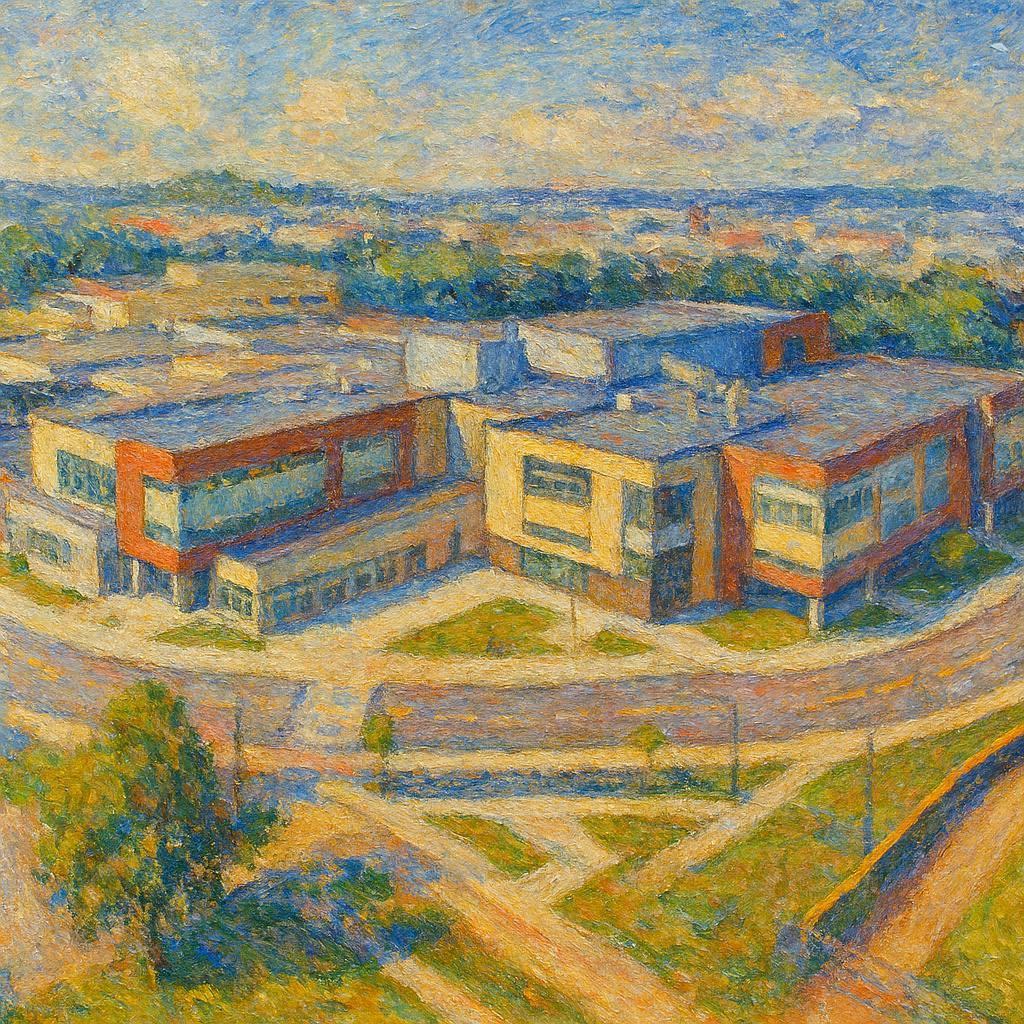
Families in Madison and Dane County face a college admissions challenge that is easy to underestimate. Madison is a world-class university city. The University of Wisconsin-Madison (a flagship research institution with more than $1.6 billion in annual research expenditures) shapes the academic culture of every high school in the metro. Students grow up hearing about research, graduate programs, and academic rigor from an early age. Expectations are high. Competition, as a result, is genuinely fierce.
Students at schools like Middleton, West, Waunakee, Verona, and Sun Prairie routinely carry strong GPA records and full AP schedules. However, many arrive at their senior year without a focused narrative. They are accomplished in many directions but compelling in none.
Today’s case study highlights Alex, a student from Middleton High School. Through deliberate planning and consistent execution, he earned:
- EA acceptance to the University of Wisconsin-Madison, College of Letters and Science
- EA acceptance to the University of Michigan, College of Literature, Science, and the Arts
- ED acceptance to Vanderbilt University
Alex’s story is a practical roadmap for Madison-area families who want to understand what truly moves the needle at selective colleges.
Meet Alex: A Strong Student Surrounded by Strong Students
When Alex began working with College Transitions in the fall of his sophomore year, he had genuine strengths to build on.
He attended Middleton High School in Middleton, Wisconsin. According to U.S. News & World Report, Middleton ranks 14th in Wisconsin and is a nationally recognized school for its STEM and fine arts programs. Its AP participation rate is 61%, and its graduation rate is 99%. The school offers AP courses, Project Lead the Way curriculum, and a Gifted and Talented program, and was named the best high school in Dane County by U.S. News in 2021. Middleton sends approximately 100 students to UW-Madison annually, and UW-Madison admits more than 150 Middleton seniors each year. That context matters: at selective colleges beyond Wisconsin, Middleton is a respected name but not a widely known one. The burden of differentiation falls squarely on the student.
Alex had strong grades in his AP Biology and AP Statistics courses. He was interested in brain science and had followed neuroscience research news on his own since middle school. He participated in his school’s Science Olympiad team and had done one summer program at UW-Madison. However, he had not yet connected those experiences into a focused academic story. He looked, on paper, like many capable STEM students from competitive Midwest schools. He needed a sharper direction.
Our first task was to help him find one.

1. Choosing a Strategic Major: Neuroscience
Many biology-interested students from university towns default to pre-med or general biology as declared majors. Both paths are extremely crowded at selective schools. After reviewing Alex’s coursework, summer program, and genuine intellectual interests, we guided him toward a more specific direction.
Why Neuroscience Made Sense
- It connected his AP Biology coursework with his self-directed interest in brain science.
- It gave him a unifying theme across activities, research, essays, and supplemental responses.
- It differentiated him from the large pool of pre-med and general biology applicants.
- It aligned directly with programs at his target schools: Vanderbilt’s interdisciplinary neuroscience program, UW-Madison’s neuroscience major, and Michigan’s Brain, Behavior, and Cognitive Science track.
- It was locally authentic. Alex had grown up next door to one of the leading neuroscience research universities in the country. That proximity was an asset he had not yet used.
Admissions readers respond to students who present a clear and authentic academic direction. This framework gave Alex exactly that. Furthermore, it made every subsequent element of his application more coherent.
2. Improving His ACT Score: From 30 to 34
Wisconsin administers the ACT as part of its state assessment program, and most Middleton students take the ACT rather than the SAT. Alex’s initial ACT score of 30 was solid. However, it was not yet competitive for schools like Vanderbilt, which enrolls students with middle-50% ACT scores roughly in the 34–36 range, or for the most selective programs at Michigan and UW-Madison.
We built a focused preparation plan that emphasized:
- Science reasoning and experimental design passages
- Math reasoning, data analysis, and precalculus
- English grammar, usage, and rhetorical skills
- Reading comprehension with natural science and social studies passages
- Timed, full-length practice under realistic conditions each week
By early fall of his senior year, Alex had raised his score to 34. That improvement placed him squarely in competitive range at every school on his list. It also demonstrated to admissions readers that he was capable of sustained, deliberate improvement under pressure.
3. Turning His UW-Madison Connection into Sustained Research
Alex had completed a two-week summer program at UW-Madison the summer before his junior year, attending seminars at the Wisconsin Institute for Discovery. The experience was genuinely valuable. However, it remained a passive credential — something that had happened to him rather than something he had built. We worked with him to transform it into an ongoing contribution.
What Alex Did Differently
- He reached out directly to the graduate student who had led one of his seminar sessions and asked to visit the lab.
- After two informational visits, he was invited to assist with a literature review project on synaptic plasticity in adolescent brain development.
- He contributed to the lab biweekly throughout his junior year, summarizing research papers and flagging relevant citations.
- He attended the lab’s weekly research meeting four times and was acknowledged in a graduate student’s dissertation bibliography for his contributions.
This continuation transformed a summer program credential into a multi-semester research narrative. It also gave Alex specific, verifiable, and citable scientific contributions to reference across his applications.
4. Adding an Independent Research Project: A Data Analysis in Neuroscience
To deepen Alex’s neuroscience narrative with original intellectual work, we helped him design an independent data analysis project using publicly available datasets from the National Institutes of Health and the Allen Brain Atlas.
Project Focus
Patterns of Gene Expression in the Developing Human Prefrontal Cortex and Their Relationship to Adolescent Risk-Taking Behavior: A Literature Synthesis and Data Analysis
Alex examined:
- Published gene expression data from the Allen Brain Atlas for the prefrontal cortex across developmental windows
- Peer-reviewed literature on the relationship between delayed prefrontal maturation and adolescent decision-making
- Quantitative patterns in the published data relevant to dopamine receptor development
- Implications for understanding why risk-taking behaviors peak in mid-adolescence
He produced a written synthesis report and submitted the project to the Regeneron Science Talent Search in the biological sciences category. Though he did not advance past the initial review, the project gave him a citable independent effort that demonstrated genuine intellectual initiative beyond his coursework.
5. Entering Competitions for External Validation
Selective colleges value evidence of intellectual engagement beyond the classroom. Beyond the Regeneron submission, we encouraged Alex to enter competitions aligned with his neuroscience direction.
- Science Olympiad, Disease Detectives and Anatomy and Physiology events — regional medals at two invitationals
- Junior Science and Humanities Symposium, Wisconsin regional division — participant
- American Psychological Association Science Student Council Essay Contest — honorable mention
Each entry reinforced his narrative. Together, they added external recognition that supplemented his lab contributions and his independent project.
6. Crafting a Personal Statement Rooted in a Specific Moment
Alex’s early essay drafts were technically competent but generic. Writing about finding neuroscience fascinating and wanting to understand the brain, he covered ground that appears in hundreds of science applications each cycle. We pushed him to write from a specific moment rather than a general interest.
The final personal statement focused on a specific Tuesday afternoon in the UW-Madison lab. After two hours spent reading a paper on synaptic pruning in the adolescent prefrontal cortex, Alex arrived at a single paragraph describing the process by which the brain eliminates unused neural connections during adolescence. That process, if disrupted, correlates with the onset of schizophrenia in early adulthood. What made that paragraph land differently than any other was context: his younger brother had been diagnosed with a schizophrenia-spectrum condition the year before.
The essay did not dwell on the diagnosis. Instead, it focused on the specific sensation of seeing a biological mechanism described in a scientific paper that might explain something Alex had watched happen to someone he loved. That restraint made it far more powerful than any statement of intellectual curiosity could have been. The essay was precise, personal, and entirely his own. It connected naturally to his interest in neuroscience without ever explaining it directly.
7. Using Early Action and Early Decision Strategically
Early Action Schools
- University of Wisconsin-Madison, College of Letters and Science, Neuroscience — accepted
- University of Michigan, Brain, Behavior, and Cognitive Science — accepted
These Early Action acceptances gave Alex strong, nationally recognized options before winter break. UW-Madison’s neuroscience program, embedded within one of the leading brain research universities in the country, was a natural fit given his lab experience. Michigan’s interdisciplinary BBCS program offered a similarly research-intensive path with strong professional outcomes.
Early Decision School
- Vanderbilt University — accepted
Vanderbilt was Alex’s top choice. Its neuroscience program consistently ranks among the best undergraduate programs in the country. Its Vanderbilt Brain Institute, small class sizes, and emphasis on undergraduate research made it an authentic match for his two years of focused preparation. Applying ED demonstrated real commitment and gave him a meaningful advantage in a highly selective applicant pool.
His acceptance arrived in mid-December, the result of two years of deliberate and consistently executed work.
Why Alex’s Strategy Worked
- He identified a specific neuroscience identity early and built every element of his application around it.
- He raised his ACT score into competitive range for his target schools.
- He transformed a passive summer program into a sustained, multi-semester research contribution.
- He completed an independent data analysis project that demonstrated genuine intellectual initiative.
- He entered competitions that reinforced his narrative and added external recognition.
- He wrote a personal statement that was specific, deeply personal, and impossible to replicate.
- He used Early Action and Early Decision to maximize his admissions outcomes.
Above all, Alex did not try to look like a generic STEM applicant from a university town. Instead, he built a story around a specific scientific question and a specific personal connection and made both of them work together in every part of his application.
What This Means for Madison-Area Families
Madison is one of the most intellectually rich cities in the Midwest. Its university, research institutions, and civic culture give students access to extraordinary resources. However, those resources only translate into admissions success when they are used deliberately.
According to U.S. News, the Madison metro’s top traditional public schools are genuinely competitive. Middleton ranks 14th in Wisconsin with a 61% AP participation rate and a 99% graduation rate. West High School ranks 28th in Wisconsin with a 48% AP participation rate. Waunakee High School ranks 32nd in Wisconsin with a 64% AP participation rate. Verona Area High School ranks 68th in Wisconsin with a 62% AP participation rate.
In that environment, strong ACT scores and a full AP transcript are expected. They are not differentiators. Standing out at selective colleges, especially for STEM programs, requires more:
- A clear and authentic academic direction
- Extracurricular depth, not just breadth
- At least one sustained research or lab-based experience
- External validation through competitions or recognition
- Essays that are specific, personal, and impossible to replicate
- Smart use of Early Action and Early Decision
This is the work College Transitions specializes in and the work that made Alex’s outcome possible.
Ready to Build a Strategy Like Alex’s?
Whether your student attends Middleton, West, Waunakee, Verona, Sun Prairie, Stoughton, Oregon, or any other school in the Madison metro, College Transitions can help them:
- Identify a compelling and authentic academic direction
- Build meaningful extracurricular depth
- Design research or lab-based experiences using local university resources
- Improve standardized test scores strategically
- Craft essays that stand out to selective admissions readers
- Use Early Action and Early Decision to maximize results
Schedule a consultation today and let’s build a plan that turns your student’s potential into standout admissions outcomes.