The Nashville Admissions Landscape
Nashville’s high school scene is more layered than its “Music City” nickname suggests. Hume-Fogg Academic Magnet, ranked second in Tennessee and 35th nationally by U.S. News & World Report, sits downtown and admits students through a competitive application process. A few miles away sits Martin Luther King Jr. Magnet. It is ranked fourth in the state and 93rd nationally, and it draws applicants from across Davidson County through its own selective entry exam. Both schools post remarkable outcomes; however, neither serves the students who simply live within their zoned boundaries.
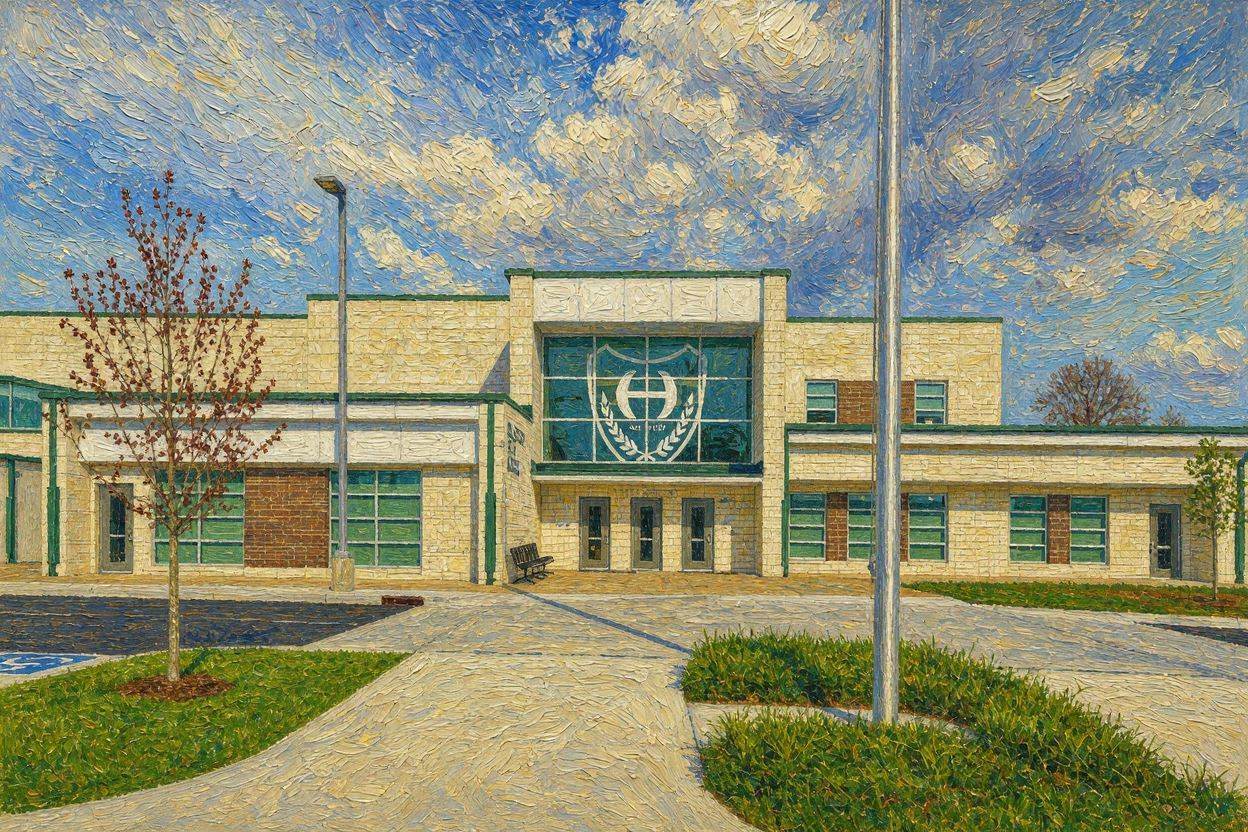
That distinction matters for families evaluating Metro Nashville Public Schools. Among the district’s zoned, non-selective options, Hillsboro High School stands out as the highest-achieving choice. It ranks 151st in Tennessee and posts a 40% International Baccalaureate participation rate through its IB Diploma Programme. Importantly, Hillsboro accepts any student who lives within its attendance zone, no audition or entrance exam required. Nearby zoned schools, including John Overton, Hillwood, and McGavock, round out the district’s comprehensive high school options.
For a student without a magnet-school acceptance letter, a zoned school can still open doors to selective admission. The strategy simply has to be deliberate. Consequently, one recent Hillsboro senior built exactly that kind of plan, drawing on an unlikely local resource. Nashville is home to 17 publicly traded healthcare company headquarters, more than any other American city, generating an estimated $72.1 billion in annual regional economic output. Few students think to build a college application around hospital administration. A Hillsboro senior named Josiah did, and it worked.
Meet Josiah: A Hillsboro Student with a Health Policy Vision
Josiah entered Hillsboro High School as a freshman with a vague interest in medicine. His father worked in revenue cycle management for a downtown hospital system, and that job shaped how Josiah saw the field. Rather than chase a pre-med track like many of his classmates, he noticed something more specific. The same city that headquartered companies managing hospitals nationwide sat inside a state that led the country in rural hospital closures per capita. That contradiction became the foundation of his entire admissions story, built step by step below.

Step 1: Choosing a Differentiated Major
Josiah settled on health policy rather than a broader public health or pre-med path. The choice reflected Nashville’s specific economic identity, not a generic interest in healthcare.
Why This Major Made Sense
- Nashville hosts more publicly traded healthcare company headquarters than any other U.S. city, including HCA Healthcare, the nation’s largest for-profit hospital operator, founded there in 1968
- Tennessee simultaneously ranks among the states with the highest per-capita rate of rural hospital closures, a tension Josiah could observe directly through his father’s work
- Health policy, distinct from pre-med or public health, let Josiah study the business and regulatory forces shaping care access rather than clinical practice itself
Admissions officers at schools with dedicated health policy programs responded to that specificity. A vague “I want to help people” narrative would have blended in. His focused critique of his own city’s healthcare paradox did not.
Step 2: Improving Standardized Test Scores
Tennessee administers the ACT to every public high school junior. Josiah’s testing strategy therefore followed the ACT track rather than the SAT. His initial junior-year score of 27 reflected strong reading and English subscores but a weaker math section.
Josiah spent the summer before senior year working through targeted math review. He subsequently retook the exam in September, and his composite rose to 33, a jump driven almost entirely by math and science gains. That improvement mattered because it demonstrated sustained academic growth, not a single lucky test day.
Step 3: Deepening Extracurricular Involvement
Josiah’s activities all connected back to his health policy interest instead of scattering across unrelated clubs. He co-led Hillsboro’s HOSA-Future Health Professionals chapter and organized a student advocacy day at the Tennessee state legislature focused on rural hospital funding. Josiah also volunteered weekly at a Nashville free clinic serving uninsured patients.
Extracurricular Highlights
- Co-president, HOSA-Future Health Professionals chapter
- Organizer, student advocacy visit to the Tennessee General Assembly on rural hospital funding
- Weekly volunteer, Nashville free clinic intake desk
- Founding member, school-based Health Policy Discussion Society
Above all, each activity reinforced the same throughline: access to care, and who gets left out when hospitals close.

Step 4: Adding an Independent Research Component
Josiah worked with a mentor from Vanderbilt University Medical Center’s Department of Health Policy. Together, they subsequently built an independent research project mapping the geographic mismatch between Nashville’s concentration of healthcare corporate headquarters and the shrinking hospital access in Tennessee’s rural counties.
Research Project Scope
- Compared Nashville Health Care Council economic data on the city’s 17 publicly traded healthcare headquarters to county-level rural hospital closure data since 2010
- Analyzed which corporate healthcare functions, such as revenue cycle management and administration, clustered in Nashville while direct patient care shrank elsewhere in the state
- Presented preliminary findings to his HOSA chapter and used the project as the basis for two supplemental essays
The project gave Josiah’s application something rare: original analysis rather than a summarized reading list.
Step 5: Competing at a State and National Level
Josiah entered HOSA’s Public Health competitive event, using his rural-access research as the foundation for his presentation. Notably, he placed second at the Tennessee HOSA State Leadership Conference, advancing to the HOSA International Leadership Conference.
That competition result served two purposes. First, it validated his research to outside evaluators beyond his own teachers. Second, it gave him a concrete achievement to list on applications. Admissions readers weigh that kind of evidence more heavily than self-reported passion.
Step 6: Writing a Personal Statement Rooted in Place
Josiah’s personal statement opened not with a hospital scene but with his father’s commute. It ran fifteen minutes from their East Nashville home to a downtown office tower managing hospitals the family would never set foot inside. From there, Josiah traced his own growing awareness of the distance between healthcare’s headquarters and its patients.
Instead of claiming a singular dramatic turning point, Josiah wrote about incremental realization. First came his father’s dinner-table stories, then his volunteer shifts, then his research data. Admissions officers at his target schools later cited the essay’s specificity, particularly its refusal to generalize Nashville’s healthcare identity into empty civic pride.
Step 7: Applying EA and ED Strategically
Josiah applied Early Action to two schools with strong health policy and health management programs. His choices were the University of Michigan’s School of Public Health and the University of Georgia’s College of Public Health, both of which offered early feedback without binding him to a single choice.
For his Early Decision application, Josiah chose George Washington University’s Milken Institute School of Public Health. He was drawn by its Health Policy major and its Washington, D.C. location, close to the federal agencies shaping the closures he had researched. He was accepted EA to Michigan and Georgia in December, then accepted ED to GW shortly after.
Why Josiah’s Strategy Worked
- EA applications built confidence without binding commitment
- The ED choice matched a specific academic program, not simply institutional prestige
- Every application component, from major to research to essay, reinforced a single consistent narrative

What This Means for Nashville Families
Josiah’s path shows that a zoned, non-magnet high school like Hillsboro does not limit a student’s admissions ceiling. Instead, the strategy simply has to be specific and locally grounded. Families across Metro Nashville Public Schools, whether zoned for Hillsboro, John Overton, Hillwood, or McGavock, can apply the same underlying lessons, as can families hoping for a Hume-Fogg or Martin Luther King Jr. Magnet seat.
Key Takeaways for Families
- A student’s zoned school does not have to be a magnet or selective-admission campus to support a competitive application
- Nashville’s specific industries, healthcare chief among them, offer differentiated majors and research angles unavailable to students elsewhere
- Test score improvement, targeted extracurriculars, original research, and strategic early applications work best when they reinforce one consistent story
- Local mentorship, whether through a university department or a professional parent’s industry, can substitute for a formal named program when it is specific and well documented
Every Nashville student’s path looks different. Building a strategy this cohesive takes guidance most families do not have time to develop alone, and College Transitions works with students across Metro Nashville Public Schools to identify exactly this kind of differentiated, locally rooted admissions story.
Additional Resources
- Top High Schools in the Nashville, TN Area: How They Compare for College Admissions
- Is Nashville a Good Place for College Admissions? Weighing Music City’s Growth and Opportunity
- Building a College-Ready Resume in Music City: Programs for Nashville High Schoolers
- Nashville College Admissions Consultants