
The Nassau County Competitive Landscape
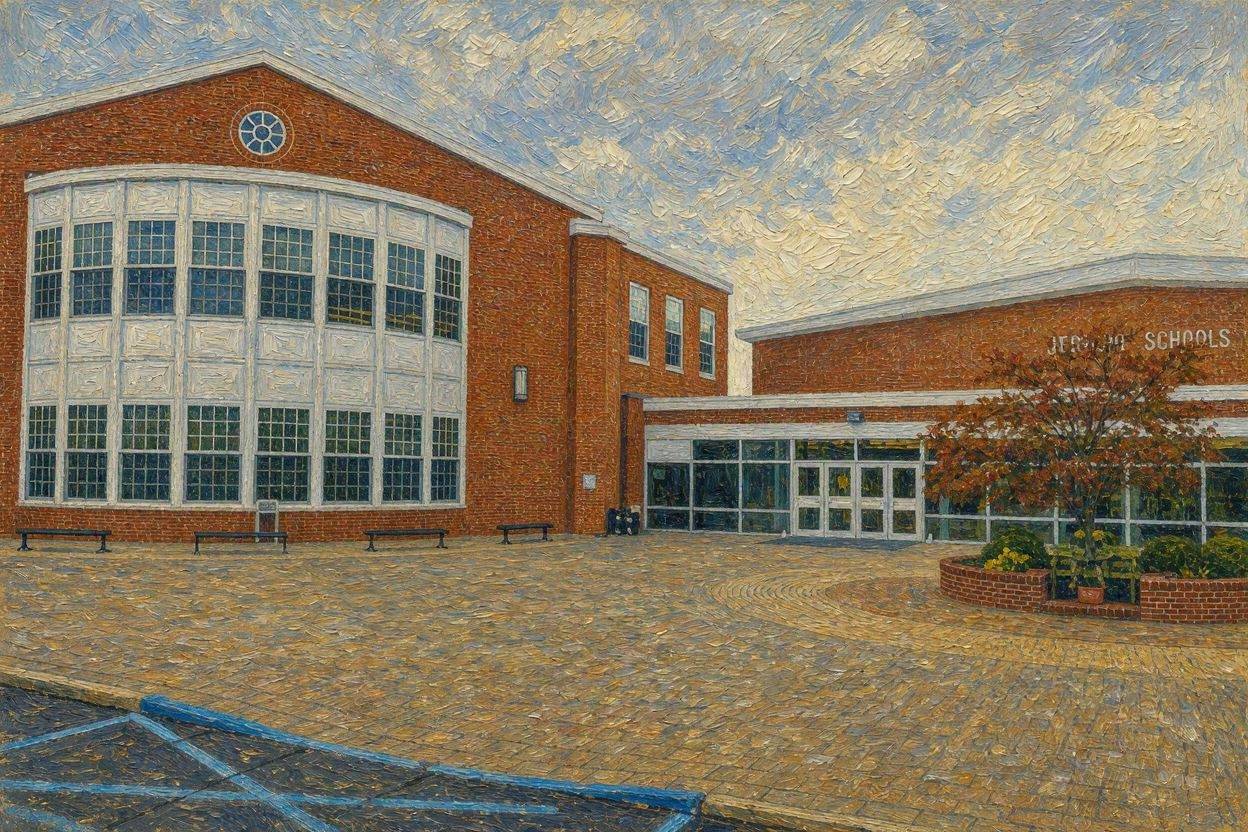
Few counties in the country pack as much academic firepower into so small a footprint as Nassau County, New York. Jericho Senior High School currently ranks ninth among all New York high schools and 108th nationally according to U.S. News & World Report, making it the highest-ranked school on Long Island. Garden City, Great Neck South, Manhasset, Syosset, and Herricks all land within the state’s top 50 as well. Consequently, a Nassau County applicant competes not against a handful of standout peers but against an entire county of them. Admissions officers who read applications from Jericho, Garden City, or Great Neck already expect strong transcripts and heavy AP loads. Distinguishing oneself requires more than grades; it requires a genuinely differentiated story.
Meet Asher: A Jericho Senior High School Student with a Plan
Asher entered Jericho Senior High School as a capable but unremarkable student, at least on paper. He earned solid grades and enjoyed physics, though nothing in his freshman-year record hinted at a defined direction. What set him apart, ultimately, was his willingness to look at his own backyard differently than his classmates did. Jericho sits roughly ten miles from Bethpage, the former home of Grumman Aerospace, and less than fifteen minutes from the Cradle of Aviation Museum in Garden City. Most students pass these landmarks without a second thought. Asher started asking questions instead.
Why Aerospace Engineering Made Sense
- Nassau County’s aerospace legacy, anchored by Grumman’s decades-long presence in Bethpage, gave Asher direct access to primary artifacts and institutional memory rather than secondhand research
- The Cradle of Aviation Museum houses an actual Lunar Module built at the Bethpage plant, offering a rare local case study in structural engineering under extreme constraints
- Long Island’s ongoing STEM workforce initiatives, including the museum’s own programming, connected Asher to working engineers rather than only to textbooks
Once he recognized what his own county offered, Asher moved quickly from casual interest to a deliberate plan.

Step 1: Choosing a Major Rooted in Local History
Working with his College Transitions advisor during sophomore year, Asher settled on aerospace engineering after visiting the Cradle of Aviation Museum for what began as a routine school trip. He learned that Grumman’s Bethpage engineers had designed the Apollo Lunar Module to survive the vacuum of space while weighing as little as possible, a constraint that fascinated him. His advisor helped him see that this local history could anchor an entire application narrative instead of remaining a passing interest. From that point forward, every extracurricular decision Asher made supported the same throughline: engineering under real-world constraints, studied through Long Island’s own aerospace past.
Step 2: Improving Test Scores Through Structured Practice
Asher’s PSAT results as a sophomore were respectable but unremarkable, landing around 1250. Rather than treating test prep as an afterthought, he built a sixteen-month study plan around his weakest section: SAT math word problems involving physics concepts. He worked through official College Board practice tests every other weekend and reviewed missed questions with a tutor his College Transitions counselor recommended. His score climbed steadily across three sittings, ultimately reaching 1500 on his final attempt during the fall of senior year. That improvement mattered less for the number itself than for what it signaled: sustained, methodical effort toward a specific goal, a theme reviewers would later recognize throughout his file.
Step 3: Deepening Extracurriculars Around a Single Thread
Instead of joining a wide assortment of clubs, Asher concentrated his energy on Jericho’s robotics team, where he eventually led the structural design subgroup. He also became a weekend docent-in-training at the Cradle of Aviation Museum through its Student Volunteer Program, explaining Lunar Module engineering to museum visitors. Both commitments reinforced each other: lessons learned building competition robots informed how he discussed historical spacecraft design, and vice versa. Admissions readers notice this kind of coherence quickly. A student who builds robots and explains real spacecraft to the public tells a more convincing story than one who joins ten unrelated organizations for the sake of a longer list.

Step 4: Adding an Independent Research Project
During junior year, Asher pursued an independent research project comparing the weight-saving strategies used in the Apollo Lunar Module’s descent stage to materials used in modern student-built rocketry. He conducted much of his research using the museum’s archival materials and interviews arranged through its STEM Hub network of Long Island aerospace professionals. His final paper, roughly twenty pages, examined how engineers balance structural integrity against payload weight, a tradeoff still central to aerospace design today. He presented preliminary findings to his physics class, then refined the project further based on their questions. The finished research became the centerpiece of both his supplemental essays and his eventual interviews.
Step 5: Entering a National Competition
Asher’s robotics team captain suggested he apply his research toward Team America Rocketry Challenge, the country’s largest student rocketry competition and a pathway to the Aerospace Industries Association’s international rocketry event. Asher took the lead on his team’s altitude-control system, applying lessons drawn directly from his Lunar Module research about minimizing structural weight without sacrificing stability. His team’s rocket did not win nationally, but it placed within the top quarter of qualifying teams regionally, a result Asher discussed candidly in his application as evidence of iterative problem-solving rather than pure achievement. Admissions officers tend to respond well to setbacks framed honestly.
Step 6: Writing a Personal Statement Grounded in Place
Asher’s personal statement opened not with the Lunar Module itself but with a Grumman engineer’s handwritten weight-budget notebook, preserved at the museum, that Asher had been allowed to examine closely. He used that notebook as a lens for his own habit of stripping unnecessary complexity from problems, whether in robotics design or in his own thinking. His College Transitions essay advisor pushed him through four full drafts, each one cutting further away from generic engineering-interest language and toward specific, sensory detail. The final essay never mentioned rankings or prestige. It simply showed a student who had learned to see his own county’s history as an engineering education in itself.
Step 7: Using Early Action and Early Decision Strategically
With his College Transitions advisor, Asher mapped an application strategy built around demonstrated interest and program fit rather than name recognition alone. He applied Early Action to Georgia Tech and the University of Michigan, both known for aerospace engineering programs with strong industry pipelines, since neither school’s non-binding early round would limit his options. For Early Decision, he chose Rensselaer Polytechnic Institute, whose aerospace engineering program and close faculty mentorship matched the hands-on research experience he had built at the Cradle of Aviation Museum. This sequencing let him secure strong EA outcomes before committing, while still signaling genuine first-choice interest to RPI.
Why Asher’s Strategy Worked
- He built every activity around one coherent, locally rooted theme instead of chasing breadth for its own sake
- His research used primary sources most applicants never think to seek out in their own county
- His test score improvement demonstrated sustained effort rather than a single lucky sitting
- His essay avoided generic engineering-passion language in favor of specific, personal detail
- His EA and ED choices reflected genuine program fit, not simply institutional prestige

What This Means for Nassau County Applicants
Asher’s results speak for themselves: EA acceptances from Georgia Tech and the University of Michigan, followed by an ED acceptance to Rensselaer Polytechnic Institute. Students at Garden City, Great Neck South, Manhasset, Syosset, and Herricks face the same core challenge Asher did, namely standing out inside one of the country’s most academically dense counties. Nassau County’s advantage, however, cuts both ways. Its aerospace heritage, its museums, and its dense professional networks offer raw material that few other regions can match; a student simply has to look for it. College Transitions helps Nassau County families spot that kind of locally grounded opportunity early and helps them to build an application strategy around it well before senior year begins.
Additional Resources
- Top High Schools in the Nassau County, NY Area: How They Compare for College Admissions
- Is Nassau County, NY a Good Place for College Admissions?
- The Gold Coast Advantage: Local Resources for Nassau County Students Building a Selective Application
- 20 Best Public High Schools in New York State — 2025

