The Norfolk County Admissions Landscape
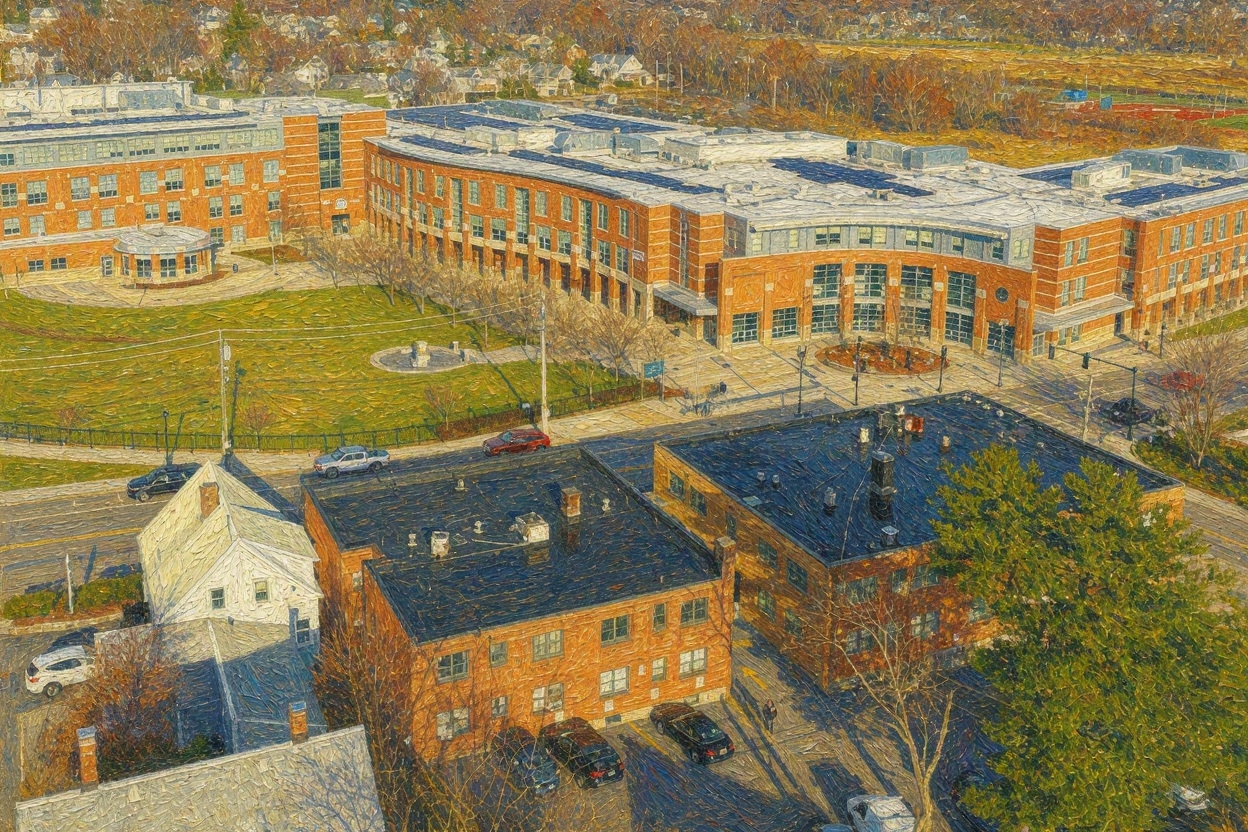
Norfolk County sits at the center of one of the most competitive college admissions markets in Massachusetts. Wellesley High School (35th in Massachusetts, 68% AP participation) and Needham High School (22nd in Massachusetts, 73% AP participation) routinely rank among the state’s strongest public schools. Families in Milton, Weymouth, and Braintree compete for spots at flagship universities and elite liberal arts colleges too. However, the county’s reputation rests on more than test scores. Norfolk County towns range from dense, historic Quincy to leafy Wellesley. That range gives students an unusually wide set of local stories to draw from. Consequently, admissions officers reading applications from this county see everything from biotech internships to town-meeting civic projects. Importantly, the strongest applicants rarely chase whatever honor looks most impressive in the abstract. Instead, they build a case around what their specific corner of Norfolk County can teach them. One recent Quincy High School graduate shows what that kind of local narrative can accomplish.
Meet Edward: A Quincy Student with a Presidential Advantage
Edward grew up near the birthplaces of John Adams and John Quincy Adams on Franklin Street. He attended Quincy High School, whose athletic teams are nicknamed the Presidents. That nickname reflects Quincy’s unusual claim to being the only American city that produced two presidents. Quincy High School ranks 123rd in Massachusetts, with an Advanced Placement participation rate of 29%, well below Wellesley’s and Needham’s figures. Nevertheless, Edward treated that gap as an opening rather than a deficiency. Because the Adams National Historical Park sits blocks from campus, he had access to primary-source material that students in wealthier districts did not. Notably, few applicants nationwide can describe standing inside the room where a founding president was born. Fewer still can connect that memory directly to their intended field of study.
Step 1: Choosing a Major Rooted in Place
Edward settled on Public History early in eleventh grade. The decision followed a summer spent volunteering at the Adams National Historical Park visitor center. He noticed that most classmates interested in history described vague plans to “maybe do law.” Edward wanted something narrower. Public History, he learned, focuses on how museums, archives, and historic sites translate primary sources into accessible public narratives. Since Quincy’s identity is inseparable from the Adams family legacy, the major connected directly to his hometown. Therefore, every later decision, from course selection to extracurricular commitments, reinforced that same throughline.
Why This Major Made Sense
- Quincy’s identity as the “City of Presidents” gave Edward direct access to archival collections tied to early American governance
- The Adams National Historical Park’s programming around the 250th anniversary of the American Revolution created new public-facing history projects he could join
- Public History, rather than a general history degree, let him connect archival work, museum interpretation, and civic storytelling into one coherent academic identity
Step 2: Rebuilding the Testing Profile
Edward focused his preparation entirely on the SAT. His diagnostic score of 1290 reflected strong reading comprehension but weaker math performance. He worked with a College Transitions tutor to build a structured sixteen-week plan. The plan isolated his data-analysis and algebra weaknesses specifically. Subsequently, his score climbed to 1490 by the fall of senior year. That jump placed him competitively even against Norfolk County’s highest-ranked districts. Above all, the improvement mattered because it removed any doubt about his academic readiness. It freed admissions readers to focus on the distinctive parts of his file instead.
Step 3: Deepening Extracurricular Commitment
Rather than joining several clubs superficially, Edward concentrated his time on two commitments tied to his major. He became a weekend interpreter-in-training at the Adams National Historical Park. There, he led short talks for visitors touring the Old House at Peace field. He also joined Quincy High School’s history club and eventually became its president. Meanwhile, he began building relationships with staff at the Massachusetts Historical Society, which holds the Adams Family Papers. This consistency gave his recommenders specific, memorable stories to write about. As a result, his file read as focused rather than scattered.
Step 4: Adding an Independent Research Component
During the summer before senior year, Edward worked with a Massachusetts Historical Society archivist. Together, they transcribed and annotated a set of previously under-catalogued 1780s letters between Abigail Adams and extended family members. The project required careful paleography training, since eighteenth-century handwriting differs significantly from modern script. Furthermore, Edward had to cross-reference names and dates against existing Adams Papers volumes to catch inconsistencies. College Transitions helped him frame the project for admissions readers unfamiliar with archival methodology. Together, they translated technical transcription work into a clear statement about historical evidence and interpretation.
Research Project Scope
- Transcribed roughly forty pages of eighteenth-century correspondence under archivist supervision
- Cross-referenced names, dates, and locations against the published Adams Papers Digital Edition
- Wrote a short interpretive essay connecting the letters to Abigail Adams’s domestic wartime responsibilities
- Presented preliminary findings to Massachusetts Historical Society staff and volunteers
Step 5: Entering Competition
Edward entered National History Day with a documentary built around the transcription project. The film focused on how ordinary correspondence shapes public understanding of historical figures. His entry advanced through the Massachusetts regional round and reached the state finals. Although he did not place at nationals, the process forced him to defend his research methodology to expert judges. That defense sharpened the same analytical skills selective colleges look for in prospective history majors. Instead of treating the competition as a single event, he used the judges’ feedback to revise his personal statement that same fall.
Step 6: Writing a Personal Statement That Only Edward Could Write
Edward’s essay opened not with a general love of history but with a specific memory. He described standing in the small, unheated room at the Adams birthplace where he first understood something important. Historical figures, he realized, once occupied ordinary, cramped domestic spaces just like his own family’s. From there, he traced how that moment led him toward archival transcription. Eventually, it led him toward wanting a career translating primary sources for public audiences. Because the essay stayed rooted in Quincy-specific detail throughout, it avoided the generic “history has always fascinated me” framing admissions readers see constantly. College Transitions coached him through three drafts, pushing him to trade broad claims for concrete sensory detail.
Step 7: Using EA and ED Strategically
Edward applied Early Action to American University and the University of Delaware. Both schools were strong fits, given their history and museum-studies connections, including Delaware’s ties to the Winterthur Museum. He was admitted to both by mid-December. At the same time, he applied Early Decision to Northeastern University. Northeastern’s Public History track pairs classroom study with co-op placements at institutions like the National Park Service. Edward used his applications to reinforce one academic identity. That identity centered on a student whose interest in public-facing historical work was already documented through real archival experience. Northeastern admitted him in December, closing out his process before winter break.
Why Edward’s Strategy Worked
- His major, research, competition entry, and personal statement all reinforced a single, coherent academic identity
- He treated Quincy High School’s lower state ranking as an opportunity to lean into hyperlocal resources rather than a limitation to overcome
- College Transitions helped him translate technical archival work into language admissions readers could immediately understand

What This Means for Norfolk County Applicants
Students throughout Norfolk County can apply Edward’s approach, whether they attend Milton High School, Braintree High School, Weymouth High School, or a smaller district. Their high school’s state ranking should not determine their strategy. The strongest applications rarely come from chasing whatever activity looks most impressive in the abstract. Instead, they come from identifying what a specific town, institution, or local resource makes possible. From there, students can build a genuinely coherent story around that resource.
- Identify a local institution, industry, or historical resource that connects authentically to an intended major
- Treat research or independent projects as opportunities to demonstrate real methodology, not just interest
- Reframe a school’s lower state ranking as access to distinctive local opportunities rather than as a disadvantage
College Transitions works with Norfolk County families to identify these place-specific opportunities early. That early start lets a student’s major, research, and essays build toward one coherent, differentiated application rather than a scattered list of accomplishments.