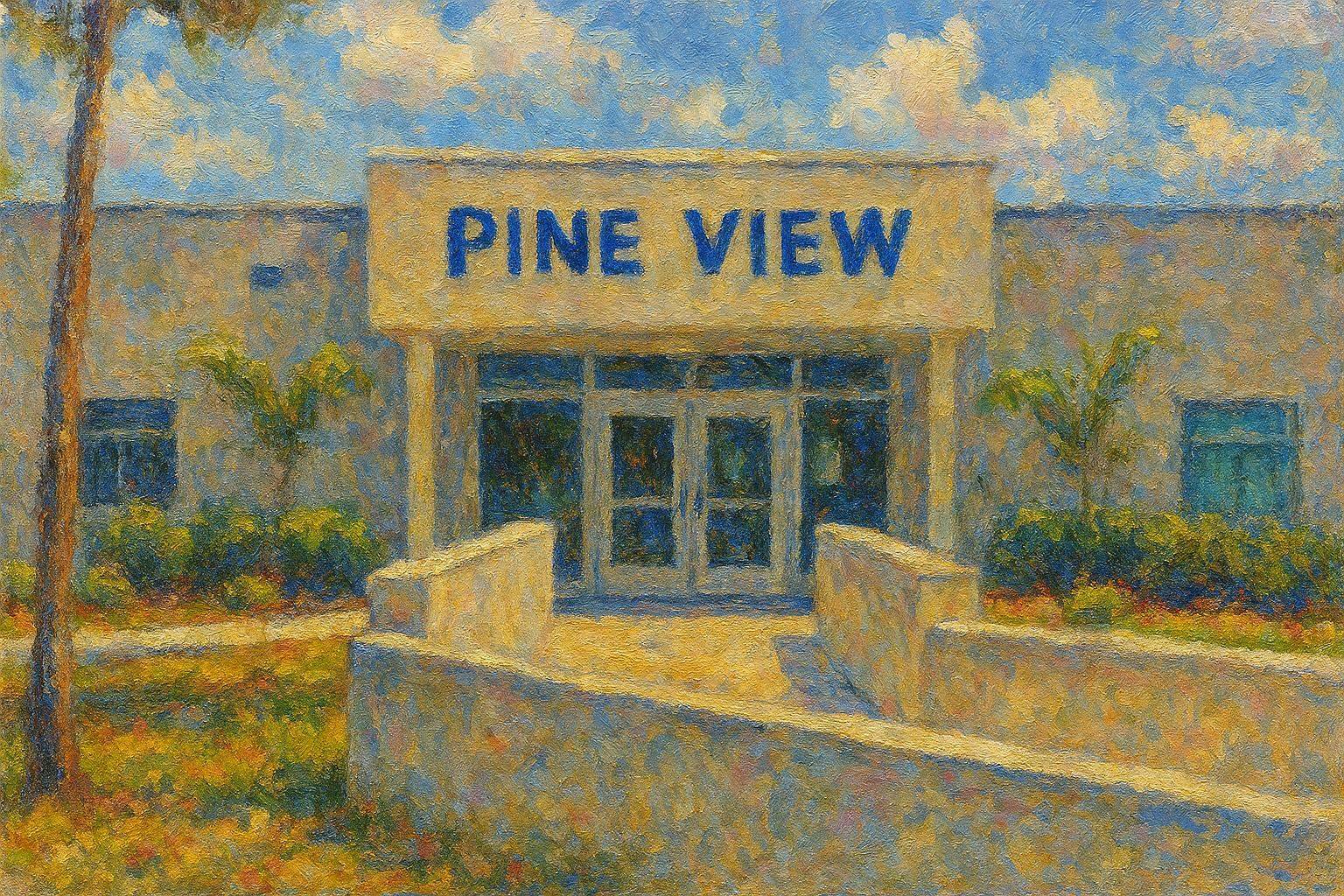
The Sarasota Landscape
Sarasota County sends a distinctive mix of students into selective college admissions each year. Pine View School, a magnet for gifted learners in Osprey, currently ranks first in Florida and 12th nationally among public high schools, according to U.S. News & World Report. Riverview High School, home to an International Baccalaureate program, and Sarasota High School, whose Paul Rudolph-designed campus is itself a piece of architectural history, round out the county’s strongest traditional options. Suncoast Polytechnical High School adds a career-academy alternative for students drawn to hands-on technical study. Consequently, admissions officers who see a Sarasota address already expect academic seriousness. However, the county’s real differentiator is not test scores. It is the built environment that surrounds these students every day, a landscape shaped by one of the most influential architectural movements in American history.
Meet Isla
Isla enrolled at Pine View School as a rising ninth grader after transferring from a Sarasota County middle school gifted program. She arrived with strong math instincts and an unusual habit: sketching the roofline of every building she passed. That habit, it turned out, pointed toward a major that few of her classmates would consider, let alone build an entire application around.
Why This Major Made Sense
Isla chose architecture, with a concentration interest in climate-responsive design, for reasons rooted specifically in Sarasota:
- Her own high school sits two miles from buildings designed by Paul Rudolph, the architect most associated with the Sarasota School of Architecture movement
- Sarasota’s Gulf Coast climate produced a documented, named architectural response (clerestory windows, deep overhangs, cross-ventilation) that most students never learn exists
- Local advocacy groups actively catalog and restore midcentury buildings, giving a motivated teenager real access to primary source material
- Few applicants from any region can claim firsthand, walkable familiarity with a nationally recognized design movement

The Seven Strategic Steps
1. Choosing a Major Rooted in Place
Rather than defaulting to a generic STEM track, Isla settled on architecture during tenth grade after a summer spent photographing Lido Shores homes for a personal blog. Her counselor helped her see that this interest, paired with strong spatial reasoning grades, could anchor a coherent four-year narrative. From that point forward, every extracurricular decision ran through a single filter: does this deepen my understanding of how buildings respond to place?
2. Raising Her Test Scores with Purpose
Isla took the SAT in the fall of eleventh grade and scored 1310. Rather than generic prep, she focused her remaining study time on the reading and writing section, since her architecture portfolio would eventually need to demonstrate strong written reasoning as well as design skill. Her second sitting, in the spring, produced a 1500. Notably, she treated the retake as a controlled experiment, tracking which question types cost her the most points and adjusting her practice accordingly.
3. Deepening Her Extracurriculars Through ACE Mentor
Isla joined the ACE Mentor Program’s Southwest Florida affiliate, which pairs Sarasota-area high schoolers with practicing architects, engineers, and construction professionals for a full academic year. Working biweekly with a mentor team, she helped design a hypothetical mixed-use development, touring active construction sites and a local architecture office along the way. This was not a resume line; it was an apprenticeship in how design decisions actually get made.

4. Adding an Independent Research Project
Isla’s most distinctive contribution came from an independent preservation research project. Working with a local architectural advocacy nonprofit, she spent the summer before senior year documenting at-risk Sarasota School structures.
- She cataloged five residential and civic buildings from the 1950s and 1960s using original permit records and archival photographs
- She interviewed two architects who had worked on recent restoration projects
- She compiled her findings into a short, illustrated report on passive cooling strategies unique to the Sarasota climate, submitted to her research mentor for feedback
5. Entering a National Design Competition
Through her ACE Mentor team, Isla helped prepare a project for the program’s national year-end presentation, where student teams pitch their designs to a panel of industry professionals. Her team’s proposal, which incorporated passive ventilation principles drawn directly from her research project, placed among the top presentations at the regional level. This step mattered because it forced her to defend design choices under real questioning, not just describe them on paper.
6. Writing a Personal Statement with a Clear Thread
Isla’s personal statement opened with a memory of tracing the shadow patterns cast by her middle school’s overhangs, then moved into her preservation research and her ACE Mentor project. Instead of listing accomplishments, she used the essay to explain why she believed architecture should respond to its specific climate and community rather than impose a generic style. Every supplemental essay she wrote afterward reinforced the same thread.
7. Using Early Action and Early Decision Strategically
Isla applied Early Action to the University of Florida and Georgia Tech, two strong public architecture programs with generous merit consideration and no binding commitment. She applied Early Decision to Cornell University’s College of Architecture, Art, and Planning, her clear first choice given its design studio culture and its history of training architects who valued regional specificity. Her ED acceptance from Cornell arrived in mid-December.

Why Isla’s Strategy Worked
- Her major, research, extracurriculars, and essays all reinforced a single, specific idea rather than competing for attention
- Her research project produced original material that no admissions reader had encountered before
- Her test score improvement told a story of targeted effort rather than raw aptitude alone
- Her ED choice matched a genuine best fit, which made her application read as authentic rather than strategic
What This Means for Sarasota Applicants
Isla’s path offers a template that other Sarasota County students, including those at Riverview, Sarasota High, and Suncoast Polytechnical, can adapt to their own interests. A strong application from this region does not require inventing a connection to place. It requires noticing one that already exists and building disciplined, verifiable work around it.
Students pursuing a similar strategy should prioritize the following:
- Identify a local resource, landmark, or organization that connects authentically to an intended major
- Seek a sustained mentorship or research opportunity rather than a one-time volunteer credit
- Use standardized testing strategically, targeting the specific sections that matter most for the intended field
- Apply Early Action to strong-fit reach and match schools, and reserve Early Decision for a genuine first choice
Building this kind of coherent, place-rooted strategy takes time. Few families have the bandwidth to research majors, programs, and admissions timelines on top of everything else a busy junior or senior year demands. This is precisely the work College Transitions does with students across Sarasota County and beyond. We help turn a genuine local interest into an application that colleges remember.