Union County’s Increasingly Competitive Admissions Landscape
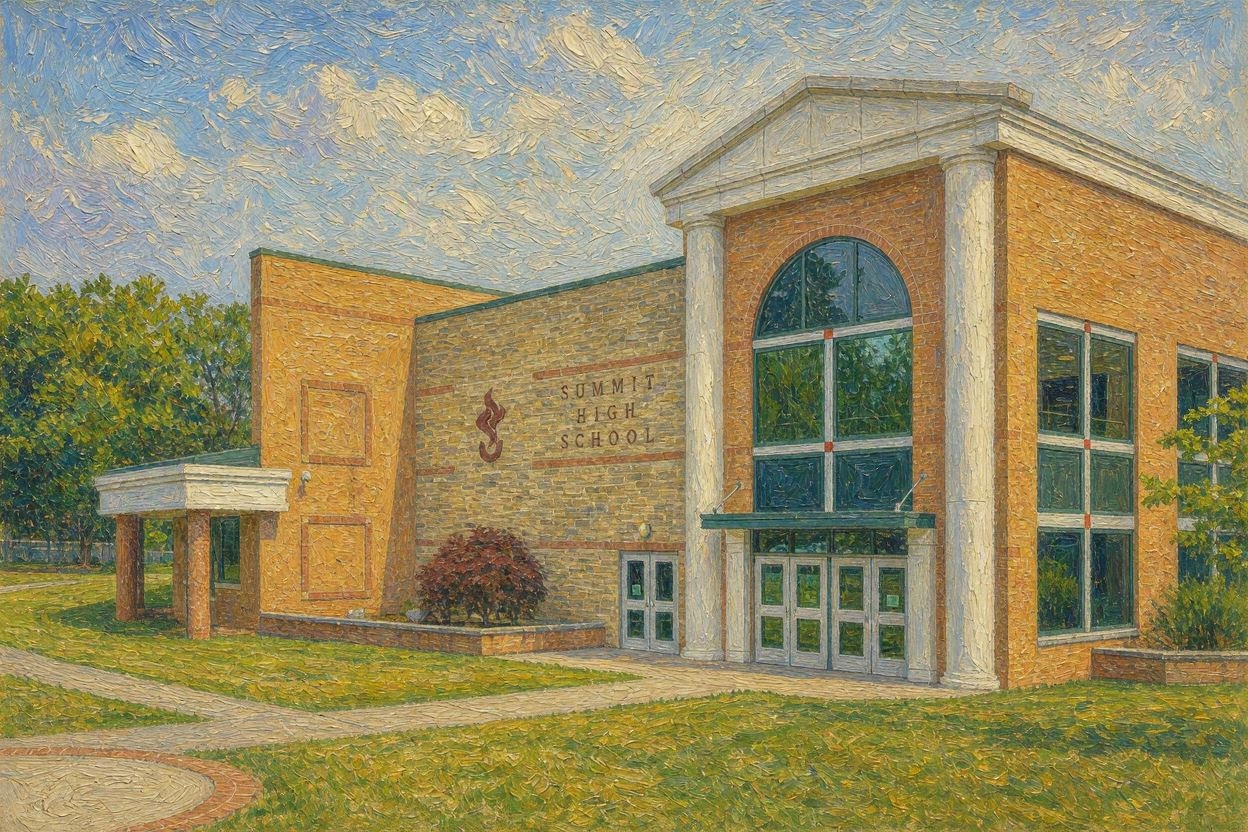
Summit, New Jersey, sits in a stretch of Union County where families often choose neighborhoods for the schools attached to them. The city’s only public high school, Summit High School, serves the entire Summit Public School District. It currently ranks 30th in New Jersey and 499th nationally, according to U.S. News & World Report. The school posts a 75% AP participation rate and a 95% graduation rate. Millburn High School holds the 15th spot statewide. New Providence, Governor Livingston in Berkeley Heights, and Chatham High School round out a cluster of small, well-resourced districts competing for the same selective-college seats. However, Summit’s real edge is not purely academic; it is geographic. The city hosts one of the largest cell therapy manufacturing campuses on the East Coast. One student figured out how to turn that fact into a genuine admissions advantage.
Meet Anders: A Summit Senior with a Plan
Anders grew up a short walk from downtown Summit. From his bus stop each morning, he could see the sprawling former Celgene campus on Morris Avenue. That campus, now operated by Bristol Myers Squibb, manufactures CAR-T cell therapies for cancer patients. Each dose is engineered from a single patient’s own T-cells. Anders had always liked biology, but a sophomore-year visit to the Union County STEM fair changed his focus. There, a BMS process engineer described how a therapy travels from a patient’s bloodstream to a cleanroom and back again. Consequently, by junior year, Anders knew he wanted to study biopharmaceutical manufacturing. It is an unglamorous but essential discipline: the work of turning lab discoveries into medicine patients can actually receive. College Transitions began working with Anders in the fall of his junior year. They translated that early interest into a coherent, evidence-backed application strategy.
Step 1: Choosing a Major Rooted in Summit’s Own Industry
Anders settled on bioprocess engineering, sometimes called biopharmaceutical manufacturing, instead of a more generic biology or pre-med track. The distinction mattered. Bioprocess engineering focuses on scaling a therapy from a small lab batch to a reliable, regulated commercial product. That is precisely what happens inside the BMS Summit facility a mile from his high school. Importantly, this choice let every later decision, from research to competitions to essays, reinforce one differentiated story rather than a scattered list of interests.
Why This Major Made Sense
- Summit hosts an FDA-registered cell therapy manufacturing site producing commercial CAR-T therapies
- Nearby Overlook Medical Center administers those same therapies to patients, giving Anders a clinical counterpoint to the manufacturing side
- Bioprocess engineering sits at the intersection of chemical engineering, biology, and quality systems
Step 2: Turning Around a Standardized Testing Profile
Anders’ sophomore PSAT suggested a starting SAT range in the 1300s. That was respectable, but not distinctive for the schools he had in mind. Instead of a generic prep course, Anders built a targeted study plan around his weakest section: math word problems involving rates and proportions. Notably, those problems mirror the yield and throughput calculations central to manufacturing. He raised his score from 1310 on his first sitting to 1490 on his final one.
Step 3: Deepening a Single-Threaded Extracurricular Record
Rather than joining a wide assortment of clubs, Anders concentrated his energy where the manufacturing story could genuinely grow. He joined Summit High School’s Science Research Club as a sophomore. By senior year he had become its president. In that role, he organized a speaker series that brought local biotech professionals into the classroom. Additionally, he volunteered in the waiting area of Overlook Medical Center’s infusion center. That placement let him observe the patient side of therapies made just a few miles away. Admissions officers could trace a clean line from his freshman-year curiosity to his senior-year leadership.

Step 4: Adding an Independent Research Project
In junior year, Anders designed an independent research project on a real logistics problem. Because each dose of a personalized cell therapy is made for one specific patient, manufacturers cannot mass-produce it and shelve it the way they would a conventional drug. Working under the informal mentorship of his AP Chemistry teacher, he modeled how temperature swings during cryopreserved transport affect cell viability. Importantly, he drew only on published FDA guidance and public industry data, not on proprietary BMS information.
Research Project Scope
- Reviewed publicly available FDA guidance documents on cryopreserved cell therapy shipping standards
- Built a simplified model estimating viability loss under different transport temperature scenarios
- Compared findings against published data from BMS’s own investor and manufacturing disclosures
Step 5: Competing at the Junior Science and Humanities Symposium
Anders entered his cold-chain research into the regional Junior Science and Humanities Symposium. This nationwide competition funnels strong projects toward national recognition and, for some finalists, scholarship funding. He did not win his regional round outright. However, he advanced far enough to present his poster to a panel that included two working bioprocess engineers. Notably, their feedback pushed him to sharpen the practical-implications section of his research, a revision he later folded into his personal statement.
Step 6: Writing a Personal Statement Anchored in Place
Anders’s personal statement did not open in a lab. Instead, it opened at his old bus stop, the one where he could see the BMS campus each morning without quite understanding what happened inside it. From there, the essay traced how a single building shaped his sense of what an engineering career could look like in his own hometown. The essay read less like a resume recap and more like a coherent account of curiosity turning into direction. College Transitions reviewed four drafts with Anders. Each time, they pushed him to cut generic engineering language in favor of details only someone from Summit could supply.
Step 7: Using EA and ED Strategically
Anders applied Early Action to two schools. The University of Delaware is home to the National Institute for Innovation in Manufacturing Biopharmaceuticals, and Rutgers houses a Department of Biomedical Engineering close to New Jersey’s dense pharmaceutical corridor. Both applications leaned on the same bioprocess narrative. Simultaneously, he applied Early Decision to the University of Rochester’s Hajim School of Engineering, whose biomedical engineering program pairs coursework with direct industry partnerships in upstate New York’s biotech sector. Ultimately, Anders earned Early Action offers from Delaware and Rutgers as well as an Early Decision offer from Rochester, closing out his process before winter break.
Why Anders’s Strategy Worked
- Every element of the application, from major, research, volunteering, and essay, pointed back to a single, specific interest
- His test-score improvement demonstrated growth without becoming the centerpiece of the story
- His EA and ED choices matched the strength of his file to each program’s specific resources instead of chasing name recognition alone
What This Means for Other Summit-Area Families
Anders’s path offers a broader lesson for families in Summit, New Providence, Chatham, Millburn, and Berkeley Heights. A hyper-local industry can become a genuine differentiator, not just a talking point, when a student commits to it early and consistently. Families considering this approach should keep a few things in mind:
- Look for an unusual local institution, company, or landmark that can anchor a student’s academic interest authentically
- Build research, competitions, and volunteering around that same anchor rather than treating them as separate boxes to check
- Use the personal statement to connect those experiences for the reader, showing how they grew out of one coherent interest rather than listing them as separate accomplishments
College Transitions helps families across Union County identify these kinds of authentic angles well before senior year begins. Starting early leaves enough time to build a genuine record instead of assembling one at the last minute.