
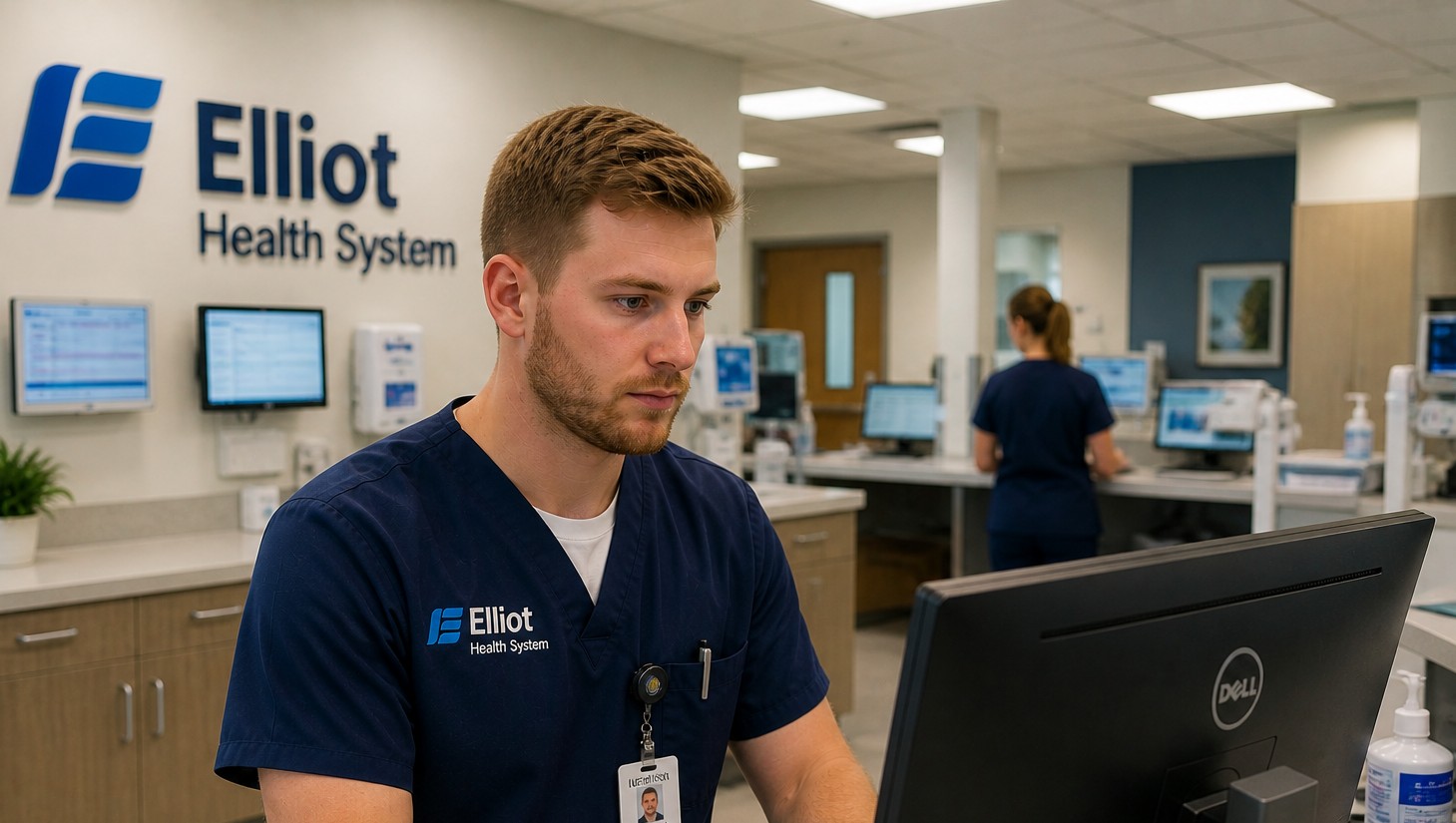
Elliot Health System reimburses tuition up to $4,000 per calendar year for full-time employees and $2,000 per calendar year for part-time employees, covering tuition, registration fees, and lab fees for Associate, Bachelor’s, Master’s, certificate programs, certifications, prep courses, challenge exams, GED preparation, and LNA programs. Beyond standard reimbursement, Elliot operates a named Loan Forgiveness Program that makes monthly contributions toward employees’ existing student loan balances. The combination of formal reimbursement plus active loan forgiveness is uncommon among employer education benefits and reflects Elliot’s strategic investment in nursing and clinical workforce retention. Elliot is also a confirmed corporate partner of Southern New Hampshire University (SNHU), providing employees and immediate family members a 10 percent tuition discount on SNHU’s online undergraduate and graduate programs, plus an additional documented 10 percent partnership with Walden University.
This guide walks through Elliot Health System’s documented education benefits, the workforce context (Elliot Hospital is a 296-bed acute care facility in Manchester, NH, the largest provider of comprehensive healthcare services in Southern New Hampshire; founded 1880 as a charitable trust and opened April 1890 as the first community general hospital in NH; Manchester’s designated Level II Regional Trauma Center; only Level III Neonatal Intensive Care Unit in southern New Hampshire; 17 locations across NH; busiest community hospital in New Hampshire by admissions volume; currently in proposed disaffiliation from SolutionHealth as of July 2025), the online degree paths that align with Elliot career trajectories from LNAs and clinical support staff through nursing, advanced practice, healthcare administration, and IT, and how to combine education benefits with federal financial aid for the most efficient career advancement strategy.
Quick Facts on Elliot Health System Education Benefits
| Quick Facts | Elliot Health System Education Benefits |
| Employer | Elliot Health System; founded 1880 as a charitable trust; not-for-profit 296-bed acute care facility in Manchester, NH; largest provider of comprehensive healthcare services in Southern New Hampshire; Manchester’s Level II Regional Trauma Center; member of SolutionHealth (currently in proposed disaffiliation as of July 2025) |
| Workforce | Approximately 4,000+ employees across the Elliot Hospital system; 17 NH locations including urgent care centers, ambulatory care centers, and physician offices; busiest community hospital in New Hampshire by admissions volume |
| Tuition reimbursement (full-time) | $4,000 per calendar year for full-time employees; covers tuition, registration fees, and lab fees |
| Tuition reimbursement (part-time) | $2,000 per calendar year for part-time employees; covers tuition, registration fees, and lab fees (uncommon, since most employer programs exclude part-time staff) |
| Eligible coursework | Associate, Bachelor’s, and Master’s degree programs; certificate programs; certifications; prep courses; challenge exams (for credit or credentialing purposes); GED programs; LNA programs |
| Loan Forgiveness Program | Elliot makes monthly contributions toward employees’ existing student loan balances; applied to principal amount of qualified student loans; uncommon among employer programs and structurally distinct from forward-looking tuition reimbursement |
| Partner school discounts | SNHU 10% tuition discount (confirmed corporate partnership); Walden University 10% discount (confirmed via Director of Ambulatory Nursing case study); agreements with several additional institutions for tuition discounts |
| Apprenticeship pathways | Paid 8-week LNA apprenticeship in partnership with Manchester Community College and ApprenticeshipNH; full-time pay from day one in classroom; guaranteed LNA position after licensure; Medical Assistant cohort apprenticeship through ApprenticeshipNH |
| Tax treatment | Federal Section 127 of the IRS Code allows up to $5,250 per year in employer-provided education assistance to be tax-free; the $4,000 full-time cap falls below this threshold so the full reimbursement amount is received tax-free |

How Elliot’s Tier Structure Works: $2,000 Part-Time and $4,000 Full-Time
Elliot Health System’s tuition reimbursement program is one of the more concretely documented programs among regional New Hampshire hospitals. The official benefits page publishes specific annual reimbursement caps that vary by employment status: $4,000 per calendar year for full-time employees and $2,000 per calendar year for part-time employees. Both tiers cover tuition, registration fees, and lab fees, which is broader coverage than reimbursement programs that cover tuition only. The $4,000 full-time cap is meaningfully higher than typical regional hospital programs (Concord Hospital’s $2,000 annual cap, DHMC’s $3,000 annual cap), and the explicit part-time tier is uncommon among employer programs that typically exclude part-time staff entirely.
Eligible coursework scope is unusually broad
Most employer tuition programs limit reimbursement to formal degree coursework or job-related professional development. Elliot’s program covers a broader scope: Associate, Bachelor’s, and Master’s degree programs, certificate programs, certifications, prep courses, challenge exams (for credit or credentialing purposes), GED programs, and LNA programs. The GED inclusion is particularly meaningful for Elliot’s workforce inclusion strategy, as it allows employees without high school equivalency to pursue secondary credential completion before moving into degree-track coursework. The LNA program inclusion supports career pathway development from entry-level positions into licensed clinical roles.
Approval and grade requirements
Eligibility requires satisfying an introductory waiting period before applying for reimbursement. Approved coursework must be related to current employment or required by a degree program at an accredited college or university. Grade guidelines apply to receive reimbursement, which means employees must complete coursework with passing grades (specific minimum grade thresholds are administered through Elliot HR). Reimbursement is processed after course completion rather than as upfront payment, which means employees pay tuition upfront and receive reimbursement after submitting proof of grade and completion.
The Elliot Loan Forgiveness Program
Elliot Health System operates a named Loan Forgiveness Program that makes monthly employer contributions toward existing employee student loan balances. The program is structurally distinct from forward-looking tuition reimbursement: instead of covering coursework an employee is currently taking, the loan forgiveness program addresses student debt employees brought into their Elliot career from prior education. This dual-track structure (forward-looking tuition reimbursement plus backward-looking loan forgiveness) addresses the full timeline of an employee’s educational financial picture.
How the loan forgiveness program works
Per a documented employee case study from Director of Ambulatory Nursing – Primary Care Melissa Taylor, employees who qualify for the loan forgiveness program receive monthly contributions applied to the principal amount of their qualified student loans. Taylor describes seeing her loan balance decrease rapidly with the additional monies applied to principal. The structure means each monthly contribution reduces both the principal balance and the total interest accrued over the remaining loan term, producing more favorable economics than contributions applied to interest alone. Specific eligibility requirements, monthly contribution amounts, and qualifying loan types are administered through Elliot HR and the SolutionHealth benefits team.
Why loan forgiveness is meaningful for clinical workforce retention
Loan forgiveness as an employer benefit is uncommon among regional hospitals and addresses a specific workforce retention challenge: nurses and other clinical professionals often enter the workforce with substantial student loan debt from RN, BSN, or MSN program completion. Forward-looking tuition reimbursement supports continued credential building, but does not address pre-existing loan balances. By offering active loan forgiveness alongside tuition reimbursement, Elliot creates a financial benefit that retains clinical staff who might otherwise leave for higher-compensation employers. The combined Taylor case study documents that her final cost for both her BSN at SNHU and MSN at Walden was less than half of what the balance would have been without the financial supports.

Paid Apprenticeship Pathways
Elliot Health System operates two apprenticeship pathways that pay participants from day one of training, partnering with Manchester Community College and ApprenticeshipNH (a workforce training program of the Community College System of New Hampshire). The pay-from-day-one structure is uncommon and addresses the financial barrier that typically prevents working adults from pursuing healthcare credentialing pathways.
LNA (Licensed Nursing Assistant) apprenticeship
The 8-week LNA apprenticeship combines intensive classroom study, lab work, and clinical practicum with a mentor. Students are paid as full-time Elliot employees from the moment they enter the classroom, which removes the need for participants to juggle a separate job while completing the LNA training. Upon successful completion of the program and passing of the Nurse Assistant Competency Evaluation (NACE) national exam, qualified students are offered guaranteed full-time employment as an LNA at Elliot Health System. The program is described as a long-term career launching pad with goals like becoming an RN, given the LNA role’s foundation in clinical experience.
Medical Assistant cohort apprenticeship
Elliot also operates a Medical Assistant (MA) cohort apprenticeship through ApprenticeshipNH. The MA apprenticeship follows a similar structure to the LNA program, providing paid training and credentialing pathway support for individuals pursuing MA careers. Both apprenticeship programs feed Elliot’s clinical workforce pipeline and create entry points for individuals from the surrounding Manchester community to begin healthcare careers without the financial barriers typical of self-funded clinical training programs.
How apprenticeship pathways feed into degree completion
Elliot’s apprenticeship pathways are designed to launch healthcare careers, after which the standard tuition reimbursement program supports continued credential building. An LNA apprenticeship graduate who has been hired into a guaranteed Elliot LNA position can subsequently pursue LPN bridge programs, RN credentialing, and ultimately BSN and MSN completion at SNHU, Walden, or other partner schools using Elliot’s $4,000 annual reimbursement plus partner school discounts plus the loan forgiveness program for any prior debt. The two-stage pathway (apprenticeship into role, then formal degree completion through reimbursement and partner discounts) supports long-term career mobility for Manchester-area community members.
Partner School Discounts: SNHU, Walden, and Beyond
Elliot Health System has agreements with several institutions to provide tuition discounts for employees, with the SNHU 10 percent partnership and the Walden University 10 percent partnership both confirmed via the Melissa Taylor employee case study. The multi-partner network allows employees to choose programs based on academic fit (curriculum, schedule, program reputation) rather than being limited to a single partner school. Both SNHU and Walden are well-established online universities serving working adult populations, with extensive program catalogs aligned to healthcare and business career trajectories.
The SNHU partnership
Elliot is a confirmed SNHU corporate partner, which means employees and immediate family members are eligible for a 10 percent tuition discount on SNHU’s online undergraduate and graduate degree programs through SNHU’s workforce partnership program. SNHU’s online undergraduate tuition with the Elliot partnership discount runs approximately $873 per course (down from the standard $970 per course rate), and online graduate tuition runs approximately $1,681 per course with the discount applied. For a typical 30-credit academic year, the partnership discount alone produces a $970 savings before any internal Elliot reimbursement is applied.
The Walden University partnership
Walden University is a separate online university with strong programs in healthcare administration, nursing (MSN), public health, and behavioral health. The Elliot 10 percent Walden discount applies to Walden’s online undergraduate and graduate programs and is documented via the Melissa Taylor case study, where Taylor used the Walden discount for her MSN completion in 2022. The Walden partnership is meaningful for Elliot employees pursuing graduate-level credentials in fields where Walden has stronger program reputation than SNHU, particularly in nursing leadership and public health.
Stacking math for full-time RN pursuing BSN at SNHU
A typical Elliot full-time RN pursuing BSN completion at SNHU online would experience the following cost-benefit math: SNHU online undergraduate tuition at the Elliot 10 percent discount runs approximately $873 per course; for a 30-credit BSN completion year (10 courses), tuition runs approximately $8,730. Elliot’s $4,000 full-time annual reimbursement applies, leaving approximately $4,730 in remaining tuition. Federal Pell Grants (up to $7,395 per year for income-eligible employees) can effectively eliminate the remaining cost or meaningfully reduce it. For an RN with prior student loan debt, the loan forgiveness program adds further monthly contribution toward principal reduction. The Taylor case study confirms this stacking math produces final cost reduction of more than half compared to unsupported tuition payment.

Best Online Degrees by Elliot Career Track
Elliot Health System’s workforce spans physician and advanced practice clinical roles, nursing (RNs, LPNs, LNAs), medical assistants and clinical support, pharmacy, behavioral health and counseling, medical imaging and laboratory, therapy services, emergency department and surgical staff, environmental and food services, administrative support, finance and business analytics, IT and cybersecurity, marketing and communications, HR, and corporate functions. Each track has different credential requirements and career trajectories. The following sections walk through online degree options aligned with each major Elliot career track.
LNAs and clinical support staff
LNAs and clinical support staff make up Elliot’s largest hourly clinical workforce population. Per the Bureau of Labor Statistics’ Occupational Outlook Handbook for medical assistants, entry-level clinical support roles offer median wages around $42,000 with strong projected growth and serve as foundations for longer healthcare careers, with promotion into LPN, RN, and clinical specialist roles requiring formal nursing credentials.
LNAs at Elliot pursuing nursing track advancement typically combine community college LPN programs with formal degree completion through Elliot’s tuition reimbursement program ($2,000 part-time / $4,000 full-time annual) plus the SNHU or Walden partnership discount and federal Pell Grants for income-eligible associates. The Elliot Loan Forgiveness Program adds further support for employees who entered Elliot with prior student loan debt. Apprenticeship-funded LNAs (those who entered Elliot through the paid apprenticeship pathway) have particularly favorable economics for continuing their credential pathway since their LNA training itself was Elliot-funded.
Licensed practical nurses (LPNs) pursuing RN advancement
LPNs at Elliot pursuing RN advancement typically follow LPN-to-RN bridge programs at New Hampshire community colleges followed by RN-to-BSN completion at SNHU online or Walden online. Per BLS data on LPNs, LPN roles offer median wages around $59,000 with senior LPN and LPN supervisor advancement requiring some combination of internal experience and pursuit of RN credential. The bridge program timeline is typically 1 to 2 years for LPN-to-RN completion, plus an additional 1 to 2 years for BSN completion through programs like SNHU’s online RN-to-BSN.
Registered nurses pursuing BSN, MSN, or DNP advancement
Elliot’s RN workforce supports the full range of clinical specialties across the 296-bed Elliot Hospital and 17 NH locations including the Level II Trauma Center, the Level III NICU, and Manchester’s Pediatric Emergency Department. Per BLS data on registered nurses, RN roles offer median wages around $86,000 with senior RN advancement (charge nurse, nurse manager, clinical specialist, advanced practice) requiring BSN at minimum and graduate-level credentials for advanced practice and leadership roles. RN-to-BSN completion at SNHU’s online program or Walden’s online program typically takes 12 to 18 months for working RNs with prior diploma or associate’s-level nursing education.
The Melissa Taylor case study documents the BSN completion timeline at SNHU using the 10 percent partnership discount plus reimbursement plus loan forgiveness, and the subsequent MSN completion at Walden using the 10 percent Walden discount. This documented pathway is replicable for current Elliot RNs targeting nursing leadership roles. Walden’s MSN with healthcare leadership concentration aligns with the ambulatory clinical nurse manager and director track that Taylor followed.
Advanced practice clinicians (NPs, PAs)
Elliot employs nurse practitioners and physician assistants across primary care, urgent care, and specialty practices including the Solinsky Center for Cancer Care and Elliot Pediatrics. Per BLS data on nurse practitioners, advanced practice clinical roles offer median wages around $129,000 with strong projected growth (38 percent through 2034 for NPs). NP and PA programs require dedicated graduate programs accredited by their respective profession-specific accreditors and typically include substantial clinical hours that cannot be completed fully online.
Healthcare administration and management
Elliot’s administrative and management workforce supports the 296-bed acute care facility plus 17 NH locations, ambulatory care centers, and the Mary & John Elliot Charitable Foundation. Per BLS data on medical and health services managers, healthcare management roles offer median wages around $117,000 with strong projected growth (28 percent through 2034) and senior healthcare management reaching $170,000+. Career advancement requires bachelor’s-level credentials at minimum, with senior management benefiting from MHA, MBA with healthcare concentration, or MSN with leadership concentration.
Online programs aligned with healthcare administration career advancement at Elliot include SNHU’s BS and MS in Healthcare Administration, SNHU’s MBA with healthcare management concentration, Walden’s MS in Healthcare Administration, and other partner programs available at discount through the Elliot multi-partner network. Our guide to the best online MBA programs for working adults walks through MBA options that fit Elliot’s reimbursement structure efficiently for management track candidates.
IT, cybersecurity, and health informatics
Elliot’s IT and technology workforce supports clinical systems, electronic health records (Epic Systems-based MyChart), patient portals, and the cybersecurity infrastructure that protects patient data. Per BLS data on information security analysts, healthcare cybersecurity roles offer median wages around $124,000 with strong projected growth (33 percent through 2034) given the regulatory and patient-data sensitivity in the healthcare sector. Career advancement requires bachelor’s degrees in IT, computer science, or cybersecurity plus active certifications (CISSP, CISM, HCISPP for healthcare-specific work).
Online programs aligned with IT career advancement at Elliot include SNHU’s BS and MS in Cybersecurity, BS and MS in Information Technology, and the BS in Health Information Management. Our overview of the best online master’s in cybersecurity programs covers cybersecurity graduate program options. For data analytics and clinical informatics track associates, our overview of the best online master’s in data science programs covers data analytics options. Our guide to which online IT degree has the best career outlook walks through technology decision frameworks for working IT professionals at academic-affiliated health systems.
Behavioral health, counseling, and social work
Elliot employs behavioral health clinicians, social workers, counselors, and care managers supporting integrated behavioral health services. Career advancement in behavioral health requires master’s-level credentials (MSW for licensed clinical social work, MS in Mental Health Counseling for licensed counseling, or related graduate programs) plus state licensure. Online MSW programs at CSWE-accredited schools support advancement, and Walden University offers strong online MSW and MS in Counseling programs that may fit Elliot’s Walden partnership discount. Our overview of the best online MSW programs walks through online MSW options for working behavioral health professionals.

Stacking Elliot Education Benefits With Federal Financial Aid
Federal financial aid stacks with employer education benefits and partner school discounts under most circumstances. Pell Grants for low-income working adults provide up to approximately $7,395 per year and do not require repayment. Many entry-level Elliot LNAs, MAs, clinical support staff, and administrative associates qualify for Pell Grants based on income. Federal Stafford Loans cover additional tuition at fixed interest rates with deferred repayment until after enrollment ends. Our guide to FAFSA for online students walks through the federal aid application process for working adults.
The optimal funding strategy for Elliot employees pursuing online degrees combines Pell Grants first (which do not need to be repaid), then partner school discount applied to remaining tuition (SNHU 10 percent, Walden 10 percent, or other partner discount), then Elliot tuition reimbursement (up to $4,000 full-time / $2,000 part-time annual) applied to remaining tuition, then Stafford Loans for any remaining gap, and finally out-of-pocket payment from monthly cash flow if needed. Employees with existing student loan debt should also enroll in the Loan Forgiveness Program to receive monthly contributions toward existing principal balances. Our guides to how much you should borrow for an online degree and how adult students can graduate with minimal debt walk through the borrowing thresholds that produce manageable repayment relative to expected post-graduation healthcare compensation.
Questions to Ask Elliot HR Before Enrolling
Before signing up for tuition reimbursement or pursuing the loan forgiveness program, verify the current program terms with HR in writing. The questions below are designed to surface program details that affect long-term planning across both the forward-looking reimbursement track and the backward-looking loan forgiveness track.
- Are the published $4,000 full-time and $2,000 part-time annual caps current? Verify both annual reimbursement amounts and how they apply to your specific employment classification.
- What is the introductory waiting period before eligibility? Most healthcare programs require 6 months to 1 year of service; verify the specific window for Elliot.
- What grade requirement applies for reimbursement? Most programs require a C or higher (sometimes B or higher for graduate work); failed courses are typically not reimbursed.
- Am I eligible for the Loan Forgiveness Program? Verify eligibility criteria, monthly contribution amounts, qualifying loan types, and how to enroll in the program.
- How does the Loan Forgiveness Program interact with standard tuition reimbursement? The two programs serve different purposes (existing debt vs forward-looking reimbursement) and typically can be used together; confirm with HR.
- Which partner school discounts are currently active? SNHU and Walden are confirmed; ask about other ‘agreements with several institutions’ referenced in employee testimonials.
- Are professional certifications and license fees reimbursable? Healthcare certifications (BLS, ACLS, specialty nursing certifications) and prep course fees are explicitly covered per the official benefits page.
- How does the proposed SolutionHealth disaffiliation affect benefit administration? As of July 2025, SolutionHealth filed for disaffiliation; the separation is in regulatory review. Verify whether benefit administration changes are expected during or after the separation period.
- Is there a retention agreement or clawback? Some healthcare programs require employees to remain at the company for a defined period after coursework completion; verify whether this applies and the repayment formula.
- Are LNA and Medical Assistant apprenticeship cohorts open to current employees? The apprenticeships are designed for new entrants but may have continuing education tracks for existing staff pursuing credentialing pathways.
Should You Use Elliot’s Education Benefits?
For Elliot Health System employees pursuing online degree completion or graduate-level credentials, the answer is yes for most career situations. The combination of Elliot’s tier-structured tuition reimbursement ($4,000 full-time / $2,000 part-time annual, covering Associate through Master’s plus certifications, GED, and LNA programs), the named Loan Forgiveness Program for existing student debt, the SNHU 10 percent partnership discount, the Walden University 10 percent partnership discount, the paid LNA and Medical Assistant apprenticeships, and federal Pell Grants for income-eligible employees produces one of the most comprehensive education benefit structures available among regional New Hampshire hospitals. The Complete Guide to Earning an Accredited Online Degree as an Adult Learner provides additional context for evaluating online program fit before applying.
The strongest use cases for Elliot employees are RN-to-BSN completion at SNHU online or Walden online for working RNs targeting clinical or leadership advancement (the documented Melissa Taylor pathway); MSN programs at Walden or SNHU for nursing leadership and education track candidates; healthcare administration bachelor’s and master’s programs at SNHU for clinic operations and management track associates; MBA programs at SNHU for senior administrative track candidates; cybersecurity and IT credentials at SNHU for healthcare technology and informatics track associates; and LNA or MA apprenticeship pathways for community members pursuing healthcare careers. Our overview of the best online MBA programs for working adults walks through MBA options aligned with Elliot healthcare administration career trajectories.
Part-time Elliot employees should take particular note of the program’s explicit $2,000 part-time tier, which is uncommon among employer programs. Employees with existing student loan debt should enroll in the Loan Forgiveness Program in addition to using forward-looking tuition reimbursement; the two programs work together to address both legacy debt and ongoing credential building. Manchester-area community members interested in entering healthcare should consider the paid LNA or MA apprenticeship pathways, which provide credentialing plus guaranteed employment with no upfront tuition cost. Our guide to how adult students can graduate with minimal debt walks through the cost-management strategies that work for working adults in healthcare careers.

Related Reading
- Best Online MBA Programs for Working Adults. Graduate-level options for Elliot healthcare administration and senior management track candidates.
- Best Online MSW Programs. For Elliot behavioral health and social work track clinicians.
- Best Online Master’s in Cybersecurity Programs. For Elliot IT security and healthcare cybersecurity track associates.
- Best Online Master’s in Data Science Programs. For Elliot analytics and clinical informatics track associates.
- Returning to College After 30. Adult learner framework for Elliot clinical staff restarting their education.
Start Your Online Degree Through SNHU’s Elliot Partnership
Elliot Health System employees and immediate family members can take advantage of the SNHU workforce partnership to reduce their out-of-pocket cost for an online bachelor’s, master’s, or certificate program. The 10 percent tuition discount applies to all online undergraduate and graduate degree programs at SNHU and combines with Elliot’s tuition reimbursement (up to $4,000 full-time / $2,000 part-time annually) plus the Loan Forgiveness Program plus federal Pell Grants for income-eligible employees to produce one of the most cost-efficient online degree pathways available to working healthcare professionals in New Hampshire. Visit SNHU’s workforce partnerships page to start the enrollment request process; an SNHU admission counselor will contact you with details on the partnership discount, transfer credit evaluation, and program selection. The Complete Guide to Earning an Accredited Online Degree as an Adult Learner provides additional context on combining employer benefits with federal aid.

