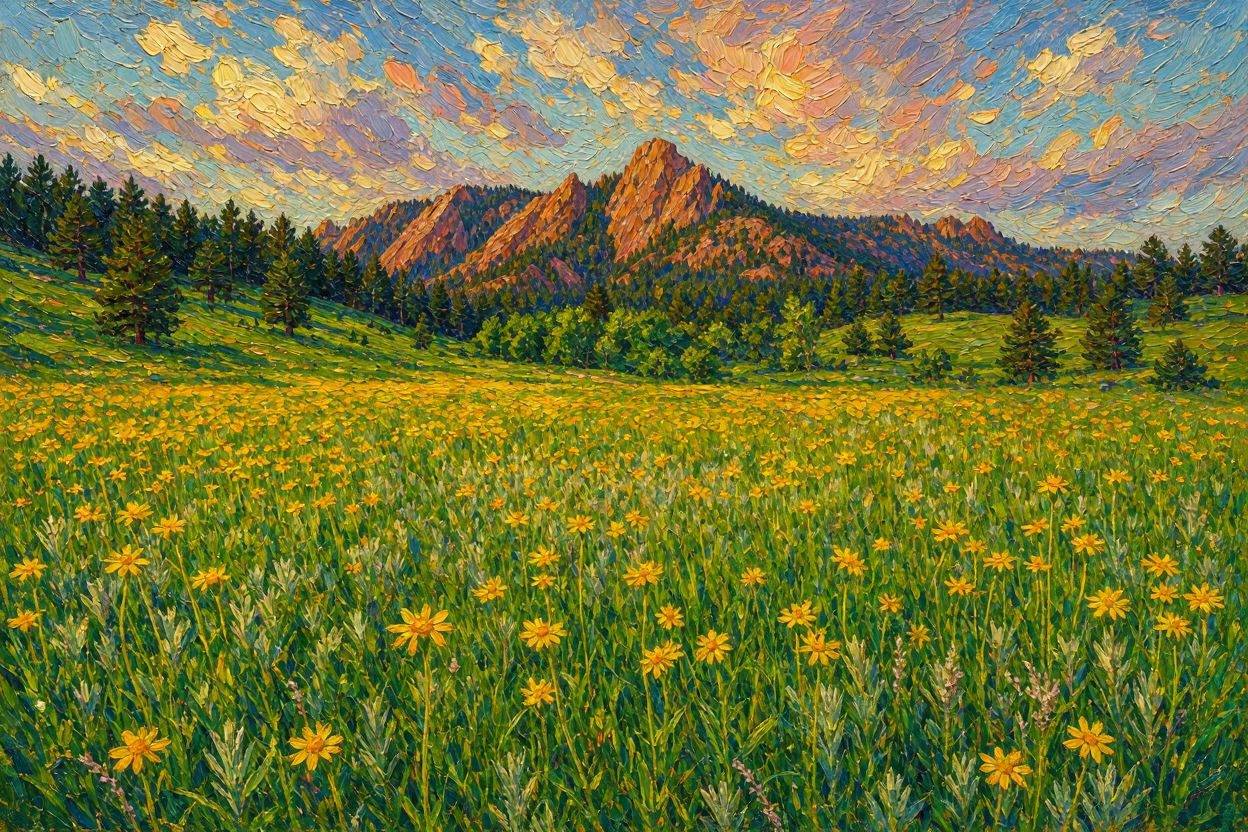
Boulder sits in a narrow valley between the Flatirons and the plains. That geography shapes more than the view from Chautauqua Park. It also shapes the kind of student Boulder produces: curious, outdoorsy, and steeped in research infrastructure. Students at Fairview, Boulder High, Monarch, Silver Creek, and Niwot have real access to federal labs and a research university. They also share an unusually intact greenbelt most cities lack. Turning that access into a competitive application, however, takes more than living nearby. It takes sustained, specific engagement.
What Makes Boulder Genuinely Distinctive
A 1959 ballot measure known as the Blue Line largely defined Boulder’s civic identity. Voters barred the city from extending water service above a set elevation on the mountain backdrop. That single decision set the tone for six decades of deliberate growth limits. Today, the city’s Open Space and Mountain Parks department preserves more than 46,000 acres of land that wraps around Boulder on three sides. Most cities of comparable size never built a greenbelt like it, and few could build one now.
Downtown, Pearl Street Mall has anchored civic life since 1977. That year, the city converted four blocks of its main commercial strip into one of the country’s earliest pedestrian malls. Just west of downtown, Chautauqua Park sits at the base of the Flatirons as a National Historic Landmark. It remains one of the few Chautauqua assemblies still operating west of the Mississippi.
Together, these places give Boulder students an uncommon set of essay material: a city that chose, again and again, to limit its own growth in favor of open land and civic space. Students who write with precision, citing the Blue Line or a specific OSMP trail restoration, tend to produce far stronger supplemental essays than students who lean on scenery alone. Specificity, not scenery, is what admissions readers respond to.

Boulder’s Place in the National Admissions Landscape
Colorado is not among the most heavily overrepresented states in elite admissions pools. Boulder itself, however, punches above its weight. The city’s concentration of PhDs and research faculty produces an unusually well-informed applicant pool relative to the state’s overall population. That density cuts both ways. Students benefit from role models and research access that few peers elsewhere have. At the same time, they compete locally against classmates with similarly polished resumes.
One local pattern is worth naming directly: the flagship anchor bias. CU Boulder is an excellent, nationally ranked research university just a few miles from most students’ front doors. As a result, families sometimes default to it as the safe, known option and underinvest in researching schools further afield. That instinct is not wrong, just incomplete. Broadening a college list beyond the local flagship tends to serve well-prepared Boulder students far better than a list built around convenience. Applying Early Decision somewhere that is a genuine first choice, rather than a fallback, matters too.
Colorado gives students the SAT statewide instead of the ACT, so most Boulder students carry a baseline score into junior spring. That said, geographic context and testing familiarity only help students who have already built a strong profile. A regional essay angle cannot substitute for depth. Colleges consistently reward sustained, multi-year engagement over a long list of one-semester activities. In the end, that holds whether the angle is research, civic work, the arts, or the outdoors.
Programs and Opportunities for Boulder High Schoolers
The programs below span Boulder’s research economy, its civic infrastructure, its arts scene, and its surrounding open space. That range gives students several distinct ways to build a multi-year record instead of a single credential.
CU Boulder Science Discovery’s STEM Research Experience
CU Science Discovery places motivated high schoolers directly into CU Boulder and CU Anschutz research labs. The paid mentorship runs seven weeks, typically from June through July. Admission goes through a competitive application, not open enrollment.
Accepted students work roughly 20 hours a week on an active research project. Responsibilities include collecting and analyzing data, running experiments, and doing background literature review alongside a faculty or graduate-student mentor. Participants also attend a weekly Research Methods Seminar covering literature searches, data visualization, and scientific writing. The program closes with a public poster session.
For students drawn to bench science, field research, or engineering, this is one of the most authentic research placements in the state. Because it is selective, strong grades and a clear area of interest matter from the start.
The City of Boulder’s Youth Opportunities Advisory Board
The Youth Opportunities Advisory Board (YOAB) is a standing board of 16 high school students appointed by the Boulder City Manager to advise city government directly. Members serve one-year, renewable terms and represent the diversity of Boulder’s youth community. Current eighth, ninth, tenth, and eleventh graders who live in the City of Boulder, including most of Gunbarrel, may apply each spring for the following school year, and no prior leadership experience is required.
Board members design and run their own community projects rather than simply attending meetings. Recent YOAB work has focused on the city’s Child Friendly Cities Initiative priorities: addressing bullying, improving youth safety and belonging, and creating channels for young people to share opinions directly with the city. A standing YOAB workgroup also partners with the Boulder Police Department on youth-community trust building. Interested students should watch the city’s Youth Opportunities Advisory Board page each spring for the application window.
For students interested in public policy, local government, or civic organizing, YOAB offers a documented, multi-year seat at the table rather than a single semester of volunteering.
BMoCA’s Studio Project Teen Program
The Boulder Museum of Contemporary Art runs Studio Project, a free program open to all ninth through twelfth graders in Boulder and the surrounding counties. Students meet weekly during the fall and spring semesters. They make art alongside professional artists while examining social issues that affect their own communities. Students may apply for one semester or both.
Because the program centers on dialogue and social issues rather than technique alone, it suits art-school-bound students as well as students whose primary interest is civic or social engagement expressed through a creative medium.
Boulder County Audubon’s Teen Naturalists
For students drawn to ecology or field science, Boulder County Audubon’s Teen Naturalists program offers a free, nearly year-round outlet. The group meets roughly monthly from September through June for wildlife surveys, bioblitzes, and nature photography outings across Boulder County. Any middle or high school student can join at no cost.
Students who stay involved over multiple years can also apply for the organization’s Hog Island scholarship. The award covers a week at the National Audubon Society’s Coastal Maine Bird Studies for Teens camp for Colorado students aged 15 to 17. Because the program rewards consistent participation over a single event, it suits ninth or tenth graders especially well, since they will be able to build a multi-year record in field ecology before applications come due.

Final Thoughts
None of these programs, on their own, will make an application. What they offer instead is a foothold. A Boulder student can turn genuine local access, whether to a CU Boulder research lab, a city planning process, a museum studio, or a county bird count, into two or three years of documented, specific engagement. That kind of depth, paired with an essay grounded in something as concrete as the Blue Line or a particular OSMP trail, tends to read as far more distinctive than a generic list of clubs. College Transitions works with Boulder-area families on exactly this kind of strategy: building a balanced college list and sequencing research and civic opportunities across high school so a strong profile is ready well before senior fall.