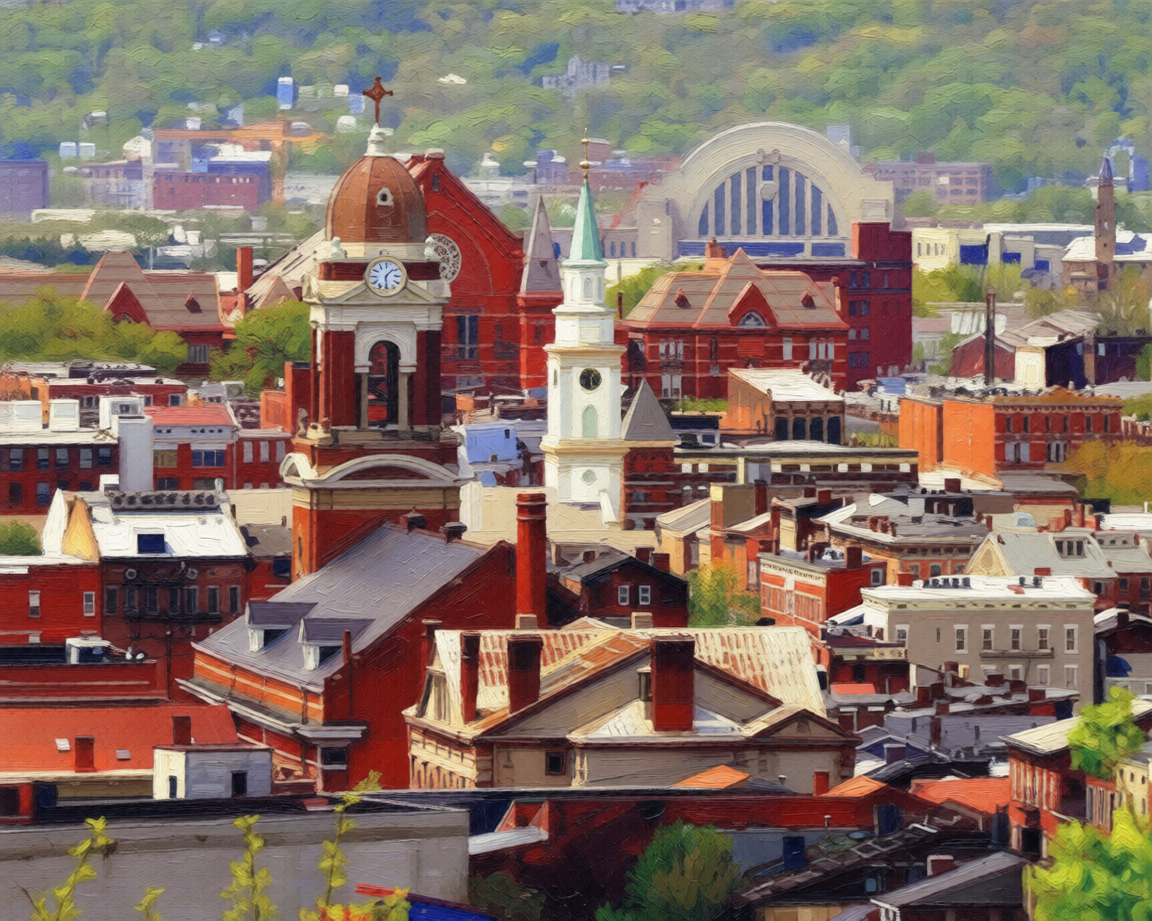
Cincinnati sits in a river basin ringed by hills. That same geography shapes its neighborhoods and gives the city its nickname, the City of Seven Hills. For a high school student, that same setting also offers something less obvious. It functions as a working laboratory of urban design, corporate research, and civic life. Few other mid-sized cities can match it. Students who seek out what is nearby, rather than waiting for it, build a profile that reads as their own.
The National Admissions Picture
Ohio occupies a middle position in the national admissions landscape. Colleges do not treat it as an overrepresented state, the way they treat parts of the Northeast or California. By contrast, Ohio is not a rare address that catches a reader’s eye on its own. As a result, a Cincinnati student’s local ties alone will not carry an application. Those ties only amplify a profile that is already strong on its own terms.
The Flagship Anchor Bias
Families in the Cincinnati area often default to Ohio State or the University of Cincinnati as the safe, familiar choice. That instinct is not wrong. But students aiming for the most selective colleges should resist letting a nearby flagship narrow their list. Instead, they should research programs elsewhere that fit just as well. Early Decision can be a smart move once a student has identified a genuine first-choice program. It signals a level of commitment that regular decision cannot. However, ED only helps once the underlying application is already competitive; it is not a shortcut around a thin resume. In the end, depth matters more than breadth. A student who sticks with one or two areas over time builds a stronger profile than one juggling many activities.
What Makes Cincinnati Distinctive
Notably, Cincinnati’s built environment is unusual for an American city its size. Over-the-Rhine, just north of downtown, holds one of the largest contiguous historic districts in the country. Decades of vacancy nearly emptied its nineteenth-century Italianate buildings, but a sustained, still-ongoing revitalization effort brought them back into use. Beyond the built environment, the city offers more raw material. Its river-basin topography, its brewing history, and its corporate headquarters growth all give students place-rooted material to work with. A student writing about Cincinnati does not need vague language about diversity or opportunity. The hills, the century-old building stock, and the tension between preservation and new development anchor a strong essay. In turn, the opportunities below build on that same specificity.
Building a Profile Through Cincinnati’s Opportunities
The programs below span design, technology, environmental work, and community service. Students can choose based on genuine interest rather than which one looks best on paper.
Design and Planning: DAAPcamps at the University of Cincinnati
The University of Cincinnati’s College of Design, Architecture, Art, and Planning runs DAAPcamps each summer. Its lineup includes a studio track in Urban Planning, alongside architecture, industrial design, and several other creative disciplines. Rising 9th through 12th graders can attend as day campers. Those in 10th, 11th, or 12th grade can also opt for a week-long residential camp. That option includes living in UC housing, studio projects, and a Cincinnati-focused field trip. DAAP faculty and current students teach both formats. A student who wants firsthand exposure to how planners think about Cincinnati gets a direct path to that experience. UC opens an early notification list each July for the following summer’s dates and registration.
Technology and Business: INTERalliance INTERnships
INTERalliance of Greater Cincinnati places students in paid, ten-week internships at major regional employers, including Procter & Gamble and GE. The internships run from early June through mid-August. Any student completing 9th through 12th grade this year can apply. Applicants need reliable transportation to and from the worksite, a one-page resume, and a free INTERalliance student membership. Applications typically open in the fall and close in late February. Students interested in a technology or business track should start that paperwork well before spring. Interns work with mentors and attend leadership workshops, which gives the experience more substance than a typical summer job.
Environmental Stewardship: Groundwork Ohio River Valley’s Green Team
Groundwork Ohio River Valley hires local teenagers, ages 14 through 18, for its Green Team. In doing so, this paid, seasonal program puts students to work on real infrastructure. Interns clear invasive species, plant trees, install garden beds, and build green space in Cincinnati neighborhoods that need it most. Last season, the organization employed 98 high school youth, plus a smaller cohort of young adult Youth Leaders. For a student drawn to environmental science, civil engineering, or urban planning, this is a rare opportunity. Few programs in the region pair a paycheck with hands-on fieldwork instead of a classroom simulation of it.
Community Engagement: Cincinnati & Hamilton County Public Library Teen Volunteer Program
Students ages 12 through 18 can apply to volunteer at branches of the Cincinnati & Hamilton County Public Library. Roles range from Summer Reading Program assistance to ongoing branch support. Applications run on a rolling basis through the library’s online portal, and there is no cost to participate. This program will not carry the same weight as a paid research placement. But for a student still exploring interests, it offers an accessible starting point. It also works well for one who needs a lower-commitment way to build consistency. That starting point can grow into a longer-term role.

Charting a Path Forward
None of these programs will do the work of building a strong applicant on their own. What moves an application forward is a student who commits to one or two areas over time. That student also pursues the most rigorous coursework available. In the end, genuine growth matters more than a checklist of unrelated activities. For students, Cincinnati happens to offer an unusually direct route into design, technology, environmental work, and civic life. Students only need to seek it out. Options range from a week in a DAAP studio to a summer inside a Fortune 500 company through INTERalliance. They also include a season with Groundwork ORV’s Green Team or a steady volunteer shift at the local library. Students and families who want help turning these experiences into a competitive application can find it through College Transitions.