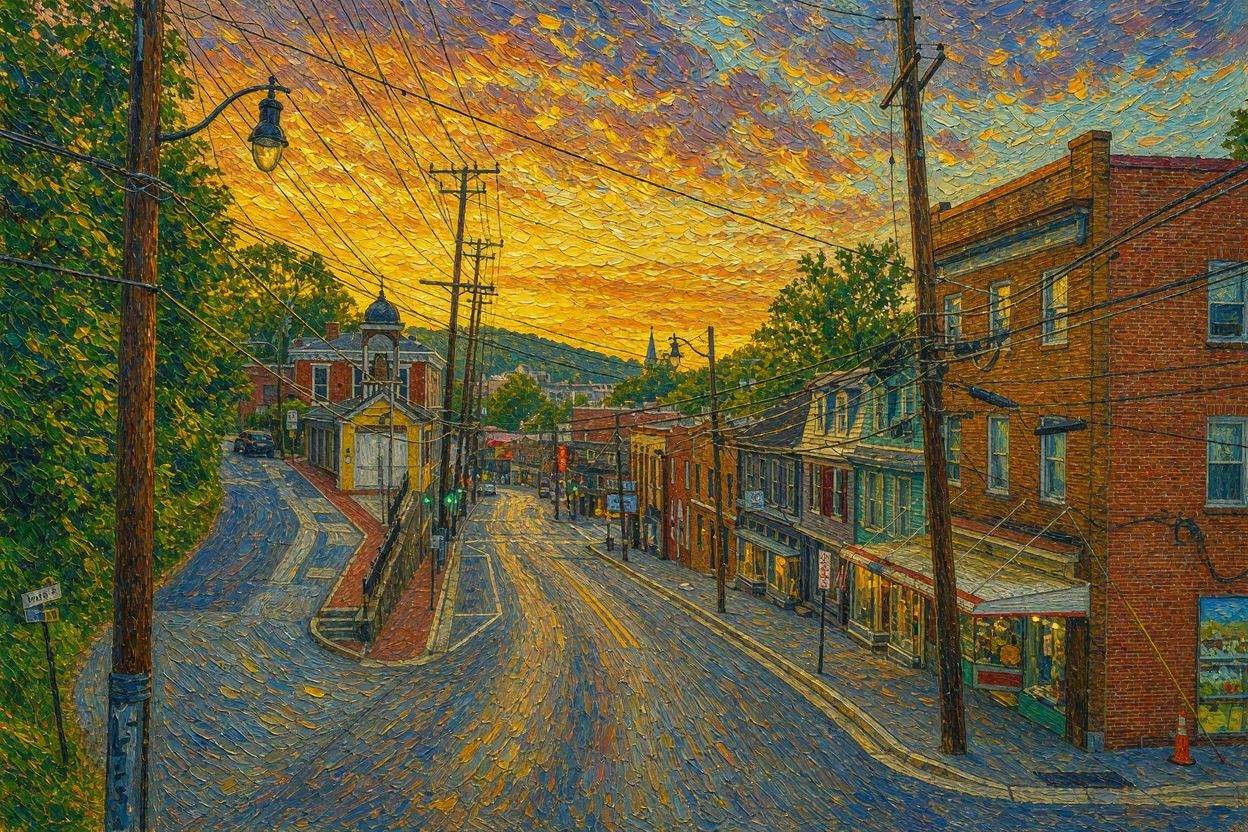
Howard County sits in an unusual position on the map: close enough to Washington, D.C. and Baltimore to borrow both cities’ resources, yet distinct enough to have built its own research and civic infrastructure. For ambitious students in Clarksville, Columbia, Ellicott City, and the county’s other communities, that position translates into real opportunities. Students who know where to look can find themselves working alongside engineers at a federally funded research laboratory, conducting climate research with university scientists, or building sustained community involvement through local institutions.

The National Admissions Picture for Howard County Students
Howard County families compete in one of the most saturated applicant pools in the country. Maryland sits inside the Mid-Atlantic admissions corridor, a region that produces a disproportionate share of highly qualified applicants relative to its population. Consequently, admissions officers at selective colleges see far more strong Howard County transcripts each year than they can accept, which means rigor and involvement alone rarely separate one applicant from another. Depth in a genuine area of interest, sustained over multiple years, carries far more weight than a long list of one-off activities. A student who spends two summers deepening the same research question will generally stand out more than a student who samples five unrelated clubs.
The Flagship Anchor Bias
Because the University of Maryland, College Park sits just down the road, many Howard County families default to it as the obvious landing spot, especially given the university’s Banneker/Key Scholars Program for top in-state applicants. That instinct makes sense financially and logistically. However, students should be careful not to let geographic convenience narrow their college list before they have explored it. A strong flagship option should sit alongside a broader range of schools, including out-of-state universities and Early Decision options where a student’s profile fits particularly well. Early Decision can be a genuine strategic advantage for students whose top-choice school lines up with their academic interests, but it works best as the final step after a student has already built a substantive record, not as a shortcut around one.
What Makes Howard County Distinctive
Howard County’s identity is built on a set of deliberate choices, and those choices give students rich, specific material for college essays. Columbia itself began in 1967 as developer James Rouse’s planned community, organized into ten distinct villages, each with its own community center, so that residents of different backgrounds and income levels would share the same civic spaces. That founding vision still shapes how the county functions today, from its village associations to the interfaith centers built into several neighborhoods. Merriweather Post Pavilion, the outdoor amphitheater at the heart of that plan, has hosted major touring acts since 1967 and survived a decades-long preservation fight that only concluded when county leaders folded its renovation into the broader Downtown Columbia Master Plan.
By contrast, the county’s western half tells a different story. Since 1978, Howard County’s Agricultural Land Preservation Program has protected more than 23,000 acres of farmland through purchased development easements, one of Maryland’s strongest local preservation records. A county known nationally for its federal-contractor and biotech economy also maintains genuine farmland a few miles from its office parks, useful material for essays about land use or environmental policy. Ellicott City’s historic Main Street adds a third layer: an eighteenth-century mill town built into a granite gorge that has flooded catastrophically twice in recent years and rebuilt itself both times, a concrete case study in urban resilience. Together, these three identities (planned suburb, preserved farmland, and historic mill town) give Howard County students more essay material than a single narrative could.

Programs and Opportunities for Howard County Students
JHU APL’s ASPIRE Program
The Johns Hopkins University Applied Physics Laboratory in nearby Laurel runs ASPIRE, one of the region’s most substantive STEM opportunities for high schoolers. Open to juniors and seniors at least fifteen years old with a minimum 2.8 unweighted GPA who are U.S. citizens in select areas of Maryland, Virginia, or Washington, D.C., ASPIRE pairs students with an APL staff mentor on a real technical project in fields from computer science to biological and chemical sciences. The summer session is an intensive, unpaid internship requiring thirty to forty hours per week, and some students continue into an academic-year track from September through May. Applications open on a rolling basis, with acceptance rates around seven to ten percent, so students should apply early. Because APL sits just across the county line, ASPIRE is a natural extension of Howard County’s federal-research corridor for students interested in engineering.
UMD’s High School Internship Program in Geographical Sciences
Students drawn to environmental science and data analysis have a strong option at the University of Maryland’s Department of Geographical Sciences, which runs a six-week High School Internship Program (HIP) each summer for juniors and seniors across the greater Washington region. Funded through UMD’s Grand Challenges Institutional Grant on climate resilience, the program is fully remote, so a Howard County student can join without commuting to College Park. Interns work in small cohorts on real research projects, covering topics such as climate modeling and geospatial analysis, and close with a formal poster presentation modeled on an academic conference. Selection results are typically released in early April, and some participants continue their research through the following academic year. Students should also ask a teacher about nominating them for the program’s companion High School Awards, since that recognition can strengthen an application even without acceptance as an intern.
Howard County Library System’s Teen Volunteer Program
For students building sustained community involvement rather than a single research credential, the Howard County Library System offers an ongoing Teen Volunteer Program open to anyone fourteen and older, with parental permission required under eighteen. Roles vary by branch and include staffing the Makerspace, where teens can move from user to informal instructor over a year or two, plus supporting summer reading registration, class preparation, and system-wide events. All hours count toward Maryland’s Student Service Learning requirement, and branches such as Elkridge run structured application and training cycles each spring. What makes this valuable beyond the hours themselves is the possibility of depth: a student who volunteers at the same branch for two or three years, eventually taking on a leadership role, has a far more compelling profile than one who logs scattered one-time shifts elsewhere.

Building a Standout Application from Howard County
None of these programs work in isolation. Selective admissions officers are not looking for a checklist of impressive names; they want evidence that a student pursued a genuine interest with focus over time and can speak specifically about what they learned. A student who spends two summers at APL, or who builds real skill at the library Makerspace before mentoring younger volunteers, has a record that tells a coherent story on its own. That kind of depth matters more than touching every opportunity this article describes. Howard County offers students unusual raw material, from federal research labs to a flagship university down the road to a government actively preserving both its history and its farmland, and students who commit early to one or two of these threads will be better positioned than those who spread themselves thin. College Transitions can help turn these resources into a coherent, well-timed college strategy.