
Westchester County sits between two bodies of water. The Hudson River runs along its western edge, while Long Island Sound shapes its southern shoreline. In between, dozens of cities, towns, and villages share a dense web of rail lines, parkways, and reservoirs. For high school students, that compact geography matters. A teenager in Ossining can reach a biotech lab in Tarrytown, a hospital in Valhalla, and the county legislature in White Plains within a single afternoon.
That access is a real advantage. However, it also means that thousands of capable classmates can reach the same places. Below, we explain how Westchester students fit into the national admissions picture, what makes the county distinctive, and which local programs can help a student build depth instead of simply adding more activities.
The National Admissions Picture
New York sends a large volume of applicants to selective colleges every year. Consequently, admissions officers who cover the Northeast see deep pools of qualified students, and Westchester’s high-performing districts add to that depth. Strong grades and rigorous coursework are expected here rather than unusual.
That reality changes the strategy. Geographic advantages only help students who have already built strong academic profiles. In other words, a Regeneron internship or a county fellowship will not compensate for a thin transcript. These experiences work best when they extend an interest that a student has already pursued in class and on their own time.
Looking Past the Familiar List
Many Westchester families default to a short, familiar set of options. For some, that means SUNY university centers such as Binghamton or Stony Brook. Other families focus on the same handful of Ivy League and Northeastern liberal arts colleges that classmates target every year. Both habits can narrow a student’s choices too early.
Strong options exist in every region of the country. For example, research universities in the Midwest and South often offer generous merit aid and less crowded applicant pools from the New York suburbs. Similarly, many West Coast liberal arts colleges actively seek students from the Northeast. A balanced list should include reach, target, and likely schools across several regions.
Using Early Decision Wisely
Early Decision can help a student who has a clear first choice and has compared financial aid offers in advance. That said, many Westchester classmates apply ED to the same few schools. Students should therefore choose an ED school because it fits their academic goals, not because it is popular in their hallway. A thoughtful ED choice also pairs well with Early Action applications to schools elsewhere in the country.
With that landscape in mind, the next step is to understand what makes Westchester itself a source of material for both activities and essays.
What Makes Westchester County Distinctive
Water That Built a City
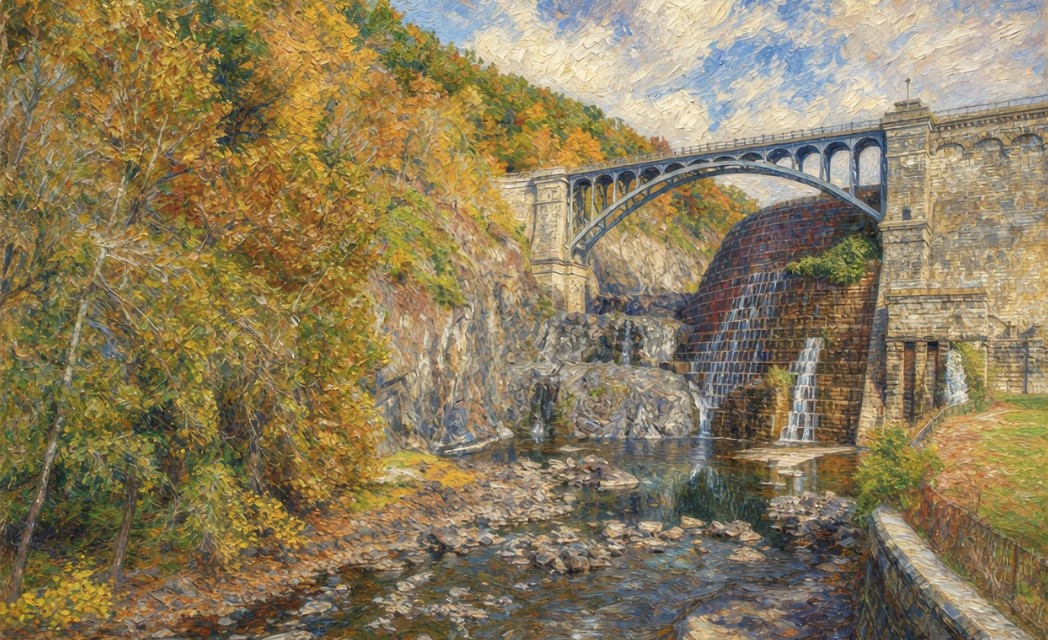
Westchester’s history is, in many ways, a history of water. The Old Croton Aqueduct opened in 1842 to carry fresh water to a growing New York City. Today, about 26 miles of its route form the Old Croton Aqueduct State Historic Park, a linear trail running from Yonkers to the Croton Dam in Cortlandt. Meanwhile, the newer Croton system still supplies the city. A student interested in engineering, public health, or environmental policy can study this infrastructure firsthand, often within walking distance of home.
Parks, Parkways, and Planning
The county also pioneered modern regional planning. Westchester County calls the Bronx River Parkway the first parkway in the nation, and its Westchester section opened in 1925. Similarly, Playland in Rye opened in 1928 as a county-owned amusement park and became a National Historic Landmark in 1987. Together, these sites show how a suburban county shaped twentieth-century leisure, transportation, and land use. As a result, they offer concrete material for students drawn to urban planning, history, or architecture.
Writing About Place With Precision
Strong essays rarely say that Westchester is “close to the city.” Instead, they name a specific weir chamber on the Aqueduct, a particular stretch of the Bronx River, or a Metro-North line that shaped a student’s daily routine. Precision signals genuine attention.
Some local history also calls for care. For example, Historic Hudson Valley interprets the lives of enslaved people at Philipsburg Manor in Sleepy Hollow, and the county’s Indigenous history long predates its colonial estates. These histories belong first to the communities that lived them and carry them forward. Students from within those communities may find them a deeply authentic subject, while other students should approach them with respect rather than treat them as general application material.
These features of place set the stage for the county’s most practical advantage: a concentration of programs explicitly open to high school students.
Programs and Opportunities for Westchester County Students
Lab Research in Tarrytown
Regeneron High School Mentorship Program
Regeneron, the biotechnology company headquartered in Tarrytown, runs one of the most demanding research experiences available to local high schoolers. The High School Mentorship Program matches each student with a Regeneron scientist for a full-time summer project. Students work onsite in Tarrytown for six to seven weeks at 40 hours per week. They also meet weekly with scientists and peers for enrichment sessions and training.
The program accepts sophomores and juniors, and students must be able to work onsite for the full summer. Notably, applicants do not need to be enrolled in a formal science research class. However, a science teacher must nominate them. Teacher nominations typically open in mid-October and close in mid-November, and student applications are usually due in early December. A complete application includes a resume, two short essays, a recorded video interview, and a parental consent form. Selected students interview in January or February, and projects typically begin in late June or early July.
For students already pursuing science research in school, this mentorship can deepen a multi-year project. Moreover, many Westchester students later present their work at the county’s regional science fair, which gives the experience a natural public outlet.
Research is one path into the sciences, yet many students discover their interests through direct patient care instead.
Health Care in Valhalla
WMCHealth Healthcare Explorer Program
Westchester Medical Center in Valhalla is the flagship of the Westchester Medical Center Health Network. Through its Healthcare Explorer Program, rising high school seniors spend four weeks inside the hospital, typically from early July to early August. Participants learn how hospital departments operate and what different health professionals do. They also build basic skills such as patient communication, infection control, and medical terminology. In addition, Explorers offer patients companionship and help staff with non-medical daily tasks.
WMCHealth High School Student Volunteer Program
Students who want a longer commitment can apply to the hospital’s volunteer program. Applicants must be at least 16, and a parent or guardian must sign the application for anyone under 18. High school volunteers begin with the summer program, which they must complete before they can continue through the school year. Applications for the summer program have closed at the end of April in recent cycles, so students should plan ahead.
For students considering medicine, nursing, or public health, sustained volunteering often says more than a single summer. Consequently, a student who starts in the summer and continues weekly through senior year demonstrates the kind of commitment that admissions readers value.
Beyond health care, White Plains offers another kind of hands-on education: a front-row seat to local government.

Civic Leadership in White Plains
Herman S. Geist Summer Fellowship
The Westchester County Board of Legislators runs the Herman S. Geist Summer Fellowship, a paid internship for high school and college students. The Board describes it as a four-week program that offers both paid positions and unpaid positions for high school credit. Fellows work in legislators’ offices on constituent services and policy projects. They also learn the legislative process, join group projects, and take part in a mock legislative session. Recent cohorts have begun with an orientation in early June.
County Executive Summer Volunteer Fellowship
The County Executive’s office runs a separate Summer Volunteer Fellowship for high school students, college students, and recent graduates. The office encourages high school seniors to apply for a “senior alternative” placement between May and June. Fellows research policy proposals for the County Executive’s senior team, help organize public events, and study legislation from comparable municipalities. Scheduling is flexible and remote work is allowed, although fellows must work at least three days a week. Applications have typically been accepted through late April.
Westchester County Youth Council
For a year-round civic commitment, Family Services of Westchester runs the Westchester County Youth Council. The council serves young people ages 10 to 19, and members meet weekly in White Plains on Tuesday evenings, with a Thursday session in Yonkers. Members organize projects on issues of county responsibility and attend an annual Youth Action Training.
Together, these programs let a student follow a policy interest from a weekly youth council to a legislative office. From the county seat, the next opportunity lies to the north, on one of Westchester’s working landscapes.
Farming and Land Stewardship in Northern Westchester
Muscoot Farm High School Internship
Muscoot Farm, a historic working farm run by Westchester County Parks in Somers, offers an internship designed exclusively for high school seniors. Interns work during a spring session from April through June, with shifts between Tuesday and Saturday. The farm recommends 16 to 20 hours per week and requires a minimum six-week commitment. Interns earn academic credit rather than pay. Their work spans livestock care, animal science, horticulture, crop cultivation, and historic preservation. Applications typically open in January.
Muscoot Farm Junior Volunteer Program
Younger students can join the farm’s Junior Volunteer Program, which is open to students in grades 9 through 12. Volunteers meet on Sunday mornings during the fall, winter, and spring. They help with public programs, special events, and farm maintenance. Because spots are limited, students should watch for when applications open, usually in mid-August.
A student might begin as a ninth-grade volunteer and return as a senior intern. In doing so, they would build four years of engagement with agriculture, animal science, or land conservation.
Putting It Together
Westchester students have unusual access to laboratories, hospitals, government offices, and preserved landscapes. Still, access alone does not distinguish an applicant. Selective colleges want to see rigorous coursework, sustained engagement over time, and real depth in one or two areas. A student who pursues two or three related experiences over several years will almost always present a stronger profile than one who collects a long list of unrelated activities.
For example, a student interested in biology might pair a school research course with the Regeneron mentorship and weekly hospital volunteering. Similarly, a student drawn to public policy might move from the Youth Council to a county fellowship. In each case, the experiences connect, and the student can explain why. At College Transitions, we help Westchester families build balanced college lists, plan challenging coursework, and shape applications that reflect that kind of focused, long-term commitment.

