A City with More to Offer Than Most Applicants Realize
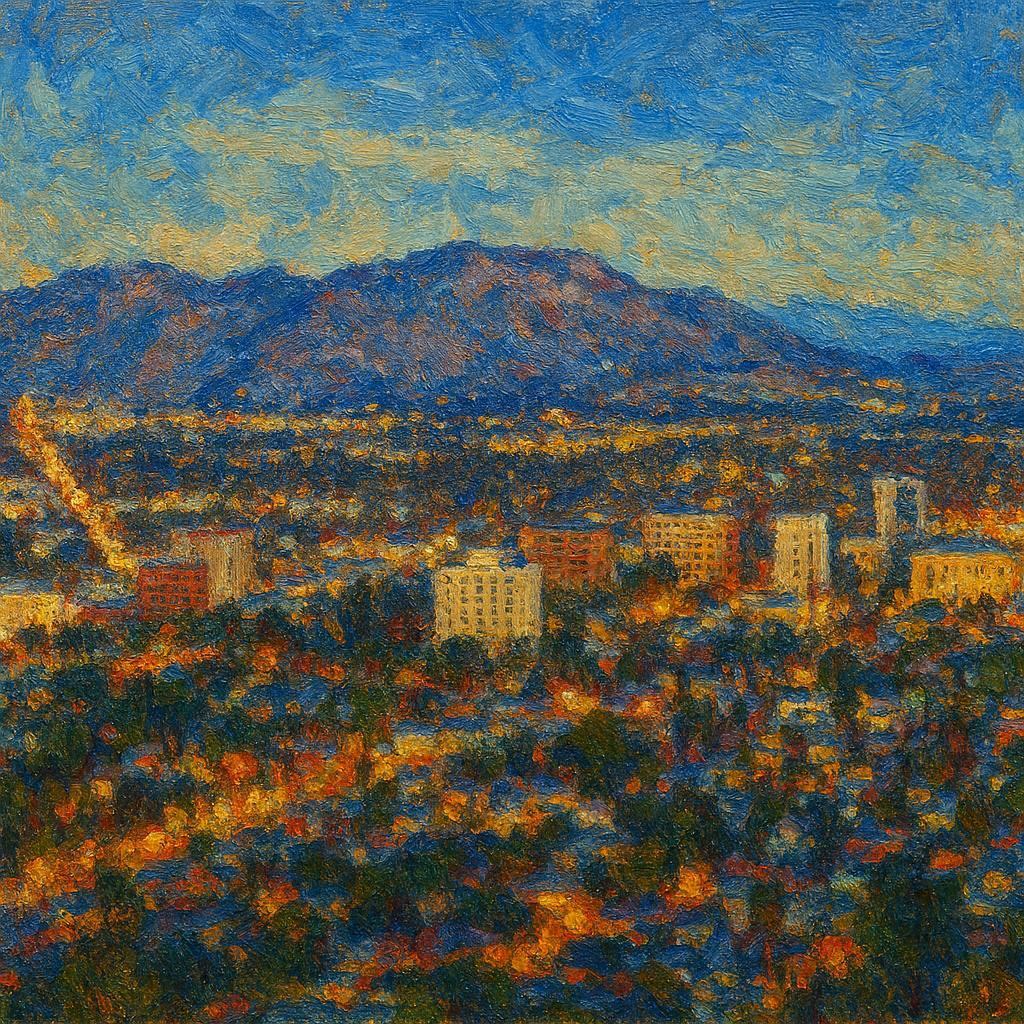
Riverside is easy to underestimate. Sitting roughly 55 miles east of downtown Los Angeles, it occupies a curious position in California’s cultural geography. Too far from the coast to feel glamorous and too sprawling to feel like a college town, it is too often reduced to a freeway exit sign. Most people who use that exit never stop to look closely. That is an advantage for students who pay attention.
The city carries a genuinely layered history. It was the birthplace of California’s navel orange industry and once held the highest per capita income in the United States. Today it is the largest city in the Inland Empire. UC Riverside, one of the most ethnically diverse research universities in the country, anchors its eastern edge. That same region now grapples with some of the worst air quality in the nation, a warehouse logistics boom, and deeply rooted questions about environmental justice and economic access. For college-bound students, those tensions are not liabilities. They are material. Students who engage with Riverside honestly, connecting its past to its present and asking hard questions about where it is heading, arrive at the college application process with something coastal California applicants often lack. That something is a grounded and distinctly textured sense of place.

California’s Admissions Reality: What Riverside Students Need to Know
A State with a Saturated Pool
California is the most overrepresented state in the applicant pools of elite private universities on the East Coast and in the Midwest. Year after year, institutions like Harvard, Yale, Princeton, Columbia, and Williams receive disproportionately large numbers of applications from California students. Consequently, being a California resident applying to selective schools outside the UC system comes with real competitive friction. Admissions readers at those schools see hundreds of polished applications from the state’s most prestigious zip codes. A Riverside student is, by contrast, somewhat rarer and more geographically specific.
That specificity matters, but only for students who have already built strong academic profiles and compelling extracurricular records. Geography softens nothing for underprepared applicants. It adds texture and differentiation for students who have used their location thoughtfully.
The UCR Default and Why It Deserves Scrutiny
Many Riverside families treat UC Riverside as an automatic fallback. That assumption is worth examining carefully. UCR is a legitimate research university with Nobel Prize-winning faculty and a genuine mission serving the Inland Empire. However, strong Riverside students who build expansive lists often find meaningful options at selective institutions elsewhere. In those regions, Inland Empire applicants are genuinely rare.
Schools including Tulane, University of Denver, Case Western Reserve, Lehigh, University of Rochester, Fordham, and Santa Clara University see relatively few applications from Riverside each year. A well-prepared student with a specific, place-rooted narrative is an interesting and relatively uncommon applicant at those schools. That narrative might be built through UCR research labs, Riverside County civic programs, or the region’s environmental justice landscape. Furthermore, several of those institutions offer merit scholarships that are unavailable from public flagships like UCR. Broadening the college list is both strategically sound and, frequently, financially advantageous.
A Note on Early Decision
Riverside students considering selective private universities should research each school’s Early Decision (ED) policy carefully. ED generally improves admission odds at schools that offer it. For students whose financial aid needs are reasonably predictable, applying ED to a well-matched private university can be a meaningful strategic advantage. Students with significant financial need should evaluate ED schools’ financial aid track records before committing.
What Makes Riverside Genuinely Distinctive
Citrus, Labor, and the Complexity of Inland California History
In 1873, a Riverside resident named Eliza Tibbets planted two navel orange trees sent by the U.S. Department of Agriculture. Those trees, and the industry they seeded, transformed Southern California. By 1895, Riverside held the highest per capita income in the United States, built almost entirely on citrus. That prosperity was created by the labor of Chinese, Japanese, Mexican, Italian, Korean, and African-American workers. Their histories are now documented in exhibits at the California Citrus State Historic Park, a 248-acre open-air museum in Riverside. The park’s Relevancy and History Project links UC Riverside’s Public History Program with California State Parks. Working directly with community members, the project recovered and told those layered, often painful stories.
For students with roots in any of these communities, the park and the broader history of Inland California labor offer rich, specific material for essays. For all students, the park is a place where the distance between economic mythology and lived reality is unusually visible. That kind of productive complexity is precisely what selective college essays reward when approached with honesty and specificity.
Environmental Justice in Real Time
The Inland Empire now handles roughly 52% of Southern California’s freight network. Massive warehouse facilities have replaced citrus groves across Riverside and San Bernardino counties. They bring diesel truck traffic, particulate matter, and ozone concentrations that rank among the worst in the United States. UCR researchers have documented how those burdens fall disproportionately on low-income and communities of color. In 2024, Andrea Vidaurre, a UCR alumna from the Inland Empire, received the Goldman Environmental Prize for North America. She earned it for her work fighting for zero-emission freight policy in the region.
For students interested in environmental science, public health, policy, or community organizing, Riverside is not a city removed from those issues. It is one of their ground zeros. That proximity is a genuine asset for students willing to engage with it seriously.
The Cheech and Riverside’s Arts Identity
In June 2022, Riverside opened The Cheech Marin Center for Chicano Art and Culture. It is the first public institution in the United States dedicated exclusively to Mexican-American and Chicano art. The Cheech, part of the Riverside Art Museum, houses more than 700 works donated by collector Cheech Marin. The collection includes pieces by Carlos Almaraz, Patssi Valdez, Frank Romero, and Judithe Hernández. It sits on Mission Inn Avenue, alongside the historic Julia Morgan-designed Riverside Art Museum building and steps from the National Historic Landmark Mission Inn Hotel.
The Cheech is a genuinely significant cultural institution, not a regional novelty. For students with personal and cultural connections to Chicano art and history, it offers a locally rooted anchor for conversations about identity, creative practice, and community. Those conversations belong most authentically to students from within those communities, students whose own histories and families are part of the story The Cheech tells. For students outside those communities, the institution remains a meaningful example of how Riverside has made itself worth taking seriously as a place.
A Research University That Reaches Into the Community
UC Riverside is an R1 research university, meaning it conducts the highest level of doctoral research. It has two Nobel laureates on faculty and 13 members of the National Academies of Science and Medicine. Its School of Medicine serves a region with chronic shortages of primary care physicians. Its faculty conduct active research on citrus disease, air quality, stem cell biology, nanotechnology, and environmental justice. Many of those projects connect directly to the Inland Empire communities surrounding the campus.
For Riverside high school students, UCR is not just a potential college destination. It is a nearby research institution whose faculty and programs are, in many cases, explicitly designed to reach outward.
Specific Opportunities for High School Students
UCR STRIDE: Stem Cell Research for Inland Empire Students
The Summer Training and Research Inspiration for Diverse Pipeline Engagement toward Advancing Stem Cell Treatment (STRIDE) is a five-week summer research program. It is hosted by UCR’s Bourns College of Engineering. STRIDE accepts up to 60 high school students from Riverside and San Bernardino counties. Applicants must be over 16 years old by the program start date. The program typically runs from June through July.
STRIDE trainees work in UCR faculty research labs on projects related to stem cell biology, bioengineering, tissue engineering, neuroscience, and materials science. They receive mentorship from graduate students, medical students, and postdoctoral scholars. The program also includes communication and research skills workshops, career panels, and speaker sessions. It is funded by a $509,000 grant from the California Institute for Regenerative Medicine (CIRM).
For students interested in medicine, biomedical research, or engineering, STRIDE is among the most substantive locally accessible research experiences in Southern California. It is competitive and faculty-mentored. Few high school applicants nationwide carry a credentialed research experience from a major public research university.
UCR School of Medicine: The Health Sciences Partnership
The Health Sciences Partnership (HSP), offered through the UCR School of Medicine, connects UCR undergraduate mentors with health academy students at local Riverside-area high schools. Mentors visit classrooms throughout the academic year to deliver presentations on college admissions, health careers, medical school pathways, and problem-based learning activities. The program specifically prioritizes schools serving at-risk populations and students from economically disadvantaged backgrounds.
Students at participating high schools should speak with their health academy coordinator or school counselor about enrollment. For students considering medicine, nursing, or allied health careers, sustained engagement with HSP mentors builds both knowledge and relationships with UCR’s medical school community. That foundation is valuable well before the undergraduate application process begins.
Riverside County Youth Advisory Council (YAC)
The Riverside County Board of Supervisors has operated the Youth Commission and its five district Youth Advisory Councils since 1998. Each of the county’s five supervisorial districts maintains its own YAC. Members are high school student representatives from public, private, and continuation schools within that district. Students attend bi-weekly meetings, participate in community service projects, and bring youth-related recommendations directly to the Board of Supervisors.
Eligibility requires attending a high school in Riverside County and demonstrating willingness to commit time to meetings and service events. Applications for each district’s YAC are available through the district supervisor’s office. The Riverside County YAC model has been recognized nationally as an innovative example of genuine youth civic participation. Sustained participation, particularly in officer roles, provides a specific and demonstrable record of civic engagement. That record is rooted in the particular governance challenges of the Inland Empire.
County of Riverside Student Internships
The County of Riverside operates a formal student internship program that is explicitly open to high school students. Positions span county departments including public health, environmental services, social services, planning, and administration. Paid professional student internships are available to high school students who meet individual department requirements; unpaid positions are also available. All appointments are part-time hourly roles.
For students interested in public administration, public health, or urban planning, a county internship provides direct exposure to how a large regional government operates.
California Citrus State Historic Park: Volunteering and Public History
The California Citrus State Historic Park operates a Volunteers in Parks (VIP) program. It welcomes new volunteers, including young people, in areas including historical interpretation, research, communications, and artifact restoration. According to the park’s official volunteer page, participation can provide career exploration, work experience, and college references.
Students interested in history, public history, environmental studies, or community storytelling should consider participating in this program. A student who develops real knowledge of the park’s history and becomes a meaningful participant in its educational programming holds a locally rooted and nationally distinctive credential. The park collaborates with UCR’s Public History Program. Engaged volunteers can sometimes connect with academic researchers working on related projects.

Building a Competitive Application from Riverside
Start Early with STRIDE and UCR Programs
STRIDE begins recruitment in the fall for the following summer. Students in 10th or 11th grade who are interested in biomedical or engineering research should apply in the fall semester. Preparation matters: applicants are more competitive when they bring genuine curiosity about a specific research area, ideally informed by coursework in biology, chemistry, or physics. A STRIDE research experience, reflected upon thoughtfully in college essays, is a meaningful differentiator in competitive STEM application pools.
Engage with County Civic Programs Before Senior Year
Students interested in government, policy, law, or public service should apply to their district’s Youth Advisory Council in 9th or 10th grade. By senior year, they should have developed a specific understanding of a real governance challenge in the Inland Empire. Air quality regulation, warehouse siting, access to healthcare in a medically underserved region, regional housing policy: all are live issues with real stakes. That specificity, rooted in actual participation in a real advisory body, separates a compelling civic application from a generic one. Colleges read the difference immediately.
Use the Environmental Justice Landscape as an Intellectual Resource
The air quality, warehouse logistics, and public health issues facing the Inland Empire are active research areas for UCR faculty. They are also active organizing challenges for community groups including the Center for Community Action and Environmental Justice (CCAEJ). Students who genuinely engage with those issues, through coursework, community meetings, or contact with advocacy organizations, develop a place-specific intellectual identity. That identity translates powerfully into essay writing. The goal is not to gesture at environmental concern generically. Instead, the goal is to describe something particular: a specific facility, a specific health outcome, a specific community meeting, or a specific question that sent a student down a months-long research path.
Write About Riverside with Precision
The best college essays from Riverside students will not describe the Inland Empire as a sprawling suburb east of Los Angeles. They will describe something specific. Perhaps the first time a student stood in the California Citrus State Historic Park and understood that the orange grove in front of them was not a pastoral scene; it was a labor landscape built by people whose names the history books mostly skipped. Or what it felt like to sit in a county supervisor’s hearing and realize that a zoning decision three miles from their home would shape their neighbors’ health for decades. Maybe it could be what a UCR lab taught a student about the relationship between a disease attacking California’s citrus trees and the families who have always depended on them. Precision and texture are what admissions readers respond to. Both are available to any Riverside student willing to pay close attention to where they actually live.
Think Beyond the UC System
Students with strong profiles should build lists that extend well beyond the UC and CSU systems. East Coast and Midwest liberal arts colleges and research universities see relatively few applications from the Inland Empire. A well-prepared Riverside student with a genuine, specific narrative is uncommon and often memorable at those institutions. That narrative might be grounded in UCR research, county civic engagement, or direct experience with the region’s environmental and public health challenges. Researching schools whose missions resonate with community service, environmental work, or health equity sharpens the case considerably. Connecting that research to specific programs and values in supplemental essays matters even more.
The Bottom Line
Riverside is a city where the distance between past and present is unusually short. The land that once produced the nation’s most lucrative orange groves now sits under some of its thickest freight traffic. Its university houses a world-class stem cell research center and runs high school programs designed to bring more Inland Empire students into medicine. And the downtown that holds a National Historic Landmark hotel also holds the first American museum dedicated exclusively to Chicano art.
For students who look at all of that and ask real questions, Riverside offers exactly what selective colleges say they are looking for. Students who participate in the county’s civic structures, pursue research at UCR, or volunteer in spaces where history is actively interpreted are the ones who arrive with a genuine and specific relationship to the place they come from. So do those who document the region’s environmental present with rigor and care.
That relationship takes time to build. Students who start building it in 9th or 10th grade arrive at senior year with something that cannot be faked. It is a real story, told from a real place, by a student who actually paid attention.
If you would like help thinking through how Riverside’s particular landscape maps onto a competitive strategy for selective college admissions, College Transitions is here. Schedule a consultation and let’s develop a plan that reflects where you actually are.
Additional Resources
- Top High Schools in the Riverside, CA Area: How They Compare for College Admissions
- Case Study: How One Riverside Student Turned the City’s Agricultural Heritage into a Standout College Application
- College Admissions in Riverside, CA: What Students and Families Need to Know
- The Best CSU Schools Ranked — 2026