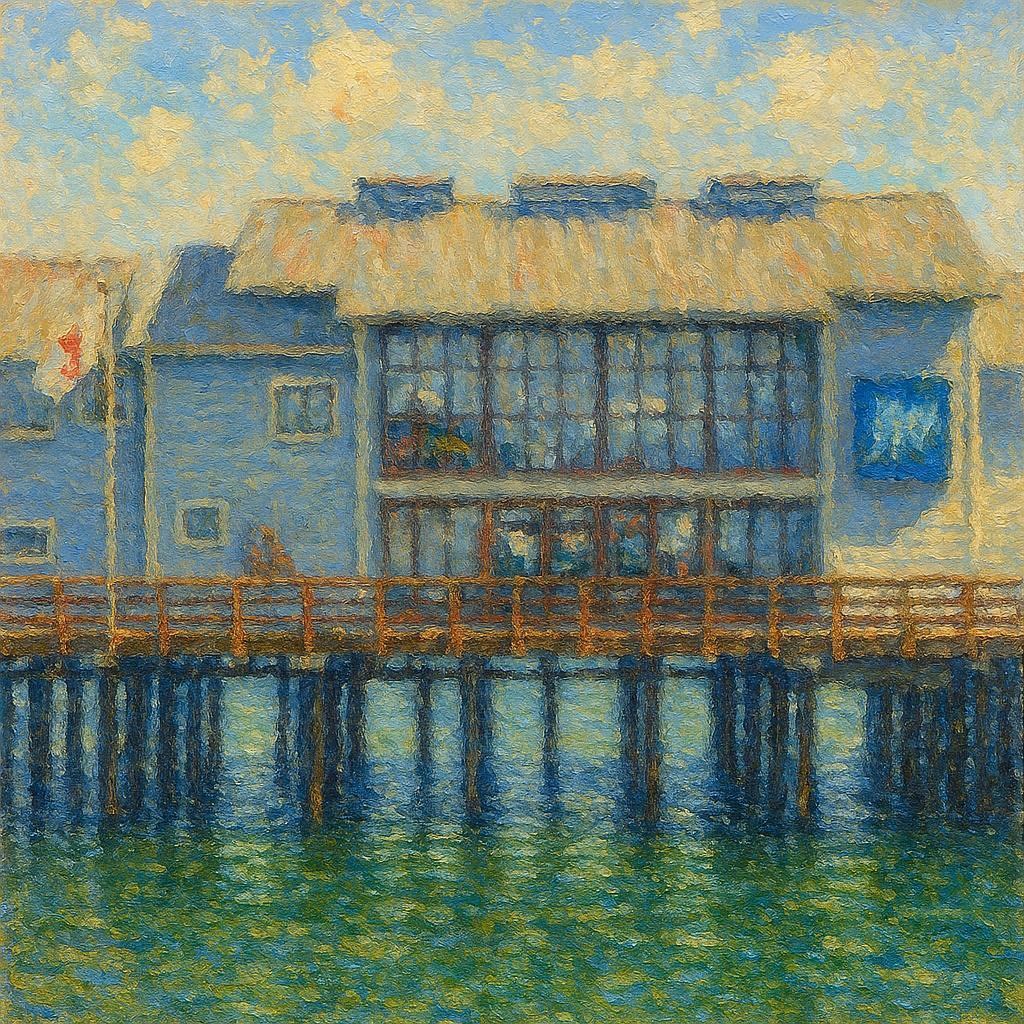
Santa Barbara looks, from a distance, like a place where ambition takes a back seat to ocean views. That impression misses what actually sits inside city limits: a UC research campus, a global medical humanitarian headquarters, an internationally recognized film festival, and a natural history museum. For a motivated student, the raw material for a genuinely distinctive application is already here. The harder task is knowing which door to walk through and then staying long enough to make it count.
Where Santa Barbara Sits in the Admissions Landscape
California produces more competitive college applicants than any other state. That volume shapes how selective admissions offices read every file listing a California zip code. Coastal, well-resourced communities like Santa Barbara compete inside an unusually dense pool. A strong GPA and a leadership title mean less here than the same numbers would mean from a rural district. That district, after all, sends far fewer applicants to elite schools each year.
This density, in turn, feeds a specific local pattern: the UC anchor bias. Families in Santa Barbara often build a college list centered on UC Santa Barbara, UCLA, and Berkeley. Those campuses feel familiar, geographically close, and already woven into family history. That instinct is understandable, since these campuses feel so close and so familiar today. However, it also means many strong students never seriously consider private research universities or out-of-state flagships. A Santa Barbara background could genuinely stand out at those schools. Additionally, the UC system caps how many students it admits from any single region. Leaning entirely on UC campuses can therefore work against a student rather than for one.
Early Decision deserves serious consideration for families targeting selective private colleges. Applying ED can meaningfully raise admit odds at many institutions. It also forces the kind of early self-reflection that produces a stronger, more specific application overall. That said, geographic advantages and program access only help students who already arrive with a strong foundation. A summer program listed without real depth behind it reads as decoration, not substance.
Research Access That Rivals Much Larger Cities
Santa Barbara’s most distinctive asset is direct access to a University of California research campus. UC Santa Barbara’s Research Mentorship Program pairs qualified high schoolers with a graduate student, postdoc, or faculty mentor. The result is a seven-week, in-person research experience. It spans disciplines from the sciences to the humanities. Students earn 8 university credits and complete a technical research paper. They also present their findings at a formal symposium.
Admission is highly competitive. Reported acceptance rates sit below 5%. Applicants generally need a minimum 3.80 weighted GPA, and most participants are entering 10th or 11th grade. Need-based scholarships exist, with priority given to California residents.
Marine Science Right Outside the Classroom
For students drawn to field science, UC Santa Barbara’s Marine Science Institute runs the REEF College Prep Internship at its teaching aquarium on Campus Point Beach. This program is built specifically for high schoolers, with prerequisites of grade 8-12 standing and parent and teacher consent. Participants work alongside REEF staff and undergraduate interns on aquarium care, marine science communication, and outreach to K-12 visitors. The internship also counts toward community service hours, so students can pair it with a school’s graduation requirements instead of treating it as an extra commitment.
Because the program runs on a rolling, email-based application through the REEF Program Coordinator rather than a single fixed deadline, motivated students can start building this experience as early as freshman year and return across multiple summers. That kind of sustained, multi-year involvement is exactly what admissions readers look for.
A Health and Humanitarian Sector Few Cities Can Match
Direct Relief, one of the largest humanitarian medical aid organizations in the world, is headquartered in Santa Barbara. Today, it delivers supplies to communities facing poverty and disaster across the globe. Santa Barbara Unified’s Health Careers Academy connects students directly to that ecosystem. Participants engage in community health projects at Direct Relief. They also complete senior-year internships at organizations including Cottage Health and local dental practices. The Academy helps students pursue certifications such as CNA, PCT, and MA. This happens through a partnership with Santa Barbara City College. Students who finish the program in good standing with a 3.3 GPA or higher gain guaranteed admission consideration at Westmont College. For students building interest in medicine or public health, that mix of hands-on service and credentialing is hard to find elsewhere.
Climate and Environmental Work with Local Stakes
Santa Barbara’s environmental history runs deep. It stretches from the 1969 oil spill that helped spark the modern environmental movement to more recent wildfire and debris flow events. That history gives local climate work a direct throughline to civic life. The Community Environmental Council runs free Youth Climate Workshops for students in sixth through twelfth grade. These happen twice yearly at its downtown Environmental Hub. Students there hear from environmental leaders and connect with peers on real advocacy campaigns. Motivated participants should look for opportunities tied to the University of California’s Natural Reserve System sites in the region. Those working relationships often lead to independent projects sustained over multiple years. In doing so, students build a documented environmental record that reads as authentic rather than performative.
Paid Work Experience for Every Interest
Not every strong applicant needs an unpaid summer research slot, however. The Santa Barbara County Education Office’s Partners in Education program runs a Paid Student Internship Program. It starts with seven weeks of job readiness training and career coaching. Students then move into paid internships with local businesses and nonprofits, earning minimum wage. Host organizations span an unusually wide range. They include Cottage Health, aerospace and defense firms, Montecito Bank & Trust, the Santa Barbara Zoo, and TV Santa Barbara. That range lets students find a placement that actually matches their intended major. The program also prioritizes economically disadvantaged students, and it won a 2024 CSBA Golden Bell Award for reducing barriers to paid career experience.
Film and the Arts as a Genuine Career Pathway
The Santa Barbara International Film Festival is not just a February event. It also runs a year-round Education Center in downtown Santa Barbara. Its 10-10-10 Student Screenwriting and Filmmaking Competition pairs ten local high school students with ten college students in screenwriter-director duos. Together they produce ten short films. Those films then premiere at the historic Arlington Theatre. This program gives a Santa Barbara student a portfolio credential few applicant pools can match. Few cities beyond Los Angeles and New York offer this level of direct festival access to teenagers.
What Makes This Place Genuinely Distinctive
Santa Barbara’s Spanish Colonial Revival architecture shapes the city’s entire identity. Much of it was rebuilt under a unified design code after a 1925 earthquake. Students who engage with the city’s Architectural Board of Review process have material for genuinely specific essays. So does a student who researches how that 1925 rebuilding decision still constrains housing policy today. Either angle beats generic small-town nostalgia. The region’s agricultural belt also offers a distinct entry point. It runs from Carpinteria’s greenhouse flower industry through the Santa Ynez Valley’s wine country. That belt interests students focused on sustainable agriculture, water policy, or labor economics.
The Santa Barbara Zoo adds another layer for students interested in conservation biology. Its Teen Conservation Club gives participants hands-on involvement in conservation projects. Students learn about conservation science and research methods and attend monthly meetings and conservation activities. A student can build a multi-year conservation record without ever leaving the South Coast.
The Real Challenges Santa Barbara Students Face
Affluence Bias and a Thin Public Narrative
Santa Barbara’s reputation for wealth, especially around Montecito, can work against students from the city’s less affluent neighborhoods. It can also work against students from Santa Barbara’s Latino community, which makes up a substantial share of the county’s population. Admissions readers who associate the Santa Barbara name with resort culture may underestimate the economic diversity actually present across local schools. Students should not assume the city’s image will do any explaining for them. Specificity about a student’s own neighborhood, family history, or school experience matters more than the city’s brand.
A Small Talent Pool Competing Against Massive Ones
Unlike Bay Area or Los Angeles suburbs, Santa Barbara sends a small number of students to any single elite college each year. That limits the informal institutional familiarity that benefits applicants from larger feeder schools. This cuts both ways, though. Santa Barbara students rarely compete against dozens of classmates for the same handful of spots. However, they also cannot lean on a school’s admissions track record the way bigger, more established pipelines can. Building a relationship with an independent college counselor, or making direct contact with admissions offices, carries real weight here.
How Santa Barbara Students Can Stand Out
Students should choose one thread and follow it for years, rather than sampling widely. That thread might be marine science through the REEF College Prep Internship at UCSB’s Marine Science Institute. It might instead be humanitarian health work through Direct Relief. Or it might be filmmaking through SBIFF’s 10-10-10 program. Depth reads as authenticity; breadth without follow-through reads as resume-building. Santa Barbara City College, consistently ranked among the top community colleges in the country, also offers a low-barrier way to show college-level performance. Students at partnered high schools can take SBCC courses at no cost through dual enrollment. Dos Pueblos, Santa Barbara High, San Marcos, and Carpinteria are among those partner schools. This builds a transcript showing readiness beyond AP scores alone.
Families should also resist the pull toward an all-UC college list. Santa Barbara’s genuine strengths span research access, humanitarian infrastructure, environmental work, and the arts. Those strengths translate well into applications for private research universities and liberal arts colleges nationwide, not just the UC system down the freeway.
Start Building a Plan That Fits
Santa Barbara gives students an unusual amount of access for a city its size: university-level research, a globally recognized film festival, and a working humanitarian aid headquarters. None of it counts for much without a clear plan and sustained follow-through, though. If you would like help turning these local resources into a strategy that reflects your student’s actual interests, College Transitions is ready to help build that plan together.