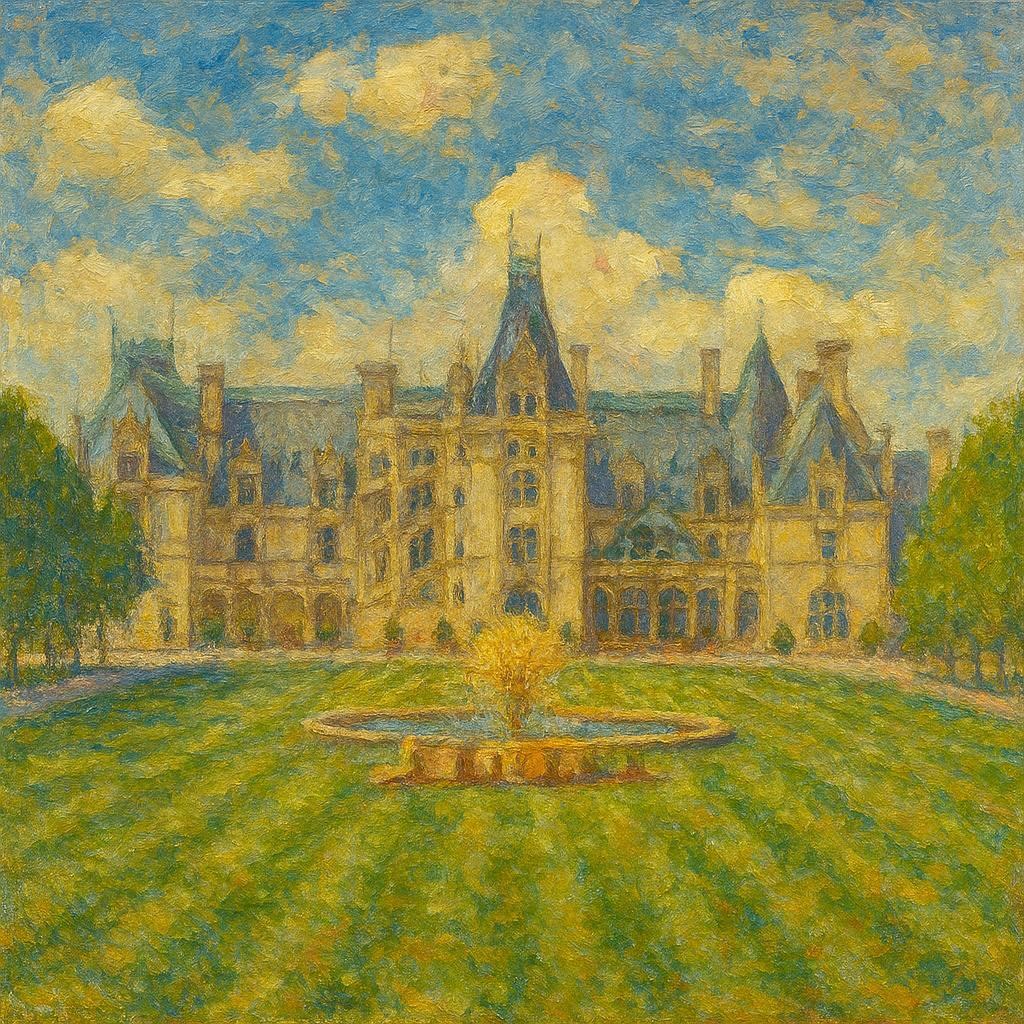
Asheville occupies a singular position in the American cultural imagination. Nested in a bowl formed by the Blue Ridge and Great Smoky mountains, it attracts artists, scientists, environmentalists, and entrepreneurs. Few mid-sized cities can claim numbers like these. It is, simultaneously, an Appalachian mountain town, a nationally recognized arts hub, and an ecologically rich gateway to the Southern Appalachians. That combination gives college-bound students a genuinely distinctive backdrop. Yet many Asheville families default reflexively to UNC Chapel Hill or NC State. They never seriously examine what the broader national landscape offers a well-prepared student from western North Carolina.
That default is worth questioning.

North Carolina’s Place in the National Admissions Picture
North Carolina sits in an interesting middle position in the national admissions landscape. It is neither as overrepresented as Massachusetts, New York, or California, nor as underrepresented as Wyoming or Montana. Consequently, a strong Asheville applicant occupies a favorable position at many selective institutions. They are uncommon enough to attract curiosity, and prepared enough to be credible.
That said, the western part of the state presents its own specific dynamic. Students from the Research Triangle and Charlotte metro area have historically submitted the majority of North Carolina’s selective-school applications. Asheville and western North Carolina, by comparison, send far fewer applications to highly selective institutions each year. For a student with strong academics and a compelling, place-rooted narrative, that relative scarcity is an asset.
Furthermore, North Carolina’s in-state public options, while strong, come with real limitations. UNC Chapel Hill’s overall acceptance rate has fallen to approximately 15%, with out-of-state applicants facing even steeper odds. NC State is more accessible but not the automatic safety school many families assume. Treating either as a guaranteed fallback without building a broader national list is a planning error. This is especially true for students whose profiles would make them genuinely competitive at selective private colleges.
The UNC Asheville Calculus
Many Asheville families default to UNC Asheville as an obvious local option. UNCA is a genuine and reputable institution with strong programs in environmental studies and the liberal arts. However, it is not a selective school. Its acceptance rate is approximately 92%, with admitted students typically scoring between 1170 and 1360 on the SAT. For a strong student, it is likely not the most ambitious destination available. Building a list that reaches well beyond western North Carolina typically produces better outcomes. It often provides access to merit aid that in-state public schools do not offer.

What Makes Asheville Genuinely Distinctive
An Arts Ecosystem Without Parallel in the Rural South
Asheville’s identity as an arts city is not a marketing claim; it is a documented reality. The River Arts District runs roughly two miles along the French Broad River. It occupies former warehouses and industrial buildings. Today it houses more than 350 working artists and makers. The district operates as a functioning creative community rather than a polished commercial gallery strip. Kilns fire, canvases stretch, potters work the wheel, and visitors can watch the process directly. Asheville has one of the highest concentrations of working visual artists per capita of any city its size in the United States.
Underpinning this contemporary scene is one of the most significant chapters in the history of American art education: Black Mountain College. Founded in 1933 just east of Asheville, Black Mountain operated as a radically experimental institution. It was based on John Dewey’s principles of progressive education and ran until its closure in 1957. In that brief span, it attracted an extraordinary roster of figures: Josef and Anni Albers, Buckminster Fuller, John Cage, Merce Cunningham, Willem de Kooning, Jacob Lawrence, Robert Rauschenberg, Cy Twombly, Ruth Asawa, and Charles Olson, among many others. The Alberses arrived directly from the Bauhaus as Hitler rose to power. In 1952, John Cage staged what is widely considered the first “Happening” in modern art history at Black Mountain. Today the Black Mountain College Museum and Arts Center, located in downtown Asheville, maintains archives, exhibits, and public programming. It keeps that legacy directly accessible.
For students interested in visual art, design, architecture, or experimental music, this heritage is not ambient background. It is a specific, researchable, intellectually rich resource. Almost no other city of Asheville’s size can match it.
The French Broad River and Appalachian Ecology
Asheville sits at the confluence of several river systems in a landscape of extraordinary biological richness. The French Broad River flows directly through the city. The surrounding Southern Appalachian Mountains contain some of the most diverse temperate deciduous forests on Earth. Their species richness rivals tropical systems in certain plant taxa. The region’s watersheds, forests, and elevation gradients support field research across ecology, hydrology, conservation biology, and climate science.
RiverLink is a regional nonprofit focused on the environmental and economic vitality of the French Broad River and its watershed. It engages more than 1,000 volunteers and 4,000 students annually. Its work spans river stewardship, water quality monitoring, and environmental education. Its RiverRATS program (River Research and Appreciation Through Science) delivers hands-on watershed education to schools and community groups throughout the French Broad basin. For motivated high school students interested in environmental science or hydrology, volunteering with RiverLink is a strong option. It provides fieldwork experience grounded in a specific, measurable, and environmentally significant local system.
Similarly, Asheville GreenWorks accepts high school interns on an ongoing basis. Interns work on water quality monitoring, urban forestry, invasive species removal, and recycling education. They participate in river and road cleanups, assist with stormwater improvement projects, and lead educational programs. Completion of an Asheville GreenWorks internship results in a letter of recommendation and a documented record of hours and skills.
Hurricane Helene and the New Landscape of Place-Rooted Writing
In September 2024, Hurricane Helene struck western North Carolina with catastrophic force. At least 108 people died in the state, including 43 in Buncombe County. The storm caused more than $59 billion in damage across North Carolina. It destroyed thousands of homes and left 100,000 Asheville residents without running water. Recovery remains ongoing and incomplete. The region’s tourism sector, in particular, continues to bear significant economic impacts.
For students who lived through Helene and its aftermath, that experience is a legitimate subject for college essays. It must be treated with honesty and specificity, however. The essays that resonate are not those that describe the storm’s scale in general terms. They are the ones that document a particular moment of community resilience or a specific act of mutual aid. They articulate a concrete understanding of environmental vulnerability that the experience produced. Students who engaged in volunteer recovery work or developed new clarity about environmental science or public health have a subject with genuine depth. That subject belongs to them; it should be written about precisely and without sentimentality.

Specific Opportunities for High School Students
CAYLA: The City of Asheville Youth Leadership Academy
The single most structurally robust locally operated program for Asheville high school students is CAYLA. It has placed students in paid internships since 2007. According to the City of Asheville’s official program page, CAYLA recruits and places students enrolled in Asheville City Schools or Buncombe County high schools in summer internships. Placements span City and County departments, local businesses, and nonprofits. Interns work approximately 16 hours per week, Monday through Thursday. They also attend mandatory Friday workshops covering financial literacy, leadership development, career exploration, and college preparation.
CAYLA students receive year-long academic support during their senior year, including individualized college application and scholarship assistance. According to the City of Asheville, 100% of CAYLA seniors have been accepted to college. The program awards a $2,000 merit scholarship to completers. Applications open in early spring.
The 2025 summer internship sites spanned a notably diverse range. They included the Asheville Art Museum, Blue Ridge Power, MAHEC, and Pisgah Legal Services. Government placements included the Buncombe County Equity and Human Rights Office and the Asheville Police Department Forensics Unit, among others. The program has been nationally recognized by both the U.S. Conference of Mayors and the Harvard Kennedy School of Government. For students who are the first in their family to attend college, CAYLA is an exceptional on-ramp. For any student admitted, it provides a competitive, mentored, and credentialed work experience specific to Asheville’s civic and professional ecosystem.
ACS Project SEED at UNC Asheville
For students interested in chemistry and biochemistry, the American Chemical Society’s Project SEED program operates at UNC Asheville. It runs through the Department of Chemistry and Biochemistry. Project SEED is a paid, eight- to ten-week summer fellowship. It places economically eligible high school students in working research laboratories alongside faculty mentors. According to the ACS Project SEED official program page, students must have completed at least one high school chemistry course. They must also demonstrate financial eligibility. Qualifying criteria include income at or below 300% of federal poverty guidelines, or documented eligibility for Free and Reduced Lunch, SNAP, SAT/ACT fee waivers, or TRIO programs.
UNC Asheville’s program is notably the first and only Project SEED site in western North Carolina. The application opens in February each year. Students who complete Project SEED nationally are eligible for $2,500 to $5,000 college scholarships through the ACS. For eligible students, this program represents authentic, faculty-mentored laboratory research at a real university at no cost. That combination is unusual at any level.
UNC Asheville Pre-College Programs
UNC Asheville offers a set of weeklong residential Pre-College Programs for rising high school sophomores, juniors, and seniors. Available programs include River Ecology and Adventure, Geology and Adventure, Wildlife Wonders: Appalachian Zoology, Meteorology, Pre-Med, and Engineering and Mechatronics. Creative Writing is offered through the Great Smokies Young Writers Workshop. Each program pairs students with university faculty and industry professionals for hands-on immersion in the subject area, field experiences, and residence hall living.
These programs are not free, and they are not research credentials in the way that CAYLA or Project SEED are. However, consider a student who attends the River Ecology and Adventure program and develops a genuine interest in Appalachian watershed systems. If that student subsequently pursues independent work with RiverLink or Asheville GreenWorks, the Pre-College experience becomes part of a coherent, multi-year narrative. Depth of engagement over time matters far more to admissions readers than any single activity.
NCSSM Summer Ventures in Science and Mathematics
North Carolina students have access to Summer Ventures in Science and Mathematics. It is a no-cost, state-funded residential research program overseen by the North Carolina School of Science and Mathematics (NCSSM). It runs at university campuses across the state. Summer Ventures selects current 10th and 11th grade North Carolina public school students by congressional district. The program runs approximately four weeks. It places students in small research teams with university faculty mentors and provides room and board at no cost.
Applications open on October 15 of each year. Essay deadlines fall on January 5; transcripts and evaluations are due in late February. Summer Ventures is among the most competitive and credentialed summer science programs available to any North Carolina student, and it is free. Asheville students who qualify should treat it as a priority application.
North Carolina Governor’s School
North Carolina’s Governor’s School is a competitive, cost-free residential summer program for gifted high school students. It offers intensive study in academic disciplines and the arts. Information sessions are held at high schools across the state, including at A.C. Reynolds High School in Asheville. Students interested in Governor’s School should speak with their school counselor in 10th grade to understand the nomination process and timeline.

Writing About Asheville in Your Application
Asheville offers strong material for college essays. The city has a globally significant arts history, an extraordinary natural environment, a complex economic transition, and the recent experience of Helene’s aftermath and the community response to it. The risk, however, is writing about Asheville in generalities. Admissions readers have seen many essays about beautiful mountains, vibrant arts scenes, and resilient communities. Those essays blur together.
What Works
Specificity works. Consider an essay about a student’s first visit to the Black Mountain College Museum and Arts Center. If that student made a concrete connection between Josef Albers’s color theory and their own visual art practice, then later tracked down a 1950s exhibition catalog in the Asheville Art Museum archives, that essay is distinct. Similarly, consider an essay about monitoring E. coli levels in a French Broad River tributary. If it connects those measurements to upstream land use and articulates what that revealed about the relationship between policy and water quality, that essay is distinct too.
Students with genuine roots in Appalachian musical traditions should write about those traditions with care and precision. They should use specific instrument names, specific songs, specific venues, and specific teachers or mentors. The Blue Ridge Music Trails of North Carolina reflect Asheville’s deep connection to old-time, bluegrass, and traditional mountain music. Students who grew up in that tradition and write about it honestly have a subject that very few cities in the country can offer.
Writing About Helene
Students who were in Asheville during Hurricane Helene have a significant experience to draw on. Admissions readers will encounter Helene essays from across the state, so the bar for distinction is high. Essays that describe what happened are less compelling than essays that examine what a student learned and did as a result. A student who spent months volunteering with a local recovery organization has real material to work with. So does a student who interviewed displaced neighbors for a journalism project, or who connected Helene’s devastation to an emerging interest in climate science or infrastructure policy. The storm should be the setting, not the story.
Building a Competitive List from Asheville
Students with strong profiles and specific, place-rooted narratives should look well beyond the Triangle and the local flagship. Several categories of schools offer genuine advantages for Asheville students.
Small liberal arts colleges in regions with few Western North Carolina applicants rarely receive strong applications from students with Asheville’s profile. The combination of environmental, artistic, and civic engagement is unusual. Schools such as Colby, Colgate, Middlebury, Bowdoin, Sewanee: The University of the South, Rhodes College, and Furman University see relatively few Asheville applicants per year. A strong, specific, place-rooted application from western North Carolina is genuinely distinctive at those institutions.
Students interested in environmental science, ecology, or sustainability should consider schools with deep programs in those fields. Oberlin, the College of the Atlantic, Prescott College, and Warren Wilson College each have strong environmental programs. Warren Wilson is located in Swannanoa, just east of Asheville. It has historically valued students whose engagement with the natural world is grounded in sustained local practice, not summer programs alone.
Students applying to highly selective schools should consider Early Decision where their first-choice school offers it. For a well-prepared student from western North Carolina with a distinctive narrative, early commitment can be strategically meaningful. Schools that value geographic and experiential diversity often reward it.
Finally, geographic advantages help only students who have already built strong profiles. A compelling Asheville narrative does not substitute for rigorous coursework, meaningful grades, and demonstrated engagement over time. Depth over breadth, sustained engagement over a checklist of activities, honest specificity over generic claims: those are the principles that produce competitive applications from any location.

The Bottom Line
Asheville is a city where a motivated high school student can conduct genuine laboratory chemistry research with a UNC faculty mentor. They can do water quality fieldwork on a river running through the city. They can walk through a museum dedicated to one of the most consequential avant-garde art schools in American history. And they can participate in a city-run internship program recognized by Harvard and the U.S. Conference of Mayors. That combination is not available everywhere. The question is whether students engage with what is around them deliberately and specifically. Those who do it early enough will build real depth before applications are due.
Students who do the work and develop genuine knowledge of place will find that growing up in Asheville is a significant asset in a national applicant pool. Those who treat the mountains as scenery and the city as backdrop will not.
If you would like help developing a strategy that connects Asheville’s specific landscape to a competitive application for selective colleges, College Transitions is here. Our team works with students to identify the right opportunities and build sustained engagement over time. We help craft essays that reflect genuine place-rooted experience. Schedule a consultation and let’s build a plan that reflects where you actually are.