
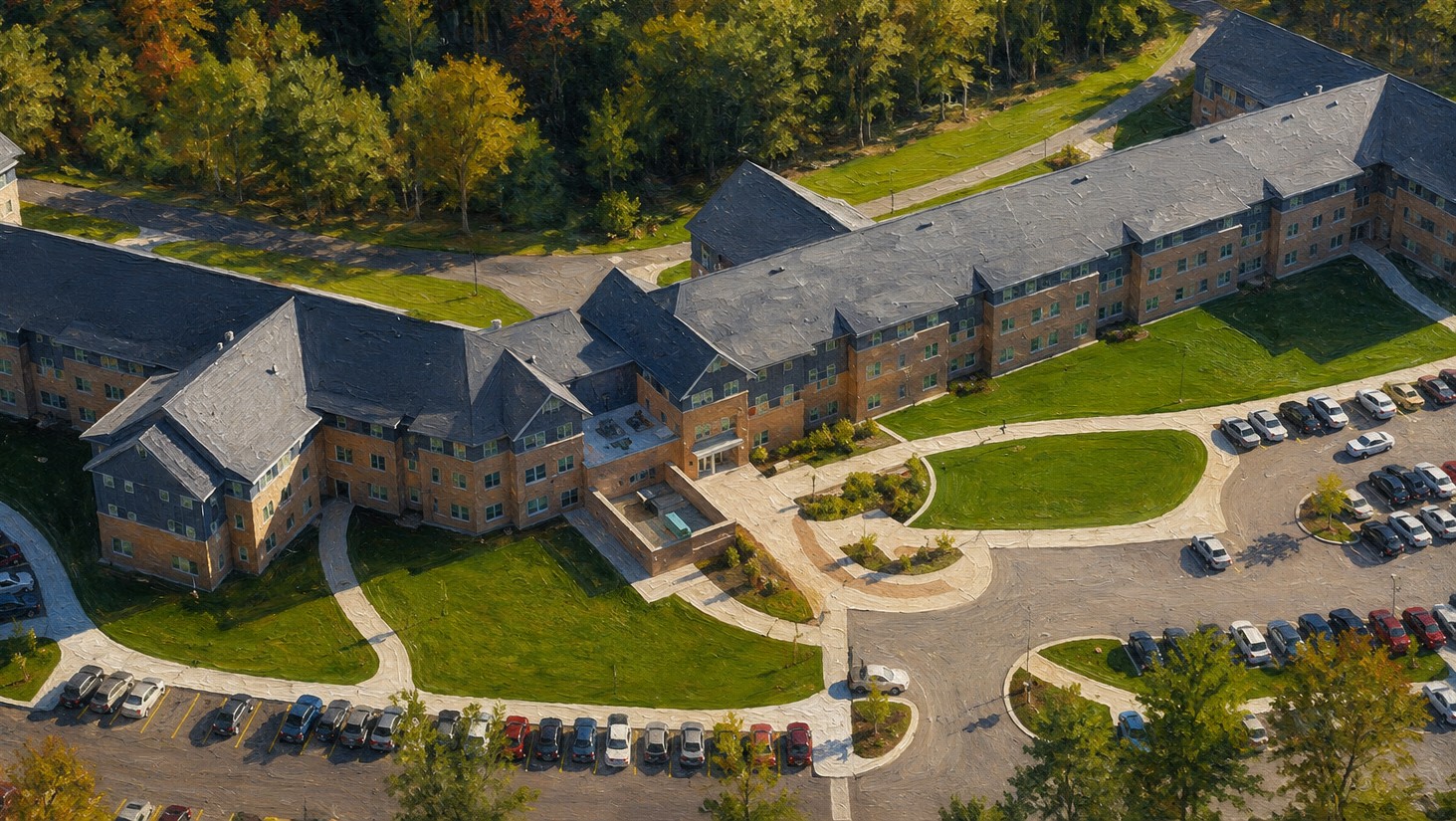
Most prospective online business students evaluate programs by ranking, choosing among the top flagship public university online programs and the large national online universities that dominate national rankings lists. Northwood University does not compete in that arena and is not trying to. The institution operates as a niche private business-focused university with specific industry specializations (particularly in automotive management), an explicit philosophical identity rooted in free-enterprise economics, an emphasis on entrepreneurship outcomes, and a much smaller student body than the flagship online programs. The right way to evaluate Northwood is not to compare its rankings to the University of Florida Online or Arizona State Online; it is to evaluate whether Northwood’s specific institutional identity, program specializations, and outcomes match the prospective student’s specific goals.
This review evaluates Northwood University’s online programs against the criteria that matter for prospective students considering a niche private business university: institutional fit, program specialization quality, accreditation, costs (which run substantially higher than flagship public alternatives), and entrepreneurship and business outcomes. The review covers Northwood’s undergraduate online business programs, the DeVos Graduate School of Management’s MBA and DBA offerings, the distinctive automotive industry specialization, and the situations where Northwood produces strong value versus the situations where another institution would serve better. For the broader framework on selecting an accredited online program as a working professional, see: The Complete Guide to Earning an Accredited Online Degree as an Adult Learner.
Institutional context
Northwood University was founded in 1959 as Northwood Institute in Midland, Michigan, by Arthur Turner and Gary Stauffer, and renamed to Northwood University in 1993. The institution operates as a private nonprofit university with its main residential campus in Midland, alongside an online portfolio that has grown substantially over the past decade. Total residential enrollment is approximately 2,116 undergraduates and 306 graduate students, with online enrollment running across multiple bachelor’s and graduate programs delivered fully online. The institution has approximately 33,000 alumni globally and an endowment of $142.7 million as of 2025.
Northwood’s institutional identity is structurally distinctive among American universities. The institution describes its educational mission around what it calls free-enterprise philosophy, with curriculum and institutional values explicitly framed around individual freedom, personal responsibility, and free-market economic principles. This identity affects the institutional culture, the curriculum design across business programs, and the philosophical orientation of much of the faculty. Prospective students who value this orientation typically find Northwood a strong cultural fit; prospective students whose values run different may want to evaluate whether the institutional identity aligns with their preferences before committing to enrollment. The free-enterprise emphasis is not hidden or implicit; it is the institutional self-description that Northwood publishes and uses to differentiate itself from other business-focused institutions.

Beyond the Midland main campus, Northwood operates international program centers in China, Sri Lanka, and Switzerland, with additional locations in France and Ghana. The international presence supports international student recruitment and provides study-abroad opportunities for U.S. students. Notable alumni include Dick DeVos (former CEO of Amway, husband of former U.S. Secretary of Education Betsy DeVos, and namesake of the DeVos Graduate School of Management), Ana Brnabic (former Prime Minister of Serbia), and Blake Koch (NASCAR driver), reflecting the institution’s mix of business, political, and motorsports alumni networks. The Northwood athletic teams compete as the Timberwolves in NCAA Division II under the Great Midwest Athletic Conference (G-MAC).
Accreditation
Northwood University holds institutional accreditation from the Higher Learning Commission (HLC), which is recognized by the U.S. Department of Education and the Council for Higher Education Accreditation. HLC is the regional accrediting body for institutions across 19 north-central U.S. states, including Michigan. Northwood’s HLC accreditation has been continuously maintained and reflects the institution’s compliance with regional accreditation standards across governance, finance, academic quality, and student services.
ACBSP business accreditation
Northwood’s business programs hold programmatic accreditation from the Accreditation Council for Business Schools and Programs (ACBSP) Baccalaureate/Graduate Degree Board. The business programs were first accredited by ACBSP in 2014 and were reaffirmed in January 2025. ACBSP is one of the two major business accreditation bodies in the United States, alongside AACSB (Association to Advance Collegiate Schools of Business). The two accreditations operate with different selectivity profiles and different evaluative philosophies. ACBSP focuses on teaching excellence, student learning outcomes, and continuous improvement using Baldrige Education Criteria for Performance Excellence. AACSB focuses more heavily on faculty research output and institutional research infrastructure. Both produce legitimate business accreditation; the choice between them reflects institutional emphasis rather than quality hierarchy.
For prospective business students, the practical implication is that ACBSP-accredited business degrees produce credential recognition in employer hiring, professional certifications, and graduate school admissions, though the recognition profile differs in specific contexts from AACSB-accredited degrees. Employers in fields that specifically prefer AACSB credentials (particularly investment banking, top-tier management consulting, and certain corporate finance roles at large multinationals) may produce different evaluation outcomes for AACSB versus ACBSP credentials. Employers in most other business contexts evaluate the candidate’s actual skills and experience without strong preference for one accreditation over the other. Prospective students whose career goals require AACSB-specific credentials should factor this into their school selection; those whose goals are general business management, entrepreneurship, marketing, or operations typically find ACBSP credentials operate without meaningful career constraint.
State authorization
Northwood is authorized to operate as a degree-granting institution in all U.S. states, supporting online enrollment of students residing across the country. The state authorization details and current accreditation status are documented on the Northwood University accreditation page. The institution is also approved for veterans’ education benefits under the GI Bill and was recognized as a Veteran-Friendly School for 2023-24 by the Michigan Veterans Affairs Agency.

Online program inventory
Northwood’s online portfolio is built around business education, with limited offerings in non-business fields. The portfolio includes 21 online programs across bachelor’s, master’s, and doctoral levels, with the business focus distinguishing Northwood from broader-portfolio online universities that serve diverse academic interests. Prospective students considering Northwood should expect a business-centric academic experience rather than the broad liberal arts and sciences inventory available at larger online universities.
Online bachelor’s programs
The flagship online undergraduate offering is the Bachelor of Business Administration (BBA), available with multiple concentration options that reflect Northwood’s industry specializations. Concentrations include Accounting, Automotive Marketing and Management, Banking and Finance, Entertainment Sport and Promotion Management, Entrepreneurship, Fashion Marketing and Management, Health Care Management, Management, Management Information Systems, Marketing, and Operations and Supply Chain Management. Each concentration extends the core business curriculum with specialization-specific coursework designed to prepare students for specific industry careers.
The Automotive Marketing and Management concentration deserves specific attention because it represents Northwood’s strongest industry specialization. The automotive program builds on Northwood’s long-standing relationships with the automotive industry and its proximity to Michigan’s automotive manufacturing base. Students in the concentration take coursework in automotive industry analysis, dealership management, automotive marketing, and related disciplines that few other universities offer at the bachelor’s level. For students pursuing careers in automotive industry management (manufacturer corporate roles, dealership leadership, automotive marketing agencies, automotive financial services), the Northwood concentration produces specific industry preparation that’s difficult to replicate elsewhere.
Other distinctive BBA concentrations
Beyond automotive management, several other BBA concentrations reflect Northwood’s industry specialization approach. The Entertainment, Sport, and Promotion Management concentration prepares students for careers in sports management, entertainment industry operations, and event promotion, fields where few universities offer focused bachelor’s-level preparation. The Fashion Marketing and Management concentration targets the apparel and retail fashion industries, drawing on Northwood’s Texas campus presence in the fashion industry context. The Entrepreneurship concentration directly serves the high alumni business ownership rate that distinguishes Northwood graduates, with curriculum focused on small business operations, venture creation, and the practical mechanics of business ownership rather than purely academic business theory. The Operations and Supply Chain Management concentration prepares students for logistics, manufacturing operations, and supply chain leadership positions.
The depth across concentrations varies, with the automotive specialization being the most developed and historically established. Concentrations that align with Northwood’s distinctive industry relationships (automotive, motorsports, family business) tend to produce stronger career preparation outcomes than concentrations covering more generic business fields. Prospective students evaluating Northwood for a specific concentration should investigate the faculty roster, industry relationships, and recent alumni outcomes for that specific concentration rather than evaluating Northwood’s BBA program as a uniform offering.

DeVos Graduate School of Management programs
The DeVos Graduate School of Management oversees Northwood’s graduate business education, including the Master of Business Administration (MBA), Doctor of Business Administration (DBA), and several specialized master’s programs. The MBA program is offered fully online with multiple concentration options including standard MBA, Automotive and Mobility (launched August 2025), Health Leadership and Innovation (launched January 2026), and others. The DBA is a research-focused doctoral program in business administration, with online coursework combined with required on-campus residencies in Midland.
The Health Leadership and Innovation MBA concentration is one of Northwood’s newest offerings, designed to prepare professionals for system-level leadership roles in healthcare organizations. The program combines business strategy, data-driven decision-making, and entrepreneurial thinking with the institutional free-enterprise foundation. Graduates target executive and management positions in healthcare systems, health insurance companies, healthcare technology firms, and related sectors. The Automotive and Mobility MBA concentration similarly extends Northwood’s national automotive leadership into the graduate space, targeting professionals across automotive manufacturing, mobility technology, automotive retail, and the broader transportation sector.
The Doctor of Business Administration
Northwood’s DBA program is one of relatively few practitioner-focused business doctorates available primarily online. The program targets experienced business professionals seeking advanced credentials for senior leadership positions, consulting careers, or transition into business school teaching. The curriculum combines online coursework with required on-campus residencies in Midland, where students engage with faculty and peers in person for intensive doctoral seminars. Students entering with fewer than 36 credit hours of graduate study complete additional master’s level coursework from the DeVos Graduate School’s master’s programs to ensure they reach the 90 graduate credit hour minimum for DBA completion. The travel costs for residencies (flights, accommodations, transportation) are at student expense, though Northwood covers meals during on-campus residency periods.
The DBA program represents Northwood’s most advanced credential offering and reflects the DeVos Graduate School’s investment in doctoral-level business education. The program is structurally distinct from PhD programs in business at research universities (which produce research-focused academics targeting tenure-track faculty positions) by focusing on applied business practice, executive leadership development, and consultative expertise rather than pure research. For experienced business professionals whose career goals include senior executive roles, board service, consulting practice ownership, or transition into business school teaching at teaching-focused institutions, the DBA represents a meaningful credential pathway.
Course delivery and student experience
Online courses are delivered through the Blackboard learning management system with mobile app access. The DeVos Graduate School MBA program archives all online classes, allowing students to access recorded content at their convenience for review and study. The course design philosophy emphasizes problem-based learning content with rigorous academic standards designed to match the face-to-face equivalents. Faculty are typically business professionals with terminal degrees and substantial work experience, reflecting Northwood’s practitioner-oriented teaching model rather than the research-focused faculty model at larger research universities.

Cost analysis
Northwood’s tuition is positioned at the higher end of the online business education market, particularly when compared to flagship public online programs. The cost structure reflects Northwood’s private nonprofit positioning and the institution’s investment in small class sizes, dedicated business curriculum, and specialized concentration offerings. Prospective students should understand the cost framework before committing to enrollment because Northwood’s tuition produces a meaningfully different cost equation than public university online options.
Tuition rates
| Cost component | 2025-2026 amount | Notes |
| Undergraduate per credit | $1,250 | Same for in-state and out-of-state |
| Undergraduate annual full-time | $34,400+ | 12-17 credit hours per semester |
| Graduate per credit | $1,055 | Same for in-state and out-of-state |
| Graduate annual full-time | $37,980 | DeVos Graduate School programs |
| Average financial aid | $17,322 | 69% of students receive grants/scholarships |
Northwood’s undergraduate per-credit rate of $1,250 is approximately 10 times higher than the $129 per-credit rate for in-state students at UF Online and approximately 5-6 times higher than typical public online university rates. Even after applying typical Northwood financial aid (the institution reports 69% of students receive grants or scholarships, with average aid of $17,322), net cost remains substantially higher than alternative public online options. The cost differential is not a flaw in Northwood’s pricing; it reflects the institution’s positioning as a private nonprofit with specific industry specializations rather than a high-volume public online program. Prospective students should expect Northwood to cost more and should evaluate whether the specific institutional features (automotive specialization, free-enterprise curriculum, smaller class sizes, alumni network) produce value worth the cost premium.
Financial aid framework
Northwood participates in federal financial aid programs and offers institutional scholarships through the DeVos Graduate School and undergraduate financial aid office. Available aid includes federal Pell Grants for income-eligible undergraduate students, federal subsidized and unsubsidized loans, institutional merit scholarships, military and veteran benefits, and private donor scholarships through the DeVos Graduate School Private Donor Scholarship program. For graduate students, the DeVos Graduate School notes that students with 75% or more employer tuition reimbursement may not qualify for institutional merit scholarships (since combined aid cannot exceed total program cost), so prospective students should evaluate the interaction between employer tuition assistance and institutional scholarship eligibility before enrollment. For the broader financial aid framework for online students, see: FAFSA for Online Students.
Admission selectivity
Northwood’s admission profile is moderately selective rather than open or highly selective. The institution reports an acceptance rate of approximately 70% for residential undergraduate programs, with average admitted student profiles including a high school GPA of 3.16, median SAT of 1010, and median ACT of 25. Online program admission applies similar academic standards in evaluating bachelor’s-level applicants, though specific requirements vary by program. The DeVos Graduate School operates rolling admissions for MBA programs, with most applicants admitted based on undergraduate academic record, work experience, and goal alignment with Northwood’s free-enterprise orientation rather than competitive standardized test scores.
The selectivity profile produces a student body that’s academically prepared but not at the elite-flagship level. Students seeking the institutional prestige of selective admission (which can affect employer perception in certain career contexts) should evaluate whether Northwood’s mid-selective admission profile aligns with their career goals. Students for whom institutional fit matters more than selectivity prestige typically find Northwood’s admission process accessible without compromising on academic quality.

Rankings and outcomes
Northwood’s positioning in major rankings systems reflects the institution’s mid-tier standing among online business programs nationally. U.S. News & World Report’s 2026 Best Online Programs rankings place Northwood at #117 of 348 in Best Online Bachelor’s Programs and #190 of 356 in Best Online MBA Programs. The rankings reflect Northwood’s positioning above the bottom tier of online options but below the top tier dominated by flagship public R1 institutions like UF, ASU, Penn State, and Illinois.
Employment and entrepreneurship outcomes
Northwood reports that 85% of 2023-24 online bachelor’s graduates were employed, in military service, or pursuing continuing education at graduation, which compares favorably to most online undergraduate program outcomes. The institution also reports that approximately 34% of all Northwood graduates own part or all of their own business, which is a substantially elevated entrepreneurship rate compared to typical university graduate populations. The entrepreneurship outcome reflects Northwood’s curriculum emphasis on free-enterprise principles, small-business management, and entrepreneurial thinking across the business programs.
For prospective students whose career goals include eventual business ownership or substantial entrepreneurial activity, the 34% business ownership statistic represents a meaningful outcome metric that few other universities can match. The combination of entrepreneurship-focused curriculum, alumni network with substantial business ownership, and small institutional scale that supports individual student mentorship produces a development environment specifically aligned with entrepreneurial career trajectories. The same features are less important for prospective students whose career goals focus on corporate management within established organizations rather than independent business operation.
Comparison with other online options
Northwood’s competitive positioning varies substantially across prospective student audiences. The right comparison depends on what the student is actually looking for in an online business program.
Northwood versus flagship public online programs
Compared to flagship public university online business programs, Northwood operates at meaningfully higher cost with different institutional positioning. The University of Florida Online’s AACSB-accredited BSBA, ranked #1 in U.S. News online business program rankings, costs approximately one-tenth of Northwood’s per-credit rate for in-state Florida residents. For students whose primary criterion is value and credential strength, the flagship public option typically produces stronger results. Northwood’s value proposition is in specific specializations (especially automotive) and institutional identity (free-enterprise philosophy, entrepreneurship focus) that flagship public programs do not offer. For peer comparisons of flagship online programs, see: University of Florida Online Review, and: ASU Online Review.
Northwood versus large online universities
Compared to large online universities like SNHU, Liberty, Grand Canyon, and similar broad-portfolio institutions, Northwood operates with a much narrower program focus (business-only versus broad portfolios), smaller class sizes, and a more distinctive institutional identity. The trade-offs reflect different fit profiles: large online universities offer scale, schedule flexibility, and broad program options across many academic fields; Northwood offers business specialization depth and institutional culture that the large online programs typically don’t develop. Prospective students evaluating both should focus on whether they want depth in business specifically or breadth across academic options.
Northwood versus regional private business universities
Compared to other regional private business universities offering online programs, Northwood’s distinctive features include the automotive industry specialization that few competing institutions match, the free-enterprise institutional philosophy that some competing institutions explicitly do not share, the DeVos Graduate School naming and associated alumni connections, and the entrepreneurship outcome metrics. Regional private business universities offer similar academic quality and similar small-institution culture but typically without the specific industry specializations or distinctive philosophical identity.

Who should consider Northwood Online
Strong fit profiles
Students pursuing careers in automotive industry management benefit from Northwood’s specific automotive concentration at both undergraduate and graduate levels, with the related industry relationships, faculty experience, and alumni network that few competing programs match. Aspiring entrepreneurs and small business owners benefit from the entrepreneurship-focused curriculum and the 34% alumni business ownership rate. Students who value the free-enterprise institutional philosophy and want to study in an environment explicitly aligned with those values typically find Northwood a strong cultural fit. Working professionals with employer tuition reimbursement covering most or all of the program cost can access Northwood without bearing the full out-of-pocket cost premium. For working professionals returning to college mid-career, see: Returning to College After 30, and for completing a degree while working full-time: Completing a Degree While Working Full-Time.
Less strong fit profiles
Cost-sensitive students without substantial financial aid or employer reimbursement will typically find better value at flagship public online programs or large online universities, since Northwood’s per-credit rate produces meaningfully higher total costs even after typical institutional aid. Students seeking non-business academic programs should look elsewhere, since Northwood’s online portfolio is business-centric. Students pursuing investment banking, top-tier management consulting, or other careers where AACSB business school credentials specifically matter may want AACSB-accredited alternatives rather than ACBSP. Students whose values don’t align with Northwood’s free-enterprise institutional identity should weigh whether the institutional culture would produce a fit problem during enrollment. For broader analysis of online business degree return on investment context, see: What Is the ROI of an Online Business Degree?.
Honest evaluation
Strengths
Northwood’s strongest features are the automotive industry specialization that’s structurally distinctive among American universities, the entrepreneurship outcome metrics (34% alumni business ownership), the ACBSP business accreditation that supports credential recognition across most business career contexts, the institutional identity that produces a coherent and distinctive educational experience, the small institutional scale that supports faculty-student relationships and individualized mentorship, and the established alumni network in business and motorsports. The DeVos Graduate School MBA programs in Automotive and Mobility and Health Leadership and Innovation represent specific industry expertise that broader programs typically cannot match.
Limitations to weigh
Several specific limitations should factor into prospective student evaluation. The cost is substantial relative to flagship public alternatives and represents the most significant limitation for cost-sensitive students. The mid-tier ranking positioning means Northwood does not produce the institutional prestige that top-tier rankings provide; students whose career goals require prestige signals should evaluate accordingly. The narrow program focus on business means students whose interests span multiple academic areas may find the inventory too limited. The institutional identity, while a strength for students who align with it, can be a limitation for students whose values run different. The ACBSP rather than AACSB business accreditation may matter in specific career contexts even though ACBSP is a legitimate business accreditation in most contexts.
Where Northwood compares unfavorably
In specific use cases, Northwood compares unfavorably to alternatives. For students seeking the lowest possible per-credit business degree cost, public flagship online programs (UF Online, ASU Online, Penn State World Campus) produce substantially better value. For students seeking AACSB-accredited business credentials, the alternative options that hold AACSB accreditation produce stronger career recognition in specific business contexts. For students seeking the broadest possible program inventory, large online universities like SNHU or ASU Online produce more academic field options. For students seeking the largest possible institutional alumni network, the major state university online programs produce networks substantially larger than Northwood’s 33,000-alumni base. For students who specifically don’t want the free-enterprise institutional identity, institutions with different or less explicit institutional values may produce better cultural fit.
Where this leaves prospective students
Northwood University Online is a strong fit for the specific audiences it serves: students pursuing automotive industry management careers, aspiring entrepreneurs and small business owners, students who value free-enterprise institutional identity, and working professionals with employer tuition reimbursement that offsets the cost premium. The institution’s ACBSP business accreditation, HLC institutional accreditation, automotive industry specialization, and entrepreneurship outcomes produce a distinctive educational profile that other online business programs typically cannot match. The cost is substantially higher than flagship public alternatives, which means prospective students should evaluate whether the specific Northwood features produce value worth the cost premium.
Prospective students whose situations don’t fit the strong-fit profile should evaluate alternatives directly rather than defaulting to Northwood based on individual institutional features alone. The flagship public online programs, the large online universities, and other regional private business universities each produce different fit profiles that may serve specific student situations better. The complete framework for selecting an accredited online program as a working adult is covered in: The Complete Guide to Earning an Accredited Online Degree as an Adult Learner.

