
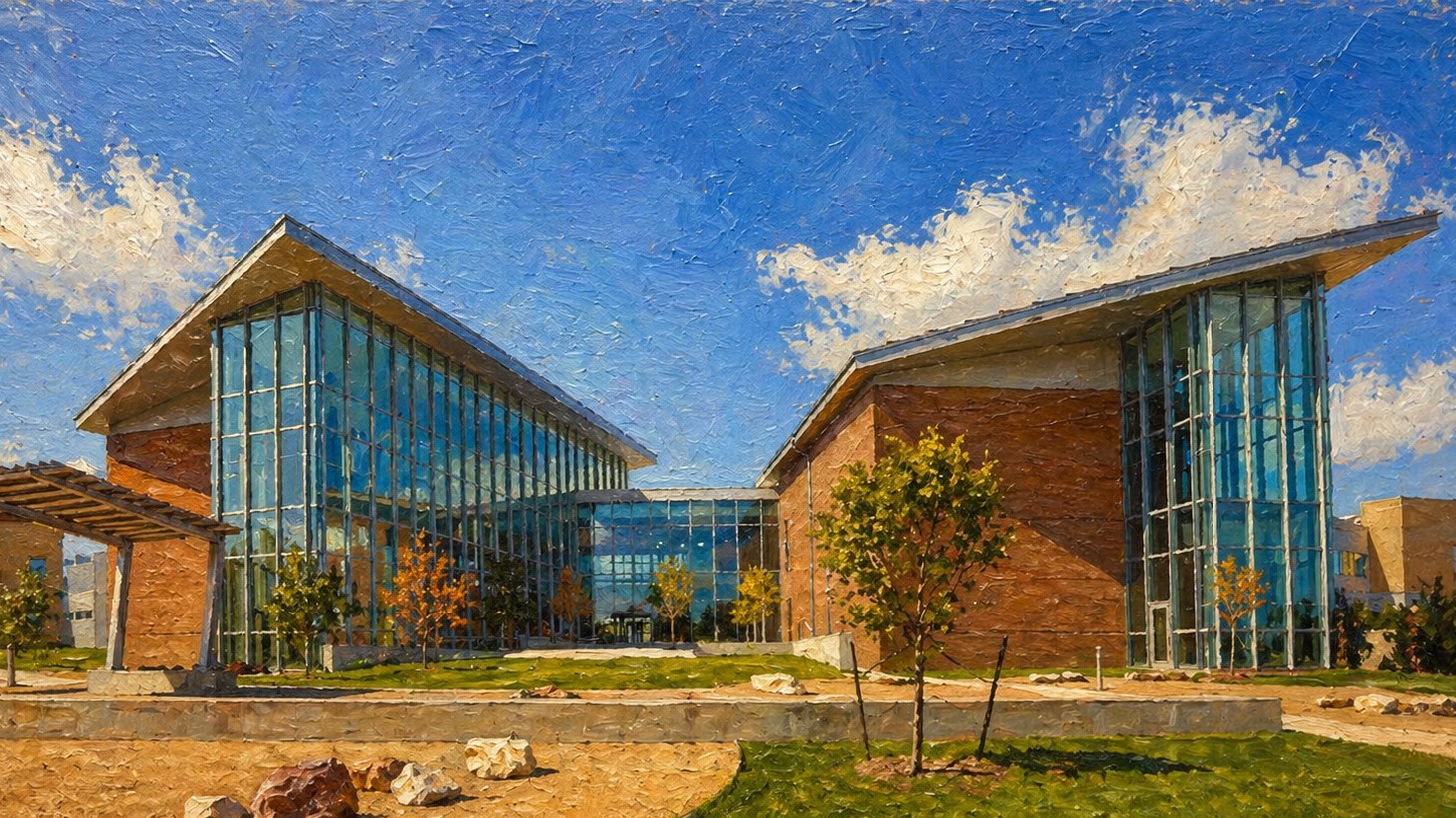
Dallas College is one of the largest public community colleges in the United States, serving roughly 127,000 credit, workforce, and continuing education students annually across seven Texas campuses and a substantial online program. Five years ago it was something different. Until June 2020, what is now Dallas College operated as the Dallas County Community College District (DCCCD), a system of seven separately-accredited colleges including Brookhaven, Cedar Valley, Eastfield, El Centro, Mountain View, North Lake, and Richland. The 2020 consolidation into a single accredited institution restructured the institution operationally, expanded what it can offer academically, and created the foundation for the bachelor’s degree programs that now anchor its online catalog.
This review covers what Dallas College is today, the consolidation that defines its current form, the three bachelor’s degrees and 100-plus associate programs delivered online, what they cost, and which prospective students benefit from the in-county tuition model versus those who would be better served elsewhere.
| Quick Facts | Dallas College |
| Founded | 1965 (as Dallas County Junior College District); first campus opened 1966; consolidated into Dallas College in 2020 |
| Location | Dallas County, Texas; seven campuses plus a dozen neighborhood centers |
| Institutional type | Public community college (level-changed in 2020 to award bachelor’s degrees) |
| Accreditation | Southern Association of Colleges and Schools Commission on Colleges (SACSCOC); single accreditation effective June 2020 |
| Total students served annually | ~127,000 (credit, workforce, continuing education combined) |
| Bachelor’s degrees offered | Three: Early Childhood Education and Teaching (B.A.S., 2020), Nursing/RN-to-BSN (2024), Software Development (B.A.T., 2025) |
| Associate degrees and certificates | 100+ programs across business, healthcare, technology, education, trades, and liberal arts |
| Tuition (Dallas County resident) | $99 per credit hour |
| Tuition (Texas resident, out-of-county) | ~$169 per credit hour |
| Tuition (out-of-state) | ~$250 per credit hour |
| Books and supplies | Included in tuition (saves ~$835 per year) |
| Federal financial aid eligible | Yes (Pell Grant, federal loans, VA benefits) |
| Online learning quality | Online Learning Consortium Quality Scorecard Exemplary Status (top 10% nationally) |

The 2020 Consolidation and What It Means
Dallas College today is the product of one of the most consequential institutional restructurings in U.S. community college history. From 1965 through 2020, what is now Dallas College operated as the Dallas County Community College District, a system of seven independently-accredited two-year colleges. Each college (Brookhaven, Cedar Valley, Eastfield, El Centro, Mountain View, North Lake, Richland) had its own SACSCOC accreditation, its own administrative structure, and its own degree-granting authority. Students who took courses across multiple DCCCD campuses ran into a structural problem. SACSCOC rules required at least 25% of credits to be earned at a single college for that college to grant the degree.
The district discovered that more than 1,300 students were unable to graduate because they had accumulated enough credits across DCCCD colleges, but not enough at any single one. That number drove the consolidation effort. In February 2020 the district submitted a comprehensive application to SACSCOC requesting consolidation into one accredited institution. SACSCOC approved the application on June 12, 2020, and DCCCD became Dallas College, with the seven former colleges repositioned as campuses of a single institution.
The level change
Alongside the consolidation, SACSCOC granted Dallas College a level change, which allowed the institution to offer bachelor’s degrees for the first time in its history. Before 2020 the district could award only associate degrees and certificates. After 2020 Dallas College joined the small but growing group of community colleges nationally that hold authority to grant bachelor’s degrees in select fields, alongside Florida’s Miami Dade College, several other Texas community colleges, and a handful of state systems that have authorized community college baccalaureates.
The first bachelor’s degree, a Bachelor of Applied Science in Early Childhood Education and Teaching, launched in fall 2020 immediately after consolidation approval. A Bachelor of Science in Nursing (RN-to-BSN) followed in 2024. A Bachelor of Applied Technology in Software Development launched in fall 2025 with industry tracks in data analytics and machine learning. A Bachelor of Applied Science in Management is also in the catalog as a competency-based program for working adults.
Consolidation tradeoffs
The consolidation produced operational benefits but also organizational frictions worth understanding. Students gained the ability to graduate without restriction on which campus their credits came from, and student services were standardized across all seven campuses. Faculty experienced significant changes. The previous three-year rolling contracts at the campus level were replaced with one-year contracts at the consolidated institution, which weakened job security and was the most contested aspect of the merger. Centralized governance also reduced the autonomy each campus previously held over its programs and culture.
None of this affects the academic credentials of degrees earned today, which are awarded by the consolidated Dallas College and accepted by transfer destinations and employers on the same terms as any other regionally accredited credential. The historical context is relevant primarily for prospective students considering whether the institution’s current form aligns with what they want from a community college experience.
Accreditation
Dallas College holds institutional accreditation from the Southern Association of Colleges and Schools Commission on Colleges (SACSCOC), one of the seven recognized U.S. regional accreditors. SACSCOC accreditation is held at the institutional level and applies to all programs at all seven campuses and across all online offerings. Texas state-level approval for academic programs comes through the Texas Higher Education Coordinating Board (THECB), which approved each of the bachelor’s degree programs prior to launch.
Programmatic accreditations apply to specific career-track programs where licensure or specialty credentialing requires it. The RN-to-BSN nursing program is structured to meet Commission on Collegiate Nursing Education (CCNE) standards consistent with peer Texas RN-to-BSN bridge programs. The Early Childhood Education and Teaching bachelor’s degree includes a pathway to Texas Educator Certification through an approved Texas Educator Preparation Program, which is the relevant credential for K-12 teaching licensure in Texas.
Verification of current accreditation status can be done through the U.S. Department of Education’s Database of Accredited Postsecondary Institutions and Programs, which lists Dallas College’s consolidated SACSCOC accreditation effective June 2020.

Online Programs
Dallas College offers more than 100 fully online programs, organized into three categories: bachelor’s degrees, associate degrees and certificates designed for direct workforce entry or transfer-out, and continuing education and workforce training delivered in partnership with ed2go and Microsoft. The catalog reflects the institution’s twin missions of community college transfer preparation and direct-to-workforce career training.
Bachelor’s degrees
| Bachelor’s Program | Description |
| B.A.S. in Early Childhood Education and Teaching | 120-credit applied science bachelor’s preparing students for early childhood teaching careers (birth through grade 3); includes a pathway to Texas EC-3 educator certification with options for EC-6, bilingual, or special education endorsements; senior-year teacher residency |
| Nursing (RN-to-BSN) | BSN completion program for currently licensed registered nurses with an associate degree or diploma in nursing; designed for working RNs seeking BSN credentials for career advancement or graduate school preparation |
| B.A.T. in Software Development | Bachelor of Applied Technology with industry tracks in data analytics and machine learning; 100% online or in-person at Richland Campus; built around employer demand in the Dallas-Fort Worth tech sector |
| B.A.S. in Management | Competency-based program designed for working adults and transfer students; mastery-based progression rather than time-based credit hours; coursework in leadership, project management, marketing, and HR |
The bachelor’s program list is deliberately narrow. Dallas College has not pursued breadth across business, technology, healthcare, and other fields the way large online universities have. Each bachelor’s degree was launched in response to specific Dallas-Fort Worth regional workforce demand. Early childhood teaching shortages in Dallas-area schools drove the first program, RN-to-BSN demand at North Texas hospital systems drove the second, and software development hiring at the technology employers that have expanded their North Texas presence drove the third.
Associate degrees and certificates
The associate degree and certificate catalog is substantially larger, with 100-plus online programs across business administration, accounting, computer information technology, healthcare careers (medical billing, health information management, surgical technology), criminal justice, education, paralegal studies, fire protection, and a wide range of liberal arts and STEM transfer paths. Most associate degrees are designed to either prepare students for direct workforce entry in skilled occupations or to transfer fully into the junior year at four-year Texas public universities, including UNT, UTD, UT Arlington, Texas State, Texas Tech, and SMU under specific articulation agreements.
The transfer-out architecture is one of Dallas College’s strongest selling points. Many students complete an associate degree at Dallas County tuition rates, then transfer to a four-year Texas public university for upper-division coursework, producing a bachelor’s degree at total tuition costs substantially below direct-to-four-year enrollment. Students considering this pathway should consult with a Dallas College success coach during the associate degree to ensure course selection aligns with the receiving institution’s degree requirements.
ACE bachelor’s completion partnership
Dallas College has a formal partnership with American College of Education (ACE) for students who want to complete a bachelor’s at an institution that offers programs Dallas College does not. ACE offers online bachelor’s completion programs in healthcare administration, business administration and leadership, professional studies, and educational studies. Dallas College students and graduates receive a 5% tuition discount at ACE. This is an alternative pathway for Dallas College associate graduates whose bachelor’s interest is outside Dallas College’s own four bachelor’s offerings.
Continuing education and workforce training
Through partnerships with ed2go and Microsoft, Dallas College delivers continuing education programs designed for non-degree career skills. These include open enrollment programs in IT certifications (CompTIA, Microsoft, AWS), business and project management training, healthcare career preparation, and a wide range of professional development courses. These programs are not credit-bearing toward Dallas College degrees but provide industry-recognized certifications that support direct workforce entry.

Cost
Dallas College operates on a three-tier tuition structure tied to student residency. Tuition for Dallas County residents is heavily subsidized through county taxpayer support, which produces tuition rates substantially below what students at most other accredited online colleges pay.
| Residency | Per credit | 60-credit AA | 120-credit BA |
| Dallas County resident | $99 | ~$5,940 | ~$11,880 |
| Texas resident, out-of-county | ~$169 | ~$10,140 | ~$20,280 |
| Out-of-state / international | ~$250 | ~$15,000 | ~$30,000 |
Several details meaningfully reduce effective cost beyond the published per-credit rate. Books and required course materials are included in tuition, saving students approximately $835 per academic year compared to institutions that charge for course materials separately. There are no separate fees for student services such as DART transit passes, parking, tutoring, mental health counseling, or emergency aid programs. Dallas College publishes more than 300 scholarship programs, and the Dallas College Promise program provides up to three years of tuition-free enrollment for graduates of partner Dallas-area high schools.
Federal financial aid
Dallas College is fully Title IV eligible. Pell Grants, federal Stafford loans, GI Bill and Yellow Ribbon benefits, and federal work-study are all available to qualifying students. For most Dallas County residents, federal aid combined with the $99 per-credit base rate produces a debt-free pathway to either an associate degree or one of the four bachelor’s programs. Students should complete the FAFSA early to determine eligibility. Our FAFSA for online students guide walks through the federal aid process for online community college students.
How Dallas College compares to alternatives
| Institution | UG per credit | Bachelor’s offerings | Best for |
| Dallas College (in-county) | $99 | 4 (limited) | Dallas County residents |
| Dallas College (out-of-state) | ~$250 | 4 (limited) | Specific program seekers |
| Lone Star College (Texas, in-district) | ~$85 | 3 | Houston-area residents |
| Valencia College (Florida) | ~$103 (in-state) | 4 | Florida residents |
| Rio Salado College (Arizona) | ~$97 (in-state) | 0 (transfer focus) | Arizona residents |
| WGU (any state) | ~$330 (flat-rate) | Many | Self-paced learners anywhere |
| SNHU | ~$330 | Many | Out-of-state seekers needing breadth |
The comparison reveals Dallas College’s positioning clearly. For Dallas County residents, the in-county tuition is among the lowest accredited online options anywhere in the country, with the additional benefit of book inclusion and federal aid eligibility. For out-of-state students, Dallas College’s tuition rises substantially and the limited bachelor’s catalog narrows the value proposition. Out-of-state students typically have better options at large online universities (SNHU, WGU, ASU Online) that offer broader program selection at comparable per-credit rates.
For broader context on online college cost-benefit analysis, our guide to how much you should borrow for an online degree walks through the financial framework that should drive any online college enrollment decision.

Admissions
Dallas College maintains an open admissions policy for associate degree and certificate programs. Applicants must have a high school diploma, GED, or equivalent, and complete the standard college application along with placement testing for math and English (TSI Assessment for Texas residents) or submit qualifying SAT, ACT, or other approved test scores. There is no minimum GPA, no application fee, and no admissions essay or interview at the associate level.
Bachelor’s degree programs use selective admissions tied to each program’s specific entry requirements. The B.A.S. in Early Childhood Education and Teaching requires completion of a relevant associate degree (Associate of Arts in Teaching, Associate of Arts, or Associate of Applied Science) plus minimum GPA thresholds. The Nursing RN-to-BSN program requires a current unencumbered Texas RN license and an associate degree or diploma in nursing from an accredited program. The B.A.T. in Software Development requires either an associate degree in a relevant technology field or completion of equivalent transfer coursework.
Transfer credit policies are generous, consistent with Dallas College’s transfer-focused mission. Up to 90 credits of relevant coursework can transfer in toward a 120-credit bachelor’s degree, which is comparable to the most generous transfer policies at large online universities. Texas residents who completed coursework at any other Texas public community college or university typically transfer credits seamlessly under state articulation agreements.
Online Learning Quality
Dallas College has earned Exemplary Status from the Online Learning Consortium’s Quality Scorecard review, a credential held by approximately the top 10% of colleges and universities that have undergone the OLC evaluation. The OLC Quality Scorecard assesses online program design, faculty support, student support, course quality, and institutional commitment to online education across more than 70 specific criteria. Earning Exemplary Status is a meaningful third-party signal of online program quality, distinct from the accreditation that supports the credentials themselves.
Online courses at Dallas College are delivered through eCampus, the institution’s learning management system, with most courses offered asynchronously to support working students and those balancing family obligations. Some bachelor’s program courses include synchronous components for case discussion and group work, particularly in the nursing and education programs where applied skills development requires faculty interaction. Class sizes for online courses are generally smaller than at large online universities, with most associate-level courses capped below 30 students.
Student support resources for online students include online tutoring through the eCampus platform, virtual academic advising and success coaching, online library research support, online writing center services, and online mental health and wellness resources. The institution explicitly does not charge separate fees for these support services, which are bundled into the per-credit tuition rate.

Who Dallas College Fits Well
Strong fit
Dallas County residents seeking an affordable accredited associate degree, certificate, or bachelor’s in one of Dallas College’s four bachelor’s program areas. The combination of $99 per-credit tuition, included books and supplies, federal aid eligibility, and 100-plus program options produces total costs that no out-of-state alternative can match for this audience. A Dallas County resident earning a 120-credit bachelor’s degree pays approximately $11,880 total tuition before scholarships or federal aid, which is roughly the cost of one year of out-of-state tuition at most public universities.
Texas residents outside Dallas County who want to use Dallas College as a transfer pathway. The out-of-county rate of approximately $169 per credit is still below most Texas four-year public universities for lower-division coursework, and the transfer architecture into UNT, UTD, UT Arlington, and other Texas publics works well for students who plan their associate degree with transfer in mind.
Working RNs in the Dallas-Fort Worth area pursuing BSN credentials. The RN-to-BSN program is competitively priced, fully online, and recognized by major North Texas hospital systems for nursing career advancement and graduate school preparation. RNs evaluating BSN options in the Dallas-Fort Worth market should compare Dallas College against UT Arlington’s online RN-to-BSN program and Texas Woman’s University as the primary alternatives.
Adults pursuing early childhood education careers in Dallas County school districts. The B.A.S. in Early Childhood Education and Teaching includes the Texas educator certification pathway and a senior-year paid teacher residency that builds the specific experience hiring districts look for. The integration of credential preparation, applied experience, and bachelor’s coursework into a single program is structurally efficient for this specific career goal.
Aspiring software developers in the Dallas-Fort Worth tech corridor. The B.A.T. in Software Development is built explicitly around regional employer demand, with industry advisory input from local technology employers. Graduates targeting Dallas-Fort Worth software development hiring will find the program well-aligned to local job market expectations, particularly the data analytics and machine learning concentration tracks.
Weak fit
Out-of-state students seeking general online bachelor’s options outside Dallas College’s four program areas. The limited bachelor’s catalog combined with the higher out-of-state per-credit rate produces a value proposition weaker than what students can find at SNHU, WGU, ASU Online, or other large online universities with broader program selection.
Students seeking graduate-level credentials. Dallas College does not offer master’s or doctoral programs. Students who want graduate credentials should look at Dallas-area public universities (UNT, UTD, UT Arlington) or the broader online graduate market.
Students seeking national-brand recognition or elite-tier credentials. Dallas College is a respected community college with a meaningful regional employer reputation in North Texas, but it is not a nationally-known brand. Students whose career goals include placement at national consulting firms, elite graduate programs, or national-tier employers may find the regional positioning insufficient. For these students, AACSB-accredited online programs at AACSB business schools or selective state flagships would be a stronger fit.
Students whose desired bachelor’s specialty falls outside the four current Dallas College bachelor’s offerings. The program catalog is deliberately narrow, focused on regional workforce demand. Students wanting business administration, psychology, criminal justice, or other common bachelor’s fields will find better breadth at large online universities or at four-year Texas publics.

Dallas College Compared to Other Community College Online Options
Community college online options have grown substantially over the past decade, and Dallas College sits in a specific position relative to peer institutions.
Against Lone Star College (Houston metro area), pricing is similar with both institutions offering low in-district tuition rates, both holding SACSCOC accreditation, and both granting select bachelor’s degrees. Lone Star is appropriate for Houston-area residents; Dallas College for Dallas County residents. Out-of-district Texas residents should compare specific program availability rather than choose on tuition alone.
Against Valencia College (Orlando, Florida), pricing is comparable for in-state residents and program breadth is similar. Both institutions consolidated and expanded into bachelor’s offerings during the 2010s and 2020s. Valencia has a longer track record with bachelor’s programs (since 2013); Dallas College has a stronger position in the consolidated single-accreditation model and Texas-specific employer relationships.
Against Rio Salado College (Maricopa Community College District, Arizona), Dallas College offers bachelor’s degrees that Rio Salado does not. Rio Salado is structured primarily as a transfer feeder for Arizona State University and other Arizona public institutions. Students who want a bachelor’s at the community college level should choose Dallas College; students focused on transfer-to-four-year-university pathways may find either institution suitable depending on state of residence.
Against large online universities such as SNHU and WGU, Dallas College offers substantially lower in-county pricing and a community college mission focused on regional employer relationships and transfer pathways, but a much narrower bachelor’s program catalog. Out-of-state students who do not need a community college specifically will typically find SNHU or WGU’s broader program selection a better fit.
Should You Enroll at Dallas College?
Dallas College is one of the strongest community college values in the United States for Dallas County residents, and a credible regional option for Texas residents outside Dallas County who want access to its specific bachelor’s programs or its transfer architecture. It is a less compelling option for out-of-state students, who face higher per-credit rates and a limited bachelor’s catalog that does not compete with large online universities on program breadth.
It is the right choice for Dallas County residents pursuing an affordable accredited associate degree, certificate, or one of the four available bachelor’s programs. It is the right choice for working RNs in the Dallas-Fort Worth area pursuing BSN credentials, for adults pursuing early childhood teaching careers in Dallas-area schools, and for aspiring software developers targeting the Dallas-Fort Worth tech sector. For these students, the Complete Guide to Earning an Accredited Online Degree as an Adult Learner provides additional context for evaluating community college fit before applying.
It is the wrong choice for out-of-state students seeking general online bachelor’s breadth, for students seeking graduate-level credentials, for students whose target bachelor’s specialty falls outside Dallas College’s four current programs, and for students whose career goals require national-brand institutional recognition. For these students, alternatives at large online universities, four-year Texas publics, or AACSB-accredited online programs will produce a better fit.
If you are evaluating online college options across community colleges, four-year universities, and large online universities, our online program explorer lets you filter by institution type, program field, format, and other criteria. For broader context on how to evaluate any online college before applying, the Complete Guide to Earning an Accredited Online Degree as an Adult Learner walks through the questions every prospective student should be asking before enrolling.
Related Reading
- Online College Review: Lone Star College. Texas community college peer with similar in-district tuition model.
- Online College Review: Valencia College. Florida community college peer with longer bachelor’s-granting history.
- Online College Review: Rio Salado College. Arizona community college peer focused on transfer pathways.
- Accredited Online Nursing Programs for Working Adults. Broader survey of online nursing options including RN-to-BSN bridges.
- Returning to College After 30. Adult learner framework that applies across community college and four-year options.
Find an Online College That Fits Your Goals
Choosing an online college is a significant decision, and Dallas College is one of many strong options worth evaluating. Our online program explorer helps you compare accredited online colleges by institution type, program field, format, and other priorities. Start your search to see which programs align with your goals.

