
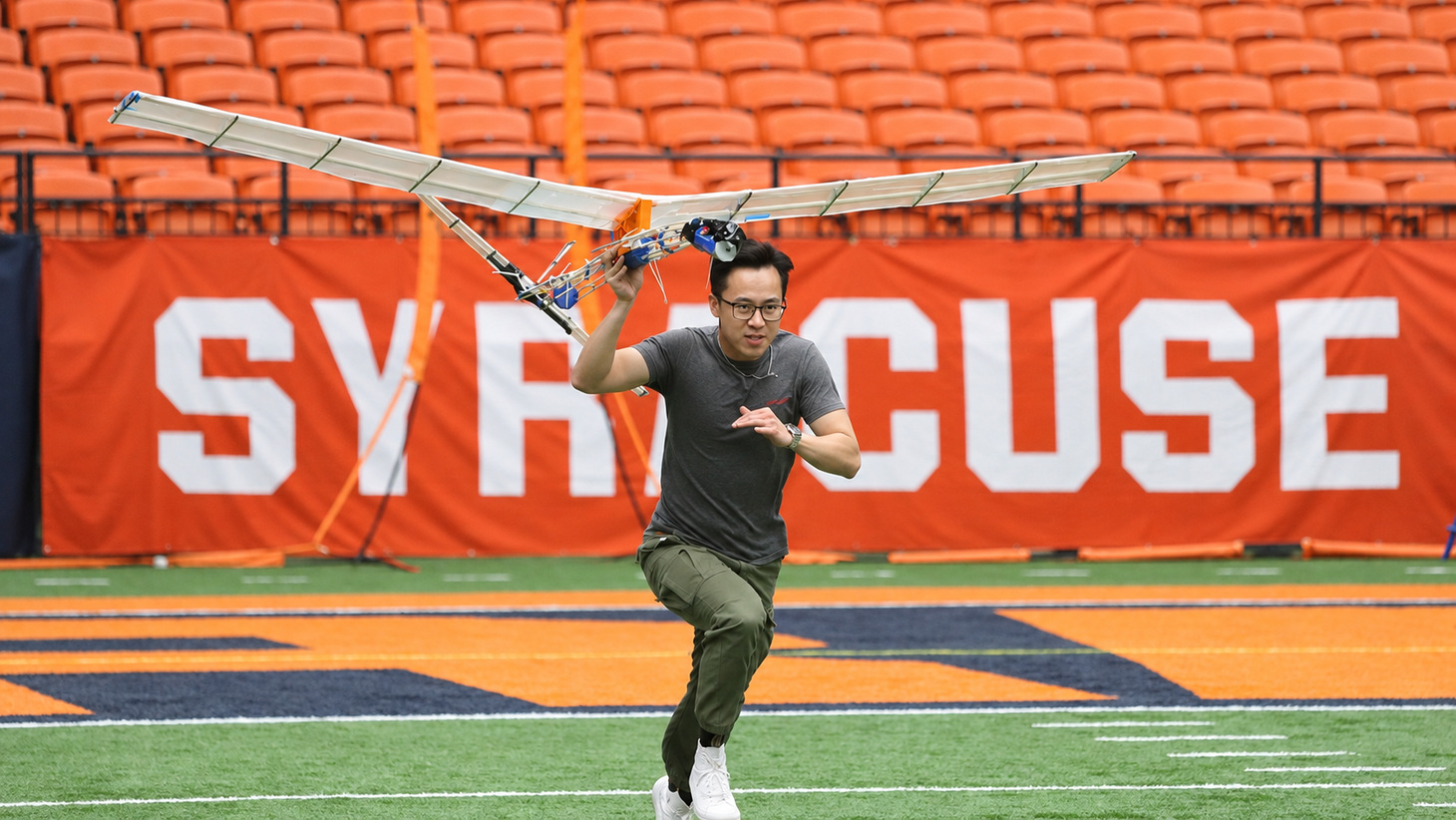
If you love building things, writing code, or figuring out how systems work, you’ve probably noticed that engineering programs can start to look alike on paper. Rigorous math sequence, accredited majors, a senior design project. Check, check, and check. The more useful questions are what a school offers beyond the basics and where its graduates end up. Syracuse University’s College of Engineering and Computer Science (ECS) has some unusually concrete answers, from required engineering courses you can take in Strasbourg, France to a $100 billion chip plant rising a short drive north of campus. Here’s what you should know about Syracuse engineering and computer science as a future undergraduate.
Syracuse Engineering and Computer Science at a Glance
- Location: Syracuse, New York
- Founded: 1901
- Undergraduate majors: 10, with every engineering program ABET-accredited
- Newest major: AI Science, launched in fall 2026
- Class of 2025 outcomes: 94% employed, in graduate school, or serving in the military
- Class of 2025 average starting salary: $79,204
- Study abroad centers for engineers: London, Florence, and Strasbourg
- Application deadlines: November 1 (Early Decision I and Early Action) and January 5 (Early Decision II and Regular Decision)
What is the Syracuse University College of Engineering and Computer Science?
The Syracuse University College of Engineering and Computer Science (ECS) is the university’s home for undergraduate and graduate study in engineering and computer science. It offers more than 30 programs across four departments: Biomedical and Chemical Engineering, Civil and Environmental Engineering, Electrical Engineering and Computer Science, and Mechanical and Aerospace Engineering. The college also has some history on its side. Syracuse was one of the first two universities in the country to offer degrees in computer engineering.
Just as important is what surrounds the college. As an ECS student, you’re part of a large private research university, which means easy access to minors and second majors in places like the Maxwell School and the College of Arts and Sciences, plus Division I athletics and the energy of a big campus. If you want a serious technical education without giving up the full university experience, that combination is a big part of the appeal.
Is Syracuse good for engineering and computer science?
Yes, Syracuse is a strong choice for engineering and computer science, with ABET-accredited engineering programs, a 94% career outcome rate for Class of 2025 graduates, and opportunities that are hard to find elsewhere. You can take required courses at Syracuse’s own centers in London, Florence, and Strasbourg without delaying graduation, and you’ll also find a new AI degree with a dedicated hardware track and a $100 billion semiconductor campus a short drive from your classrooms. Add three advisors for every student, industry-sponsored senior design projects, and an average starting salary of $91,876 for electrical engineering, computer engineering, and computer science graduates.
What majors does Syracuse offer in engineering and computer science?
Syracuse offers 10 undergraduate majors in engineering and computer science, all leading to a Bachelor of Science:
- Aerospace Engineering: Train on a full-motion, FAA-approved flight simulator and work in subsonic and supersonic wind tunnels.
- AI Science: The newest major, with separate software and hardware concentrations (more on this below).
- Biomedical Engineering: Shape your electives toward industry, research, or medical school prerequisites.
- Chemical Engineering: Explore specializations such as biochemical, environmental, or polymer materials engineering.
- Civil Engineering: Lean toward construction, geotechnical, environmental, or structural engineering.
- Computer Engineering: Focus on hardware design, software design, or both.
- Computer Science: Pair core computing with electives in areas like network security, quantum computing, and virtual reality.
- Electrical Engineering: Dig into microelectronics, robotic controls, satellite communications, and cybersecurity.
- Environmental Engineering: Tackle water, air, and climate problems, with field sampling at sites like the Hubbard Brook Experimental Forest.
- Mechanical Engineering: Finish with a year-long, industry-sponsored senior design project.
Want to add a technical specialty to your degree? ECS also offers 10 minors, including AI Science and Engineering and a newer minor in Datacenters, AI and Energy Systems.
What is Syracuse’s AI Science degree?
Syracuse’s Bachelor of Science in AI Science, launched in fall 2026, treats artificial intelligence as its own discipline rather than a topic inside computer science. You’ll start AI coursework in your second year. In fall of your third year, you’ll choose a concentration:
- Software: Courses such as data mining and image and video processing.
- Hardware: Courses such as AI hardware design (think FPGA acceleration and the chip architectures that run neural networks) and computer architecture.
That hardware track is the part worth noticing. Most new AI majors focus on software and data. Syracuse describes its program as one of the first undergraduate AI degrees in the country to offer both paths, which makes sense for a college sitting next to one of the largest semiconductor projects in the country. The degree ends with a two-semester senior capstone, often completed with industry partners such as Lockheed Martin and Saab.
Can engineering students at Syracuse study abroad?
Yes, Syracuse engineering and computer science students can study abroad at Syracuse’s own centers in London, Florence, and Strasbourg while staying on track to graduate on time. It’s one of the most distinctive parts of the ECS experience. Engineering students often skip study abroad because their course sequences leave no room for it. Syracuse solved that problem with global centers where you take required courses abroad, and few engineering colleges offer anything comparable at university-run centers in three European cities.
Each program is mapped to a specific semester:
- Strasbourg, France (fall, second year): Take Calculus III, Statics, and French at the Syracuse center, plus physics and electrical engineering courses with labs at INSA Strasbourg, a French engineering school. No prior French is required.
- London, England (spring, second year for engineering students; fall, third year for computer science students): Computer science students take major courses alongside electives.
- Florence, Italy (spring, second year): Take required engineering courses taught in English, and most students live with a host family.
Students who’ve done it back up the timeline. “There was no disruption to my four-year plan,” one Strasbourg alum told Syracuse University News. You also won’t be on your own. In Strasbourg, an engineer named Jean-Laurent “JoJo” Lareyre has become a tutor, mentor, and guide to more than 60 Syracuse students since 2023. To participate, you’ll need a cumulative GPA of 3.0 or higher, and early planning with your advisor helps your AP credits and prerequisites line up.
What is the first year like for Syracuse engineering students?
First-year engineering and computer science students at Syracuse take ECS 101, Introduction to Engineering and Computer Science, a course that introduces every degree program in the college. If you arrive set on mechanical engineering and discover a love for environmental work, you’ll find out early. You’ll also have plenty of support:
- Three advisors. Every ECS student has a student success advisor, a career advisor, and a faculty advisor.
- Academic Excellence Workshops. These one-credit sessions place you in a group of six to eight students, led by an upper-class facilitator, to work through foundational courses together.
- A dedicated living community. The ECS Living Learning Community in Shaw Hall puts you on the same floor as other first-year engineers and computer scientists.
- A place to land. The Campos Student Center, opened in 2025, hosts evening math study tables, free First Friday brunches, and Catalyst Scholars, a community for first-generation ECS students.
You’ll spend much of your time in Link Hall, which has been renovated floor by floor in recent years with updated labs, classrooms, and student success space.
What hands-on experience will I get at Syracuse?
Syracuse engineering students get extensive hands-on experience. In a survey of Class of 2025 seniors, 87% had completed at least one Experiential Learning Milestone, such as an internship, co-op, research project, or study abroad program. Here are a few standouts:
- Signature Co-Op Program. The optional co-op is a paid, full-time role that runs across spring and summer or summer and fall. One recent graduate turned his co-op at Novelis into a full-time job offer.
- Industry-sponsored senior design. In mechanical and aerospace engineering, teams spend a full year solving real problems for sponsors such as Boeing, Lockheed Martin, the U.S. Navy, and Carrier.
- Invent@SU. In this six-week summer program, teams design, prototype, and pitch an original invention. Each student receives a $2,200 stipend, and each team gets $1,000 for prototyping.
- Competition teams. Among the 19 ECS clubs and organizations are Citrus Racing (Formula SAE), Cuse Baja, ORBiT rocketry, Orange Robotics, and Engineers Without Borders. Two recent Citrus Racing members credit the team with preparing them for engineering roles at SpaceX.
Can I do research as an undergraduate at Syracuse?
Yes, undergraduates can do research at Syracuse, including paid summer research in all four engineering and computer science departments, funded by companies, research grants, and the National Science Foundation. During the academic year, you can earn independent study credit for faculty-supervised research, and those credits count toward the technical electives in your major. The college also hosts a National Science Foundation Research Experiences for Undergraduates (REU) site in interactive biomaterials. University-wide SOURCE grants can help fund your own project, too.
How does Micron’s investment affect Syracuse engineering students?
Micron’s investment puts one of the largest semiconductor projects in the country a short drive from Syracuse’s campus, and the university has built new training and hiring connections around it. In January 2026, Micron Technology broke ground on a $100 billion semiconductor manufacturing campus in Clay, New York, just north of Syracuse. It’s the largest private investment in New York State history. The site is planned for up to four chip fabrication plants, and Micron expects about 9,000 people to work there once it reaches full production.
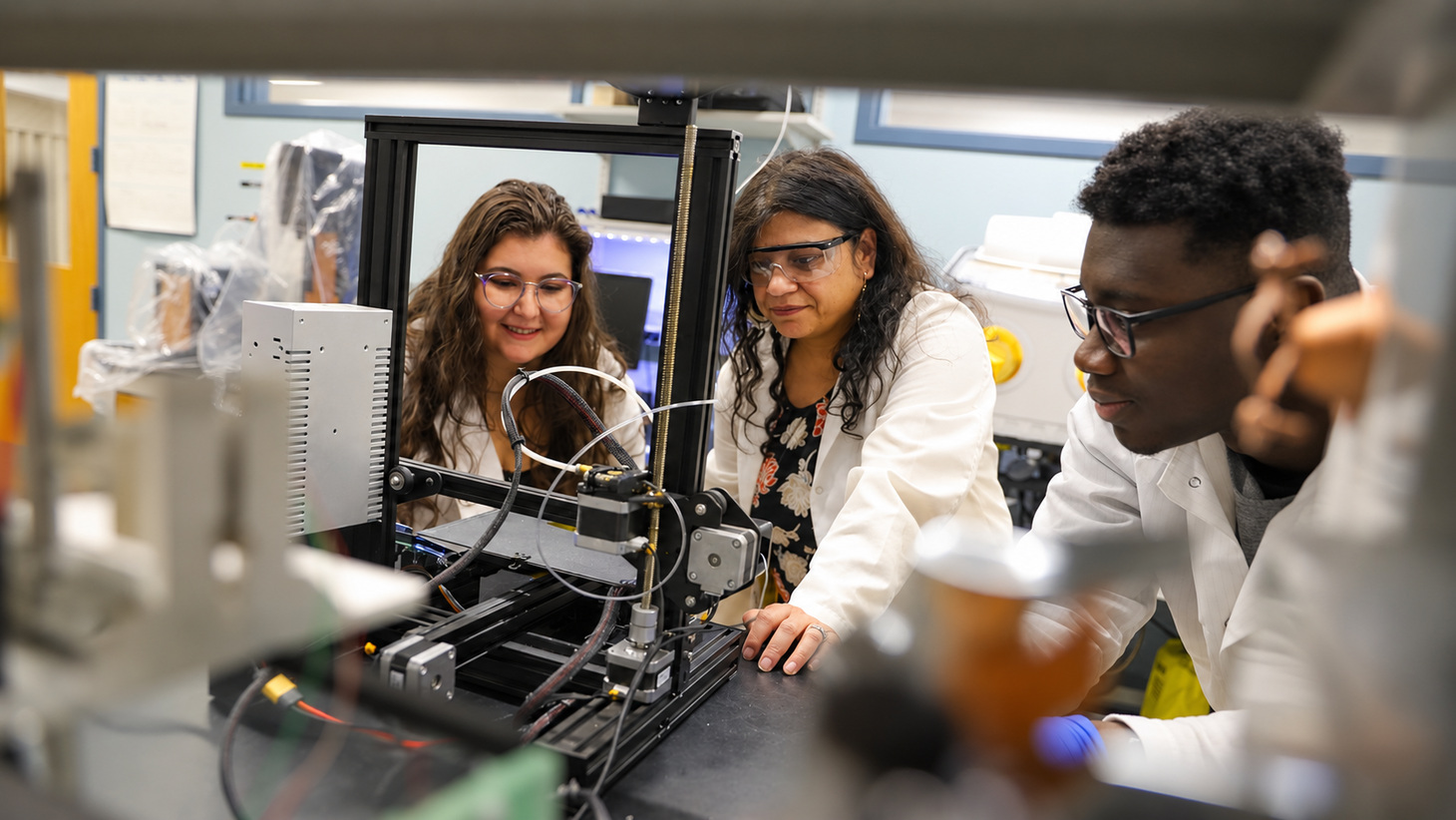
Syracuse has positioned itself as a key academic partner. The university and Onondaga County invested $20 million to create the Center for Advanced Semiconductor Manufacturing, which includes a control room that replicates a modern, autonomous manufacturing line so students can train on live systems. Micron is also one of the college’s Premier employer partners for 2026-27. The connection is already producing results: Micron’s first hire in Central New York was a Syracuse electrical engineering student.
For you, that means a major engineering employer is building just up the road from your classrooms, with needs that span electrical, computer, mechanical, and chemical engineering.
What do Syracuse engineering and computer science graduates earn?
Syracuse engineering and computer science graduates in the Class of 2025 earned an average starting salary of $79,204. Among graduates who reported, 94% were employed, enrolled in graduate school, or serving in the military. According to Syracuse University’s outcomes report, 37% of ECS graduates went straight to graduate school, a sign of how many use their degree as a launchpad for advanced study.
Average starting salaries by department:
- Electrical Engineering, Computer Engineering, and Computer Science: $91,876
- Biomedical and Chemical Engineering: $79,650
- Mechanical and Aerospace Engineering: $78,724
- Civil and Environmental Engineering: $76,340
Recent graduates have landed at Amazon, Apple, Meta, Microsoft, and Qualcomm; Blue Origin, NASA, Pratt & Whitney, and Lockheed Martin; Pfizer, Regeneron, and Boston Scientific; and Turner, Kiewit, and the Port Authority of New York and New Jersey. ECS also hosts two career fairs each year, in the fall and spring.
Can I earn a master’s degree or MBA in five years?
Yes, Syracuse engineering and computer science students can earn a bachelor’s and a master’s degree in about five years. All ECS undergraduate programs have a combined master’s degree option, and these 4+1 programs let you share credits between your bachelor’s and master’s degrees. If you’re drawn to the business side of technology, the H. John Riley Dual Engineering/MBA Program with the Whitman School of Management lets you earn a Bachelor of Science and an MBA in five years. You’ll apply in the spring of your sophomore year.
Does Syracuse support student entrepreneurs?
Yes, Syracuse supports student entrepreneurs, which makes it a good fit for engineers who want to build products, not just study them. ECS students can tap into a range of entrepreneurship resources, including the Blackstone LaunchPad, the Orange Innovation Fund, and the ‘Cuse Tank pitch competition, which awarded $25,000 in prizes in 2026. First-year students can also live in the Glazer Creativity, Innovation and Entrepreneurship Living Learning Community. Add Invent@SU, and you have a clear path from idea to prototype to pitch.
How do I apply to Syracuse engineering and computer science?
Students apply to Syracuse’s College of Engineering and Computer Science through the university’s undergraduate application. According to the ECS admissions page, you should have:
- Four years of high school math, including precalculus and/or calculus
- Four years of high school science (physics is strongly recommended)
- One recommendation from a math, science, or engineering teacher
Early Decision I and Early Action applications are due November 1. Early Decision II and Regular Decision applications are due January 5. Syracuse is test-optional for fall 2027 applicants. For a closer look at admissions statistics and strategy, check out our guide on how to get into Syracuse University.
The best way to get a feel for the college is to plan a visit. ECS offers weekday information sessions and lab tours in Link Hall, along with virtual information sessions on Tuesday evenings.
Are there scholarships for engineering students at Syracuse?
Yes, Syracuse offers merit scholarships to engineering and computer science students. Every ECS applicant is automatically considered, and approximately 30% of admitted students are selected for one. ECS also offers ten renewable scholarships each for high school participants in FIRST robotics and Project Lead The Way (two or more courses), along with scholarships for ACE Mentor Program participants. If you’ve spent your Saturdays building robots, it pays to say so on your application.
Is Syracuse worth your money?
Syracuse can be well worth the investment for engineering and computer science students, especially once financial aid is factored in. In our book, Colleges Worth Your Money, we note that Syracuse’s cost of attendance is about $92,000 per year, but 81% of students receive financial aid. We consider Syracuse worth your money when you have the opportunity to enter one of its top-flight programs, like ECS.
Here’s what the aid picture looks like, according to our book:
- Need-based aid: Students who qualify for need-based aid receive an average grant of $45,033, and Syracuse meets an average of 98% of demonstrated need.
- Merit aid: 33% of freshmen without financial need receive a merit award, with an average annual award of $18,253.
For engineering and computer science students specifically, the return shows up in the outcomes covered above: a 94% career outcome rate and average starting salaries of $79,204 overall and $91,876 in electrical engineering, computer engineering, and computer science. To see what Syracuse would cost your family, try the university’s net price calculator before you apply.
Who is Syracuse engineering and computer science best for?
Syracuse engineering and computer science is an especially strong fit if you:
- Want to study abroad without slowing down your engineering degree
- Are excited by AI and want to understand the hardware behind it, not just the software
- Hope to work in semiconductors, aerospace, or advanced manufacturing
- Like the idea of turning a class project into a startup
- Want a rigorous technical education inside a big, spirited university
Still deciding on a major? ECS 101 gives you a structured look at every program before you commit.
Final Thoughts – Syracuse Engineering and Computer Science
Syracuse’s College of Engineering and Computer Science gives you more than a strong technical foundation. You can take required courses in Strasbourg, study AI from the chip level up, train on a teaching factory floor built for the semiconductor industry, and graduate into a job market with Micron next door. If you want an engineering education that’s hands-on, global, and connected to where the industry is heading, Syracuse belongs on your list. (It’s also one of the schools profiled in our book, Colleges Worth Your Money.)
Looking for additional resources? Consider checking out the following:

