
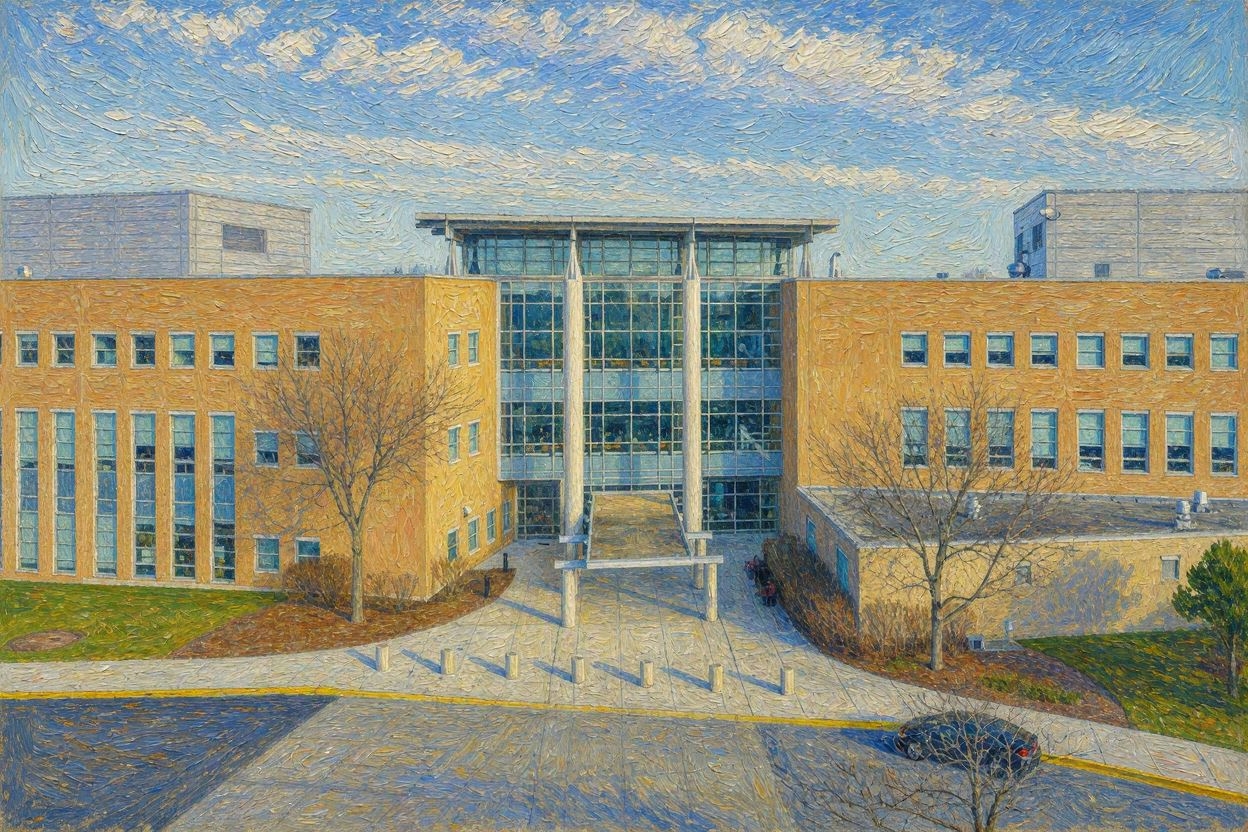
A City Built on Selective Enrollment
Chicago runs one of the most complex public-school systems in the country. Selective enrollment exam schools sit at its center. They draw applicants from every neighborhood in the city. Beyond those exam schools, families can also choose a longstanding IB program, a large charter network, or a small cluster of independent schools. As a result, no two Chicago students follow quite the same path to college. Several factors distinguish these schools from one another:
- Selective enrollment schools admit students through a citywide exam and a socioeconomic tier system, not a neighborhood boundary.
- Lane Tech and Lincoln Park each enroll thousands of students, while Jones and the independent schools stay comparatively small.
- Lincoln Park offers Chicago’s original IB Diploma Programme, a distinct model from the AP-heavy selective enrollment schools.
- Noble Network campuses admit students by lottery rather than exam score, opening a rigorous option to a broader pool.
- Independent schools like Latin and the Lab Schools operate outside CPS entirely, with smaller classes and different counseling models.
With that landscape in mind, here is how Chicago’s leading schools compare, tier by tier, for college admissions purposes.
Market Context: Admissions Offices Know This City Well
Selective colleges see more Chicago applicants than they do from almost any other metro area. Consequently, admissions officers read those applications with real familiarity. That familiarity cuts both ways for applicants. On one hand, a strong record from a top selective enrollment school carries built-in credibility. That said, reviewers also see hundreds of similar applicants from the same schools every cycle.
Illinois offers no large statewide merit scholarship comparable to programs in Florida or Georgia. Instead, the state’s Monetary Award Program provides need-based grants. Additionally, the University of Illinois Urbana-Champaign’s Illinois Commitment covers tuition for admitted students from lower- and middle-income households. That dynamic pulls many strong students toward U of I’s flagship campus, particularly for engineering and computer science.
Meanwhile, internal competition inside Chicago itself is fierce. The eleven CPS selective enrollment high schools compete for the same pool of high-scoring eighth graders. Each school’s tier-based admissions formula shapes exactly who ends up in each building. That competition pushes rigor upward across the entire selective enrollment tier. That is precisely why reviewers expect a demanding course load from any Chicago applicant who wants to stand out.

Selective Enrollment Public High Schools
| School | IL Rank (US News) | National (US News) Rank | AP Participation | Graduation Rate | Enrollment |
|---|---|---|---|---|---|
| Walter Payton College Prep | #1 | #32 | 98% | 99% | 1,230 |
| Northside College Prep | #2 | #40 | 59% | 97% | 1,041 |
| Lane Tech College Prep | #3 | #72 | 97% | 96% | 4,604 |
| Whitney M. Young Magnet HS | #4 | #104 | 58% | 96% | 2,221 |
| Jones College Prep | #5 | #106 | 96% | 99% | 1,957 |
Walter Payton College Preparatory High School
Public, Selective Enrollment · Near North Side, Chicago, IL
| Metric | Data |
|---|---|
| US News IL Rank | #1 |
| US News National Rank | #32 |
| AP Participation | 98% |
| Graduation Rate | 99% |
| Enrollment | 1,230 |
| Student-Teacher Ratio | 14:1 |
| Average SAT | 1420 |
| Average ACT | 33 |
Academic Model and Curriculum
Payton runs an exam-school model built almost entirely around Honors and AP coursework. Nearly every senior takes at least one AP exam before graduating. Notably, Payton also houses the only Confucius Institute located inside a US high school. That partnership supports advanced Mandarin instruction alongside the standard AP language sequence. Consequently, Payton students carry a genuinely unusual academic profile among selective enrollment applicants.
Programs, Activities, and Outcomes
Beyond the classroom, Payton fields nationally competitive math and debate teams. The school also offers an extensive research-methods elective sequence. Additionally, college counselors work with a caseload small enough to track individual students closely, a rarity inside a district this large. Payton consistently sends graduates to Ivy League and other highly selective universities. Its counseling office also maintains detailed placement data that families can review during the cycle.
From a College Admissions Standpoint
Because Payton already carries institutional weight with reviewers, students there need a genuinely distinct hook. A niche research interest or a specific city-based project tends to matter more than one more AP score. Students should use Payton’s smaller size to build close relationships with a few teachers early. Those relationships translate directly into stronger, more specific letters of recommendation.
Northside College Preparatory High School
Public, Selective Enrollment · North Park, Chicago, IL
| Metric | Data |
|---|---|
| US News IL Rank | #2 |
| US News National Rank | #40 |
| AP Participation | 59% |
| Graduation Rate | 97% |
| Enrollment | 1,041 |
| Student-Teacher Ratio | 16:1 |
Academic Model and Curriculum
Northside teaches exclusively at the Honors and AP level outside of physical education. As a result, baseline rigor is already high before a student adds a single elective. The school’s signature Colloquium program pulls students out of the standard schedule one day each week for an independent project. That might mean collecting water samples on Lake Michigan or producing original radio segments. In turn, that structure gives Northside students a built-in venue for self-directed research.
Programs, Activities, and Outcomes
Northside’s facilities, including a solar-heated pool and an organic garden, support project-based electives few other CPS schools can match. Colloquium alumni frequently carry their independent projects into formal research competitions during junior and senior year. Meanwhile, Northside’s college counseling office has decades of experience placing students at flagship state universities and selective private colleges alike. Outcomes are particularly strong in STEM fields.
From a College Admissions Standpoint
Northside applicants should lean into the Colloquium program rather than treat it as a scheduling quirk. A multi-year Colloquium project, documented with real data or a finished creative product, gives reviewers something concrete. Above all, students should connect that independent work explicitly to their intended major in the personal statement. That link is what separates a strong Northside application from a merely solid one.
Lane Technical College Prep High School
Public, Selective Enrollment · Roscoe Village, Chicago, IL
| Metric | Data |
|---|---|
| US News IL Rank | #3 |
| US News National Rank | #72 |
| AP Participation | 97% |
| Graduation Rate | 96% |
| Enrollment | 4,604 |
| Student-Teacher Ratio | 16.6:1 |
Academic Model and Curriculum
Lane Tech offers all 38 AP courses tracked by the College Board. As a result, it is home to the largest AP program in Illinois. The school was also one of a hundred schools worldwide selected to pilot AP Capstone, a two-year research sequence. Given its size, Lane Tech supports niche electives, including aerospace engineering and marine biology, that smaller schools simply cannot staff.
Programs, Activities, and Outcomes
Lane Tech’s scale supports an unusually deep STEM ecosystem. Notably, the school hosts the state’s largest high school science fair, along with a dedicated Girls in Engineering, Math, and Science program. Athletics matter here too, since Lane Tech pairs a genuinely comprehensive sports program with its academics. Meanwhile, college counselors manage a large caseload, so students who want individualized attention need to seek it out proactively.
From a College Admissions Standpoint
Given Lane Tech’s size, reviewers cannot assume every graduate had the same experience. That reality works in a student’s favor if used well. A student who completed AP Capstone or built depth in a specific elective sequence, such as aerospace engineering, has a genuinely differentiated story. Above all, that kind of depth is precisely what a 4,600-student school makes possible.

Whitney M. Young Magnet High School
Public, Selective Enrollment · Near West Side, Chicago, IL
| Metric | Data |
|---|---|
| US News IL Rank | #4 |
| US News National Rank | #104 |
| AP Participation | 58% |
| Graduation Rate | 96% |
| Enrollment | 2,221 |
| Student-Teacher Ratio | 17:1 |
Academic Model and Curriculum
Whitney Young, Chicago’s first magnet high school, offers 30 AP courses that reflect that founding mission. The English department has a particularly strong AP track record. Additionally, its debate, mock trial, and student government programs feed directly into that same college-level writing and argumentation work. Consequently, Whitney Young students tend to arrive at college well prepared for discussion-based seminars.
Programs, Activities, and Outcomes
Beyond AP coursework, Whitney Young fields one of the strongest speech and debate programs among CPS selective enrollment schools. The school also offers deep visual and performing arts programming. Its counseling office, meanwhile, draws on a long alumni network spanning law, medicine, business, and public service. Students researching a specific career path often find a willing alumni mentor.
From a College Admissions Standpoint
Whitney Young applicants benefit from leaning into the school’s humanities and civic-engagement strengths, rather than trying to out-STEM Lane Tech or Payton. A sustained commitment to debate or student government, paired with strong AP results in English and social studies, produces a coherent profile. That coherence, above all, matters more than breadth for students at a school this well known.
Jones College Prep High School
Public, Selective Enrollment · Printers Row, Chicago, IL
| Metric | Data |
|---|---|
| US News IL Rank | #5 |
| US News National Rank | #106 |
| AP Participation | 96% |
| Graduation Rate | 99% |
| Enrollment | 1,957 |
| Student-Teacher Ratio | 17:1 |
Academic Model and Curriculum
Jones sits in the South Loop, directly downtown, and that location shapes much of its academic identity. The school partners closely with nearby cultural and civic institutions. As a result, students gain access to internships and mentors that a neighborhood school further from downtown cannot offer as easily. Jones also maintains one of the higher AP participation rates among selective enrollment schools.
Programs, Activities, and Outcomes
Jones’ downtown location supports a robust internship pipeline into nearby law firms, financial institutions, and cultural organizations. The school’s business and entrepreneurship electives draw directly on that proximity. Student-run enterprises are a visible part of campus life. Meanwhile, Jones posts one of the strongest graduation rates among selective enrollment schools, and counselors emphasize early exposure to downtown professional networks.
From a College Admissions Standpoint
Jones students have a genuine locational advantage that few other Chicago applicants can claim. Admissions officers respond well to evidence that a student actually used it. An internship at a Loop firm or a business plan built around a real South Loop problem carries more weight than a generic list of clubs. Above all, Jones applicants should treat downtown Chicago as a resource, not just a commute.
The IB Alternative: Lincoln Park High School
Lincoln Park High School
Public, IB Diploma Programme · Lincoln Park, Chicago, IL
| Metric | Data |
|---|---|
| AP/IB Participation | 86% |
| College Enrollment Rate | 92% |
| Enrollment | 2,100 |
Academic Model and Curriculum
Lincoln Park authorized Chicago’s first International Baccalaureate Diploma Programme back in 1980. Consequently, it remains the oldest IB Diploma school in Illinois. The school also offers the IB Middle Years Programme and the IB Career-Related Programme. Additionally, a separate Advanced College Prep honors sequence serves students who prefer a traditional AP-based track. As a result, Lincoln Park offers a genuinely different academic model from its selective enrollment peers. Roughly 86% of students participate in AP or IB-level coursework by graduation.
Programs, Activities, and Outcomes
Beyond the IB Diploma track, Lincoln Park runs dedicated magnet programs in visual arts and performing arts, including music, drama, and dance. That combination gives students a genuine choice between an academic-only path and one built around a specific artistic discipline. Meanwhile, about 92% of graduates enroll in a two-year or four-year college. The school’s counseling office has decades of experience guiding students through the IB extended essay and internal assessment process alongside standard college applications.
From a College Admissions Standpoint
For students who prefer the IB framework’s emphasis on extended essays and internal assessments over a purely AP-driven load, Lincoln Park represents Chicago’s clearest CPS alternative. That distinction matters strategically, since reviewers who recognize the IB Diploma understand it as a genuinely rigorous, internationally benchmarked credential. Above all, applicants should use the extended essay itself as a showcase of sustained, independent research tied to their intended major.

Charter Schools
| School | Network / Type | Notable Metric | Enrollment |
|---|---|---|---|
| Noble Street College Prep | Noble Network flagship | Network-wide ~98% college acceptance | 659 |
| Chicago Math and Science Academy | Independent charter, grades 6-12 | US News Silver medal | 602 |
Noble Street College Prep
Public Charter · Noble Square, Chicago, IL
| Metric | Data |
|---|---|
| Founded | 1999 |
| Admission | Citywide lottery, open enrollment |
| Network college acceptance rate | 98% |
| Network college enrollment rate | 94% |
| Campus enrollment | 659 |
Academic Model and Curriculum
Noble Street was the founding campus of the Noble Network, which has since grown to 18 schools citywide. Unlike the exam-based selective enrollment schools, Noble Street admits students through a lottery open to any Chicago resident. That open-enrollment structure means the school builds rigor through a longer school day and mandatory tutoring rather than through selective intake. Chicago Public Schools rates several Noble campuses among the highest-performing public high schools in the city.
Programs, Activities, and Outcomes
Noble’s network-wide counseling model tracks alumni well beyond graduation, staying in contact through the first years of college. That sustained support helps explain the network’s strong college acceptance figures relative to comparable open-enrollment schools nationally. Extracurricular offerings lean toward college-access programming, including dedicated college seminar courses that every senior completes.
From a College Admissions Standpoint
Noble Street applicants often present a compelling first-generation or overcoming-obstacles narrative. Reviewers, notably, take that context seriously when it is documented well. Specific, sustained evidence, such as a multi-year tutoring commitment, strengthens that narrative considerably. Counselors should help students frame their Noble experience around growth, rather than assuming the network’s reputation alone will carry an application.
Chicago Math and Science Academy
Public Charter · Rogers Park, Chicago, IL
| Metric | Data |
|---|---|
| Grades Served | 6-12 |
| CPS Rating | Level 1+ |
| US News Recognition | Silver medal |
| Enrollment | 602 |
Academic Model and Curriculum
Chicago Math and Science Academy runs a STEM-focused curriculum inside a smaller charter setting than Noble’s flagship campuses. The school earned a Silver medal in US News rankings and holds a Level 1+ rating, the highest tier CPS awards. Consequently, CMSA offers families a STEM-oriented alternative that does not require an exam score.
Programs, Activities, and Outcomes
CMSA’s smaller enrollment allows closer relationships between students and faculty than a comparably STEM-focused selective enrollment school could offer. The school’s math and science electives feed directly into regional competitions. Meanwhile, counseling staff work with a caseload small enough to support individualized planning. That structure suits students who want STEM depth without exam-based admissions pressure.
From a College Admissions Standpoint
CMSA students should use the school’s smaller size to their advantage. Specifically, they should build a documented, multi-year STEM project rather than spreading themselves across many activities. A strong CMSA applicant typically pairs a math or science competition result with a clear interest in a related college major. That kind of coherence helps a smaller school’s graduate stand out just as clearly as a Payton applicant.

Independent Schools
| School | NAIS Member | Student-Teacher Ratio | Upper School Enrollment |
|---|---|---|---|
| University of Chicago Laboratory Schools | Yes | 8:1 | ~700 |
| Latin School of Chicago | Yes | 9:1 | 512 |
University of Chicago Laboratory Schools
Private, NAIS Member · Hyde Park, Chicago, IL
| Metric | Data |
|---|---|
| Founded | 1896 |
| NAIS Membership | Yes |
| Student-Teacher Ratio | 8:1 |
| AP/Advanced Topic Courses | 30+ |
| Grading | Unweighted 4.0 scale, no class rank |
Academic Model and Curriculum
Lab, as it is widely known, was founded by education reformer John Dewey. It remains closely affiliated with the University of Chicago. The high school offers more than 150 courses, including over 30 Advanced Placement or Advanced Topic classes. Notably, qualified students may take courses directly at the University of Chicago at no additional cost. Lab does not calculate class rank, which shifts application emphasis toward the depth of a transcript.
Programs, Activities, and Outcomes
Lab’s 8:1 student-teacher ratio supports genuinely close faculty mentorship. Its math, science, and Model UN teams are consistent state title contenders. The school maintains a strong record of sending graduates to highly selective colleges nationally, including its affiliated university. Lab’s counseling office works closely with families throughout the process, drawing on decades of placement history.
From a College Admissions Standpoint
Because Lab does not rank students, reviewers rely more heavily on course rigor and teacher recommendations to contextualize a transcript. Lab applicants should ensure their coursework tells a clear story of increasing challenge across four years. A specific research collaboration through the University of Chicago connection gives Lab students an especially strong differentiator.
Latin School of Chicago
Private, NAIS Member · Gold Coast, Chicago, IL
| Metric | Data |
|---|---|
| Founded | 1888 |
| NAIS Membership | Yes |
| Student-Teacher Ratio | 9:1 |
| Athletic Conference | Independent School League |
| Upper School Enrollment | 512 |
Academic Model and Curriculum
Latin, one of the oldest independent schools in Chicago, still teaches Latin language in its middle and upper divisions. That is a direct link to its founding classical curriculum. The school’s small class sizes support significant writing instruction across every discipline, not just the humanities. Graduates typically arrive at college with substantial experience in sustained analytical writing.
Programs, Activities, and Outcomes
Latin fields a full Independent School League athletic program alongside strong visual and performing arts offerings. Nearly all graduates matriculate directly to four-year colleges. Meanwhile, the counseling office maintains close relationships with admissions offices at selective universities nationally. Its Gold Coast location also supports internship and mentorship connections throughout downtown Chicago.
From a College Admissions Standpoint
Latin applicants benefit from the school’s reputation for rigorous, discussion-based humanities instruction. As a result, a transcript heavy in upper-level English, history, and language coursework tends to read as authentic. Strategically, students should use faculty relationships, built naturally in Latin’s small classes, to secure recommendation letters with real specificity. That specificity, more than any single activity, separates strong applications from merely adequate ones.

How College Transitions Helps Chicago-Area Families
- Building a school-specific strategy that accounts for whether a student attends an exam school, an IB program, a charter, or an independent school.
- Identifying research, internship, and mentorship opportunities across Chicago’s universities, museums, and corporate community.
- Helping families navigate the CPS selective enrollment tier system and charter lottery timelines alongside independent school applications.
- Advising on how to differentiate a transcript within a large, well-known applicant pool from schools like Payton, Lane Tech, or Whitney Young.
- Guiding Illinois-specific financial aid planning, including the Monetary Award Program and flagship university commitment programs.
Final Thoughts
Chicago’s selective enrollment schools, led by Payton, Northside, Lane Tech, Whitney Young, and Jones, give students an exceptionally rigorous foundation. That same rigor, however, means reviewers see hundreds of similar transcripts every cycle. Standing out from that pool requires a documented, specific interest, rather than simply a strong GPA.
Lincoln Park’s IB Diploma Programme and the Noble Network’s open-enrollment campuses offer genuinely different paths toward the same selective colleges. Both reward students who use their school’s particular structure deliberately. That might mean an extended essay or a sustained mentorship, pursued with real intention rather than passively.
Independent schools like the Lab Schools and Latin round out the market with smaller classes and closer faculty relationships. Wherever your student attends, College Transitions helps families in the Chicago area turn strong academic options into clear, differentiated admissions plans.

