
Asheville occupies a distinctive place in the American educational landscape. Nestled in the Blue Ridge Mountains of western North Carolina, the city has built a secondary school ecosystem that reflects its dual identity: a mid-sized, culturally vibrant urban center with both deep Appalachian roots and a growing population of families who have relocated from larger metros, often specifically for the quality of life and schools. The result is a remarkably varied market that includes a nationally ranked STEM charter, a magnet school with an inquiry-based science focus, a comprehensive public high school with broad AP access, two boarding schools with national reputations, and the region’s only co-ed independent day school.
From a college admissions standpoint, Asheville-area schools differ meaningfully in:
- How selective colleges recognize and contextualize each school’s academic profile
- The depth and breadth of AP, honors, and dual enrollment offerings
- Access to individualized college counseling versus high-caseload public school environments
- The degree to which schools are day, boarding, or charter programs, each presenting differently to admissions readers
- How a student’s geographic context in western North Carolina shapes the admissions narrative
This school-by-school analysis examines each option in turn, with strategic guidance for college-bound students and their families.

The Asheville-Area College Admissions Landscape: What Families Need to Know
How Selective Colleges Read This Market
Asheville is a market that selective colleges encounter inconsistently. Admissions offices do read Asheville applications, but the city does not generate the volume of competitive candidates that Charlotte or the Research Triangle produce. Consequently, school familiarity varies considerably. Carolina Day, Asheville School, and Christ School have established national reputations within independent school circles. Nesbitt Discovery Academy, moreover, has begun to earn recognition commensurate with its rankings. Public schools like Asheville High and SILSA, however, require more context-setting for out-of-state readers unfamiliar with Buncombe County or Asheville City Schools.
The UNC System and In-State Financial Dynamics
The University of North Carolina system plays a significant role in how families here structure college plans. UNC Chapel Hill draws strong aspirational attention, and NC State, UNC Asheville, and Appalachian State offer accessible regional options. UNC Asheville, in particular, provides free tuition and fees for in-state students from households earning $80,000 or less annually through its Access Asheville initiative. North Carolina does not operate a single statewide merit scholarship analogous to Georgia’s HOPE program; instead, the College Foundation of North Carolina (CFNC) maintains a searchable scholarship database, and the NC Need-Based Scholarship offers up to $8,800 for qualifying students at eligible in-state institutions. Families should accordingly investigate CFNC resources alongside FAFSA submissions.
The Boarding School Effect on Local Competition
One structural dynamic specific to Asheville deserves attention. The presence of two nationally recognized boarding schools within a few miles of the city means that some of the area’s strongest students are drawn from across the country rather than from Buncombe County itself. As a result, top performers at local public and charter schools face less concentrated local peer competition than students in larger metros. That said, they also have fewer highly motivated school-level cohorts to sharpen their edge. Students pursuing selective admissions from Asheville’s public sector should therefore seek external competition deliberately, through summer programs, national contests, and extracurricular pursuits beyond the school building.
Public and Charter Schools: How the Top Asheville-Area Public Options Compare
| School | U.S. News NC Rank | U.S. News National Rank | AP Participation Rate | Graduation Rate | Student-Teacher Ratio | Enrollment (9–12) |
|---|---|---|---|---|---|---|
| Nesbitt Discovery Academy | #7 | #296 | 73% | — | 21:1 | ~379 |
| Franklin School of Innovation | #51 | #1755 | 92% | — | 12:1 | ~362 |
| School of Inquiry and Life Sciences (SILSA) | #64 | #2295 | 54% | 98% (Class of 2020) | ~27:1 | ~352 |
| Asheville High School | #103 | #3930 | 52% | 92% | 13:1 | ~1165 |
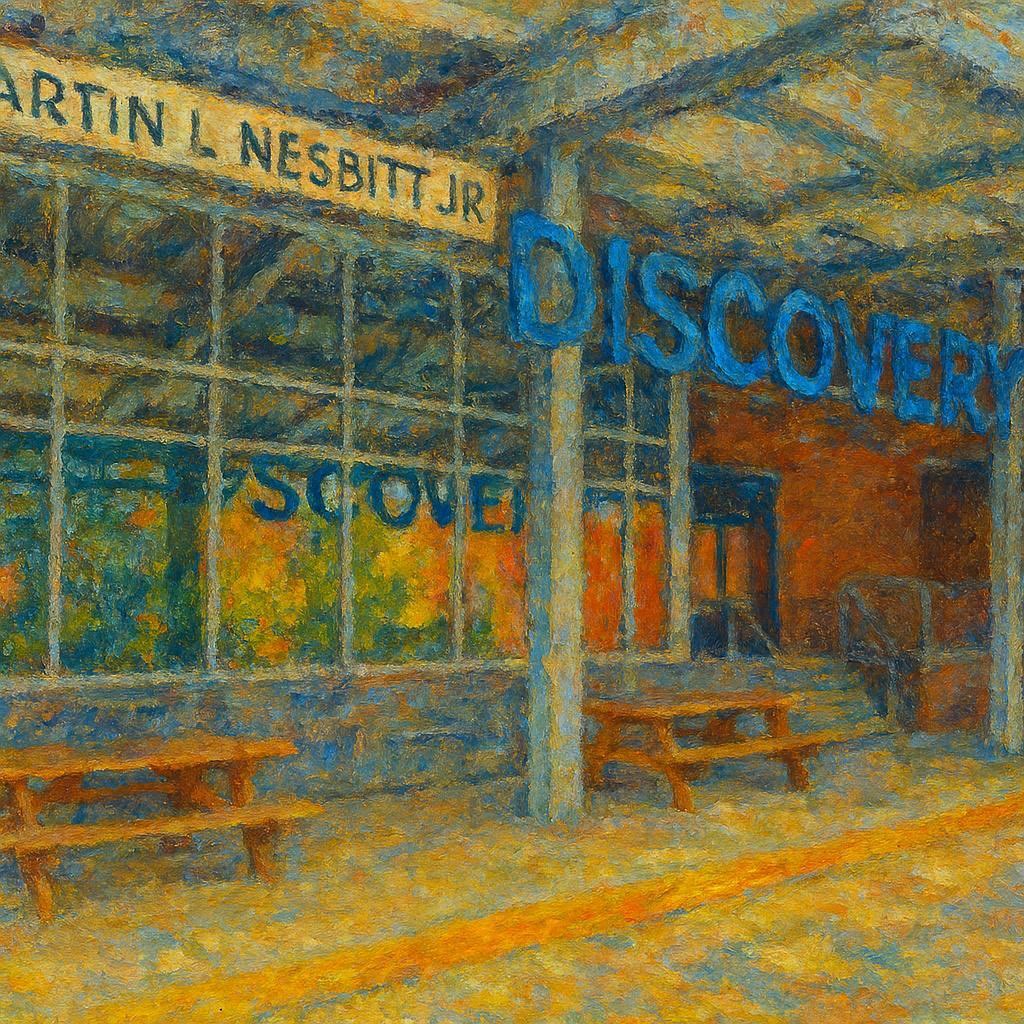
Nesbitt Discovery Academy
Public Charter (STEM) · Asheville, NC (Buncombe County Schools)
| Metric | Data |
|---|---|
| U.S. News NC Rank | #7 |
| U.S. News National Rank | #296 |
| Enrollment (9–12) | ~379 |
| Student-Teacher Ratio | 21:1 |
| AP Participation Rate | 73% |
| Math Proficiency (EOC) | ≥95% |
| Reading Proficiency (EOC) | ≥95% |
| Average SAT Score | 1291 (combined; ranked #5 in NC) |
| National Merit Semifinalists | More than any other school in western NC (last 5 years) |
Academic Model
Martin Luther Nesbitt Jr. Discovery Academy (NDA) is a tuition-free public STEM charter school serving grades 9–12 within the Buncombe County Schools system. It is, by most measurable standards, the strongest academically performing public school in western North Carolina. U.S. News ranks it seventh in the state and 296th nationally, placing it in the top 2% of all ranked public high schools in the country. The school serves approximately 379 high school students, with an admissions process that draws applications from across Buncombe County and the surrounding region.
The academic model centers on STEM-integrated coursework, rigorous AP access, and end-of-course proficiency outcomes that far exceed state and county averages. More than 95% of Nesbitt students achieve proficiency on both math and reading EOC assessments, compared to state averages of approximately 51% and 50% respectively. The AP participation rate of 73% reflects a school that actively pushes students toward college-level work, not simply students who self-select into advanced coursework.
STEM Focus and Extracurriculars
Nesbitt’s STEM identity is not merely cosmetic. The school’s curriculum emphasizes applied science and mathematics across all four years, with AP sequences in STEM-related subjects well represented. Over the past five years, Nesbitt has produced more National Merit Semifinalists than any other school in western North Carolina, a remarkable result for a public charter of its size and a clear indicator of the academic caliber the school attracts and develops.
Extracurricular programming includes science competitions, math teams, and student-led research opportunities that connect to the school’s STEM mission. The school’s culture is academically competitive by public school standards; students who thrive here tend to be motivated, self-directed learners who bring specific STEM interests to the application process.
From a College Admissions Standpoint
Nesbitt Discovery Academy is the most strategically valuable public-school credential in the Asheville market for students targeting selective colleges. Its national ranking, exceptional EOC proficiency data, high AP participation, and National Merit performance together create a profile that admissions offices can read clearly. Students should nonetheless contextualize their standing within the school, particularly in AP exam scores and extracurricular leadership. The STEM identity is, in turn, a genuine asset for engineering programs and research universities. Students whose interests lean toward humanities or the arts should, however, supplement their Nesbitt profile with external programs that signal intellectual breadth. The 21:1 student-teacher ratio suggests individualized counseling may be limited; consequently, supplemental external guidance is worth considering for students with highly selective targets.
The Franklin School of Innovation
Public Charter (EL Education) · Asheville, NC
| Metric | Data |
|---|---|
| U.S. News NC Rank | #51 |
| U.S. News National Rank | #1755 |
| Enrollment (9–12) | ~362 |
| Enrollment (Grades 5–12 total) | ~749 |
| Student-Teacher Ratio | 12:1 (HS) |
| Average Class Size | 23 |
| AP Participation Rate | ~40% (enrolled in AP courses) |
| AP Exam Pass Rate (3+) | 71.93% (2025) |
| ACT Composite Median | 21.7 (2024–25) |
| Dual Enrollment | AB Tech and UNC Asheville |
| 4-Year College Matriculation | 66% |
| AP Courses Offered | 10 |
Academic Model
The Franklin School of Innovation (FSI) is Asheville’s most academically distinctive public charter option for students who do not pursue the STEM-intensive environment at Nesbitt Discovery Academy. A tuition-free, nonprofit charter serving grades 5–12, FSI operates on the EL Education model (formerly Expeditionary Learning), which emphasizes project-based learning, inquiry-driven instruction, community engagement, and student-led passage presentations at the end of 8th, 10th, and 12th grades. The school ranks 51st in North Carolina and 1,755th nationally, making it the second-ranked non-selective public high school in the Asheville metro area.
FSI’s AP program is deliberately structured. Students may only enroll in AP courses beginning in grade 10, are limited to one AP course in 10th grade and three each in 11th and 12th. This approach ensures that AP participation reflects genuine readiness rather than overloading. Approximately 40% of high school students are enrolled in AP courses in a given year, with an AP exam pass rate of 71.93% in 2025 (up from 50% in 2019), reflecting genuine instructional quality. Dual enrollment through Asheville-Buncombe Technical Community College and UNC Asheville provides additional college-credit pathways.
Community Engagement and College Placement
FSI’s EL Education model requires all students to participate in Expeditionary Learning with community partners, producing high rates of documented community service and a senior-year passage presentation. Notably, 33% of FSI seniors logged 100 or more community service hours in 2023 alone. The school’s three full-time counselors serve the full 5–12 student population; individualized college advising is available but covers a broad range of postsecondary intentions. The school’s college acceptance list spans a wide range, from Duke, UNC Chapel Hill, and William and Mary to Warren Wilson College, Colorado College, and arts-focused institutions like the Cleveland Institute of Music and Ringling College of Art and Design.
From a College Admissions Standpoint
FSI presents a differentiated profile that mission-driven universities and liberal arts colleges will find appealing, particularly schools that value project-based learning and community engagement. The EL Education model produces graduates who can speak concretely about collaborative projects and iterative problem-solving. That said, the AP catalog is limited to 10 courses, and the 66% four-year college matriculation rate reflects broadly varied postsecondary intentions across the school. Students pursuing selective admissions should, accordingly, maximize available AP depth, pursue dual enrollment at UNCA or AB Tech, and frame the school’s distinctive pedagogy as an intentional asset in the application narrative. The senior passage presentation and capstone project can, moreover, become compelling application material when described with specificity and intellectual purpose.
School of Inquiry and Life Sciences at Asheville (SILSA)
Public Magnet · Asheville, NC (Asheville City Schools)
| Metric | Data |
|---|---|
| U.S. News NC Rank | #64 |
| U.S. News National Rank | #2295 |
| Enrollment (9–12) | ~352 |
| Student-Teacher Ratio | ~27:1 |
| AP Participation Rate | 54% |
| Graduation Rate | 98% (Class of 2020) |
| School Type | Magnet (co-located with Asheville High) |
| Instructional Approach | Inquiry-based, project-based learning; life science themes |
Academic Model
The School of Inquiry and Life Sciences at Asheville (SILSA) is one of two high schools within Asheville City Schools and occupies a shared campus with Asheville High School at 419 McDowell Street. SILSA functions as an application-based magnet school within the public school district, admitting students who seek a rigorous, inquiry-focused academic environment with a life science thread woven throughout the curriculum. U.S. News ranks it 64th in North Carolina and 2,295th nationally, making it the top-ranked school in the Asheville City Schools district.
SILSA’s instructional approach prioritizes project-based learning, collaborative inquiry, and applied science thinking. Faculty teach in cross-disciplinary contexts that reinforce life science themes across English, social studies, and STEM subjects. The school has earned three GreatSchools College Success Awards (most recently for 2020–21), and the Class of 2020 posted a graduation rate of 98%. The AP participation rate of 54% reflects a school where advanced coursework is available and encouraged, though the modest student-teacher ratio of approximately 27:1 means individualized attention varies by teacher and course.
Extracurriculars and Program Distinctions
SILSA students share the McDowell Street campus with Asheville High’s student population, which creates logistical complexity but also some shared resource access. The school’s robotics team has performed well in regional competition, and students have access to sports, arts, and clubs through the broader Asheville City Schools program. SILSA’s relatively small size (approximately 352 students) creates a tight-knit culture that students frequently describe as a strength; teachers know students by name, and peer relationships tend to be genuinely collaborative rather than competitive.
From a College Admissions Standpoint
SILSA’s magnet identity is a meaningful asset: selective colleges understand that a student chose a more demanding environment over the default comprehensive program at Asheville High. The inquiry-based curriculum, moreover, produces graduates who can articulate their intellectual process with specificity. However, SILSA’s national ranking reflects a solidly mid-tier state standing, and students targeting highly selective colleges must push well beyond the baseline curriculum. Strong AP performance, dual enrollment through AB Tech or UNCA, and extracurricular impact in STEM or environmental fields are essential differentiators. Counseling resources cover both SILSA and Asheville High students, so proactive self-advocacy in the college process is particularly important. Students applying to schools that specifically value environmental science engagement (Middlebury, Colorado College, Prescott, and similar institutions) may, in turn, find SILSA’s profile especially resonant.
Asheville High School
Public · Asheville, NC (Asheville City Schools)
| Metric | Data |
|---|---|
| U.S. News NC Rank | #103 |
| U.S. News National Rank | #3930 |
| Enrollment (9–12) | ~1165 |
| Student-Teacher Ratio | 13:1 |
| AP Participation Rate | 52% |
| Graduation Rate | 92% |
| Established | 1929 (National Register of Historic Places) |
Academic Model
Asheville High School is the older of the two Asheville City Schools high schools, enrolling approximately 1,165 students in a historically significant Art Deco building designed by prominent Asheville architect Douglas Ellington. The school ranks 103rd in North Carolina and offers a comprehensive college-preparatory curriculum that includes AP courses across standard subject areas, honors sections, and access to dual enrollment through Asheville-Buncombe Technical Community College. The 52% AP participation rate is competitive for a comprehensive public school, and the graduation rate of 92% exceeds the North Carolina state average of 86%.
Asheville High occupies a somewhat unusual position relative to SILSA. Both schools share the McDowell Street campus. Students who apply to SILSA and are accepted attend the magnet program; those who do not apply or are not admitted attend Asheville High. This means that a subset of Asheville City Schools’ most motivated, academically oriented students routes through SILSA, while Asheville High serves the full breadth of the district’s high school population. The school’s AP Pairs program, offered exclusively to Asheville High students, provides integrated AP course sequences in select subjects, representing a genuine curricular distinction over SILSA’s offerings.
Extracurriculars and School Identity
Asheville High has a strong extracurricular tradition in the arts and athletics. The school’s theater program, music department, and visual arts offerings have regional reputations. Athletics are competitive at the conference level. Spirit culture and school identity are notably strong, reinforced by the school’s nearly century-long history in the community. Students report that motivated learners find excellent individual teachers and rigorous courses available to them within the comprehensive environment.
From a College Admissions Standpoint
Asheville High is a solid college-preparatory environment for motivated students who take deliberate ownership of their academic record. Colleges will contextualize AP enrollment and performance relative to what is available at the school’s ceiling; accordingly, students pursuing selective admissions should pursue maximum AP access, including the AP Pairs sequences, while developing a clear extracurricular identity. The 13:1 student-teacher ratio falls below the state average, which in turn creates more individualized classroom relationships than the school’s enrollment size might suggest. However, college counselors serve a large student population; students targeting highly selective institutions consequently benefit from supplemental external advising.

Independent and Boarding Schools: How the Top Asheville-Area Private Options Compare
| School | Type | Enrollment (9–12) | Student-Teacher Ratio | Curriculum Note | 4-Year College Enrollment | NAIS Member |
|---|---|---|---|---|---|---|
| Asheville School | Independent Boarding/Day (co-ed) | ~296 | 8:1 (5:1 reported) | No AP courses (Advanced & Honors designations since 2024–25) | ~100% | Yes (TABS, SACS, SAIS) |
| Christ School | Independent Boarding/Day (all-boys, Episcopal-affiliated) | ~304 | 6:1 | 20 AP courses + 24 honors | ~100% | Yes (NAES, TABS) |
| Carolina Day School | Independent Day (co-ed) | ~196 (9–12 only) | 7:1 | AP offered; dual enrollment with AB Tech | 98% | Yes (NAIS, SAIS, SACS) |
Asheville School
Independent Boarding and Day · Asheville, NC
| Metric | Data |
|---|---|
| Grades Served | 9–12 |
| Enrollment | ~296 |
| Student-Teacher Ratio | 8:1 (U.S. News); 5:1 (school-reported) |
| Average Class Size | 14 students |
| Campus Size | 300 acres |
| Established | 1900 |
| NAIS Member | Yes (also TABS, SACS, SAIS, ACCIS, Cum Laude Society) |
| AP Policy | No AP curriculum since 2024–25; Advanced courses designated on transcript; AP exams available optionally |
| International Students | ~35% |
| Academic Designations | 23 Advanced + 18 Honors courses |
| Notable Program | Blues Core (four-year health, well-being, and relationships curriculum) |
Academic Model
Asheville School is a co-educational boarding and day school founded in 1900, whose 300-acre campus in the western foothills outside Asheville has been named the most beautiful private school campus in North Carolina by Architectural Digest. With approximately 296 students across grades 9–12, Asheville School offers one of the most intimate academic environments of any boarding school in the South. The school is a member of NAIS, TABS, SACS, SAIS, ACCIS, and the Cum Laude Society, establishing its standing within the most credentialed circles of American independent school education.
Beginning in the 2024–25 academic year, Asheville School made a significant and deliberate move: it eliminated the AP curriculum entirely. Faculty-developed Advanced and Honors courses now replace AP-labeled offerings. Students may still sit for AP exams as an individual option, but no course at the school will include explicit AP exam preparation. The school communicates this change directly to colleges via a detailed explanation on the school profile accompanying each transcript. Advanced coursework carries a specific notation visible to admissions readers. The decision reflects the school’s belief that faculty-designed courses can be more rigorous, relevant, and empowering than a standardized exam-driven curriculum.
The school operates on a three-trimester system with a Winterim week between the second and third trimesters. Humanities courses are team-taught by literature and history faculty, and no tracking exists within the humanities sequence. Blues Core, a four-year curriculum launched in 2021, integrates health, emotional well-being, and human relationships into the school week; the senior-year component focuses directly on the social and logistical challenges of transitioning to college life.
Extracurriculars and College Placement
Asheville School offers 23 interscholastic sports, including the distinctive mountain and outdoor activities (mountaineering, kayaking, mountain biking, equestrian) that reflect its Blue Ridge setting. A student-run honor system, performing and visual arts programs, and leadership opportunities through clubs and committees round out the extracurricular environment. Since 2020, graduates have matriculated to Duke, Harvard, Yale, Dartmouth, Columbia, Georgetown, Stanford, UC Berkeley, UCLA, Johns Hopkins, Vanderbilt, NYU, Middlebury, Wake Forest, and WashU, among others. Recent data indicates approximately 23% of graduates attend top-50 universities, with roughly 8% attending top-25 institutions.
From a College Admissions Standpoint
Asheville School is western North Carolina’s most prominent boarding school credential, and selective colleges recognize it. Its NAIS membership, Cum Laude Society affiliation, and ACCIS participation place it firmly within the ecosystem that competitive admissions offices know well. The move away from AP is, strategically, not a weakening of rigor; it is a reconfiguration of how rigor is communicated. Admissions offices have encountered this model before at schools like Exeter and Andover. The key is that the school profile must be read carefully, and the college counseling team should work proactively to ensure that communication is clear. Students with specific AP credit goals or highly technical program targets should discuss the implications with counselors early. For most selective applicants, however, the institutional reputation and actual curriculum rigor carry considerably more weight than course labeling.
Christ School
Independent Boarding and Day (All-Boys, Episcopal-Affiliated) · Arden, NC (near Asheville)
| Metric | Data |
|---|---|
| Grades Served | 8–12 |
| Enrollment | ~304 |
| Student-Teacher Ratio | 6:1 |
| Campus Size | 500 acres |
| Established | 1900 |
| NAIS Member | Yes (NAES, TABS) |
| AP Courses Offered | 20 |
| Honors Courses Offered | 24 |
| Faculty with Advanced Degrees | 65% |
| National Merit Semifinalists | More than any other school in western NC (last 5 years) |
| Religious Affiliation | Episcopal (open to all faiths) |
Academic Model
Christ School is an Episcopal-affiliated all-boys boarding and day school located on a 500-acre campus in Arden, roughly 10 miles south of downtown Asheville. Like Asheville School, it was founded in 1900. While affiliated with the Episcopal Church, Christ School accepts students of all faith backgrounds and religious traditions. The school serves approximately 304 boys across grades 8–12, with 8th graders representing a distinct entry cohort who benefit from an additional year of campus integration before high school.
Christ School’s academic program is robust and explicitly AP-forward, in contrast to Asheville School’s post-AP approach. The school offers 20 AP courses and 24 honors courses, taught by 43 faculty members of whom 65% hold advanced degrees. A 6:1 student-teacher ratio is among the strongest of any school in the Asheville market. Over the past five years, Christ School has produced more National Merit Semifinalists than any other school in western North Carolina, a result shared with Nesbitt Discovery Academy and reflective of the caliber of students enrolled. Chapel three times per week, a structured honor code, and a strong residential community shape the school’s culture in ways that distinguish it from non-denominational programs.
Extracurriculars and College Placement
Christ School competes in 13 varsity sports through the NCISAA. Athletics are a visible part of school identity, and the residential campus creates a strong brotherhood culture that alumni frequently describe as the defining element of their experience. The school’s college guidance office carries more than 40 combined years of experience in college counseling, an unusual depth of expertise for a school of this size. Recent matriculation includes Duke University, Washington University in St. Louis, Wake Forest, UNC Chapel Hill, Vanderbilt, and a range of selective liberal arts colleges and strong regional universities.
From a College Admissions Standpoint
Christ School offers genuine AP rigor, an extraordinary 6:1 student-teacher ratio, and a single-gender residential environment that suits a specific kind of student particularly well. Boys who thrive in structured, mission-driven communities with strong peer accountability and an Episcopal faith dimension will find it a distinctive choice. The counseling team’s 40-plus combined years of experience means each student receives meaningfully individualized application strategy. Colleges will, moreover, recognize Christ School as a serious academic environment. Students should nonetheless push AP depth and exam performance as high as possible, pursue meaningful summer experiences, and ensure their application narrative connects the Christ School experience to a coherent intellectual direction. The school’s service traditions and community structure can, in turn, be powerful application material when used specifically rather than generically.
Carolina Day School
Independent Day (Co-ed, Non-Sectarian) · Biltmore Forest/Asheville, NC
| Metric | Data |
|---|---|
| Grades Served | PK–12 (Upper School 9–12) |
| Total Enrollment (PK–12) | ~600 |
| Upper School Enrollment (9–12) | ~196 |
| Student-Teacher Ratio | 7:1 |
| Average Upper School Class Size | 12 students |
| NAIS Member | Yes (NAIS, SAIS, SACS) |
| AP Courses Offered | Multiple (per school profile; select dual enrollment with AB Tech) |
| Average SAT (2019–2022, 138 students) | 1255 (mean combined) |
| Average ACT (2019–2022, 119 students) | 27 (composite mean) |
| Average Unweighted GPA (Class of 2023) | 3.65 |
| 4-Year College Enrollment | 98% |
| Established | 1987 (through merger; predecessor institutions trace to 1908) |
Academic Model
Carolina Day School (CDS) is Asheville’s only co-ed, non-sectarian independent day school, serving grades pre-K through 12 on a campus in the town of Biltmore Forest, an independent municipality entirely surrounded by Asheville. CDS is a member of NAIS, SAIS, and SACS, and it accredits its full school program, not merely its upper school, through both regional and national associations. Total school enrollment is approximately 600, with the upper school serving roughly 196 students in grades 9–12.
The upper school curriculum includes AP courses across English, social studies, mathematics, science, world language, and fine arts, alongside a robust honors sequence. Students must obtain principal permission to enroll in more than three AP courses per year, a policy that guards against overextension while preserving depth. Selected courses are offered as dual enrollment sections with Asheville-Buncombe Technical Community College, beginning in 2021–22. The school does not rank students, citing class size as the primary reason; average unweighted GPA for the Class of 2023 was 3.65.
Carolina Day’s Key School, a nationally recognized program for bright students with language-based learning differences (dyslexia, dysgraphia, dyscalculia), operates as a semi-integrated division within the larger school. Key School’s Orton-Gillingham approach and extremely small language class ratios (4:1) have attracted students and faculty from across the country, giving CDS a distinctive identity within independent school circles that extends well beyond western North Carolina.
Extracurriculars and College Placement
CDS offers 22 interscholastic sports through the NCISAA and a full arts program in music, theater, and visual arts. The college counseling program begins SCOIR-based college exploration in freshman year and provides individualized guidance through the process. Recent college acceptances from the 2019–2022 cohort include Harvard, MIT, Princeton, Brown, Columbia, Cornell, Dartmouth, Duke, Georgetown, UNC Chapel Hill, Vanderbilt, and Williams, alongside a long list of strong liberal arts colleges, regional universities, and international institutions. The breadth of the CDS matriculation list reflects a school where students pursue a genuinely wide range of college outcomes.
From a College Admissions Standpoint
Carolina Day is the strongest day school credential in the Asheville market and the clearest local analog to the NAIS independent school experience that selective admissions offices recognize immediately. The 7:1 student-teacher ratio, average class size of 12, and college counseling beginning in 9th grade produce graduates who enter the process well prepared. A mean SAT of 1255 and ACT mean of 27 reflect a strong but internally varied applicant pool; top CDS students are competing nationally against the strongest students at comparable independent schools. Students targeting highly selective institutions should, accordingly, maximize AP access within the three-course annual ceiling and pursue summer programs that extend their academic identity beyond campus. Students who entered through the Key School program carry a compelling resilience narrative worth using specifically and honestly in their applications.

How College Transitions Helps Asheville-Area Families
College Transitions works with students across the full range of Asheville’s secondary school landscape. We help families:
- Understand how selective admissions offices at schools ranging from Ivy League universities to competitive liberal arts colleges read and contextualize each Asheville school, from Nesbitt Discovery Academy’s compelling STEM data profile to the strategic implications of Asheville School’s post-AP curriculum model
- Build multi-year course selection strategies that maximize academic signaling within each school’s specific curriculum, whether that means navigating FSI’s AP enrollment limits, Carolina Day’s three-course annual cap, or Christ School’s AP catalog
- Develop extracurricular plans that extend beyond school-level participation toward regional, national, and external recognition that differentiates applicants in competitive pools
- Construct college lists that account for North Carolina in-state financial incentives (including Access Asheville, CFNC scholarships, and UNC system dynamics) alongside out-of-state selective targets, so families make financially informed decisions alongside strategically sound ones
- Write application essays that communicate clearly and specifically who a student is, particularly important for students applying to schools where Asheville’s public and charter programs are less familiar to admissions readers than major-market schools
Final Thoughts
Nesbitt Discovery Academy stands out as western North Carolina’s most academically exceptional public credential, with state-level proficiency data, a high AP participation rate, and National Merit recognition that few public schools in the region can match. For students targeting selective universities from within the public sector, Nesbitt’s profile is the clearest foundation to build from. The Franklin School of Innovation and SILSA, meanwhile, each offer genuinely distinctive models for different kinds of learners: FSI rewards students who thrive in project-based, community-engaged environments, while SILSA’s inquiry science focus speaks to a specific subset of academically curious students drawn to the natural sciences and collaborative investigation. Asheville High, for its part, remains a solid college-preparatory option for motivated students who take full advantage of its AP Pairs sequences and comprehensive extracurricular breadth.
Among private options, Asheville School’s 125-year pedigree, exceptional faculty attention, and NAIS membership make it one of the most credentialed boarding school options in the Southeast, with a post-AP curriculum that requires deliberate context-setting but does not disadvantage applicants at strong colleges. Christ School’s all-boys Episcopal community, 6:1 student-teacher ratio, and 20-course AP catalog offer a structured, faith-influenced, academically rigorous alternative for boys who want a boarding experience with deep residential culture. Carolina Day School is Asheville’s strongest day school option for families who want an NAIS-credentialed, co-ed, non-sectarian environment with individualized college counseling beginning in 9th grade.
Wherever your student attends, College Transitions helps families in the Asheville area turn strong academic options into clear, differentiated admissions plans.

