Families across San Francisco know that selective college admissions have grown more competitive every year. High-achieving students at schools like Lowell, Ruth Asawa School of the Arts, George Washington, Lincoln, and International often carry strong grades and multiple AP or IB courses. However, many find themselves asking the same question: how does a strong student truly stand out in a city defined by some of the most credentialed families in the country?
Today’s case study highlights Simone, a student from Lowell High School. Through deliberate planning and strategic positioning, she earned:
- EA acceptance to the University of Washington, Jackson School of International Studies
- EA acceptance to American University, School of International Service
- ED acceptance to the University of Chicago, Public Policy Studies
Simone’s story is a roadmap for San Francisco families who want to understand what moves the needle at selective colleges. Being a strong student opens the door; a focused strategy, however, is what gets you through it.
Meet Simone: A Strong Student in a City Full of Them
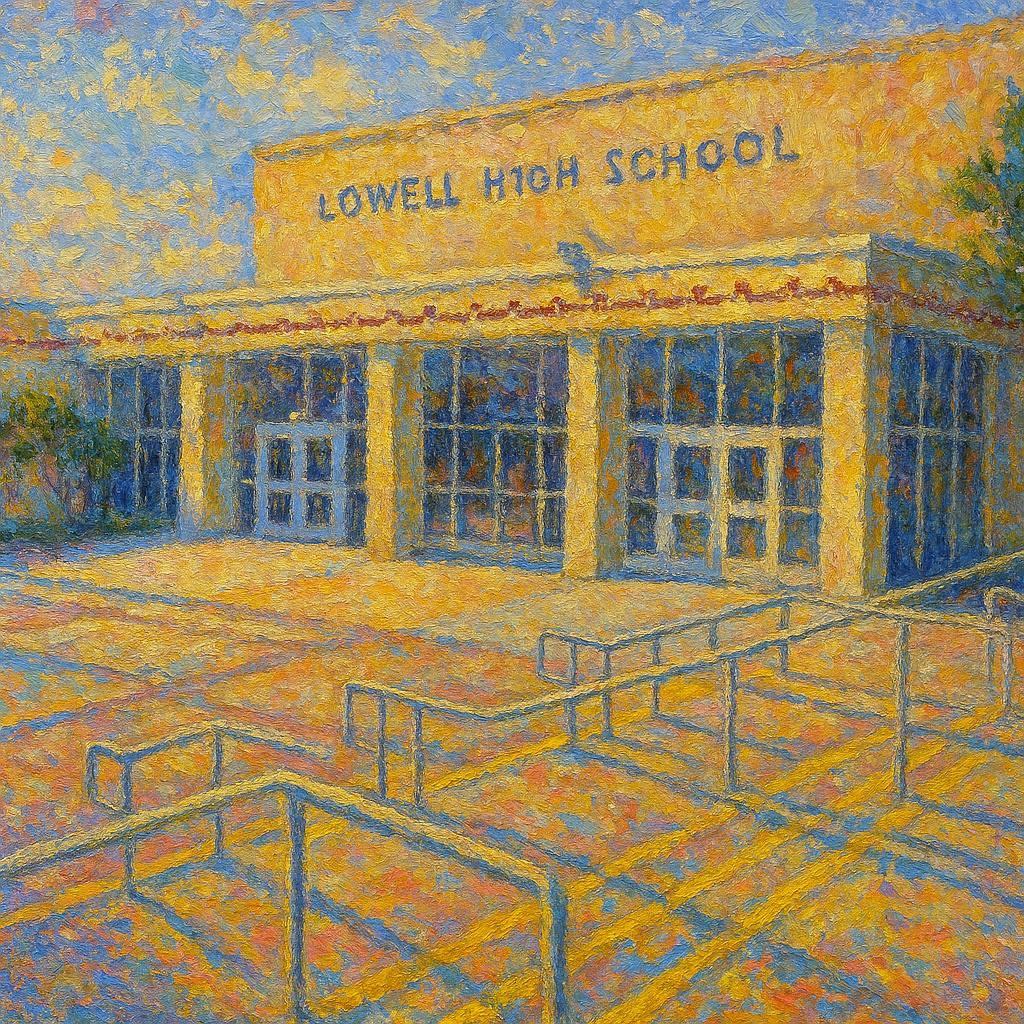
When Simone began working with College Transitions in the spring of her sophomore year, she already had genuine strengths. She attended Lowell High School, which U.S. News & World Report ranks 7th in California and among the top public high schools on the West Coast. According to the school’s official profile, Lowell enrolls roughly 2,571 students and, notably, offers more than 25 AP courses, with an AP participation rate near 55%. Additionally, the school’s average SAT score sits close to 1350, well above state and national averages. Simone earned A and B grades in honors social studies and government courses. She also had a passing interest in local politics and had attended a few city hearings with a classmate. Yet like many motivated students at a school this competitive, she had not yet channeled that interest into anything distinctive.
Consequently, our first goal was to help her find a clear academic identity she could build everything else around.

1. Choosing a Strategic Major: Technology and Public Policy
Many San Francisco students with civic interests default to political science or computer science. Those paths are common in a city built on both government and code, and they can therefore be harder to differentiate. After reviewing Simone’s coursework and interests, we instead guided her toward a more targeted direction.
Why Technology and Public Policy Made Sense
- It connected her interest in city government with the industry that defines San Francisco’s economy.
- It gave her a unifying theme across activities, research, essays, and supplements.
- It set her apart from applicants describing themselves generically as “interested in tech.”
- It aligned authentically with programs at her target schools, including Chicago’s Public Policy Studies major and Washington’s Jackson School.
Above all, admissions readers respond to students who present a clear, authentic direction. This framework gave Simone exactly that, and it consequently made every subsequent decision in her application more coherent.
2. Improving Her SAT Score: From 1310 to 1470
Simone’s initial SAT score of 1310 was solid, but it was not fully competitive for a school like Chicago, where admitted students often score in the 1500 range. Therefore, we built a focused preparation plan emphasizing evidence-based reading tied to policy and civics passages, advanced algebra and data analysis, timed full-length practice, and weekly review by error category. By early fall of her senior year, Simone had raised her score to 1470. That improvement strengthened her standing across her entire list. Importantly, it also showed admissions committees a willingness to invest serious, sustained effort, a quality selective colleges value highly.
3. Deepening Her Commitment: From Hearing Attendee to Policy Contributor
Simone had attended a handful of San Francisco Board of Supervisors hearings with a classmate, mostly as an observer. Her involvement was genuine but remained largely passive. We worked with her to shift from attendee to contributor with a documented record.
What Simone Did Differently
- She researched San Francisco’s 2019 facial recognition ordinance and tracked its enforcement record through public meeting minutes.
- She submitted public comment at a Board of Supervisors committee hearing on municipal technology oversight.
- She organized a small student panel at Lowell examining how city AI policy affects residents beyond the tech industry itself.
- She compiled her findings into a memo shared with her school’s social studies department.
This transformation gave Simone a real policy story: not just attendance, but initiative with a documented outcome. Additionally, it supplied concrete material for her personal statement and supplements.
4. Adding a Major-Aligned Research Experience
To deepen Simone’s technology policy narrative beyond classroom work, we helped her design an independent research project using publicly available city records and academic sources on municipal governance.
Project Focus
Enforcement Gaps in Municipal AI Oversight: A Case Study of San Francisco’s Facial Recognition Ban
Simone examined:
- The original 2019 ordinance text and subsequent amendments
- Board of Supervisors meeting records related to compliance reporting
- Academic literature on algorithmic accountability in city government
- Interviews with two local civil liberties advocates about implementation challenges
She produced a written report and presented a summary to her AP Government class. The project gave Simone a concrete, citable accomplishment, and it sharpened the policy-focused language she used throughout her application.
5. Entering Competitions for External Validation
Selective colleges value evidence of intellectual engagement beyond the classroom. We encouraged Simone to enter competitions that reinforced her policy direction.
- Junior State of America Fall State Convention, resolution author on municipal technology oversight
- Bank of America Student Leaders Program, selected participant
- Harvard Undergraduate Institute of Politics essay contest, regional finalist
Each entry reinforced her narrative, and none contradicted it. Consequently, that consistency strengthened how admissions readers perceived her overall profile.
6. Crafting a Personal Statement Rooted in a Specific Observation
Simone’s early essay drafts were earnest but generic. She wrote about growing up surrounded by innovation and wanting to make technology more accountable. However, those sentiments appear in countless San Francisco applications each year. We pushed her toward something far more grounded and specific.
Her final personal statement focused on a single afternoon outside City Hall, waiting for her public comment turn. A Muni bus passed by with an advertisement for an AI product on its side, and moments later she walked into a nearly empty hearing room where three residents were discussing how the city’s own facial recognition ban was tracked. That gap, notably, made her think, not about technology itself, but about how policy intentions collapse without monitoring, staffing, and follow-through. The essay was precise, locally rooted, and entirely her own. Importantly, it connected naturally to her interest in technology policy without announcing it directly, and that restraint made it more effective than any direct statement of purpose could have been.

7. Using Early Action and Early Decision Strategically
Early Action Schools
- University of Washington, Jackson School of International Studies, accepted
- American University, School of International Service, accepted
These EA choices gave Simone strong options secured before winter break. Washington’s Jackson School offered rigorous coursework in global governance, while American’s location in Washington, D.C. offered direct proximity to federal policy work.
Early Decision School
- University of Chicago, Public Policy Studies, accepted
Chicago was Simone’s top choice. Its rigorous, interdisciplinary approach to public policy, small discussion-based classes, and strong record of graduates entering government and civic technology work made it an authentic match. Applying ED demonstrated real commitment and gave her a meaningful advantage in a highly selective applicant pool. Her acceptance arrived in mid-December, the result of two years of consistent, focused work.
Why Simone’s Strategy Worked
- She identified a specific technology policy identity early and built every element of her application around it.
- She raised her SAT score into a genuinely competitive range for her target schools.
- She transformed passive civic interest into documented, public-facing contribution.
- She completed an independent research project rooted in her own city’s policy record.
- She entered competitions that added external recognition and reinforced her narrative.
- She wrote a personal statement that was specific, local, and genuinely memorable.
- She used Early Action and Early Decision to maximize her admissions outcomes.
Ultimately, Simone did not try to do everything. Instead, she did the right things, consistently and intentionally.
What This Means for San Francisco Families
San Francisco is home to several of California’s most academically intense public high schools. According to U.S. News, Lowell ranks 7th in California with an AP participation rate near 55%. Nearby, Ruth Asawa School of the Arts draws students citywide through an audition-based admissions process, while George Washington and Lincoln High School serve large, academically diverse student bodies within the same district. Importantly, San Francisco’s concentration of technology, finance, and biotech employers raises expectations across nearly every one of these schools.
In that environment, strong grades and course rigor are the baseline, not the competitive advantage. Standing out at selective colleges outside California requires more. Specifically, it requires:
- A clear and authentic academic direction
- Extracurricular depth, not just breadth
- At least one self-driven research or project experience
- External validation through competitions or recognition
- Essays that are specific, personal, and locally rooted
- Smart use of Early Action and Early Decision
This is the work College Transitions specializes in, and, above all, the work that made Simone’s outcome possible.