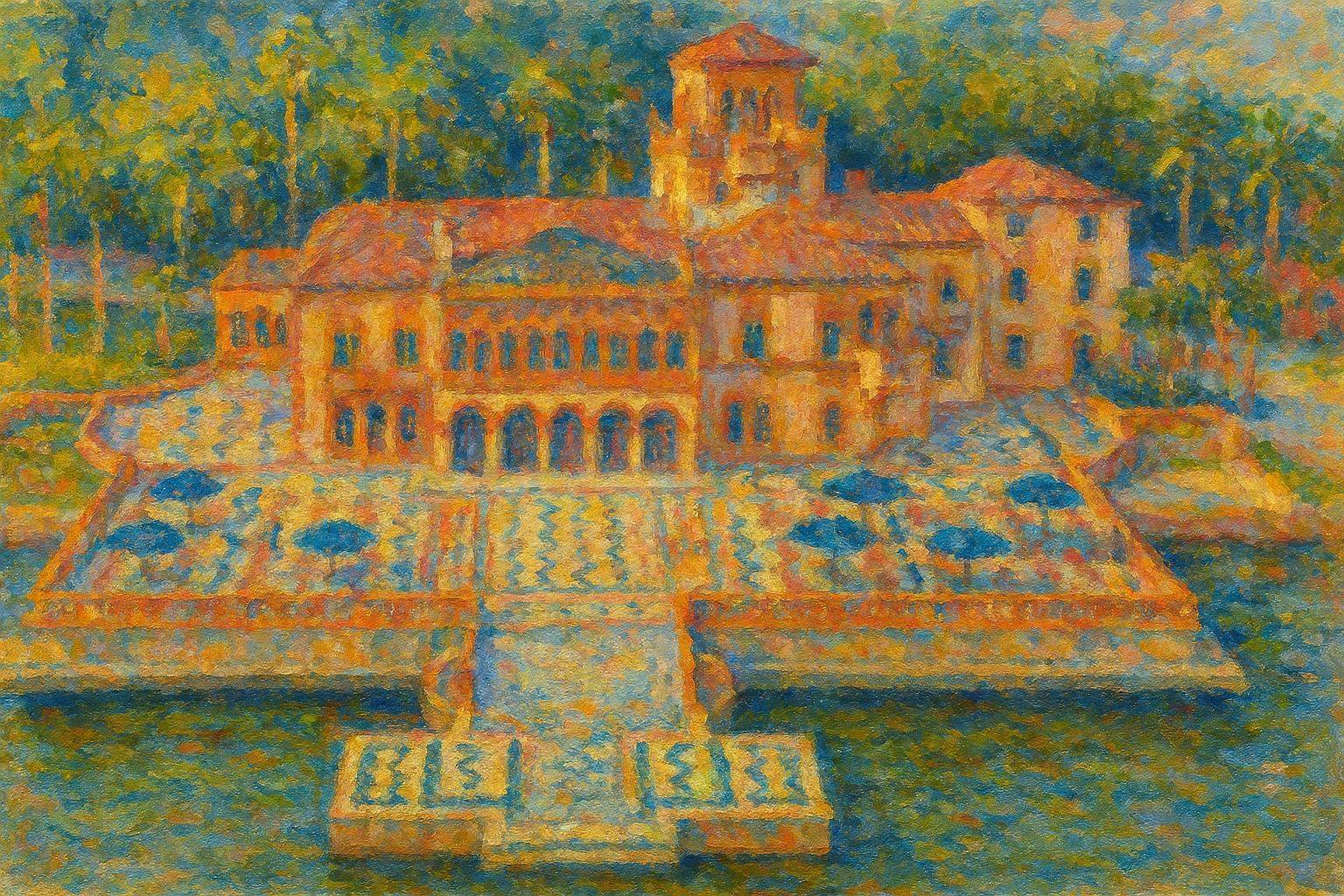
Sarasota often gets marketed as a retirement destination and a beach town. That reputation, however, undersells what the city offers a motivated high schooler. Within a few miles of downtown, students can find a marine research institution with global reach. They can also find an art and design college with a genuine pre-college pipeline. In addition, a science makerspace hands teenagers real leadership roles, and a teaching hospital trains volunteers in patient care. Today, Sarasota sits in a state that produces a large pool of competitive applicants, so students here cannot coast on geography alone. Instead, what they can do is use these local institutions to build a record of sustained, specific engagement.
Marine Science on Sarasota Bay
Mote Marine Laboratory & Aquarium anchors Sarasota’s identity as a marine science hub. Its research reputation spans red tide monitoring, coral restoration, and sea turtle conservation, and it is well known nationally. Mote’s volunteer corps accepts students starting at age 15. Roles include Aquarium Guide, Sea Turtle Patrol, and support for active research programs.
For a more structured entry point, Mote also runs the High School Blue Crew Program. It is a dedicated track for currently enrolled students who are not yet seniors. Blue Crew participants serve as Aquarium Guides at the Mote Science Education Aquarium. There, they interpret exhibits, lead animal encounters, and connect guests to ongoing Mote research. Notably, the program also builds in advancement. Students who stay in good standing can move into peer leadership roles, career shadowing, and education programming over time. Applications open in mid-February and close in mid-April each year, with onboarding each summer. The program is highly competitive, given its limited number of spots. Still, even a single season offers real exposure to Mote’s scientists and facilities. A strong record in either the general volunteer corps or Blue Crew can also position a student for Mote’s undergraduate programs later.
For an actual research experience, students should instead look at New College of Florida’s Summer Scholars Program. Its Marine Biology track is open to rising 10th through 12th graders. There, selected students attend a free, week-long summer camp at the New College Marine Biology Research Center. Together, they work on a real environmental issue affecting local waterways. In addition, high achievers can qualify for scholarships to New College itself.
Research and Academic Enrichment at New College
Beyond marine biology, New College’s Summer Scholars Program spans seven fields. These include Creative Writing, Civics, Great Books, Cryptography, Psychology of Leadership, and Archaeology. Each track ends with a week-long, all-expenses-paid camp on the Sarasota campus, and the program is free to apply. New College is the state’s designated honors college. As a result, this is a meaningful way for students in any discipline to get in front of faculty before they apply anywhere.
Art, Design, and Making
Ringling College of Art and Design gives Sarasota an unusually deep bench of pre-college arts programming. PreCollege, the college’s flagship offering, is a four-week residential program for students currently in grades 10 through 12, ages 16 to 18. Students take core studio classes plus two immersions tied to Ringling’s degree programs, and completers earn three elective college credits. Notably, need-based financial aid is available, and top performers can win first-year tuition scholarships. For students who cannot commit to a full month, PreCollege Discovery is instead a strong alternative. It offers the same caliber of instruction in a single residential week, open to ages 15 through 18. In addition, Ringling runs Teen Studios for students ages 13 to 18 who want shorter, non-residential classes during the year.
On the STEM and fabrication side, the Suncoast Science Center’s Faulhaber Fab Lab’s Student Planning & Education Committee, known as SPEC, lets high schoolers design and lead the Lab’s summer STEAM camps for younger students. That, in turn, gives them genuine instructional and leadership experience, not a token volunteer badge. For students interested in applied problem-solving, the Student Community Innovation Program is also worth pursuing. It pairs teams of high schoolers with local nonprofits to design and prototype a solution to a real community issue over the summer.
Health Care and Civic Engagement
Sarasota Memorial Hospital runs a High School Volunteer Program open year-round to students ages 14 to 18. Volunteers commit to one four-hour shift per week, and they must accumulate a minimum of 75 hours over the course of a year. Throughout their shifts, students work directly with patients, visitors, and clinical staff. For students weighing a career in medicine, this is one of the few ways to get inside a working hospital before college. As a result, sustained, multi-year participation reads far better on an application than a single summer of service.
On the civic side, the Sarasota Clerk of the Circuit Court and County Comptroller’s office runs a Student Volunteer Program. Students perform clerical and customer service duties inside a real county office. Along the way, they gain exposure to public records, court administration, and financial accountability work. Notably, the hours count toward Florida Bright Futures and other scholarship requirements, and students who meet program benchmarks earn a formal Certificate of Achievement to include with their college applications. Because the placement is inside a working government office rather than a classroom simulation, it gives students genuine standing to write about public administration, law, or civic policy with specific, firsthand detail.
What Makes Sarasota Worth Writing About
Beyond the resume line items, Sarasota offers genuinely distinctive material for a college essay. The city sits on a chain of barrier islands shaped by the same red tide blooms that Mote scientists study. As a result, a student who has volunteered there can write with real specificity about a local environmental challenge, not a generic one. Downtown, meanwhile, the Ringling Museum campus and the surrounding arts district give Sarasota a cultural density unusual for a city its size. Similarly, students who spend real time in that world, not just as museum visitors but as participants in Ringling’s teen programs, tend to write essays that feel lived-in rather than researched.
The Bottom Line for Sarasota Applicants
None of these programs matters much on its own. Instead, what moves an application is depth. A student who volunteers at Sarasota Memorial for two years builds a real story. So does a student who works their way up through Mote’s Blue Crew Program and keeps returning season after season. By contrast, a single summer camp cannot replicate that kind of narrative. Sarasota’s local flagship, New College, is an excellent option for some students. That said, families should resist defaulting to it simply because it is nearby. Instead, students with strong Sarasota-built profiles have real standing to apply broadly. That includes Early Decision to a reach school, once they have shown sustained commitment rather than a scattered list of activities. College Transitions works with Sarasota families to translate exactly this kind of local experience into a college list and application strategy that fits each student’s goals.