The Competitive Landscape in Jacksonville, FL
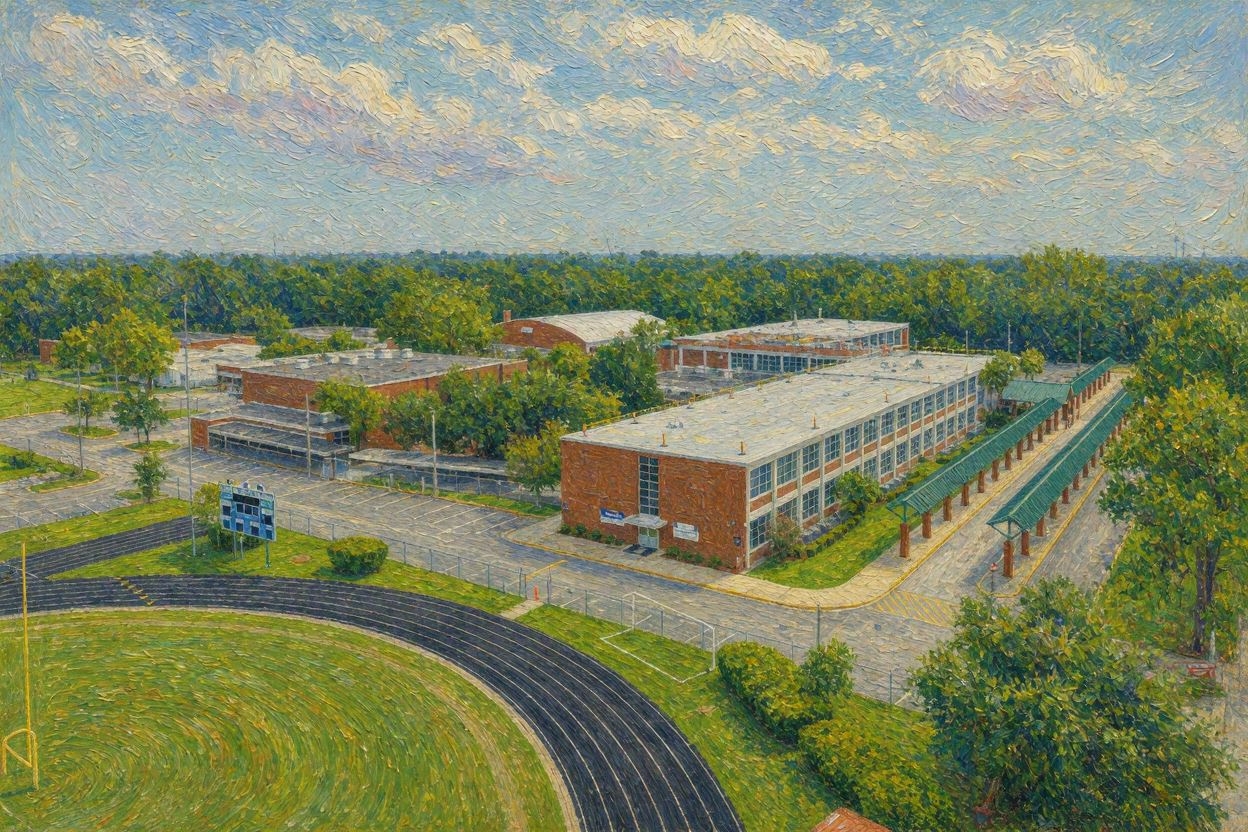
Jacksonville sends a distinctive mix of students to selective colleges each year. Much of that strength comes from Duval County’s magnet system. Stanton College Preparatory School sits at the top. It draws applicants countywide through a competitive admissions process, not a home address. Additionally, Paxon School for Advanced Studies, Samuel W. Wolfson High School, and Darnell-Cookman School of the Medical Arts round out a cluster of academically intense magnets. Meanwhile, Douglas Anderson School of the Arts adds a conservatory-style option nearby. However, Jacksonville’s admissions story is not only about magnet rigor. It is also about geography. The city sits at the mouth of the St. Johns River, home to JAXPORT, one of the nation’s busiest vehicle-handling ports, and headquarters to Crowley Maritime, a shipping company founded in 1892. Ultimately, that setting shaped one recent Stanton graduate’s path to selective admission more than any single test score did.
Meet Micah: A Supply Chain Story Rooted in the River
Micah grew up a few miles from the Talleyrand Avenue docks, where his grandfather worked as a longshoreman for decades. Weekend drives across the Mathews Bridge meant watching car carriers and container ships move up the St. Johns. That image eventually became the seed of his college application. Micah chose global logistics and supply chain management as his intended major, a field few Jacksonville applicants think to pursue. JAXPORT moves hundreds of thousands of vehicles annually. Its Blount Island terminal ranks among the largest vehicle-import hubs in the country. Consequently, Micah built every major decision of his high school career, from research to recommenders, around that single thread.

Step 1: Choosing a Differentiated Major
Micah initially considered international business as a broad, safe label. His College Transitions advisor pushed back. Broad labels, she explained, rarely stand out in a competitive applicant pool. They narrowed the focus to supply chain management, a discipline with clear academic homes at specific universities. That narrowing mattered. Every essay, activity, and letter of recommendation could reinforce the same throughline instead of describing a scattered list of interests. Notably, the shift also gave Micah a vocabulary, terms like intermodal freight and Ro/Ro shipping, that made his supplemental essays sound like a specialist’s rather than a generalist’s. Readers could see a clear academic identity from the very first paragraph.
Why Supply Chain Management Made Sense for Micah
- His family’s multigenerational connection to the Jacksonville waterfront gave the major personal weight, not just career logic.
- JAXPORT’s public cargo data and the 2022 Harbor Deepening Project gave him a real, local dataset to study.
- Michigan State, his eventual ED choice, is widely regarded as home to the nation’s top-ranked undergraduate supply chain program.
- Admissions officers rarely see a Florida applicant connect a hometown port directly to a named academic field.
Step 2: Improving Test Scores
Micah took the SAT for the first time in the fall of junior year and scored 1280. His advisor identified data interpretation as his weakest area, an ironic gap for a student aiming at a data-heavy major. Subsequently, Micah worked through timed reading passages and quantitative reasoning drills twice weekly for five months. By December of senior year, his score had climbed to 1480. That two-hundred-point gain mattered because it supported the analytical identity his essays claimed. Above all, the improvement gave admissions readers evidence that matched the story.
Step 3: Deepening Extracurriculars
Micah joined Stanton’s DECA chapter as a sophomore. By junior year, he had moved into a chapter officer role, eventually leading its Supply Chain Management competitive team. Additionally, he organized a small logistics-focused speaker series. A JAXPORT operations manager and a Crowley Maritime recruiter both spoke to the group at his invitation. Furthermore, he volunteered at a Jacksonville Public Library branch near his neighborhood, tutoring middle schoolers in math twice a month. None of these commitments existed in isolation. Each one, whether competitive or service-oriented, tied back to logistics, data, or the working waterfront that shaped his original interest.

Step 4: Adding Independent Research
Working informally with his AP Statistics teacher, Micah built a research project on JAXPORT’s public vehicle-throughput data. The project examined volumes before and after the 2022 Harbor Deepening Project, which widened the shipping channel from forty to forty-seven feet. His scope included the following elements.
- A dataset spanning five years of publicly reported monthly vehicle-handling volumes at the Blount Island terminal.
- A regression model testing whether channel-depth changes correlated with throughput growth, controlling for national auto sales trends.
- A short written comparison between Jacksonville’s growth pattern and two competitor Gulf Coast ports.
The project never claimed to be professional-grade economics. Instead, it demonstrated exactly what selective admissions officers want to see: a student who could ask a real question about their own city and go find an answer.
Step 5: Entering Competitions
Micah entered Florida DECA’s Supply Chain Management Team Decision Making event as a junior, advancing from the regional round to state finals with his research partner. Their case addressed a simulated port congestion scenario, and the judging panel included professionals with real maritime logistics backgrounds. He did not place among the top finishers that year. Nevertheless, the experience gave him direct feedback from industry judges, feedback he incorporated into a stronger senior-year submission. Importantly, this kind of competition record signals persistence to admissions readers.
Step 6: Writing a Personal Statement
Micah’s personal statement opened with a mundane moment rather than a triumphant one: sitting on his grandfather’s porch, listening to him describe how automation had changed longshoreman work over forty years. The essay used that conversation to explore why supply chains matter beyond spreadsheets and how they connect directly to families and neighborhoods like his own. Meanwhile, his College Transitions advisor helped him cut an early draft that leaned too heavily on statistics, redirecting the essay toward voice and specificity instead. Ultimately, the final version named JAXPORT, the Talleyrand docks, and his grandfather directly, without ever slipping into generic “passion for logistics” language.
Step 7: Using EA and ED Strategically
Micah applied Early Action to the University of Tennessee’s Haslam College of Business and to Penn State’s Smeal College of Business, both known for supply chain strength. He simultaneously submitted his Early Decision application to Michigan State’s Eli Broad College of Business. His EA acceptances arrived in December, and both admit letters cited his logistics research directly. Subsequently, his ED decision from Michigan State followed, confirming the strategy had worked exactly as planned.
Why Micah’s Strategy Worked
- Every application component pointed back to one coherent academic identity.
- His research used real, verifiable local data rather than a generic or borrowed topic.
- His test score improvement supported his analytical narrative rather than undercutting it.
- His EA and ED choices targeted programs specifically known for supply chain strength, not simply prestige.

What This Means
Micah’s path illustrates something Jacksonville families sometimes overlook. This city’s economic identity, not just its magnet schools, is a genuine admissions asset. Students at Paxon, Wolfson, Darnell-Cookman, and Douglas Anderson have access to the same waterfront, the same port data, and the same regional employers that shaped Micah’s application. A student does not need to attend Stanton specifically to build a story this coherent. What matters is this:
- Choose a specific, well-defined major rather than a broad category.
- Root every activity, essay, and research project in something authentic to the local setting.
- Treat test prep as evidence-building for the application’s larger narrative, not an isolated task.
- Apply EA and ED strategically to programs that match the chosen academic identity.
College Transitions works with Jacksonville students throughout this entire process, from identifying a differentiated major to building a research plan around the resources their own city already offers.