The Tulsa Admissions Landscape
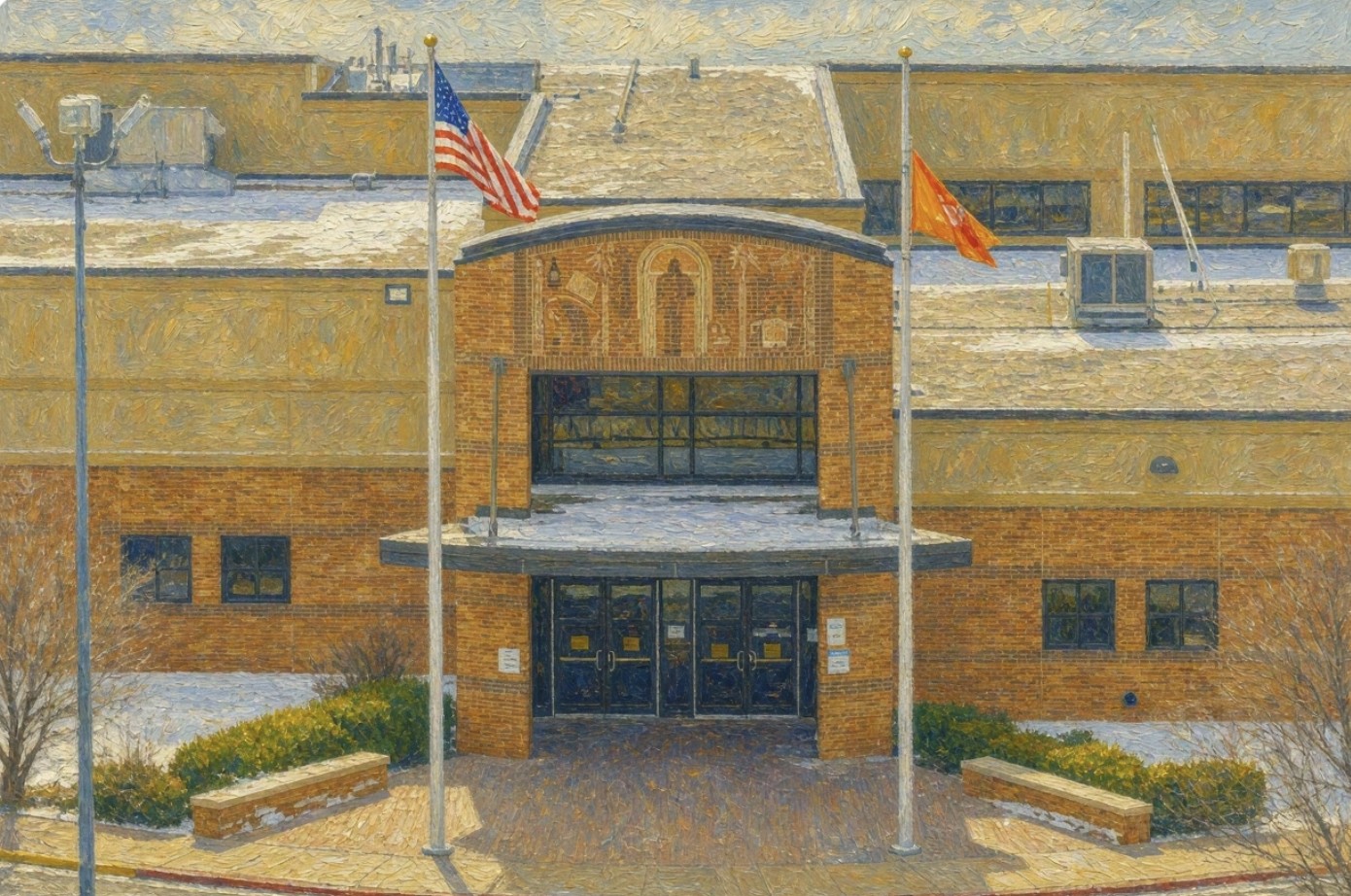
Tulsa’s strongest students compete in a metro with two very different kinds of high schools. Booker T. Washington High School is an International Baccalaureate magnet within Tulsa Public Schools. It currently ranks third in Oklahoma and 315th nationally, according to U.S. News & World Report. Dove Science Academy Tulsa follows at 867th nationally. Meanwhile, the suburban districts run enormous comprehensive campuses. Jenks, Union, Owasso, Bixby, and Broken Arrow each enroll thousands of students and send graduates to selective universities every year. Consequently, a strong transcript alone rarely separates one Tulsa applicant from another.
However, the city offers something a transcript cannot. American Airlines operates the world’s largest commercial aircraft maintenance base at Tulsa International Airport. The base opened in 1946 and now covers 3.3 million square feet of hangar and shop space. Nearly 5,000 people work there, and more than 400 aircraft visit each year. Most applicants nationwide have never seen an operation like it. A Tulsa student who pays attention can build a profile that no coastal applicant could copy.
Meet Tobias
Tobias grew up a short drive from that base. His father is a licensed aviation maintenance technician at Tech Ops-Tulsa, and his grandfather worked the same hangars before him. Dinner conversations covered late parts, crowded hangar bays, and jets that somehow left on schedule anyway. As a result, Tobias learned early that airplanes run on planning as much as on engines. Booker T. Washington gave him the coursework to study that idea seriously, including IB mathematics and a school culture with a 98% graduation rate. By senior year, a family trade had become an industrial engineering profile. Ultimately, it earned him early decision admission to Columbia University.

Step 1: Choosing a Major Rooted in Home
Tobias first assumed he would list aerospace engineering as his attended major. His College Transitions counselor asked a simple question: what part of the hangar actually interested him? The answer was not the wing or the engine. Rather, it was the schedule. He wanted to know how a base decides which aircraft enters which bay, and in what order. That question belongs to industrial engineering and operations research. Consequently, the counselor helped him compare programs that treat scheduling, queueing, and reliability as core subjects. Columbia’s Department of Industrial Engineering and Operations Research quickly rose to the top of his list.
Why This Major Made Sense
- Tulsa hosts a maintenance operation with no equal anywhere in the world
- Two generations of his family had worked inside it
- Far fewer applicants declare operations research than aerospace or mechanical engineering
- His strongest grades were in IB mathematics and statistics
Step 2: Raising the ACT Score
Tobias scored a 27 on his first ACT in the spring of sophomore year. That result sat well below the range for his target engineering programs. His counselor reviewed the score report with him and found a clear pattern. Math was already strong; however, pacing in the reading and science sections was costing him points. Therefore, the plan focused on timed section practice instead of broad content review. Tobias sat for two full practice tests each month and logged every missed question by type. He treated the log like a maintenance record, which suited him. By the fall of junior year, his composite had climbed to 31. A final attempt the following spring produced a 34. Importantly, that seven-point gain showed admissions readers the same discipline his activities described.
Step 3: Deepening Extracurriculars
Many applicants join a dozen clubs. Tobias narrowed his list to three commitments that all pointed toward operations. First, he joined a local Civil Air Patrol cadet squadron and eventually led its logistics planning for training weekends. Second, he tutored underclassmen in algebra and statistics twice a week. Third, and most notably, he redesigned how his school handed out laptops each August. The old process left students waiting in a single line for more than an hour. Tobias timed each station, mapped the bottlenecks, and proposed a staggered schedule with parallel check-in tables. School staff adopted the plan the following year, and average waits fell to about fifteen minutes. His College Transitions counselor encouraged him to measure that result carefully. Consequently, his activities list included real numbers rather than vague leadership claims.

Step 4: Adding Independent Research
Formal internships at the maintenance base are not open to high school students. Tobias therefore turned to public data. The Federal Aviation Administration publishes Service Difficulty Reports, which document mechanical problems that operators find on aircraft. His AP Statistics teacher agreed to serve as an informal mentor. Additionally, his counselor helped him scope the project so that one student could finish it in a year.
Research Project Scope
- Downloaded several years of public Service Difficulty Reports for the Boeing 737-800
- Sorted each report by aircraft system to find the most frequent problem categories
- Built a basic queueing model showing how unplanned repairs delay scheduled hangar work
- Wrote a twelve-page paper and presented it to his school’s mathematics faculty
The findings were modest, and Tobias said so plainly in his paper. Nevertheless, the project proved he could ask an operations question and answer it with evidence.
Step 5: Entering Competitions
Research alone did not show how Tobias worked under pressure. His counselor therefore suggested the MathWorks Math Modeling Challenge, widely known as M3. The Society for Industrial and Applied Mathematics runs this free contest for high school juniors and seniors. Teams of three to five students receive an open-ended problem and have 14 continuous hours to submit a solution paper. Tobias recruited three classmates from his IB mathematics course and asked a teacher to coach them. They practiced on archived problems for two months before Challenge Weekend. Their paper did not reach the final round. However, the team earned recognition beyond the first judging stage, which few first-time entrants manage. More importantly, the contest gave him a second example of applied modeling. It also gave his recommending teacher a specific event to describe.
Step 6: Writing the Personal Statement
Early drafts of his essay read like a tour of the hangar. His College Transitions essay coach pushed him toward a single scene instead. Tobias chose the night his father came home four hours late because one missing part had held up an entire aircraft. He remembered asking why nobody had planned for that. The essay then followed that question through the laptop line, the FAA records, and the modeling contest. Notably, he never claimed to have solved anything at the base. He wrote about learning to see delays as design problems, not as bad luck. Furthermore, the coach helped him cut every sentence that explained engineering terms to the reader. The final version sounded like a seventeen-year-old from Tulsa, which was exactly the point. His supplemental essays subsequently connected the same theme to each college’s specific courses and faculty.
Step 7: Using Early Action and Early Decision Strategically
Tobias and his counselor built an early list around one consistent major. He applied early action to Purdue University and the Georgia Institute of Technology, both for industrial engineering. Columbia, his clear first choice, received his early decision application. Each application presented the same profile: a Tulsa student who studies how complex operations stay on schedule. Purdue and Georgia Tech both offered admission. Columbia admitted him through early decision to study operations research in its engineering school.

Why Tobias’s Strategy Worked
Several choices set his application apart from other strong Tulsa files.
- One major connected every activity, essay, and recommendation
- His research relied on public data, so it required no special access
- The laptop project produced a measurable result that school staff could confirm
- A seven-point ACT gain supported his academic readiness for engineering
- His essay drew on a setting that only a Tulsa family could describe
What This Means for Tulsa Students
Tobias attended a magnet school, yet his approach works across the metro. Students at Jenks, Union, Owasso, Bixby, Broken Arrow, and Thomas Edison Preparatory can follow the same pattern. Tulsa’s economy offers plenty of material beyond aviation, including river infrastructure, inland shipping, and a deep music heritage. Above all, selective colleges respond to depth in one direction. Students who want similar results should focus on a few requirements.
- Choose a specific major connected to a student’s interests and strengths
- Limit activities to a few commitments and measure what each one achieved
- Use public data when formal internships or lab placements are unavailable
- Begin test preparation early enough to allow two or three attempts
- Write essays about a local experience that other applicants cannot claim
College Transitions helps students find that direction early. Our counselors work with families on major selection, testing plans, research design, and essays, ensuring every part of the application supports a cohesive student profile.