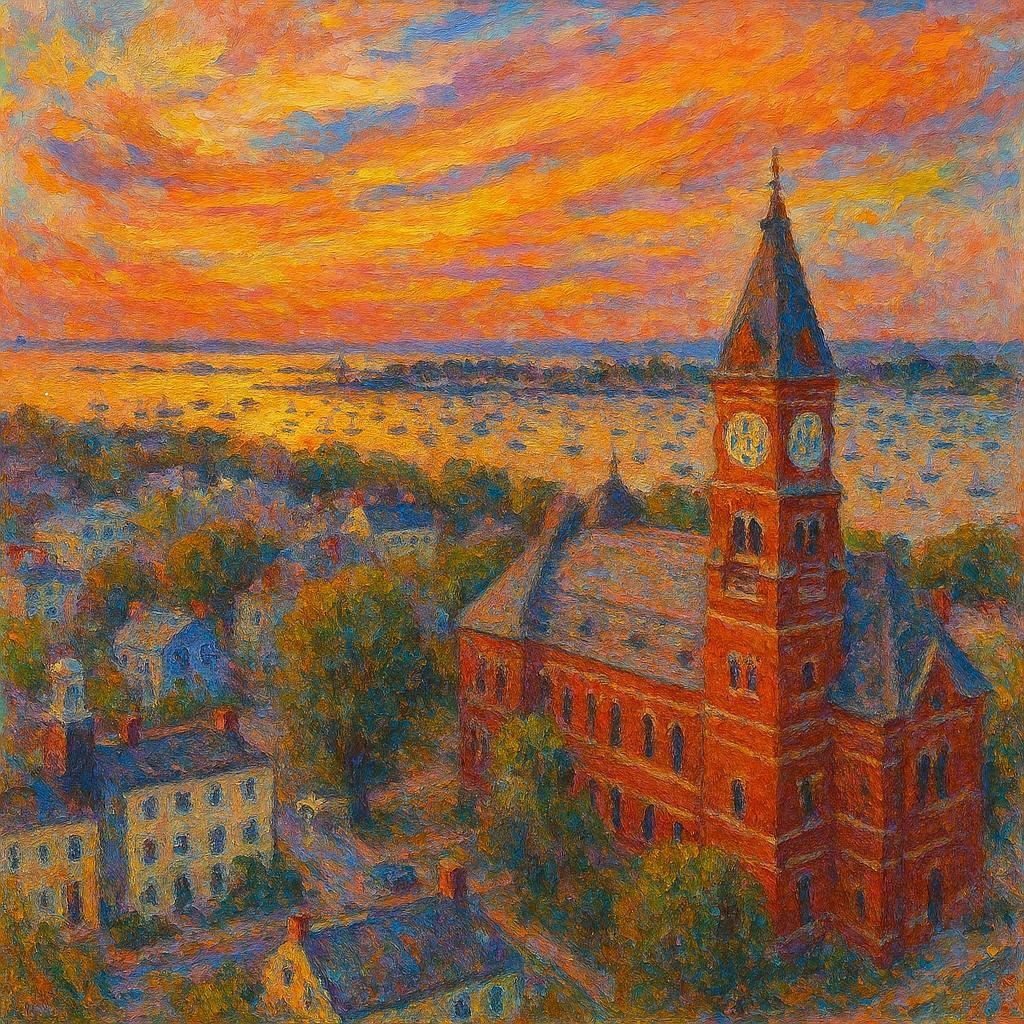
A County with Unusual Depth
Essex County, Massachusetts is one of the most historically layered places in North America. Encompassing Salem, Gloucester, Ipswich, and more than two dozen other communities, it runs along the North Shore from Lynn and Saugus in the south to Newburyport and Salisbury in the north. It is home to the oldest continuously operating museum in the United States and a world-class marine genomics research institute. It also hosts a globally respected molecular biology company and a 500-square-mile National Heritage Area.
For students aiming at selective colleges, that combination is genuinely useful. However, using it well requires understanding both where Essex County sits in the national admissions landscape and what its specific resources actually demand. In short, place is an asset only for students who engage with it seriously.
The Admissions Picture: Inside Greater Boston’s Competitive Orbit
Massachusetts is one of the most overrepresented states in the selective college applicant pool. The Greater Boston area sends disproportionate numbers of strong applicants to the nation’s most competitive institutions. Northeastern, Boston College, and Tufts now accept a fraction of the students who apply. Even schools that once served as reliable targets for Massachusetts students have become genuine reaches. As one local counselor noted recently, for a Massachusetts student today, Boston College is almost never a target; it is a reach.
Essex County sits within that competitive orbit, though not uniformly so. Students from Andover, Ipswich, and Marblehead navigate a more competitive pool than students from Lawrence, Haverhill, or Gloucester, where first-generation college students are better represented. Consequently, where a student lives within the county matters. That said, the broader point holds throughout: Massachusetts applicants are common and well-prepared at virtually every selective college. Standing out requires more than strong grades and test scores.
The local default at the flagship level is UMass Amherst, which is a strong university. However, students with competitive profiles often anchor their lists there and at a handful of Boston-area schools. In doing so, they bypass selective institutions where their specific experiences and regional identity could genuinely distinguish them. Students from smaller Essex County communities, in particular, should investigate schools outside Greater Boston’s gravitational pull. Their background is often more distinctive in those applicant pools than it appears from the inside.
Early Decision and the Massachusetts Context
For students with strong academic profiles and a genuine first-choice school, Early Decision carries real strategic weight. Massachusetts applicants are common at most selective northeastern institutions. Applying ED to schools where they are rarer, including colleges in the South, Midwest, and Pacific Northwest, can meaningfully improve both admission chances and financial outcomes. Additionally, students interested in environmental science, marine biology, or maritime history may find strong resonance at schools like the University of Vermont, Bowdoin, Unity Environmental University, or Eckerd College. Those schools combine strong relevant programs with applicant pools that rarely include students from the North Shore.

What Makes Essex County Genuinely Distinctive
History That Is Still Actively Contested
Essex County is where American history began in earnest, and not always in ways the country has reckoned with fully. The Salem witch trials of 1692 resulted in the execution of nineteen people and the imprisonment of hundreds more. They took place across the county in Salem, Andover, Ipswich, and Topsfield. Moreover, they were not an isolated episode. They were the product of political instability, social fear, and institutional failure. Nathaniel Hawthorne grew up in Salem; his great-great-grandfather was a witch trials judge. Hawthorne was so troubled by his family’s role that he changed the spelling of his name. Notably, in 2016, researchers finally confirmed Proctor’s Ledge as the actual execution site. It had been misidentified for more than a century.
Essex County was also the entry point for one of the earliest chapters of American global trade. Salem merchants conducted commerce with China, India, and Indonesia by the late 18th century. A merchant in what is now Indonesia reportedly believed Salem to be its own country, and one of the wealthiest in the world. That trade generated enormous fortunes. They are still visible today in the Federal-style architecture of Salem’s Chestnut Street, designed largely by Samuel McIntire. Furthermore, Salem Maritime National Historic Site, the first National Historic Site designated in the United States, preserves the Custom House where Nathaniel Hawthorne worked and the wharves where that trade unfolded. Notably, it remains the only intact merchant waterfront from the age of sail in the country.
The North Shore Today
The county today is more diverse than its historical reputation suggests. Lawrence is one of the most predominantly Latino cities in New England, with approximately 80% of its population identifying as Hispanic or Latino. Gloucester is America’s oldest fishing port, established in 1623; its commercial fishing industry remains active despite decades of stock depletion and federal regulation. Newburyport, by contrast, is an affluent coastal city with a preserved Federal downtown and a strong arts community. Rockport anchors what may be the oldest continuously operating artists’ colony in the country.
Together, these communities form a county with more internal variation, and more genuine tension, than most applicants pause to notice. The gap between Salem’s Halloween economy and what actually happened at Proctor’s Ledge is real and largely unexamined. So is the collapse of the Grand Banks fishery and what it meant for Gloucester’s working families. The contrast between Newburyport and Lawrence, geographic neighbors separated by fewer than ten miles on I-495, is another. Students who write about this place with precision, rather than with vague regional pride, produce essays that stand apart in the national pool.

Research Opportunities
New England Biolabs
New England Biolabs (NEB) is one of the most respected molecular biology companies in the world. Founded in 1974, it operates its primary campus on Haynes Road in Ipswich. The campus spans 150 acres and includes research facilities, a working farm, and woodland trails. NEB scientists have published over 1,500 papers and hold numerous patents, with the company suppling enzymes and reagents to research laboratories across the globe.
NEB offers paid summer internships each year. Applications open in mid-January and close by the end of February. Non-laboratory internship tracks cover Marketing, IT, Customer Service, Technical Support, and Environmental Health and Safety. These tracks are explicitly open to current high school students who are at least 16 years old. Laboratory-track internships, however, require participants to be at least 18. All interns attend weekly internal and external seminars and present their work in August. Additionally, NEB’s research team notes that they offer opportunities for local high school students to interact with NEB scientists beyond the formal internship program. Students interested in molecular biology, biotechnology, or science communication should monitor the NEB careers page beginning in January each year.
The Gloucester Marine Genomics Institute
The Gloucester Marine Genomics Institute (GMGI) is a nonprofit marine biotechnology research organization on the Gloucester waterfront. Founded in 2013, it operates a genomics research institute focused on ocean health, fisheries science, and marine biomedical discovery. Notably, GMGI researchers have contributed to projects ranging from sustainable fisheries management to cancer and aging research derived from ocean organisms.
For current high school students, the most accessible entry point is GMGI’s Summer STEM Enrichment Program. It offers one-week courses for students ages 13–18, held in July at GMGI’s Blackburn Center facility. Participants work in a state-of-the-art biomanufacturing lab on authentic laboratory investigations. No prior science experience is required. Students interested in the program should register early in the spring.
Beyond the summer program, GMGI researchers conduct active work in marine genomics, fisheries epigenetics, and biomedical science. Students with genuine interest in marine biology or biotechnology should consider reaching out directly to GMGI faculty. Moreover, GMGI participates in the Massachusetts Life Sciences Council High School Apprenticeship Challenge, which connects paid interns with life sciences organizations across the state.
The Massachusetts Life Sciences Council High School Apprenticeship Challenge
The MLSC High School Apprenticeship Challenge places paid interns at life sciences and research organizations across Massachusetts, including on the North Shore. The program serves underrepresented and income-eligible high school students. Participants must be at least 16 years old. Interns earn $17 per hour for six weeks of full-time or part-time work. Since 2016, the program has supported over 950 internships at more than 120 organizations. Applications flow through MLSC and the student’s school. For Essex County students interested in biotechnology, biomedical science, or environmental research, this is one of the clearest pathways to a paid, substantive credential while still in high school. Moreover, students who complete it arrive at college applications with a verifiable work history in a competitive professional field.

Internship and Civic Engagement Opportunities
The Peabody Essex Museum
The Peabody Essex Museum (PEM) in Salem is the oldest continuously operating museum in the United States, founded in 1799. Its collections span maritime art, Asian export art, photography, fashion, and American decorative arts. The campus includes Yin Yu Tang, an 18th-century Chinese merchant’s house dismantled, shipped from Anhui Province, and reassembled in Salem. Furthermore, PEM holds the most extensive primary source collection related to the Salem witch trials at any museum, along with the Phillips Library for archival research.
PEM’s Emerging Arts Leaders (EAL) High School Internship is open to all high school students. The program gives preference to Salem Public School students and Salem residents. Since its launch in 2021, it has welcomed ten cohorts. Participants engage with museum staff and contemporary artists, develop skills through structured dialogue, and culminate the experience by proposing objects for PEM’s permanent collection. Notably, 100% of participants have reported feeling more connected to the museum by program’s end.
PEM also offers broader seasonal internships across multiple departments, including Curatorial, Exhibition Design and Production, Education, Marketing, and Horticulture. Positions rotate each season. Summer internships run June through August, with a March application deadline. Fall and spring internships each run 12 weeks at 15 hours per week on-site. Students should review individual listings carefully, however, as eligibility requirements vary by department.
Essex Heritage Future Leaders
Essex Heritage, the nonprofit that manages the Essex National Heritage Area, operates the Future Leaders Youth Jobs Internship Funding Program. The program partners with local nonprofits to hire high school and college-aged youth in paid positions. Sites include heritage properties, environmental education organizations, archival institutions, and cultural venues across the county. In recent years, participants have worked at the Salem Maritime National Historic Site and Saugus Iron Works National Historic Site. Their work has included invasive species management, historic preservation, grounds maintenance, and maritime programming aboard the tall ship Friendship of Salem. Additionally, participants have helped prepare and paint historic structures, managed nature trails along the Saugus River, and assisted with the annual Salem Maritime Festival.
Grant funds to participating nonprofits range from $2,000 to $10,000. Consequently, institutions that otherwise could not afford youth interns are able to hire and pay them. For students interested in public history, environmental conservation, maritime heritage, or archival work, the Future Leaders program is one of the most authentic paid work experiences available to high schoolers in the region. It is also one of the most overlooked.
The Self-Directed Path
Not every opportunity in Essex County comes packaged as a formal program. NEB, GMGI, the Salem Maritime National Historic Site, and various environmental organizations along the North Shore all engage with motivated students who approach them directly. A student who reads published work from GMGI or NEB scientists and identifies a specific project of genuine interest has a realistic path forward. Sending a focused inquiry to a researcher in 10th or 11th grade often opens a door. In turn, that kind of initiative is harder to fabricate and more distinctive than participation in any program designed to absorb high school applicants broadly. As a result, students who pursue these self-directed paths often arrive at applications with more specific and credible stories to tell.

Building a Competitive Application from Essex County
Find the Thread That Is Yours
Essex County offers coherent thematic threads for students who choose to develop one seriously. Marine science and ocean health connect GMGI’s genomics research, Gloucester’s fishing economy, and the environmental pressures on the North Shore coast. Similarly, museum work and public history connect PEM, the Salem Maritime National Historic Site, and the witch trials archival record. Biotechnology connects NEB in Ipswich with the MLSC network and the broader North Shore life sciences cluster. Students who can show genuine, sustained engagement with one of these threads arrive at selective applications with a narrative that is both specific and verifiable. Surface-level participation does not accomplish this. Actual depth over two or three years does.
Write About Place with Precision
Essex County is rich with specific, unresolved material. Students who write about it precisely will almost never sound generic. For example, the fishing industry’s collapse and Gloucester’s ongoing negotiation with its identity as a working port is a subject with genuine stakes. So is the gap between Salem’s Halloween economy and what actually happened at Proctor’s Ledge. The contested legacy of New England’s 18th-century China trade wealth is another. The distance between Newburyport and Lawrence, geographic neighbors with vastly different economic realities, is a fourth. These are not abstract themes. They are concrete, local, ongoing stories. Admissions readers respond differently to an essay that names specific streets, specific institutions, and specific questions the writer has genuinely grappled with. By contrast, essays that describe “the historic town of Salem” or “the beauty of the North Shore” without specificity blend into the background immediately.
Broaden the College List Thoughtfully
Many Essex County families default to UMass Amherst, Northeastern, Boston University, and Boston College, with a small set of liberal arts schools added. That structure keeps students competing against Massachusetts applicants at every institution on the list. Consequently, a broader list should include schools where North Shore applicants are genuinely uncommon. For students with marine science or environmental interests, Eckerd College, Unity Environmental University, the University of Vermont, and Western Washington University all offer relevant programs. The University of New England is another strong option. All see limited Massachusetts competition. For students with public history or museum interests, Muhlenberg, Hampshire College, Eugene Lang College, and St. Mary’s College of Maryland are natural fits. For students with STEM credentials from NEB, GMGI, or the MLSC program, Worcester Polytechnic Institute, Rensselaer Polytechnic Institute, and Case Western Reserve are worth serious attention. All offer rigorous programs where a North Shore biotech background lands clearly. Additionally, Clark University, located in Worcester, is a strong option with significant financial aid. For students with strong humanities profiles developed through PEM or the witch trials archival record, Hamilton, Bates, Colby, and Connecticut College all value that kind of demonstrated intellectual engagement.

The Bottom Line
Essex County offers an unusually specific and underrepresented set of assets for selective college applicants. The Peabody Essex Museum, GMGI, New England BioLabs, and the Essex Heritage Future Leaders program all provide substantive, verifiable engagement for students who pursue them seriously. Furthermore, the county’s history is not merely backdrop; it is active, contested, and rich with material that applicants from most other parts of the country cannot access.
However, the Massachusetts admissions landscape is competitive throughout. The Greater Boston orbit makes standing out harder than it looks from the inside. Geographic advantage only helps once a student has already built a strong profile. That means genuine depth in one or two areas over time, not breadth across many activities. In the end, the county’s resources can make that profile distinctive. They cannot substitute for it.
If you would like help turning Essex County’s specific opportunities into a compelling application strategy, College Transitions is ready to work with you. Schedule a consultation and let’s build something that reflects where you actually come from.