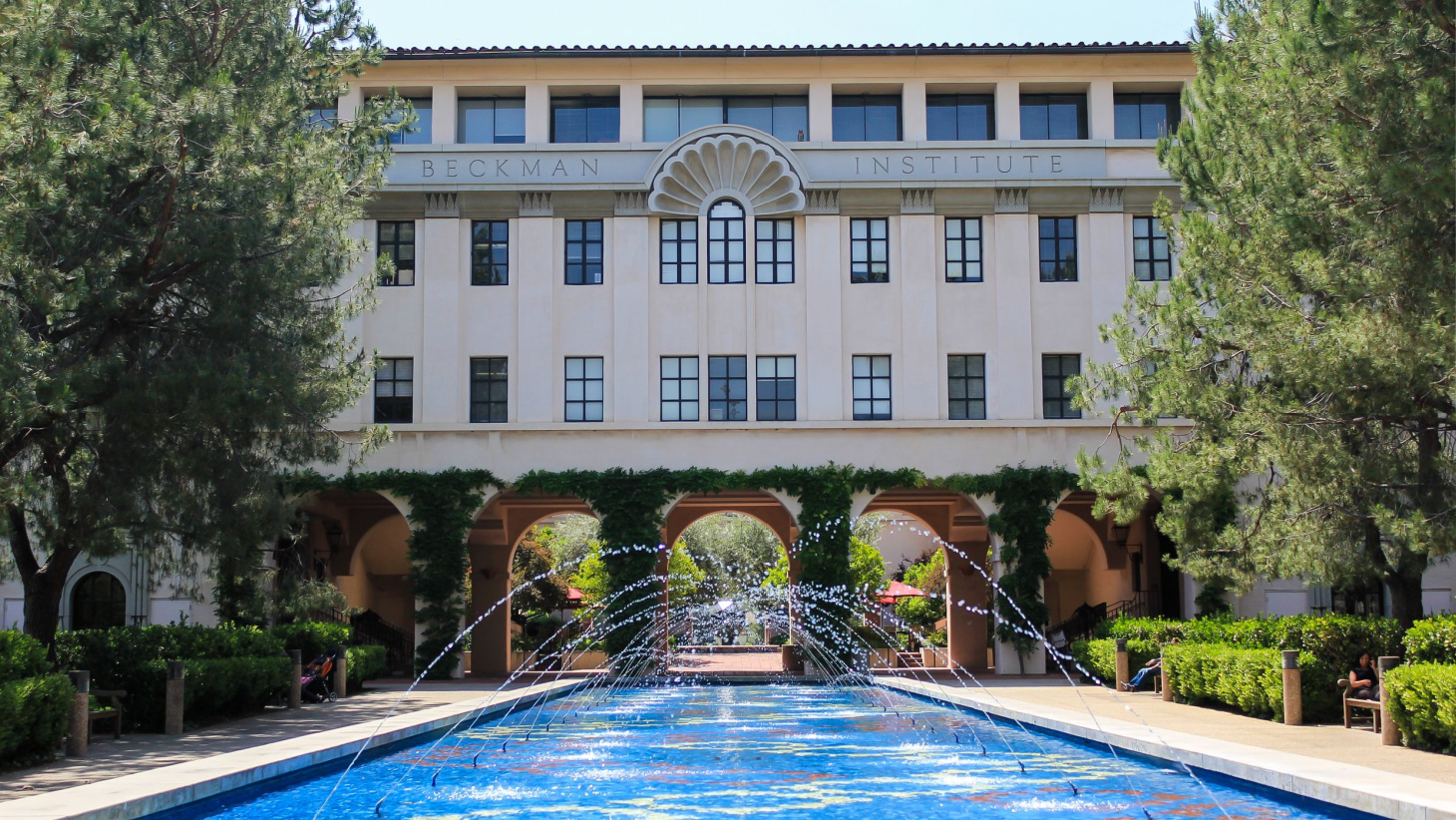
With an acceptance rate under 4% (yes, truly), Caltech is one of the most highly selective schools in the country. The most recent complete figure is 3.78% for the Class of 2029, when 427 students were admitted from 11,285 applicants, and Caltech extended 428 offers for the Class of 2030. Although ACT or SAT results are now required again during the admissions process, the Caltech admissions committee does give serious weight to the supplemental essay prompts that they require from all applicants.
Want to learn more about how to create a strong application to Caltech? In addition to our blog on How to Get Into Caltech, head to College Transitions Gateway for all our best free tools and resources, including an admissions calculator for 170+ institutions, college planning guides & templates, and example essays from accepted students.
Two things to know before we dive in. First, Caltech rebuilt its supplement for 2026-27. The old six-prompt structure is gone. Applicants now write five required responses, most of them chosen from menus of options, plus one optional short answer. Word limits have shifted too. If you drafted anything from last year’s prompts, only a little of it will transfer.
Second, all applicants are now required to review Caltech’s guidelines on the ethical use of AI before submitting their supplemental essays. Take that seriously. This is a school whose entire academic culture runs on the Honor Code, and the admissions office is signaling how it expects that culture to start.
One last note: the admissions committee has provided in-depth guidance for these questions, so we’ll keep our advice short and sweet. Caltech’s own summary of that guidance is worth internalizing before you write a word. There is no such thing as too much STEM in these responses. Faculty read the files of the most competitive applicants, so you do not need to dumb down the science. And holistic review at Caltech means whole-person review, so anything genuinely important about who you are belongs somewhere in this application.
Caltech Supplemental Essays 2026-27
Required STEM Academic Interest Question
Why did you choose your proposed area of interest? If you selected “other”, what topics are you interested in pursuing? (Min: 150 / Max: 200 words)
(Note: you’ll first select one or two areas of interest from a provided drop-down box. Caltech has a rigorous core curriculum and students don’t declare a major until the end of their first year, so the school states plainly that you are under no obligation to follow this choice if admitted. Pick the area you can write about most convincingly today.)
We all have a story of what drives us to pursue a certain academic pathway and career. How did your interest initially develop? What was the spark? How have you nurtured this passion and how has it evolved over time? If you desire to go into engineering, this is a chance to talk about everything from your childhood fascination with how things work to your participation in an award-winning robotics program at your high school. Share a compelling (and, of course, true!) narrative about how your love of your future area of study has blossomed to its present levels.
For this Caltech supplemental essay, you should also tie your passions into specific academic opportunities such as courses, professors, hands-on research programs, or any other aspects of your desired major that appeal most to you. Note that the floor moved up to 150 words this cycle. A three-sentence answer is no longer an option.
Scholarly Character (choose one)
How do you learn when there is no easy answer? Caltech’s learning environment asks students to work through difficulty, collaborate around hard ideas, and contribute to one another’s understanding. Use these responses to show us how you learn and grow. Choose one of the following prompts: (Max: 200 words)
Option 1, COLLABORATION: Tell us about a time your learning in STEM was shaped by another person or group, either because you needed help, offered help, changed your thinking through collaboration, or contributed to someone else’s understanding. What did that experience teach you about learning and working with others?
Option 2, PROCESS: Tell us about a time your approach to a STEM problem, concept, or project mattered as much as the outcome. How did you work through uncertainty or persist creatively in tackling the problem? What would you still defend about your process, regardless of the outcome?
This whole section is new, and it is the most revealing addition Caltech made this year. Every applicant in this pool can point to achievement. What the school is probing here is what happens when you are stuck, which is the ordinary condition of a Caltech undergraduate working through the core curriculum.
Choose Option 1 if you can name a specific person or group and describe an actual exchange. The prompt deliberately includes offering help and contributing to someone else’s understanding, so a story about explaining a concept to a struggling teammate counts every bit as much as a story about being rescued. Caltech students live in houses and work problem sets together. They are looking for evidence you will be a net positive in that room.
Choose Option 2 if you have a story where the process was better than the result. Note the last sentence carefully: what would you still defend about your approach, regardless of the outcome? That is an invitation to write about a project that did not work, and to argue that your reasoning was sound anyway. Very few applicants will take that invitation. The ones who do, well, they will stand out.
Scientific Drive (choose two)
How does STEM come alive in your life through learning, pursuing, or making? Caltech faculty review applications, so feel free to get technical in your response! Choose two of the following prompts: (Two essays, Max: 200 words each)
Option 1, LEARNING: Regardless of your STEM interest listed above, take this opportunity to nerd out and talk to us about whatever STEM rabbit hole you have found yourself falling into. Be as specific or broad as you would like.
Option 2, PURSUING: Tell us about a STEM question, problem, idea, or project that has held your attention over time. What drew you to it, how have you pursued it, and what do you still want to understand?
Option 3, MAKING: Tell us about something you created, tested, repaired, modeled, coded, built, or redesigned. What problem were you trying to solve and what did the process reveal to you?
The three options map onto three different kinds of STEM person, and the smart move is to choose the two that are least redundant with each other and with everything else in your application.
Option 1 is the returning favorite. Can you think of a recent time when you have been completely sucked into a STEM-related topic? Perhaps you binged every documentary available, consumed podcasts like nobody’s business, went on a Reddit bender, or found the most fascinating book at the library. What do you find so interesting about this topic, and why? While your “rabbit hole” doesn’t necessarily have to lead to anything actionable, you can certainly mention if it did. The word ceiling rose from 150 to 200 words, so there is more room to actually explain the science than there used to be.
Option 2 rewards duration. This is the one for the student who has been circling the same question since middle school. The final clause is the important one: what do you still want to understand? Ending on an open question rather than a tidy conclusion is exactly right here, and it is what separates genuine sustained interest from a hobby you performed for an application.
Option 3 is the descendant of last year’s creator/inventor prompt, and the verb list is generous. Repaired and modeled and redesigned all count, which means you do not need a patent or a prizewinning device. Maybe you perfected a solar oven design that bakes perfectly chewy chocolate chip cookies without electricity, or built a website with online shopping for your local thrift shop, or spent a summer getting a hand-me-down engine to turn over. The prompt asks what the process revealed to you, so leave room at the end for what you learned, not just what you made.
Fun Question (required)
Caltech students bring more than academic ability to the communities they join. What is something you would be excited to do, share, teach, make, start, or contribute as part of the Caltech community? (Min: 100 / Max: 150 words)
Caltech has replaced last year’s pick-two-of-four personal questions with this single forward-looking one. Note the shift. The old set asked about hobbies, identity, and concepts that blew your mind. This one asks what you would bring, which makes it a contribution question rather than a self-description question.
The verbs are your menu: do, share, teach, make, start, contribute. Pick one and get specific. “I would start a club” is nothing. “I would run a Sunday night session teaching people to solder, because half my friends want to build things and are scared of the iron” is something. This is also the one place in the supplement where non-STEM material has a natural home, so if you bake, or play in a pit orchestra, or run a terrible film podcast, this is where it goes.
At 150 words maximum, you have room for one idea and one reason. Caltech calls this the fun question, so let it actually sound like a person who is looking forward to something.
Optional Academic Short Answer Question
Caltech cares about context. Is there anything about your academic preparation, coursework, school context, or learning experiences that would help us better understand your readiness for Caltech?
This one is new, and it is genuinely optional. It exists for students whose transcripts need explaining: a school that offers no calculus or physics, a stretch where a family emergency took priority, a curriculum change mid-high-school, coursework taken at a community college because your school had nothing left to give you.
If none of that describes you, skip it. Using this space to restate accomplishments already visible elsewhere reads as padding to a committee that reviews thousands of files. For a fuller discussion of when to complete optional prompts, see our blog on Should I Complete Optional College Essays?.
How important are the Caltech supplemental essays?
Overall, Caltech lists five factors as being “very important” to the admissions process. Those factors are: the rigor of your high school coursework, test scores (they recently reinstated their testing requirements), recommendations, character/personal qualities, and your application essays. In fact, the essays are rated as being of greater importance than your GPA, class rank, or extracurricular activities!
It is also worth knowing that Caltech states its admit rate is under 5% in both Restrictive Early Action and Regular Decision, with negligible difference between the two, and that it reserves most offers for the regular round. There is no early-round shortcut here. With roughly 230 students enrolling each year, and with faculty reading the files of the most competitive applicants, these five short responses carry a great deal of the weight.
Want Personalized Essay Assistance?
If you are interested in working with one of College Transitions’ experienced and knowledgeable essay coaches as you craft your Caltech and Common App essays, we encourage you to get a quote today.
Looking for additional writing resources? Consider checking out the following:
- Common App Essay Prompts
- 10 Instructive Common App Essay Examples
- College Application Essay Topics to Avoid
- How to Quickly Format Your Common App Essay
- Should I Complete Optional College Essays?
- How to Brainstorm a College Essay
- 25 Inspiring College Essay Topics
- “Why This College?” Essay Examples
- How to Write the Community Essay