
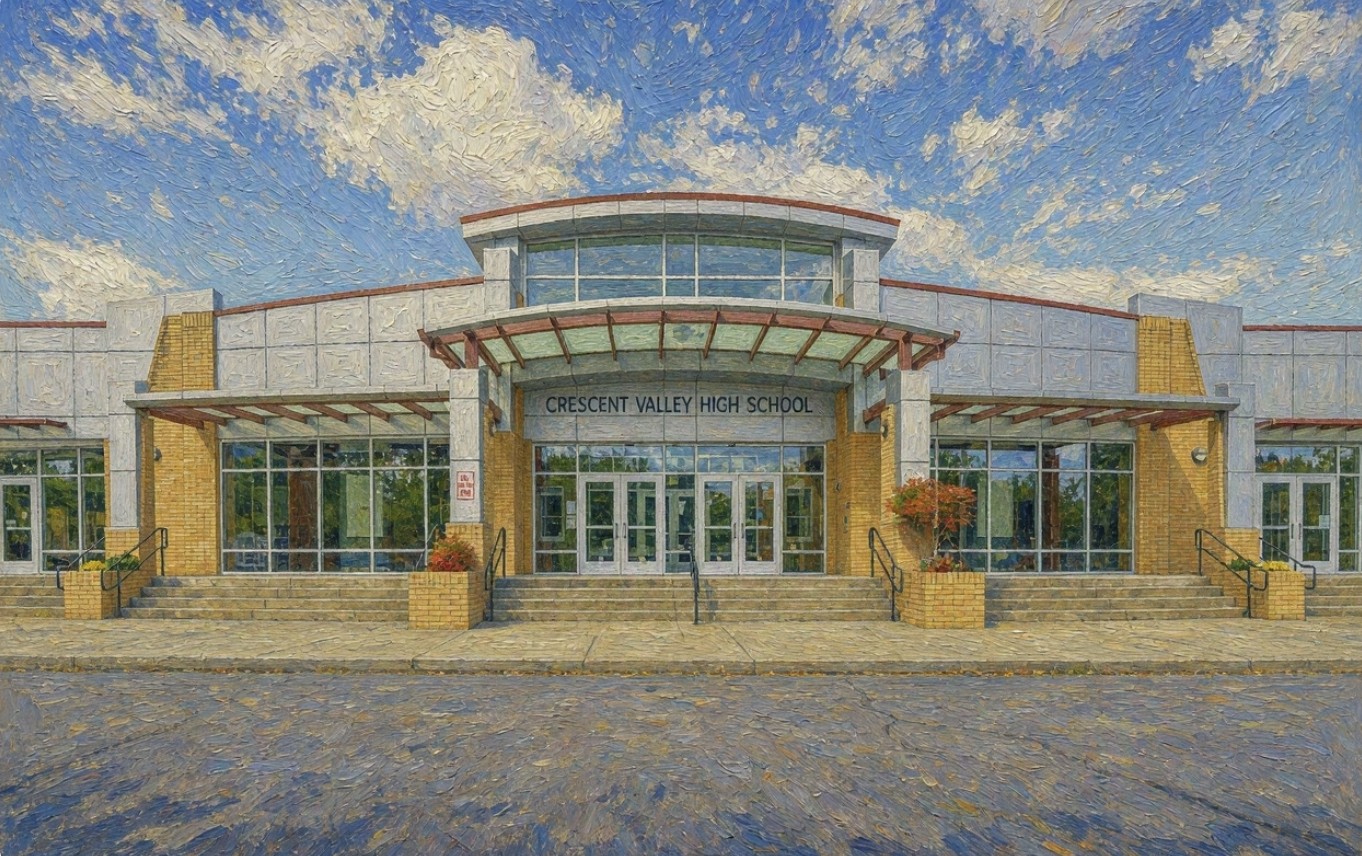
Corvallis families live in an unusual academic ecosystem. Oregon State University sits at the center of town, and its research culture shapes expectations at every nearby high school. Crescent Valley High School and Corvallis High School anchor the Corvallis School District. Meanwhile, Philomath High School serves families just west of the city, and West Albany High School draws students a few miles east. Consequently, strong grades and a full AP schedule rarely set a Corvallis applicant apart. Selective colleges see many Willamette Valley students with similar transcripts and similar goals. The real question, therefore, is how a capable student can build a profile that only a Corvallis applicant could claim.
Today’s case study highlights Linnea, a student from Crescent Valley High School. Through deliberate planning and a clear academic focus, she earned:
- EA acceptance to the Oregon State University Honors College
- EA acceptance to Purdue University’s Insect Biology program
- ED acceptance to Cornell University’s College of Agriculture and Life Sciences (Entomology)
Notably, her strategy grew out of the farmland at the edge of her own campus.
Meet Linnea: A Biology Student Surrounded by Fields
When Linnea began working with College Transitions in the spring of her sophomore year, she already had real strengths. She attended Crescent Valley High School, which U.S. News & World Report ranks 18th in Oregon and 1,955th nationally among 17,945 ranked public high schools. U.S. News also reports a 42% AP participation rate and an 89% graduation rate. Students can take AP Biology, AP Chemistry, AP Environmental Science, and AP Calculus BC on campus. Furthermore, several AP courses, including AP Statistics and AP Computer Science A, meet at Corvallis High School, so students regularly move between the two campuses.
Linnea earned mostly A grades in her science courses. Each summer, she also helped a neighbor whose family grows red clover for seed outside town. However, she had not yet connected that work to her academic interests. On paper, her activities looked scattered: a biology club, some volunteering, and a casual interest in photography.
Our first goal was to help her see that the fields around Crescent Valley were her greatest asset.

1. Choosing a Strategic Major: Entomology with a Pollinator Focus
Many Corvallis students with science interests declare biology or pre-med. Those paths are common in a university town and hard to differentiate. After reviewing Linnea’s coursework and summer experience, we guided her toward entomology, with a specific focus on pollinator ecology.
Why Entomology Made Sense
- It turned her summers on a red clover seed farm into genuine academic preparation.
- It connected to Oregon State’s pollinator research, conducted only a few miles from her school.
- It gave her a unifying theme across activities, research, essays, and supplements.
- It aligned with distinctive programs at her target schools, including Cornell’s Entomology major and Purdue’s Insect Biology major.
Few high school seniors arrive with a defined interest in insects. Cornell’s College of Agriculture and Life Sciences founded the first entomology department in the country. That history gave Linnea a precise reason to apply. Instead of presenting a generic biology profile, she could present a focused one.
2. Improving Her SAT Score: From 1260 to 1480
Linnea’s initial SAT score of 1260 was solid, but it sat below the typical range for admitted students at her top-choice school. Our tutors built a plan around her specific weaknesses. She worked through data-heavy reading passages, advanced algebra, and timed full-length practice tests. Moreover, she reviewed every missed question by category each week. That habit revealed patterns she had not noticed before. Science passages soon became a strength once she read graphs as carefully as she read text.
By the fall of her senior year, Linnea had raised her score to 1480. That improvement placed her in a competitive range at every school on her list. Above all, it showed admissions readers that she responds to feedback with sustained effort.
3. Deepening Her Commitment: From Club Member to Habitat Builder
Linnea had attended biology club meetings for two years, but her role was passive. Together, we mapped a path from participant to leader with documented results.
What Linnea Did Differently
- She proposed converting an unused strip near Crescent Valley’s athletic fields into a native wildflower planting.
- She secured approval from school administrators and recruited 22 classmates to prepare and seed the site.
- She organized monthly bee walks during spring and summer, training club members to record pollinator visits.
- She shared seasonal results with the science department and posted updates for families.
Consequently, Linnea gained a leadership experience with measurable outcomes. The planting also gave her a field site she could revisit throughout her research. Furthermore, it produced vivid details for her essays, from turning compacted soil to spotting the first bumble bee on a lupine.

4. Adding a Major-Aligned Research Experience
Next, we helped Linnea design an independent project that only a Willamette Valley student could complete. Red clover is an important seed crop in western Oregon, and growers often rent honey bee hives to pollinate it. However, Oregon State researchers have found that native bumble bees pollinate red clover seed crops consistently. Linnea wanted to know whether field edges influenced which bumble bees arrived.
Project Focus
Field Margins and Bumble Bee Diversity in Willamette Valley Red Clover Seed Fields
Linnea examined:
- Visual counts of bumble bee foragers along transects at three red clover field edges
- Differences between edges bordered by hedgerows and edges bordered by bare ground
- Bumble bee occurrence records for Benton, Linn, and Polk counties from the Oregon Bee Atlas
- Flowering plants near each field that might support bees before and after clover bloom
College Transitions helped Linnea draft a concise outreach email to an OSU graduate student. That mentor reviewed her methods and suggested a non-lethal counting protocol.
5. Entering Competitions for External Validation
Selective colleges value evidence that a student’s work holds up outside the classroom. Therefore, we encouraged Linnea to enter competitions that matched her research. Oregon’s science fairs run through the Northwest Science Expo System, a network of regional expos that feed the state-level Northwest Science Expo.
At the Central Western Oregon Science Expo, Linnea placed second in the Animal Sciences category. That result advanced her to the Northwest Science Expo at Portland State University, Oregon’s ISEF-affiliated state fair. There, she earned a special award for field-based ecological research. Each result reinforced her entomology direction. Notably, judges asked pointed questions about her transect design. Those conversations sharpened how she explained her work in supplements and interviews.
6. Crafting a Personal Statement Rooted in a Specific Observation
Linnea’s early drafts were sincere but predictable. She wrote about bee decline and the importance of protecting pollinators. Thousands of environmental applications make that same point every year. We pushed her toward a moment only she had lived.
Her final essay opened on a July morning at the edge of her neighbor’s clover field. Rented honey bee hives sat stacked on pallets near the road, humming loudly. Meanwhile, a single bumble bee worked a clover head a few feet away, noticed by no one but her. Linnea wrote about that contrast: the visible, purchased solution beside the quiet, wild one. From there, the essay traced how that question reshaped her habitat project and her research.
The essay never announced her intended major. Instead, it showed how she notices what others overlook. That restraint made her interest in entomology feel earned rather than declared. Additionally, our essay coaches helped her trim the draft to the 650-word limit without losing the texture of the field.
7. Using Early Action and Early Decision Strategically
Early Action Schools
- Oregon State University Honors College, Horticulture: accepted
- Purdue University, Insect Biology: accepted
Oregon State offered Linnea a familiar research community and access to faculty in its pollinator health program. Purdue’s Insect Biology major promised small classes within a large research university, along with a faculty-mentored capstone. Both applications featured the same red clover research, so each one reinforced a consistent academic profile.
Early Decision School
- Cornell University, College of Agriculture and Life Sciences, Entomology: accepted
Cornell was Linnea’s top choice. Its Entomology major pairs broad training in the biological sciences with deep study of insects. In addition, its Distinction in Research Honors option would let her continue fieldwork as an undergraduate. Applying ED signaled a clear, well-researched commitment. Her acceptance arrived in mid-December, the result of two years of consistent, focused work.

Why Linnea’s Strategy Worked
- She identified a specific entomology and pollinator ecology direction early and built every element of her application around it.
- She raised her SAT score into a competitive range for her target schools.
- She transformed passive club membership into a visible campus habitat project.
- She completed independent research grounded in Willamette Valley agriculture and public data.
- She entered competitions that added external recognition and reinforced her focus.
- She wrote a personal statement that was specific, local, and memorable.
- She used Early Action and Early Decision to maximize her outcomes.
Linnea did not try to do everything. Instead, she did the right things consistently and intentionally.
What This Means for Corvallis Families
Corvallis is a small district with outsized academic resources. According to U.S. News, Crescent Valley High School ranks 18th in Oregon with a 42% AP participation rate. Corvallis High School ranks 25th in Oregon, and its AP participation rate reaches 53%. Nearby Philomath High School ranks 11th in Oregon with a 29% AP participation rate. Because Corvallis has only two traditional high schools, students often share AP courses across campuses and learn early to look beyond their own building.
That setting is an advantage rather than a limitation. Few cities place a land-grant research university, working seed farms, and statewide research data within one short drive. Still, strong grades remain the baseline at selective colleges. Standing out requires:
- A clear and authentic academic direction
- Extracurricular depth, not just breadth
- At least one self-driven research or project experience
- External validation through competitions or recognition
- Essays that are specific, personal, and locally rooted
- Smart use of Early Action and Early Decision
College Transitions helps Corvallis students turn these local resources into focused, distinctive applications, just as we did for Linnea.

