
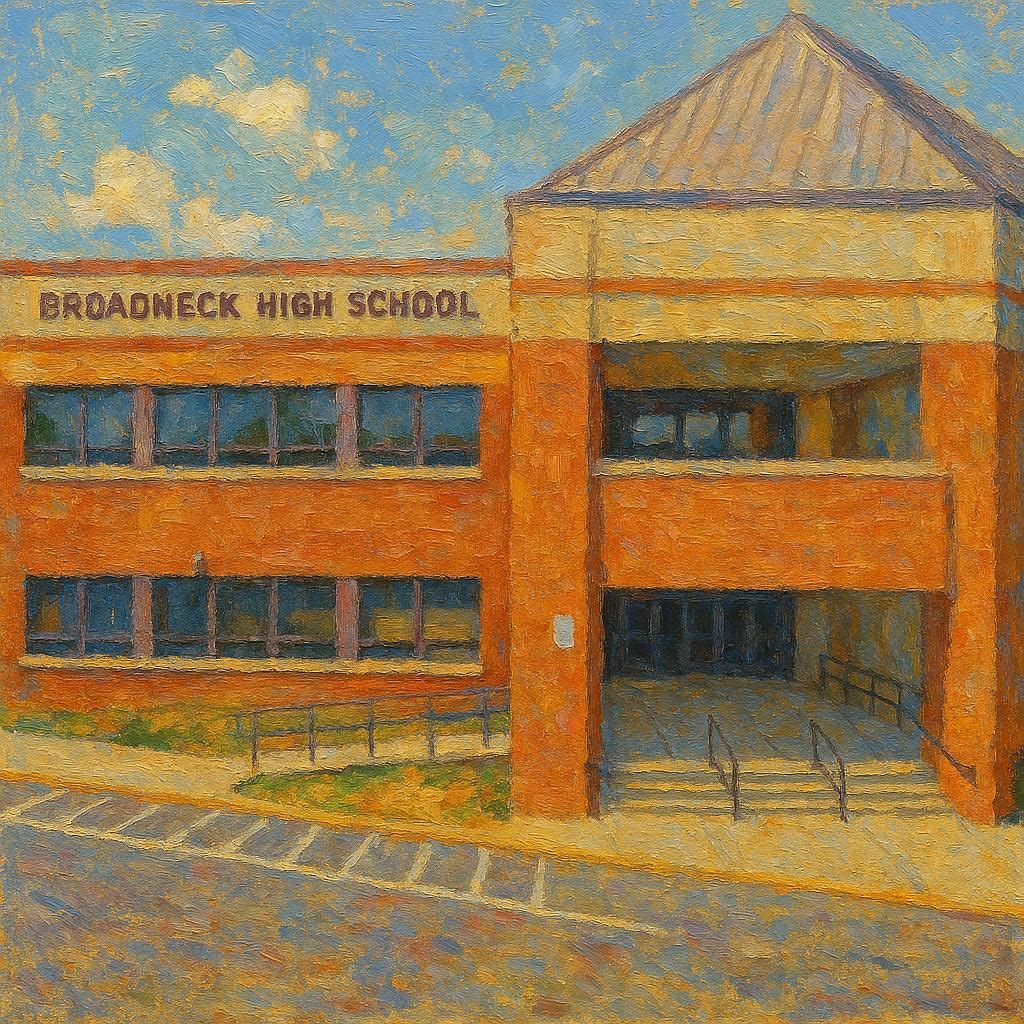
Families in Annapolis and Anne Arundel County face a college admissions challenge that is both familiar and surprisingly complex. On one hand, the area’s top public high schools rank among the best in Maryland. On the other hand, Annapolis sits just 30 miles from Washington, D.C. That proximity means local students compete directly with some of the most credentialed, policy-connected, politically engaged high schoolers in the country.
Standing out in that environment requires more than strong grades. It requires a focused narrative, a specific major, and the kind of experience that admissions readers at selective schools rarely see twice.
Today’s case study highlights Daniel, a student from Broadneck High School in Annapolis. Through deliberate planning and strategic positioning, he earned:
- EA acceptance to University of Maryland, College Park
- EA acceptance to James Madison University
- ED acceptance to American University School of Public Affairs
Daniel’s story is a practical roadmap for Annapolis-area families. It shows how the right strategy, applied consistently over two years, turns a strong student into a compelling applicant.
Meet Daniel: A Motivated Student Who Needed a Sharper Angle
When Daniel began working with College Transitions in the fall of his sophomore year, he had genuine strengths to build on.
He attended Broadneck High School, located in Annapolis and serving the Arnold and Severna Park communities. According to U.S. News & World Report, Broadneck ranks 19th in Maryland and #913 nationally among more than 17,900 ranked public high schools. The school’s AP participation rate is 59%, placing it well above both the state and national averages. Broadneck is one of 19 high schools in Anne Arundel County Public Schools, a district that consistently ranks among Maryland’s strongest.
Daniel earned strong grades in his AP Government and AP U.S. History courses. He had attended a Boys State program the summer after his freshman year and followed state legislative news closely on his own. However, he had not yet channeled those interests into a focused direction. He looked, on paper, like many motivated students from the D.C. corridor: broadly interested in government, civically aware, but without a specific story.
Our first task was to find that story and build everything around it.

1. Choosing a Strategic Major: Political Communication
Many students with government and policy interests from the D.C. region default to political science or public policy as their declared majors. Those fields are crowded in this applicant pool. Specifically, they are the most common declared majors among students who attend Boys State, participate in mock trial, and follow politics closely.
After reviewing Daniel’s coursework, interests, and communication strengths, we guided him toward a more targeted direction.
Why Political Communication Made Sense
- It connected his government coursework with a genuine strength in writing and argumentation.
- It gave him a unifying theme across activities, research, essays, and supplemental responses.
- It set him apart from the broad political science and pre-law applicants who dominate the D.C.-corridor applicant pool.
- It aligned directly with programs at his target schools: American University’s School of Public Affairs, which houses one of the country’s leading political communication programs, and JMU’s School of Media Arts and Design.
Admissions readers respond to students who present a genuine and specific academic direction. This framework gave Daniel exactly that. Additionally, it made every subsequent decision in his application more coherent.
2. Improving His SAT Score: From 1290 to 1430
Daniel’s initial SAT score of 1290 was competitive at several Maryland schools. However, it was not yet strong enough for American University’s School of Public Affairs, which enrolls students with middle-50% SAT scores roughly in the 1220–1440 range, or for UMD’s competitive direct-admit programs. We built a focused preparation plan that emphasized:
- Evidence-based reading with an emphasis on civics, law, and social science passages
- Advanced algebra, data analysis, and problem-solving
- Timed, full-length practice under realistic conditions
- Weekly review of missed questions by skill category
By early fall of his senior year, Daniel had raised his score to 1430. That improvement strengthened his profile at every school on his list. Moreover, it placed him solidly in competitive range for AU’s merit scholarship consideration, an important financial outcome as well as an admissions one.
3. Transforming His Extracurricular Presence: From Participant to Author
Daniel had participated in his school’s mock trial program and attended the Maryland Boys State program. Both were genuine involvements. However, neither gave him a leadership story or a distinctive credential. We worked with him to shift from a participant to a creator.
What Daniel Did Differently
- He launched a student political affairs newsletter at Broadneck, covering Maryland state legislature news for a student audience.
- He grew the newsletter’s readership to more than 200 subscribers within one semester.
- He interviewed two Anne Arundel County elected officials (a county council member and a state delegate) for published Q&A features.
- He submitted two op-eds to the Capital Gazette, Annapolis’s daily newspaper. One was accepted and published in the spring of his junior year.
This combination gave Daniel a documented creative output and an external publication credit. Together, they demonstrated political communication skills in action, not just in theory.

4. Adding a Research Experience: Maryland Legislative Policy Analysis
To deepen Daniel’s political communication narrative beyond extracurricular involvement, we helped him design an independent research project using publicly available data from the Maryland General Assembly and the National Conference of State Legislatures.
Project Focus
Partisan Framing Differences in Maryland Budget Coverage: A Comparative Analysis of Local News Outlets, 2022–2024
Daniel examined:
- How the Capital Gazette, Maryland Matters, and the Baltimore Sun covered the same three Maryland budget debates.
- Differences in headline framing, sourcing patterns, and issue emphasis across outlets.
- Correlations between editorial positioning and the geographic distribution of each outlet’s readership.
- Implications for civic understanding in districts with limited local news access.
He produced a written report and presented findings at a regional high school journalism symposium. The project gave him a citable original accomplishment. It also provided rich, specific content for his essays at every school on his list.
5. Entering Competitions for External Validation
Selective colleges value evidence of intellectual engagement beyond the classroom. We encouraged Daniel to enter competitions aligned with his political communication direction.
- C-SPAN StudentCam Documentary Competition — regional honorable mention
- Voice of Democracy Essay Contest (VFW) — district finalist
- National Federation of Press Women High School Communications Contest — third place, editorial writing
Each entry reinforced his narrative without contradicting it. Importantly, each one was accessible from Annapolis and required only modest time investment alongside his other commitments.
6. Crafting a Personal Statement Rooted in a Specific Moment
Daniel’s early essay drafts were well-constructed but predictable. He wrote about caring deeply about democracy and wanting to improve political discourse. Those themes appear in thousands of applications from the D.C. region each year. We pushed him to write from a specific moment and to let the specificity do the work.
His final personal statement focused on a single evening he spent in the press gallery of the Maryland State House during a floor debate on a redistricting bill. He wrote about watching a state delegate deliver a passionate five-minute speech to a chamber that was almost entirely empty; most members were in the lobby, on their phones. He wrote about what that moment made him think: not about political dysfunction in the abstract, but about the gap between the performance of democracy and its actual mechanics and what communication could do to close it.
The essay was precise, locally rooted, and entirely his. It connected naturally to his interest in political communication without stating it directly. That restraint made it far more effective.

7. Using Early Action and Early Decision Strategically
Early Action Schools
- University of Maryland, College Park, College of Behavioral and Social Sciences — accepted
- James Madison University, School of Media Arts and Design — accepted
These Early Action acceptances gave Daniel strong, named options before winter break. UMD’s proximity to Washington gave it particular appeal for political communication students, with access to Capitol Hill internships and D.C.-based media organizations. JMU’s media programs offered a more intimate setting with strong placement outcomes in public affairs communications.
Early Decision School
- American University, School of Public Affairs — accepted
American University was Daniel’s top choice. Its location in Washington, D.C., its nationally recognized political communication faculty, and its deep connections to federal agencies, lobbying firms, and media outlets made it an authentic fit. Applying ED demonstrated genuine commitment and gave him a meaningful advantage in a selective pool.
His acceptance arrived in mid-December: the result of two years of focused and intentional work.
Why Daniel’s Strategy Worked
- He identified a specific political communication identity early and built every element of his application around it.
- He raised his SAT score into competitive range for his target schools and merit scholarship consideration.
- He created a tangible, citable output: a published newsletter and a newspaper op-ed.
- He completed an independent research project that demonstrated genuine intellectual initiative.
- He entered competitions that reinforced his narrative and added external recognition.
- He wrote a personal statement rooted in a specific Annapolis moment that no other applicant could replicate.
- He used Early Action and Early Decision to maximize his admissions outcomes.
Above all, Daniel did not try to be a generic political science applicant from the D.C. corridor. Instead, he presented a specific, locally rooted story, consistently and intentionally.
What This Means for Annapolis Families
Annapolis is the seat of Maryland state government, the home of the U.S. Naval Academy, and a city steeped in political and civic history. That context is an asset. However, it also means that Annapolis students compete in one of the most politically engaged and credentialed applicant corridors in the country.
According to U.S. News, Anne Arundel County’s top schools are genuinely strong. Severna Park High ranks 6th in Maryland with a 74% AP participation rate. South River High ranks 15th in Maryland with a 72% AP participation rate. Broadneck ranks 19th in Maryland with a 59% AP participation rate. Annapolis High rounds out the county’s major public schools, ranked 59th in Maryland.
In this environment, strong MCAP scores and a high GPA are the starting point, not the differentiator. Standing out at selective colleges requires more:
- A clear and authentic academic direction that goes beyond political science
- Extracurricular depth, preferably including original creative or analytical output
- At least one self-driven research or policy project
- External validation through competitions or publications
- Essays that are specific, locally rooted, and impossible to replicate
- Smart use of Early Action and Early Decision
This is the work College Transitions specializes in and the work that made Daniel’s outcome possible.

Ready to Build a Strategy Like Daniel’s?
Whether your student attends Broadneck, Severna Park, South River, Annapolis High, Arundel, Crofton, or any other school in Anne Arundel County, College Transitions can help them:
- Identify a compelling and authentic academic direction
- Build meaningful extracurricular depth, including original output
- Design research or policy projects using local and state resources
- Improve standardized test scores strategically
- Craft essays that turn the Annapolis context into a competitive advantage
- Use Early Action and Early Decision to maximize results
Schedule a consultation today and let’s build a plan that turns your student’s potential into standout admissions outcomes.
Additional Resources
- Top High Schools in the Annapolis, MD Area: How They Compare for College Admissions
- College Admissions from Annapolis, MD: Strengths, Challenges, and What Families Should Know
- Sailing Toward Selective Colleges: How Annapolis, Maryland Students Can Stand Out in the Admissions Process
- Annapolis College Admissions Consultants

