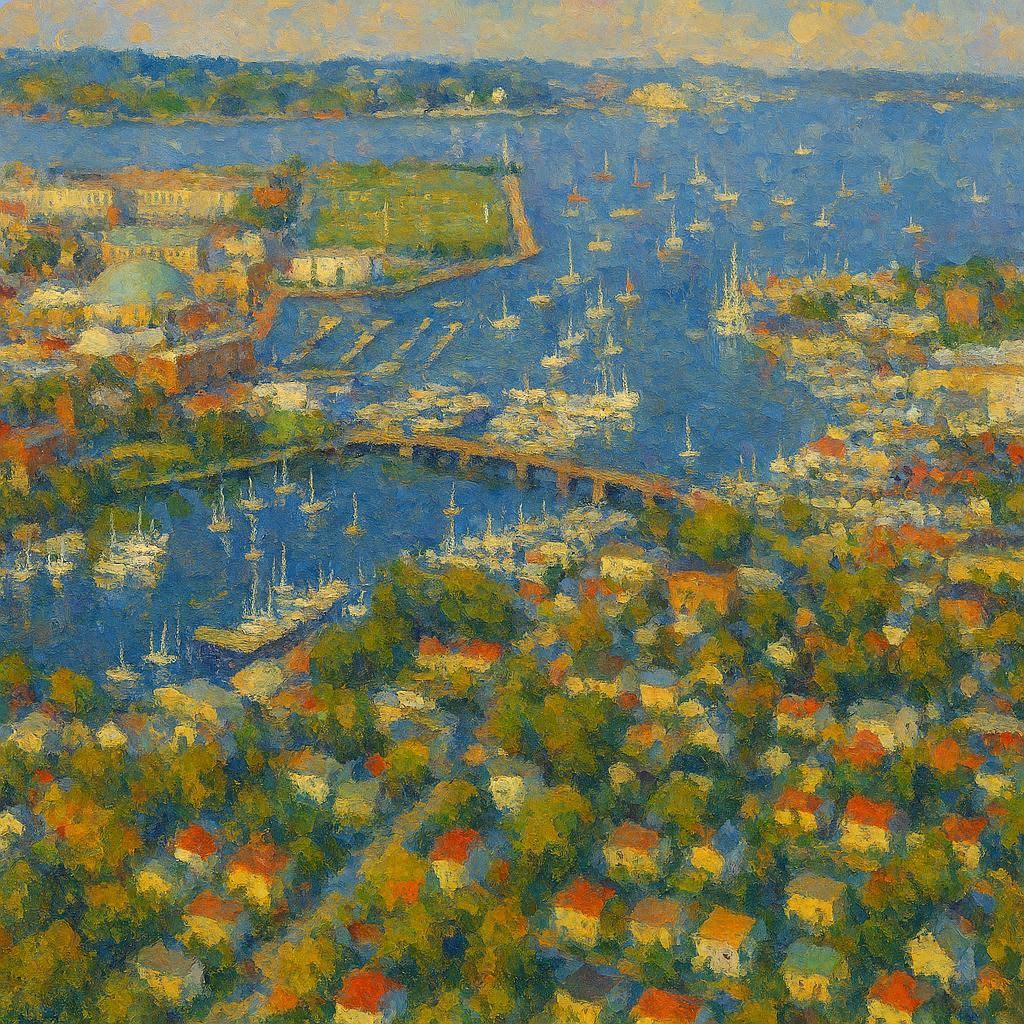
Annapolis is a city with a specific, layered identity. It is the capital of Maryland, the home of the United States Naval Academy, and the undisputed sailing capital of the East Coast. The Chesapeake Bay is at its doorstep. Washington, D.C. sits 30 miles to the west; Baltimore is 30 miles to the north. For college-bound students, that combination of civic identity, natural environment, and geographic positioning creates a genuinely distinctive admissions landscape. The question is not whether opportunities exist here. They do, and they are extraordinary. The question is which ones to pursue, how early to start, and how to build them into a coherent, competitive application.
Why Annapolis Is a Strong Launchpad for Selective College Admissions
Maryland sits in a moderately competitive position in the national college admissions landscape. It is not as saturated as Massachusetts, New York, or California. At the same time, it is not an underrepresented state in the way Wyoming or Montana might be. Consequently, Annapolis students occupy a favorable middle ground: competitive enough to be credible, rare enough to stand out.
What truly helps Annapolis students is specificity. The city’s civic and maritime identity generates application narratives that feel genuinely different from the typical mid-Atlantic suburban profile. Furthermore, the density of federal agencies, environmental organizations, military research facilities, and Bay-focused institutions in and around Annapolis gives motivated students access to experiences that would require relocation for students in most other cities.
The Experiences That Actually Differentiate Annapolis Applications
The Science and Engineering Apprenticeship Program (SEAP)
SEAP is one of the most powerful and underutilized high school research programs in the country. Run by the Office of Naval Research, it places academically talented sophomores, juniors, and seniors in Department of the Navy laboratory research for eight weeks each summer. Students work alongside professional scientists and engineers on real Naval research projects. The program is paid. Selection is competitive: approximately 300 placements are made annually across more than 38 Navy laboratories nationwide.
Notably, one of the eligible placement locations is Annapolis, Maryland itself. Additionally, nearby Bethesda, Patuxent River, and Silver Spring are also Maryland placement sites. Students are selected based on academic achievement, personal statements, recommendations, and research interests. There is no cost to participate. Applications open in August and close November 1st for the following summer. A stipend of $4,000 is provided for new participants; returning participants receive $4,500.
For an Annapolis student, applying to conduct research at a local Navy laboratory alongside active DoN scientists is an opportunity that is not available to students in most American cities. Moreover, SEAP alumni who pursue engineering or science degrees at selective universities arrive with a verified, paid research credential that very few of their classmates can match. For students targeting programs at MIT, Carnegie Mellon, Georgia Tech, or top engineering schools, this is one of the most compelling high school credentials that exists.
The Chesapeake Bay Foundation: Environmental Advocacy and Volunteer Engagement
The Chesapeake Bay Foundation (CBF), headquartered in Annapolis, is the largest nonprofit organization dedicated to restoring the Bay. Each year, CBF volunteers contribute more than 25,000 hours to programs across the watershed. Volunteer opportunities span oyster restoration, shoreline planting, stream monitoring, policy advocacy, and community outreach. For younger high school students, volunteering with CBF is a meaningful entry point into genuine environmental work.
Furthermore, CBF offers internships for undergraduate and graduate students focused on water-quality research and environmental policy. Motivated high school students who have built a strong volunteer record with CBF are well positioned to transition into those internship roles the moment they are eligible. That sustained progression, from volunteer to intern, built over two or three years, tells a far more compelling admissions story than a single summer placement.
Students interested in environmental law, conservation biology, or public policy should additionally explore CBF’s advocacy programs. CBF trains volunteers to speak at public hearings, meet with legislators, and represent the Bay’s interests in formal civic settings. Experience in that kind of structured advocacy is genuinely rare among high school applicants.
Maryland Department of Natural Resources Internships
The Maryland Department of Natural Resources (DNR) offers internships for high school students (minimum 2.5 GPA required) across a range of environmental and conservation roles. Summer internships run 10 to 12 weeks from June through August; fall internships are also available. Positions involve fieldwork across Maryland: inspecting marina equipment, designing shoreline restoration plans, collecting biological data in local rivers, and supporting fisheries science, outdoor recreation planning, and environmental outreach.
For Annapolis students, DNR placements are often accessible locally, given the density of Bay-adjacent resources in Anne Arundel County. Moreover, DNR internships involve real fieldwork rather than administrative support. A student who spent a summer collecting biological data in the tributaries of the Severn River has material for a college essay that no applicant from a landlocked state can replicate.
The Annapolis Maritime Museum and Park
The Annapolis Maritime Museum and Park runs an active education program for students of all ages. Its summer education internship specifically places high school students aged 15 to 18 in hands-on roles supporting environmental education camps. Interns assist with activities including kayaking instruction, aquarium care, and lesson planning. The full six-week program earns service-learning hours. For students interested in environmental education, marine biology, or teaching, this is a locally accessible and substantive starting point.
Beyond the internship, the museum’s programs in Bay ecology, maritime heritage, and environmental stewardship are open to student participants throughout the year. Students who engage consistently with the museum, whether through programs, volunteering, or the internship itself, develop a specific, place-based environmental identity that translates powerfully into college applications.
The US Naval Academy: Programs for Non-Applicants
Many Annapolis families associate the Naval Academy exclusively with students pursuing military service. In fact, the Academy offers programs that are valuable for high school students with no intention of applying.
The Summer STEM program is designed for rising 9th through 11th graders interested in science, technology, engineering, and mathematics. It provides a week of hands-on problem-solving, exploratory learning, and team-building on the Academy campus. Consequently, students gain direct exposure to Navy-supported STEM research and culture without committing to a military application. Additionally, hundreds of Annapolis-area families participate in the Academy’s Sponsor Program, hosting midshipmen during free periods. Students in sponsor families develop relationships with active-duty officers and gain an inside understanding of leadership, service, and institutional culture that is genuinely rare.
For students who do wish to pursue an appointment, the USNA Summer Seminar, a one-week experience for rising juniors, provides an immersive preview of life as a midshipman and formally launches the application process. All USNA students attend on a full scholarship covering tuition, room, board, and medical care.
The Maryland State Archives: History, Research, and Archival Work
The Maryland State Archives, located in Annapolis, offers an ongoing internship program for high school and college students throughout the academic year and summer. Interns engage in archival processing, conservation, research, art history, web design, electronic imaging, computer programming, and record transcription. Work may be conducted on-site at the Archives’ Annapolis facility or remotely.
For students interested in history, public policy, law, archival science, or digital humanities, this is an unusually substantive and specific opportunity. Moreover, working with primary source documents from one of the oldest state archives in the country provides intellectual depth that generic volunteer work cannot. Students who pursue this internship develop skills in historical research and archival methodology that distinguish them immediately in applications to humanities-focused programs at selective colleges.
State Government Access: Maryland’s Capital Advantage
Annapolis is the seat of Maryland’s state government. The Maryland General Assembly convenes each year from January through April. During session, the State House and surrounding offices are active civic environments. Moreover, the Maryland State Internship Program, run by the Department of Budget and Management, facilitates partnerships between state agencies and Maryland high school and college students. Positions span dozens of agencies and departments.
For students interested in public policy, law, government, or civic leadership, this access is unusually direct. A high school student who attends public hearings, engages with a state legislator’s office, or pursues a placement through the state internship program during session develops civic knowledge and professional experience that very few applicants at selective liberal arts colleges or policy-focused universities will share.
Additionally, the U.S. Senate Youth Program (USSYP), which selects two students per state annually for a Washington, D.C.-based week of government engagement, is specifically listed as a resource for Annapolis-area students. It is competitive, but it is a legitimate target for students who have already demonstrated civic engagement and academic distinction.

What Makes Annapolis Genuinely Distinctive
Beyond its formal programs and institutions, Annapolis has a civic and environmental character that is genuinely unlike most mid-Atlantic cities. That character is itself an admissions asset. Students who engage with it seriously and write about it specifically produce essays that admissions readers find both memorable and illuminating.
The Chesapeake Bay: An Ecological and Cultural Identity
The Chesapeake Bay is the largest estuary in the United States. It spans 64,000 square miles of watershed, supports more than 3,600 species of plants and animals, and has shaped the economy, culture, and identity of the region for centuries. For Annapolis students, it is not a distant resource. It is literally visible from the downtown streets.
That immediacy matters. Students who grow up alongside the Bay develop an environmental literacy that students from most American cities simply do not have.
- They understand the relationship between land use and water quality.
- They know what a hypoxic dead zone is and why it forms.
- They have watched crab and oyster harvests fluctuate with the health of the watershed.
Consequently, when those students write about environmental science, conservation, or public policy, they write from a place of genuine grounded knowledge rather than abstract interest. Admissions readers respond to that difference immediately.
The Bay is also a scientific frontier. Researchers at NOAA, the Chesapeake Bay Foundation, the Chesapeake Research Consortium, and the University of Maryland Center for Environmental Science conduct ongoing field research across the estuary. Their work on oyster restoration, nutrient pollution, sea-level rise, and fisheries management touches directly on issues that Annapolis students encounter in their everyday environment. Students who understand how that work connects to what they see in the Bay, and who can articulate the scientific and political challenges involved, bring an unusually sophisticated environmental perspective to college applications.
The Sailing Capital of America
More sailboats are registered in Anne Arundel County than in any other county in the country. The Annapolis Yacht Club is one of the oldest in the United States. The United States Sailboat Show, held annually in October, is the largest in-water sailboat show in the world. Sailing is embedded in the civic identity of Annapolis in a way that it simply is not in any other American city.
For students who sail seriously, Annapolis provides a competitive environment and a community context that is essentially unmatched outside of a handful of New England sailing towns. Junior sailing programs through the Annapolis Yacht Club and the Severn Sailing Association reach students from an early age. High school sailors here compete at a genuinely elite level. They have access to coaching, racing, and seamanship training that students in other cities can only access at expensive summer programs.
At selective colleges with varsity sailing programs, including Yale, Harvard, Dartmouth, Stanford, and Georgetown, Annapolis students are known quantities. Admissions offices that recruit for sailing know where the best junior sailors come from. Even for students not pursuing a roster spot, a sustained and serious sailing background, combined with an essay that reflects genuine reflection on seamanship, navigation, or the culture of racing on open water, produces an application voice that feels specific and earned rather than assembled.
A Living History Environment
Annapolis is one of the most historically intact colonial-era cities in the United States. The Maryland State House, completed in 1779, is the oldest state capitol building still in continuous legislative use in the country. The city’s historic district contains more 18th-century buildings than any other American city. It was briefly the capital of the United States in 1783 and 1784. George Washington resigned his military commission there, and the Treaty of Paris was ratified within its walls.
Moreover, Annapolis has a significant African American history that is less widely celebrated but equally substantive. Kunta Kinte, whose story was told in Alex Haley’s Roots, arrived in Annapolis in 1767. The Kunta Kinte-Alex Haley Memorial on the City Dock marks his arrival and serves as a site of reflection on the transatlantic slave trade. The Historic Annapolis Foundation maintains extensive records and programming related to the city’s African American heritage.
For students interested in history, law, public policy, or American studies, growing up inside one of the country’s best-preserved colonial environments is a genuine intellectual asset. Students who engage with that history through the Maryland State Archives, the Historic Annapolis Foundation, or independent research develop a grounded sense of historical inquiry that translates powerfully into applications to selective liberal arts colleges and history or political science programs.
The Naval Academy and a Culture of Service
Even for students who have no intention of applying to the Naval Academy, the institution shapes the culture of Annapolis in ways that are accessible and meaningful. Its presence generates a pervasive civic environment around service, leadership, and institutional commitment. Faculty include leading scholars in engineering, cybersecurity, oceanography, and political science. Its events are open to the public.
Building a Competitive Application from Annapolis
Start in 9th or 10th Grade
The strongest Annapolis applications are built over time, not assembled in a single summer. Students who identify their direction early, begin volunteering with the Chesapeake Bay Foundation or the Annapolis Maritime Museum in 10th grade, and then pursue SEAP or a DNR internship as juniors or seniors arrive at applications with a progression of deepening engagement. That progression is what selective admissions offices respond to.
Pursue Depth Over Breadth
The most common admissions mistake among Annapolis-area students is accumulating activities without developing expertise. A student who has volunteered six times at three different environmental organizations has less to say than one who has spent two years consistently engaged with the Chesapeake Bay Foundation, advancing from restoration volunteer to policy advocate. Selective colleges want to see sustained commitment and genuine impact. Annapolis provides ample opportunity for both.
Use Place to Build a Specific Essay Voice
Annapolis has a specific, textured character that most applicants to selective colleges have never experienced from the inside. The civic rhythms of a state capital, the ecology of the Bay, the culture of competitive sailing, the proximity to one of the country’s great military institutions: these are not generic talking points. They are the raw material of essays that admissions readers find genuinely illuminating. Students who write about their Annapolis experiences with precision and honesty, rather than abstraction, consistently produce stronger application narratives.
Broaden the College List
Many Annapolis families anchor their lists around the University of Maryland, Towson, and service academies. These are all legitimate targets. However, students with strong profiles and differentiated experiences should additionally consider selective schools in other regions where mid-Atlantic applicants are competitive but not common. Colby, Bowdoin, Trinity, Dickinson, University of Richmond, Washington and Lee, Wake Forest, and Tulane all see relatively few applications from Annapolis each year. A well-prepared student with a specific Bay-related research background or a sustained government internship brings a profile those schools find genuinely interesting.
The Bottom Line
Annapolis offers an extraordinary range of high school experiences. From Navy research internships and state government access to Bay ecology fieldwork and maritime museum programs, the city provides material for college applications that is specific, verifiable, and essentially impossible to replicate elsewhere. The resources are here. The question is only whether students engage with them deliberately enough, and early enough, to build something worth writing about.
If you’d like help identifying which Annapolis-area experiences best match your student’s interests and building an application strategy around them, College Transitions is here. Schedule a consultation and let’s develop a plan that puts your city to work for you.