
Marin County sits just north of the Golden Gate Bridge, and its reputation precedes it. The county’s median household income is among the highest in the United States. Its public high schools are well-resourced, AP participation rates are strong, and students arrive at the college process having hiked Mount Tamalpais, explored Point Reyes National Seashore, and grown up inside one of the most ecologically celebrated landscapes in North America.
That reputation, however, creates a specific admissions problem. Students from Redwood High School in Larkspur, Tamalpais High School in Mill Valley, Archie Williams High School in San Anselmo, Sir Francis Drake High School in San Anselmo, and Novato High School compete not just against each other, but against a national applicant pool full of students from affluent, well-resourced communities with beautiful natural surroundings. Proximity to nature is not a differentiator. What a student has done with that proximity is.
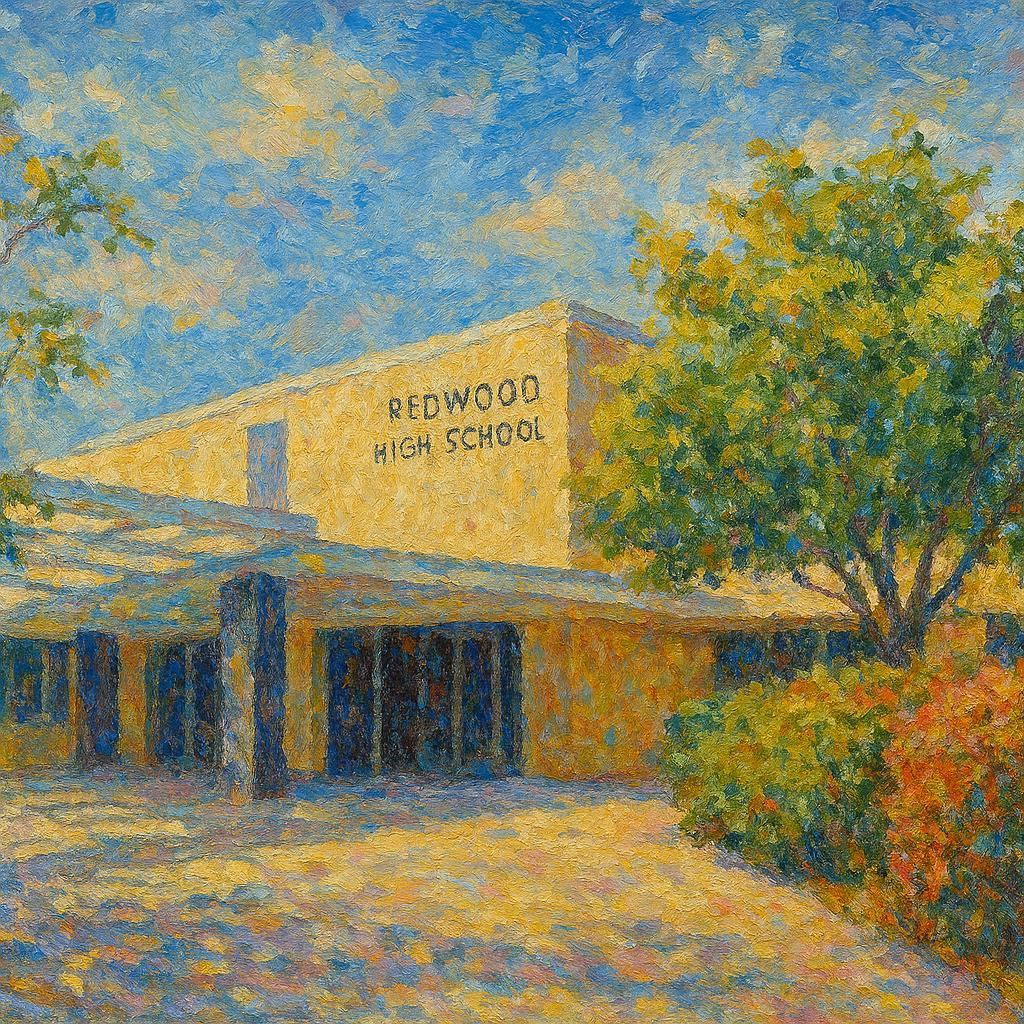
Today’s case study follows Daniela, a student at Redwood High School, ranked 50th in California by U.S. News & World Report. Through deliberate strategy and an application narrative rooted in Marin’s most pressing and least romanticized challenge, she earned:
- Early Action acceptance to the University of Oregon (College of Design, Landscape Architecture program)
- Early Action acceptance to Cal Poly San Luis Obispo (College of Agriculture, Food and Environmental Sciences, Environmental Management and Protection)
- Early Decision acceptance to UC Berkeley (College of Natural Resources, Society and Environment major)
Daniela’s story is a practical guide for Marin families who want to understand why a beautiful setting alone does not produce a differentiated application, and what it takes to build one that does.
Meet Daniela: A Strong Student in a County That Is Learning to Live with Fire
When Daniela began working with College Transitions in the spring of her sophomore year, she brought genuine academic strengths and a setting that, with the right framing, was unlike any other in the applicant pool.
She attended Redwood High School in Larkspur, the highest-ranked traditional public high school in Marin County. According to U.S. News & World Report, Redwood has an AP participation rate of 84% and a graduation rate of 99%. With roughly 1,785 students and a well-established college counseling program, it sits at the stronger end of the Tamalpais Union High School District.
Daniela carried a near-perfect GPA across a demanding course load that included AP Environmental Science, AP Human Geography, and AP Statistics. She had spent weekends on the trails of the Marin County Open Space Preserves and watched California wildfires dominate the news each summer. Marin’s wildfire risk was not abstract to her. Her family’s homeowners insurance had been dropped by their carrier the previous year. Her parents then spent months navigating the California FAIR Plan. That experience left a lasting impression.
Her SAT score, however, was a 1370. Furthermore, her extracurricular profile had not yet caught up with her genuine interests. Admissions readers at UC Berkeley or Cal Poly would not see a story in her file. They would see a capable Marin student who liked hiking. Our task was to change that.

1. Choosing a Differentiated Major: Community Fire Resilience and Landscape Planning
Many environmentally engaged students from northern California apply as environmental science, conservation biology, or sustainability majors. All three are popular. At selective schools, all three are fiercely competitive. Applicants from affluent coastal communities who present these majors without original research tend to read similarly to one another.
After reviewing Daniela’s coursework, her family’s direct experience with the insurance crisis, and the resources available to her in Marin County, we helped her build her application around a more specific direction: community fire resilience, with a focus on how landscape planning and land-use policy can reduce wildland-urban interface risk in high-value, fire-prone communities.
Why This Major Made Sense for Daniela
- Marin County is one of the most studied wildland-urban interface zones in California. In 2020, Marin voters funded the Marin Wildfire Prevention Authority, a dedicated agency focused on fire-adapted community planning across the county’s 34 open space preserves and adjacent residential areas. Daniela lived inside the communities that agency was designed to protect.
- The California home insurance crisis had made fire resilience an economic, policy, and equity issue, not just an ecological one. Daniela had experienced that reality firsthand, giving her a perspective most applicants can only read about.
- Landscape architecture and land-use planning sit at the intersection of ecology, design, and policy in a way that environmental science alone does not. Applicants who can articulate that intersection tend to stand out more sharply in both fields.
- No student from Connecticut, Illinois, or Florida could claim the same combination of lived proximity to fire risk and personal family stake in its consequences that Daniela brought to this subject.
This framing gave every element of Daniela’s application a unified, locally grounded thread.
2. Raising Her SAT Score: From 1370 to 1490
California does not administer the SAT or ACT as a statewide graduation requirement. Daniela had therefore tested independently once in the spring of her sophomore year as a baseline. Her score of 1370 was solid. However, it fell below the median for her most selective targets. UC Berkeley’s College of Natural Resources draws from a highly competitive applicant pool, and Cal Poly SLO’s impacted Environmental Management and Protection program expects strong quantitative preparation.
We built a targeted plan around her specific weak areas: the math section, particularly problems involving data analysis and multi-step reasoning, and the reading section, where she lost time on complex argumentative and scientific passages. The plan included:
- Timed full-length practice tests every two weeks under realistic testing conditions
- Content review in advanced data analysis, rates and ratios, and systems of equations
- Passage annotation strategies for reading comprehension, particularly for policy and scientific texts
- Two official test dates scheduled in junior year to allow meaningful improvement between attempts
By October of her junior year, Daniela had raised her SAT score to 1490. That 120-point gain placed her solidly within the competitive range at every school on her list. It also reinforced the quantitative credibility of her environmental science coursework in the eyes of admissions readers.
3. Deepening Her Existing Involvement: From Hiker to Fire Resilience Advocate
Daniela had been an active member of Redwood High’s environmental club since her freshman year. Her involvement, however, was undifferentiated. She attended meetings, helped organize a beach cleanup at Rodeo Beach, and participated in Earth Day activities on campus. Admissions committees recognize environmental club membership. They are genuinely moved by original initiative within it.
We worked with Daniela to shift from participant to program builder. She approached the club’s faculty advisor with a specific proposal: to partner with the Marin Wildfire Prevention Authority’s community outreach program and bring a defensible space education initiative to Redwood’s campus and the surrounding Larkspur neighborhood. The MWPA said yes.
Over the following year, Daniela designed and led three public workshops in partnership with MWPA staff. Each session was held at Redwood High and open to community members. Topics covered the basics of defensible space, home-hardening techniques recognized by California’s insurance market, and vegetation management practices consistent with the county’s ecologically sensitive open space boundaries. Additionally, she recruited fellow students to help facilitate, developed a bilingual handout in English and Spanish for neighboring households, and coordinated with local fire prevention officers to review all content for accuracy.
The initiative served real people in her actual community. It also produced a durable partnership between a public high school and a county agency, an outcome no student outside Marin County could have replicated.

4. Adding a Research Component: A Wildland-Urban Interface Risk Analysis
To push Daniela’s profile beyond leadership and into original analytical work, we helped her design an independent research project using publicly available data from the California Department of Forestry and Fire Protection, the Marin Wildfire Prevention Authority, and the California Department of Insurance.
Project Focus
Insurance Retreat, Landscape Risk, and Equity Implications in Marin County’s Wildland-Urban Interface Communities: A Parcel-Level Analysis
Daniela examined:
- Cal Fire’s Fire Hazard Severity Zone designations across Marin County’s unincorporated communities, cross-referenced with parcel-level insurer non-renewal data from the California Department of Insurance
- Vegetation management compliance rates near the Marin County Open Space District preserves, drawn from MWPA public reports
- The relationship between proximity to open space boundaries, fire hazard severity classification, and insurance market retreat across Marin’s residential zones
- Policy implications for how Marin municipalities can integrate fire resilience requirements into land-use planning and permitting processes
She presented her findings at the Bay Area Science and Engineering Fair, where the project earned a regional award in the Environmental Sciences category. A MWPA staff member who had reviewed her methodology subsequently agreed to serve as a professional reference in her application. The project gave Daniela something rare: original, policy-relevant analysis of a problem directly affecting her own neighborhood, built entirely from publicly available government data.
5. Entering Competitions That Reinforced Her Identity
We identified three competitions that would allow Daniela to demonstrate applied analytical and design thinking in formats that admissions readers at landscape architecture and environmental policy programs recognize and value.
The first was the Bay Area Science and Engineering Fair, where her WUI insurance analysis earned recognition in the Environmental Sciences category. The second was the American Society of Landscape Architects student design challenge, open to pre-college students, for which Daniela submitted a conceptual fire-resilient streetscape design for a residential block in Larkspur adjacent to an open space preserve. Her submission received honorable mention. The third was the National Ocean Sciences Bowl, where her team placed in the top third of the Northern California regional competition, demonstrating broad environmental science fluency beyond her fire resilience focus.
Taken together, these entries showed admissions readers that Daniela was applying original design and analytical thinking to a real problem in her own community. She was not simply expressing concern about the environment. She was doing something about it.
6. A Personal Statement Built Around a Specific Evening in Her Kitchen
Daniela’s early essay drafts were polished but impersonal. She wrote about loving Marin’s landscape and wanting to protect California’s wild places. The perspective, however, could have belonged to any thoughtful student from anywhere in the state.
We pushed her to start over with a specific moment. Her final personal statement opened on a weeknight in October of junior year. Her father was on the phone with a California FAIR Plan agent. The kitchen table was covered in coverage documents, fire risk assessments, and Cal Fire hazard map printouts. Her father, an architect who had spent years designing Bay Area homes, was learning for the first time that the tools he used to make buildings beautiful were largely irrelevant to whether insurers would cover them.
That image became the essay’s spine. Daniela wrote about realizing, that evening, that environmental issues were inseparable from economic and equity ones. Neighbors with less capacity to navigate the FAIR Plan were being left behind. The landscape she had hiked every weekend of her childhood was now also a liability her community did not yet know how to share fairly.
The essay did not argue for any policy position. Instead, it traced how one evening of kitchen-table confusion became a question she could not stop asking: how do communities plan for the landscapes they love when those same landscapes pose their greatest risk? That question carried her directly into landscape architecture, land-use planning, and the research project she built the following spring.

7. Using Early Action and Early Decision Strategically
Timing was a central element of Daniela’s strategy. We evaluated her full target list and identified where the EA round would provide a meaningful advantage given her profile and intended major.
Early Action to the University of Oregon
The University of Oregon’s landscape architecture program, housed in the College of Design, is nationally recognized and draws students with strong design portfolios and environmental policy interests. Applying EA allowed Daniela’s application to reach reviewers in a less crowded window. Her Marin-specific project gave the file unusual specificity for a pre-college portfolio. She earned Early Action admission.
Early Action to Cal Poly San Luis Obispo
Cal Poly SLO’s Environmental Management and Protection program offered a hands-on, applied curriculum well-aligned with Daniela’s research and advocacy background. Cal Poly’s impacted programs become significantly more competitive in the RD round. Applying EA consequently gave her application its strongest possible read. She earned Early Action admission.
Early Decision to UC Berkeley
After careful deliberation, UC Berkeley’s College of Natural Resources emerged as Daniela’s clear first choice. The Society and Environment major offered exactly the combination of social science, policy analysis, and ecological thinking she had been building toward throughout junior and senior year. Berkeley’s proximity to California’s fire-policy research community meant her intended field of study was embedded directly in the institution she was choosing. Applying ED communicated genuine first-choice commitment. She was admitted.
Why Daniela’s Strategy Worked
- She identified a specific and authentic academic identity rooted not in Marin’s beauty, but in its most urgent and least glamorous challenge.
- She raised her SAT score by 120 points, placing her solidly within the competitive range at every school on her list.
- She transformed general environmental enthusiasm into a structured community initiative with a real government agency partner that produced lasting, measurable outcomes.
- She designed an independent research project using publicly available fire risk and insurance data that no student outside Marin County could have conceived or executed in the same way.
- She entered competitions across three formats (science fair, design challenge, and science bowl) that demonstrated applied original thinking rather than mere participation.
- She wrote a personal statement rooted in a specific evening in her own kitchen that no other applicant could have written.
- She used Early Action and Early Decision to maximize her admissions outcomes across her full target list.
Above all, Daniela did not write a Marin County application about Marin County’s beauty. She wrote one about its vulnerability, and that distinction made all the difference.

What This Means for Marin County Families
Marin is one of the most competitive college admissions environments in California. Students here attend high schools with strong AP programs, experienced college counselors, and nearly universal four-year college-going cultures. That context, however, produces a specific risk: when every student in the applicant pool has access to the same resources and the same beautiful setting, none of those things differentiates anyone.
The Schools Are Strong. The Competition Is Stronger.
According to U.S. News & World Report, Redwood High School ranks 50th in California with an 84% AP participation rate. Tamalpais High School ranks 122nd in California with a 72% AP participation rate. Both schools sit within the Tamalpais Union High School District, which also includes Archie Williams High School. Additionally, Sir Francis Drake High School in San Anselmo, Novato High School, and San Marin High School round out a county landscape where strong academic preparation is the baseline expectation, not a differentiator.
What Actually Separates Applications at Selective Schools
At the most selective universities, a strong GPA and high AP course count from a Marin County school are necessary but not sufficient. What separates the strongest applications is a specific, original, locally grounded narrative that no other student can replicate. For Daniela, that narrative was the collision between Marin’s celebrated landscape and its growing fire vulnerability. For another Marin student, it might be the county’s affordable housing crisis and its relationship to open space policy, the intersection of Point Reyes fishing culture and marine conservation regulation, or the county’s position at the leading edge of California’s insurance market collapse.
The common thread is specificity. Marin offers an extraordinary number of locally grounded intellectual angles. Students who find theirs, build original work around it, and write about it with precision and honesty are the ones who stand out at selective colleges. At College Transitions, we help Marin County students identify that angle and build a focused, compelling application narrative around it.

