
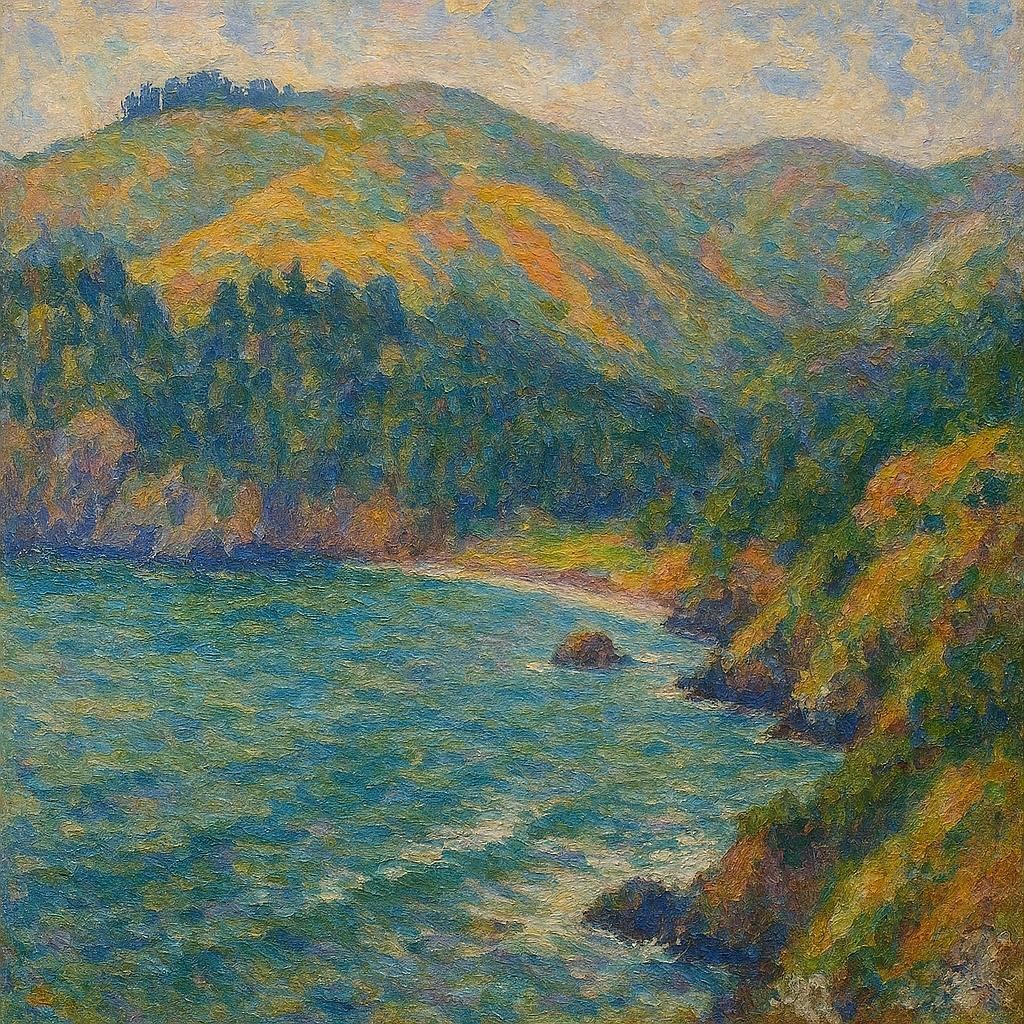
A Beautiful County with a Complicated Admissions Picture
Marin County sits just north of San Francisco, separated from the city by the Golden Gate. It is defined by redwood ridges, open coastline, and one of the highest per capita incomes of any county in the United States. Its high schools consistently send graduates to selective colleges. However, it is also, by almost any honest accounting, one of the most challenging places in California from which to build a distinctive selective college application. The reasons for that are worth understanding before doing anything else.
The Admissions Picture: California’s Crowded Lane
California is the most overrepresented state in the selective college applicant pool. Bay Area students apply in enormous numbers to highly selective institutions. Marin students sit squarely inside that pool. Moreover, they compete not only against each other but against the dense concentration of strong, well-resourced applicants from San Francisco and the East Bay. The broader Bay Area tech corridor adds further pressure. Consequently, Marin students navigate all of it at once.
Marin is also one of only a handful of California counties where more graduating students attend four-year universities than community colleges. As a result, the county produces a disproportionately large pool of four-year applicants relative to its population. Notably, students from Tamalpais, Redwood, Drake, and Terra Linda high schools navigate a competitive local applicant pool before they even reach the national one.
The dominant local anchor is the University of California system. UC Berkeley, UCLA, and UCSB are the default aspirations for many Marin families, and for good reason. However, students with strong profiles often build their entire lists around California campuses. In doing so, they bypass selective schools in other regions where their applications would be both more competitive and more distinctive. Additionally, many families focus heavily on Early Decision schools in the Northeast without broadening their geographic range meaningfully. Both patterns limit strategic options unnecessarily. That said, the solution is not to abandon the UC system but to treat it as one part of a genuinely diverse list.
California students are common at most selective colleges. Standing out requires more than strong grades, high test scores, and a California address. Instead, students need a specific, coherent narrative built through real experience. Moreover, that experience needs to be connected, sustained over time, and honest.
The UC Anchor Problem
For Marin students, the University of California system functions as both a floor and a ceiling. It is a floor in the sense that strong students can usually find a UC that fits them. It is a ceiling in the sense that lists beginning and ending with UCs miss schools that might suit students better. Students interested in environmental science, sustainability, film, visual arts, or marine biology should investigate schools outside California with strong programs in those areas. Early Decision to a school in the Southeast, Midwest, or Pacific Northwest can meaningfully shift a student’s competitive position. Bay Area applicants are far less common in those pools.

What Makes Marin County Genuinely Distinctive
Landscape as Civic Identity
Marin’s landscape is not merely scenic. It is, to an unusual degree, the product of active civic decisions. The county contains more protected open space per capita than almost any other in the country. Point Reyes National Seashore, Muir Woods National Monument, and Mount Tamalpais State Park all encompass significant portions of the county’s land. So does the Golden Gate National Recreation Area and the Marin County Open Space District. Together, these protections cover a remarkable share of the county’s total area. They resulted from specific political fights in the 1960s and 1970s. Conservation advocates pushed back against development pressures that would have transformed the county beyond recognition.
The Dipsea Trail runs from Mill Valley to Stinson Beach. It hosts the oldest trail race in the United States, held annually since 1905. Similarly, mountain biking as a modern sport has its origins on the slopes of Mount Tamalpais in the 1970s. The Lagunitas Creek watershed in west Marin supports the largest remaining wild run of coho salmon in Central California. The species’ survival depends on ongoing restoration efforts. Notably, these are not generic natural amenities. They are specific, contested, and ongoing.
A County Divided by Wealth and Race
Marin is the wealthiest county in the Bay Area, with a median household income exceeding $115,000. It is also, by the most rigorous available analysis, the most racially disparate county in California. In fact, a statewide analysis ranked it first among all 58 California counties for racial disparity. The Canal District of San Rafael holds a stark distinction. The UC Berkeley Othering and Belonging Institute has identified it as the most racially segregated Latino neighborhood in the nine-county Bay Area. Marin City, by contrast, contains the most segregated Black neighborhood in the county.
Approximately 70% of county residents identify as non-Hispanic white. That figure reflects a documented history of redlining, exclusionary zoning, and resistance to affordable housing. A 2021 audit found that the county had failed to comply with fair housing and civil rights laws. It had built only a fraction of the low-income housing required by state mandate. Consequently, the gap between Marin’s environmental commitments and its housing record is one of the county’s defining civic tensions.
For students who have genuinely grappled with these contradictions, this material is real and intellectually rich. Civic engagement, journalism, community advocacy, and sustained attention to local policy are all legitimate paths into it. It belongs in essays written with honesty and care.
The County’s Name and Its History
Marin County is named for Huicmuse, a Coast Miwok leader baptized at Mission Dolores in 1801. The Spanish gave him the name “Marino.” The county name is a shortened version of that. The Coast Miwok people inhabited Marin and southern Sonoma counties for more than 10,000 years before European settlement. Spanish mission expansion, introduced disease, and forced labor shattered Coast Miwok communities within decades of contact. Today, the federally recognized Federated Indians of Graton Rancheria maintains a living presence in the region. It is a federation of Coast Miwok and Southern Pomo members whose federal recognition was restored by Congress in 2000. The Miwok Archeological Preserve of Marin works to preserve and teach Coast Miwok history and culture. So does the Museum of the American Indian in Novato. Both organizations maintain active public programming. Notably, the county itself bears the name of a man whose people were systematically dispossessed by the colonial project that created the institutions doing the naming.
This history belongs to the Coast Miwok and their descendants. It is not a general application asset for all students. Students with Coast Miwok heritage or genuine long-term engagement with these communities may find it authentically central to their stories. However, other students should engage with it as a historical fact about the place they inhabit, with honesty and appropriate humility. In short, the county’s name is a starting point for curiosity, not a credential to claim.

Research and Academic Opportunities
Marin Science Seminar
The Marin Science Seminar (MSS) is a free, community science series. It runs six Wednesday evening sessions per semester at Terra Linda High School’s Innovation Hub in San Rafael. Each session features a working scientist or researcher presenting current work. Furthermore, the series offers structured internships for Marin County students in grades 9–12.
MSS internships are semester-based and competitive. The fall application period opens August 1 each year; the deadline falls in early September, with decisions sent by mid-September. Interns assist with event logistics at all six sessions, arriving at 7 pm and departing after breakdown. The program offers several specialty tracks: Videography (recording, editing, and producing session content), Art and Photography, Science Journalism, and Data Management. Students who complete specialty tracks can build a verifiable portfolio. Additionally, public school students may count their MSS hours toward the MCOE School-to-Career internship credit requirement.
For students interested in STEM, science communication, or media production, MSS is a genuinely accessible and distinctive local program. The speaker roster has included researchers from UCSF, Stanford, UC Berkeley, and NOAA, among others. Notably, students who stay engaged across multiple semesters and build a portfolio through specialty tracks arrive at applications with a verifiable and uncommon credential. They can also speak specifically about the science they encountered. That is a different kind of preparation than most applicants offer.
The Self-Directed Research Path
Marin sits within commuting distance of UCSF, UC Berkeley, San Jose State University, and the Lawrence Berkeley National Laboratory. For students with genuine STEM interest, proactive outreach to faculty or researchers is often the most powerful path. Research areas that connect specifically to Marin’s environmental context include coho salmon recovery on Lagunitas Creek and coastal erosion along the Marin Headlands. Marine mammal health at the Marine Mammal Center and the land-use science behind the county’s open space decisions are two more. In each case, the most compelling applications come from students who pursued these questions before someone handed them a program to join. In turn, that self-direction is what makes the experience credible to admissions readers.
The Marine Mammal Center, located in the Marin Headlands at Fort Cronkhite in Sausalito, is the world’s largest marine mammal hospital. It offers college-level internships in veterinary care, research, and communications. For high school students specifically, however, the Center offers volunteer opportunities and educational programs. Students interested in marine biology or veterinary medicine should contact the Center directly about current high school availability, as programs evolve annually.

Internship and Civic Engagement Opportunities
The Marin County Career Explorer Program
The Marin County Career Explorer Program is an eight-week paid summer internship for local youth ages 15–21, funded by the Marin County Probation Department. The program runs from mid-June through early August. Participants earn $18.50 per hour for up to 25 hours per week. The program begins with a two-week orientation, followed by a six-week placement with a county department, community agency, or public education partner. The deadline is in early May.
The Career Explorer program explicitly targets youth from diverse backgrounds and those who may face barriers to employment or career development. Its primary purpose is workforce access for youth who have faced socioeconomic challenges or other barriers. It is not, therefore, a general merit internship. For students from underrepresented backgrounds in Marin who are interested in public service careers, the Career Explorer program provides substantive, paid experience. It also offers a direct view into local government operations. Furthermore, more than 500 Marin youth have completed the program over its ten-year history.
The MCOE School-to-Career Internship Program
The Marin County Office of Education’s School-to-Career Partnership places public high school juniors and seniors with local employers across fall, spring, and summer sessions. Each session runs eight weeks. Students spend 6–9 hours per week at their placement and receive elective high school credit. Summer participants also attend a career academy at the College of Marin and may earn up to 1.5 transferable college credits.
The program has placed students with employers including Kaiser Permanente, Marin General Hospital, law offices, and county agencies. Most placements are unpaid, though some paid positions exist. Students should contact their school’s College and Career Center to apply.
350Marin and Environmental Advocacy
350Marin is a local climate advocacy organization. It has placed both high school and college-age students in structured internship work on local climate action initiatives. Its summer program has historically focused on college students. However, high school interns participated in 2024, including students from Novato High and San Marin High. Students interested in climate policy or community organizing should contact 350Marin directly about current high school opportunities, as the program varies year to year.
The School-to-Career Network and Beyond
The MCOE School-to-Career network connects Marin students with over 200 local employers, including Autodesk, which has historically participated in the program. Additionally, Marin’s proximity to San Francisco’s tech and creative industries opens doors for motivated students. Direct outreach to organizations in film, environmental nonprofits, architecture, and design is worth pursuing. A student who sends a specific, well-researched inquiry in 10th or 11th grade has a realistic chance of building a meaningful connection.

Building a Competitive Application from Marin County
The Specificity Problem
Marin is a county that can produce strikingly generic applications. The applicant who writes about hiking on Mount Tam or a vague appreciation for “nature” is not distinctive in this pool. Neither is the student who joined a school environmental club without connecting that participation to specific, verifiable action. The county’s conservation and land-use debates offer plenty of material for genuine engagement. Generic participation in them does not. In short, vague engagement with a beautiful place does not constitute a college essay.
By contrast, a student who spent two years as an MSS videography intern has built a verifiable portfolio of science communication content. They can describe specific talks and what they learned from each. That student is in a different category entirely. Similarly, a student who volunteered consistently at the Marine Mammal Center and assisted with animal rehabilitation is in a different category. So is a student who can articulate a coherent understanding of marine mammal health as a measure of ocean ecosystem conditions. The difference is depth and specificity, not activity type.
Write About Place Without Vagueness
The best essays from Marin students render the county’s particular tensions precisely. The contradiction between the county’s celebrated environmental identity and its documented history of exclusionary housing policy is one such tension. The experience of growing up in one of the wealthiest, whitest counties in California is a second tension worth naming. Adjacent to the Bay Area’s most economically precarious and racially segregated neighborhood, Marin presents a study in contrasts. The question of who benefits from open space preservation, and who bears the cost of the land-use restrictions that produce it, is a third.
Furthermore, students who have engaged with any of these questions through journalism or civic advocacy produce essays that are specific, textured, and honest. So do students who have engaged through coursework in environmental studies or history. Admissions readers from outside California notice the difference.
Broaden the College List Deliberately
Many Marin families anchor their lists on UC Berkeley, UCLA, UC Santa Barbara, and a handful of selective northeastern schools. That structure keeps students competing heavily against other California applicants at every institution. Consequently, a broader list should include schools where Marin applicants are uncommon. For most Marin students, that means looking seriously at the Midwest, the Southeast, and the Pacific Northwest.
For students interested in environmental policy or sustainability, Colorado College, University of Vermont, and Middlebury all offer strong programs where California applicants do not dominate. Lewis and Clark and University of Puget Sound are two more. For students with film, animation, or visual effects interests, Emerson College, Chapman University, and Ringling College of Art and Design are natural targets. So is Savannah College of Art and Design. All see far fewer Bay Area applicants than their California peers at CalArts or USC. For students with STEM profiles built through MSS or self-directed research, Case Western Reserve, Worcester Polytechnic Institute, and Rochester Institute of Technology are natural fits. Trinity College in Hartford is another. All see less California competition than the schools most Marin applicants default to. For students with strong humanities profiles developed through engagement with Marin’s civic tensions, Pomona College, Occidental College, Whitman College, and St. Olaf are worth serious attention.
Early Decision to any of these schools, where Marin and Bay Area applicants are genuinely rare, can shift a student’s competitive position substantially.

The Bottom Line
Marin County’s advantages for selective college admissions are real but easily squandered. The landscape, the civic complexity, and the proximity to the Bay Area research corridor all provide genuine material. Students who engage with them seriously have something to work with. By contrast, students who treat them as backdrop do not. However, Marin is one of the most competitive applicant markets in the country. Students who arrive with the same credentials and the same activities as hundreds of their peers gain no advantage from geography. The same list of California schools compounds that problem further. Place only helps when a student has done something specific and real with it. That is true everywhere, but it is especially true in Marin.
In the end, the students who benefit from Marin’s specific character are those who have done something real in its landscape, civic life, or research environment. They write about it with honesty and detail. They have also built college lists that make their Marin background an asset rather than a neutral fact.
If you would like help building an application strategy that puts Marin to work for your student specifically, College Transitions is ready to help. Schedule a consultation and let’s build something that stands apart from the pool.

