
The Oklahoma City Admissions Landscape
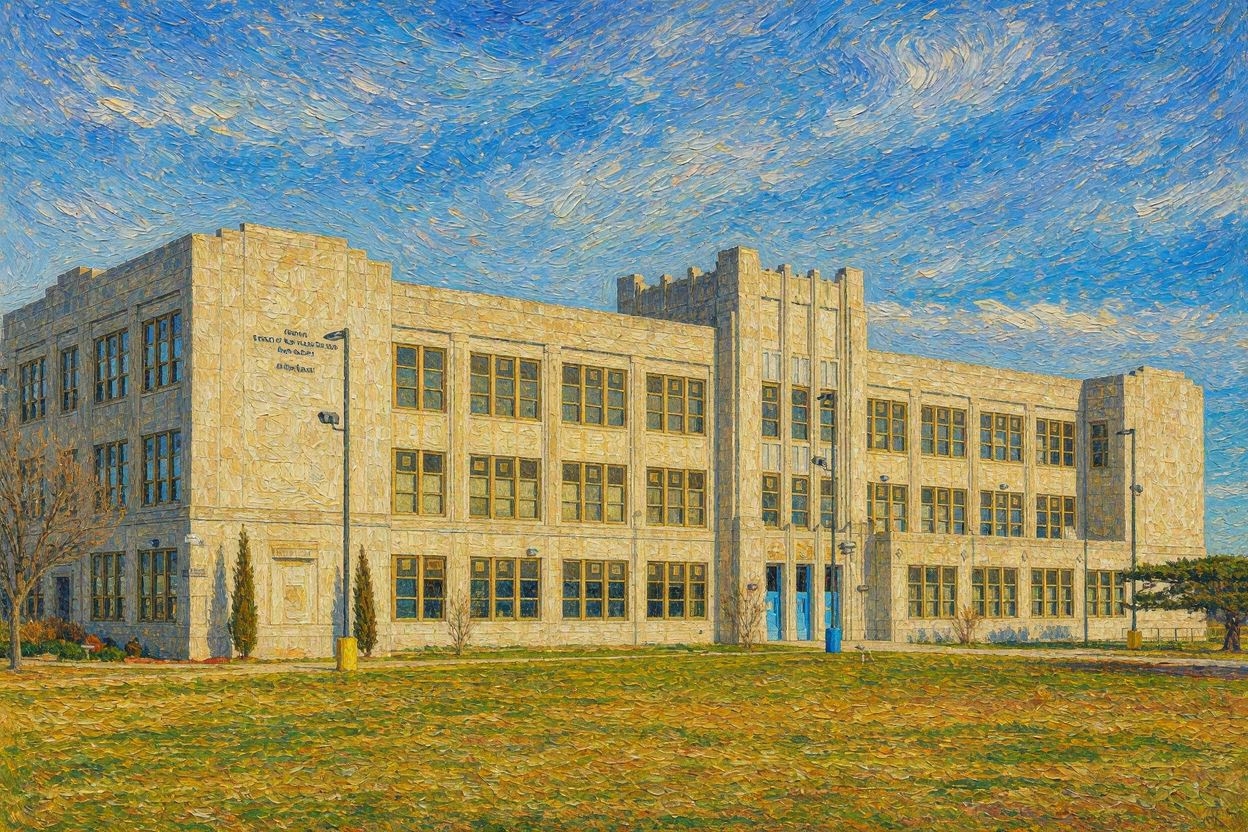
Oklahoma City’s high school landscape rewards students who dig past the obvious resume lines. Classen School of Advanced Studies is the International Baccalaureate magnet at the center of Oklahoma City Public Schools. It currently ranks second among Oklahoma high schools and 339th nationally, according to U.S. News & World Report. Only fellow OKCPS option Dove Science Academy ranks higher in the city. Meanwhile, Harding Charter Preparatory School holds fourth place statewide. The competition stretches well past city limits, too. Deer Creek High School in Edmond, Edmond Santa Fe, Norman North, and Norman High School all post strong Advanced Placement participation rates. Each regularly sends graduates to selective universities. Consequently, a single impressive label rarely separates one applicant from another anymore. Instead, admissions officers look for a story that only a particular corner of Oklahoma could have produced.
Meet Kellan
Kellan found that story literally underfoot. He grew up in Oklahoma City during the 2010s earthquake swarms. Kellan felt tremors that his parents insisted had never rattled their house before. Classen SAS gave him the coursework to chase an explanation, backed by an 83% Advanced Placement participation rate and a 99% graduation rate. By senior year, Kellan had turned a childhood question about shaking ground into an admissions narrative. That narrative centered on geoscience and energy policy. It ultimately earned him early decision admission to Rice University.

Step 1: Choosing a Major Rooted in Home
Kellan settled on geoscience with an energy-systems focus. The choice grew directly out of Oklahoma’s own recent history. Beginning around 2009, wastewater disposal tied to oil and gas production coincided with a sharp rise in the state’s earthquake activity. The activity concentrated in the Anadarko Basin’s SCOOP and STACK plays. Both the Oklahoma Geological Survey and the U.S. Geological Survey later confirmed the connection. Subsequently, the Oklahoma Corporation Commission adopted a regional “traffic light” system. That system limits injection volumes near seismically active zones. For Kellan, this regulatory history was not an abstract case study. It was neighborhood news.
Why This Major Made Sense
- Oklahoma’s induced-seismicity episode is one of the best-documented examples of human activity reshaping local geology anywhere in the country
- The University of Oklahoma’s Mewbourne College of Earth and Energy, home to the state geological survey, sits forty minutes from Kellan’s front door
- Continental Resources, one of the country’s largest independent oil and gas producers, remains headquartered in downtown Oklahoma City, giving Kellan direct access to industry mentors
College Transitions helped Kellan translate that regional context into major-specific language. The team steered him away from a generic petroleum engineering label and toward the geoscience and policy angle that actually excited him.
Step 2: Improving Test Scores Through Focused Practice
Oklahoma administers the ACT statewide as part of its Career and College Readiness Assessment. Kellan’s junior-year school-day test became his baseline, with his first composite score landing at 24. That score was respectable but well below the range Rice and similarly selective programs expect. Working with a tutor the following summer, Kellan concentrated on the science and math sections. Those two areas connected most directly to his intended major. He retested twice and posted a 32 composite by the fall of senior year. That eight-point jump mattered less for its size than for its timing. The score arrived in time to support his early decision file. It also gave reviewers concrete evidence that his STEM interest translated into STEM performance. Notably, Kellan’s science subscore rose even faster than his composite, a detail his counselor highlighted directly in supplemental materials.
Step 3: Deepening Extracurricular Involvement
Kellan helped restart Classen SAS’s dormant Earth Science Club during his sophomore year. He eventually served as its president. Under his leadership, the club organized a field trip to the Oklahoma Geological Survey’s core repository. It also hosted a guest lecture from a University of Oklahoma seismologist. As a result, membership grew from six students to nearly thirty within two years. Kellan attributed the growth to timing the club’s relaunch around the same statewide earthquake headlines that had first caught his own attention. Furthermore, he used the club as a recruiting ground for younger students. That approach ensured the group would outlast his own graduation. College Transitions encouraged Kellan to document club growth with specific numbers rather than general enthusiasm. Selective admissions readers respond to measurable impact far more than to adjectives.

Step 4: Adding an Independent Research Project
Kellan’s signature research project analyzed publicly available earthquake catalogs from the U.S. Geological Survey. He paired that data with disposal-well volume records the Oklahoma Corporation Commission makes public online. Working after school across his junior spring, he built a spreadsheet model. The model compared monthly injection volumes in several SCOOP and STACK counties against recorded seismicity rates in those same counties. He was looking for the lag pattern that Oklahoma Geological Survey researchers had previously described in published studies. Overall, his findings largely echoed existing academic literature rather than breaking new scientific ground. Still, the process taught him to work with real regulatory datasets, a skill few high schoolers can claim. Above all, the project gave Kellan primary-source evidence for his personal statement.
Research Project Scope
- Compiled county-level disposal-well injection volumes from Oklahoma Corporation Commission public filings spanning a five-year window
- Cross-referenced those volumes against the U.S. Geological Survey’s earthquake catalog for the same counties and years
- Built a spreadsheet model charting the correlation, then compared results against published Oklahoma Geological Survey findings
- Presented the completed project to his Earth Science Club before submitting it for competition
Step 5: Entering Competitions to Validate the Work
Kellan submitted his research to the Oklahoma State Science and Engineering Fair. That competition serves as the state’s primary feeder into the International Science and Engineering Fair. First, his project advanced past the regional round. It placed among the top entries in the Earth and environmental sciences category at state finals. The recognition mattered less for the trophy than for the outside validation. Judges with actual geoscience backgrounds confirmed that his methodology reflected genuine understanding rather than a polished summary of other people’s work. That distinction became a recurring theme in his teacher recommendations. Those letters emphasized independent thinking over guided achievement.
Step 6: Writing a Personal Statement Grounded in Place
Kellan’s personal statement skipped the dramatic hook. It opened with a plain memory instead: sitting at dinner when a 4.0-magnitude earthquake rattled dishes off a shelf. His grandmother remarked that Oklahoma “didn’t used to do this.” From there, the essay traced how that single sentence sent him toward public data. He followed the trail through the Oklahoma Geological Survey and the Corporation Commission’s regulatory filings, eventually landing at his own research project. Throughout, the essay avoided technical jargon in favor of concrete detail. It let the science speak through observation rather than vocabulary. According to feedback Kellan later received, admissions readers appreciated that the essay never overstated his findings. Instead, it treated an ongoing scientific and regulatory debate with appropriate humility. College Transitions pushed Kellan through several drafts specifically to strip out language that oversold his conclusions.
Step 7: Using Early Action and Early Decision Strategically
Kellan applied early action to two in-state options. One was the University of Oklahoma’s Mewbourne School of Petroleum and Geological Engineering. The other was the University of Tulsa’s McDougall School of Petroleum Engineering, ranked tenth nationally among undergraduate petroleum engineering programs by U.S. News. Both offers arrived by mid-December. He also applied early decision to Rice University. Its Earth, Environmental and Planetary Sciences department offered exactly the geoscience specialization he wanted, alongside proximity to Houston’s energy industry. Rice admitted Kellan in December.
Why Kellan’s Strategy Worked
- His major choice grew from a genuine local experience rather than a generic STEM interest, which made every other application element easier to write
- Test score improvement targeted the subsections most relevant to his intended field
- His research project used real public datasets rather than a simulated or hypothetical scenario, giving reviewers something concrete to evaluate
- Competition results provided outside validation of a project that could otherwise have read as self-directed enthusiasm
What This Means for Oklahoma City Students
Kellan’s path shows that strong Oklahoma City applicants do not need to manufacture a national profile. They do not need it to compete for selective admission. Northwest Classen, Southeast, and Capitol Hill High Schools are Classen SAS’s sister campuses within Oklahoma City Public Schools. That district offers meaningful research access through nearby state institutions. This holds true even when a school’s own U.S. News ranking trails the city’s top performers. They can reach the same public datasets, university seismologists, and regional science fairs that shaped Kellan’s application. Ultimately, the strategy that worked for him comes down to three repeatable moves.
- Identify a genuinely local phenomenon, industry, or institution that can be used to support a student’s major choice and interests
- Turn to public government or university data when a formal internship or lab placement is not available, since a self-directed project built on real records can carry the same weight
- Reach out directly to nearby university researchers or state agencies, since many are more accessible to motivated high schoolers than families assume
College Transitions works with Oklahoma City students throughout this process. The team helps students locate the local hook that turns a good application into a distinctive one.

