
The Seattle Admissions Landscape
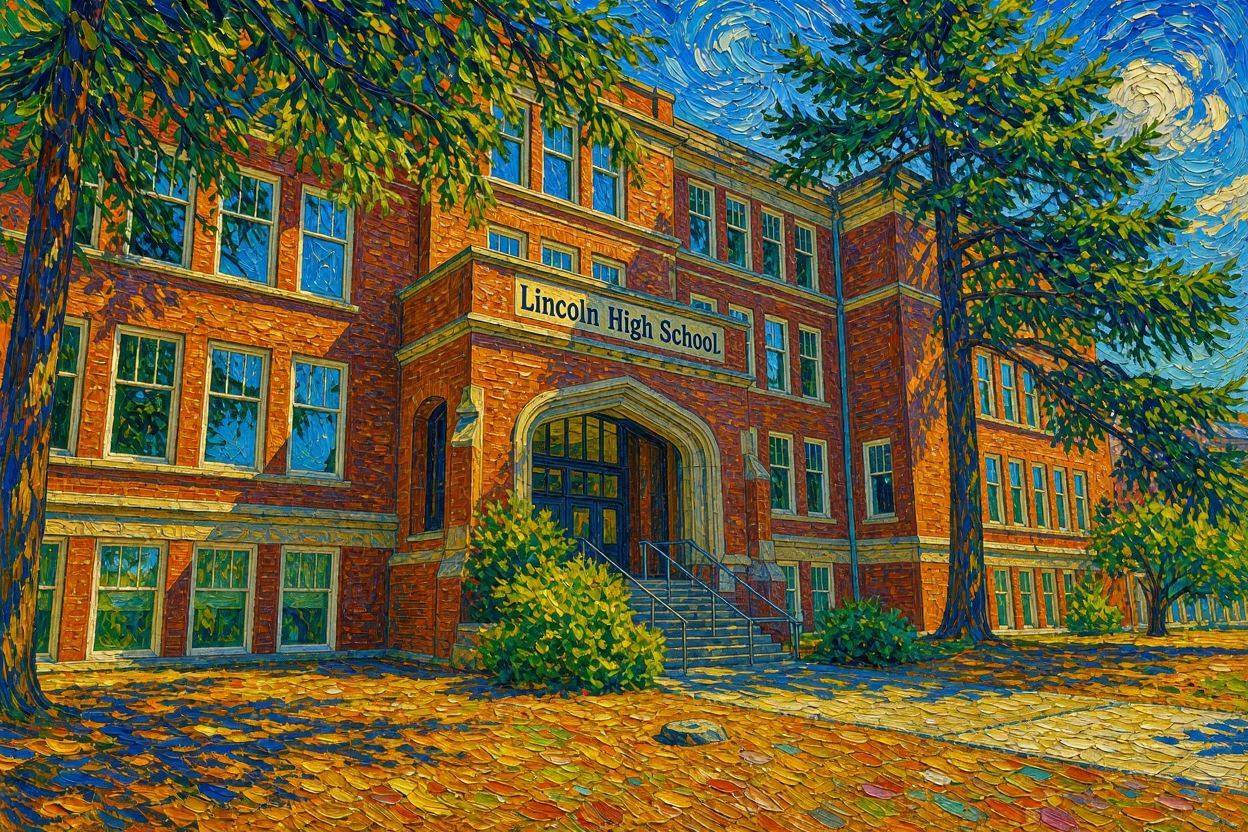
Seattle families compete in one of the most academically dense metro areas on the West Coast. Nikola Tesla STEM High School and Raisbeck Aviation High School draw the most national attention. However, traditional neighborhood schools also produce standout applicants. Lincoln High School, Seattle Public Schools’ oldest campus, ranks fifth in Washington according to U.S. News & World Report. It enrolls roughly 1,700 students in the Wallingford neighborhood. Nearby Roosevelt, Ballard, and Garfield High Schools round out the district’s strongest academic performers. Lincoln’s 84% AP participation rate and 98% graduation rate place it among the region’s most competitive comprehensive high schools. Consequently, students there face pressure to differentiate themselves well beyond grades and test scores. Importantly, Seattle’s applicant pool skews heavily toward computer science and business. That pattern means admissions officers actively look for something else. This gap created an opening for one Lincoln student to build an application around a different subject entirely.
Meet Annika: A Wallingford Student with Water on Her Mind
Annika grew up three blocks from the Lake Washington Ship Canal. The narrow waterway separates her Wallingford neighborhood from Fremont and Queen Anne. For years, construction crews built the Ship Canal Water Quality Project nearby, an underground tunnel meant to stop sewage and stormwater from spilling into the canal. She walked past the work site daily on her way to Lincoln High School. Instead of tuning it out, she started asking questions about where the water actually went. That curiosity, paired with strong grades in biology and chemistry, eventually pointed her toward environmental engineering. Below are the seven strategic steps that shaped her path to selective admission.
1. Choosing a Major Rooted in Her Own Backyard
Annika settled on environmental engineering during sophomore year. A class project on Puget Sound pollution led her to research the Ship Canal Water Quality Project herself. Notably, she learned that combined sewer overflows near her neighborhood had historically dumped untreated waste into water she passed every day. That realization felt personal rather than abstract. Furthermore, it gave her a major with an obvious throughline: every subsequent activity could tie back to urban water systems. Her counselor later noted that this specificity distinguished her essays from generic environmental statements. Her interest formed independently, on foot, watching cranes lift concrete near Gas Works Park.
2. Raising Her SAT Score Through Targeted Practice
Annika took a diagnostic SAT in the fall of junior year and scored 1310. She identified reading pace as her weakest area. Consequently, she enrolled in a structured eight-week prep course focused on timed comprehension drills. Additionally, she retook practice math sections weekly, targeting careless errors rather than content gaps. By the following spring, her score climbed to 1500. That jump reflected disciplined revision rather than raw test aptitude. She treated the SAT like a lab report: identify the error pattern, isolate the variable, and retest. Above all, that approach paid off in stronger confidence during her college interviews.
3. Deepening Extracurriculars Around Urban Water Systems
Rather than joining unrelated clubs, Annika concentrated her time on activities tied to her major. She revived Lincoln’s dormant Environmental Science Club and grew it to 30 regular members within a year. The club partnered with the University of Washington’s Green Futures Lab, which studies floating wetlands installed along the Ship Canal. Members helped monitor plant growth at a Lake Union site during monthly volunteer sessions. Additionally, Annika organized a neighborhood storm drain campaign with Seattle Public Utilities. Volunteers painted “no dumping, drains to Puget Sound” stencils near 200 drains. Admissions officers could see a coherent thread connecting every listed activity.

4. Adding an Independent Research Component
During junior summer, Annika designed her own water quality monitoring project. She tested dissolved oxygen, turbidity, and bacterial indicators at three outfall sites along the Ship Canal. Subsequently, she compared her readings against historical data published by Seattle Public Utilities. This comparison helped her track whether tunnel construction phases correlated with measurable changes. A UW graduate student in the School of Aquatic and Fishery Sciences reviewed her methodology. He also offered feedback on her sampling protocol. The project took eight weeks of sampling, followed by two weeks of analysis and write-up. Her application carried a research credential that felt earned rather than purchased.
5. Entering Regional Science Competitions
Annika submitted her water quality findings to the Washington State Science and Engineering Fair. She placed second in the environmental engineering category. Subsequently, she adapted the project for the King County Science and Engineering Fair. Her poster traced pollutant levels against tunnel construction milestones. Judges praised her use of public municipal data alongside her own field samples. Instead of treating the competition as a one-time event, she used judge feedback to refine her methodology. Above all, this iterative process demonstrated the intellectual growth that selective engineering programs want to see over time.
6. Writing a Personal Statement About Watching the Water Change
Her personal statement opened with a memory of watching construction cranes from her bedroom window. It then traced how that view slowly turned into a genuine research question. Notably, she avoided sweeping claims about saving the planet. Instead, she focused on one specific canal and one specific set of readings she collected herself. Her essay described the moment she matched a spike in bacterial counts to a documented rainstorm. That small discovery, she wrote, hooked her permanently. Admissions readers responded to the essay’s restraint, since nothing in it oversold her impact. Instead, it showed patient, local, verifiable curiosity, which read as more mature than dramatic claims of global change.
7. Using Early Action and Early Decision Strategically
Annika applied Early Action to the University of Michigan and Northeastern University. Both schools offer strong environmental engineering programs with flexible, non-binding early rounds. She used those applications to test her essays before finalizing her top choice. Subsequently, she applied Early Decision to Cornell University, whose Biological and Environmental Engineering program matched her research interests precisely. Cornell’s binding commitment signaled genuine intent. Admissions officers weigh that signal heavily in a program that receives far more qualified applicants than it can admit. Michigan and Northeastern admitted her through Early Action in December. Cornell followed with an Early Decision acceptance that same month.
Why Annika’s Strategy Worked
- A hyper-local major grounded in a specific waterway, not a generic environmental interest.
- Independent research with real data, reviewed by a graduate student rather than self-reported.
- Extracurriculars that all connected to the same throughline, avoiding a scattered resume.
- Competition results used as revision fuel rather than a final destination.
- An ED choice at Cornell that matched her documented research interest exactly.
- What This Means for Seattle Families
Annika’s path illustrates a broader lesson for students at Lincoln, Roosevelt, Ballard, Garfield, and other strong Seattle Public Schools campuses. A hyper-specific, place-based interest often carries more weight than a broad, safe one. Selective programs increasingly look for applicants who can point to something real they built, created, or contributed to. A list of impressive-sounding but disconnected credentials rarely stands out in comparison. Here is what this means practically for Seattle applicants.
- Build a narrative around something genuinely local, whether a waterway, a neighborhood issue, a cultural tradition, or a civic project already underway nearby.
- Seek out mentors and practitioners in the field, even informal ones, rather than only paid summer programs.
- Use competitions, showcases, or public exhibitions as a revision tool, not merely a credential line.
- Choose Early Decision only when a program’s offerings match documented interests, not just prestige.
College Transitions works with families across Seattle Public Schools to identify local resources worth anchoring an application around. That list might include university partnerships, city or neighborhood organizations, and community groups tied to a student’s genuine interests. An experienced advisor can help students at Lincoln and beyond turn that kind of place-based interest into a coherent, differentiated application.

