The Somerset County Admissions Landscape
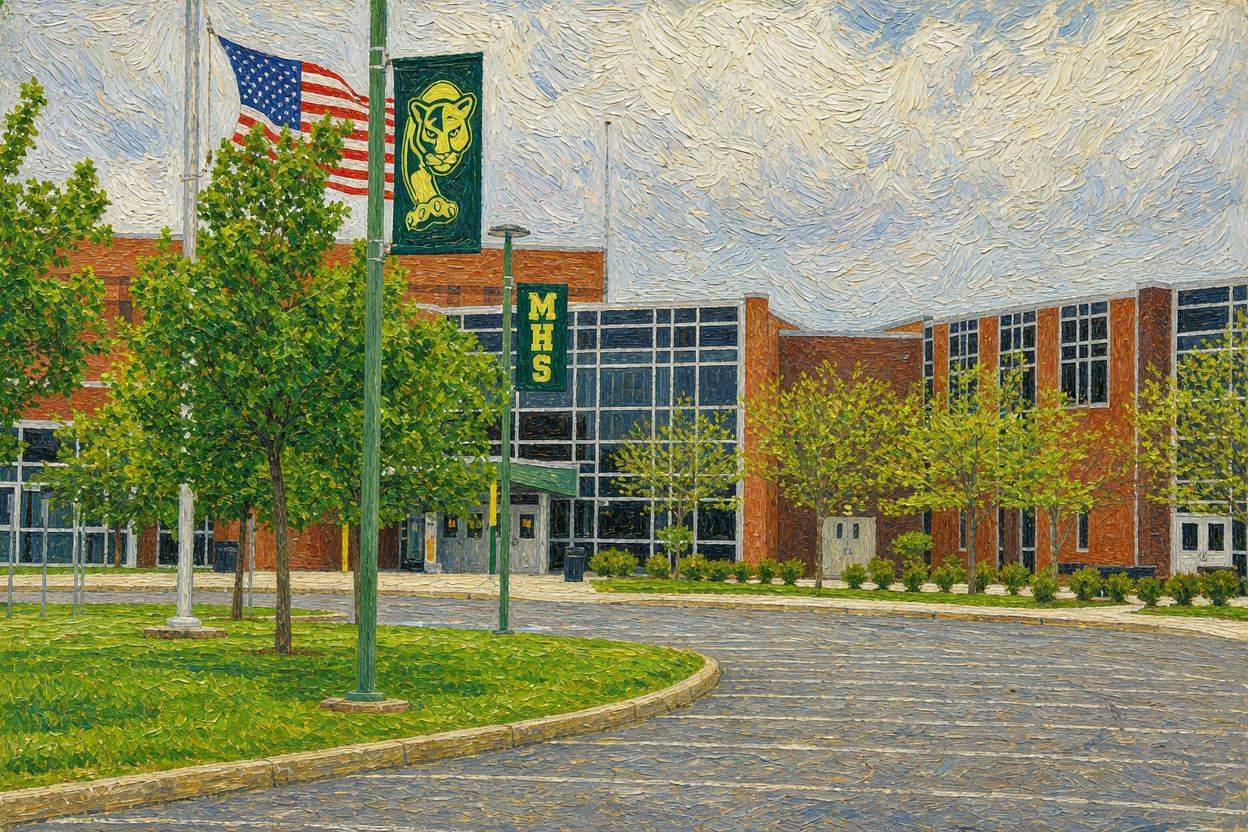
Somerset County families often assume the county functions as a single competitive market. However, it does not. Montgomery High School in Skillman anchors one end of that cluster. Ridge High School in Basking Ridge and Bernards High School in Bernardsville anchor the other. Bridgewater-Raritan, Hillsborough, and Watchung Hills Regional add further depth. Together, these schools give the county one of the densest concentrations of high-performing public options in New Jersey. Montgomery High School is the lone comprehensive public high school in Montgomery Township. It ranks 26th in New Jersey and 464th nationally, according to U.S. News & World Report, with an AP participation rate near 67%. Consequently, admissions officers already recognize the school’s transcript patterns and grading rigor. For families new to the process, that familiarity cuts both ways. Strong grades alone rarely separate one Montgomery applicant from another. Instead, what increasingly separates them is a clearly defined academic identity, built early and pursued through senior year.
Meet Rowan: A Montgomery High School Success Story
Rowan grew up a few miles from Sourland Mountain Preserve. The 3,025-acre forest straddles Montgomery Township and neighboring Hillsborough Township. Rowan’s family hiked its ridgeline trails most weekends. By ninth grade, Rowan had noticed something troubling. Wide stretches of forest floor held almost no young trees beneath the canopy. That observation, rather than a single class, became the starting point for four years of serious work in forest ecology. Notably, Rowan’s story shows how a first-hand observation can grow into a differentiated major and a defensible research project. Above all, it grew into a strong admissions narrative built on genuine expertise. The seven moves below trace exactly how that early observation became a fully built application, starting with the major itself.

1. Choosing a Differentiated Major
Rowan settled on forest ecology and conservation biology. The major was distinct enough to signal real direction without narrowing options too early. Instead of describing a general interest in “the environment,” Rowan’s applications named a specific problem. That problem was regeneration failure caused by deer overbrowsing and invasive insect damage in New Jersey’s largest contiguous forest.
Why This Major Made Sense
- Sourland Mountain sits directly in Rowan’s backyard, giving daily access no distant applicant could replicate
- The Sourland Conservancy’s active forest restoration work provided a real organization studying the same problem
- The major connected cleanly to biology, statistics, and environmental science coursework already on Rowan’s transcript
2. Strengthening Standardized Test Scores
Rowan treated test prep the same way Rowan treated fieldwork: methodically, and on a schedule. Rowan’s first SAT attempt, in the fall of junior year, produced a 1310. Targeted prep followed, along with a second sitting that spring. The score rose to 1490. Importantly, the improvement mattered less as a number than as evidence that Rowan followed through on a plan.
3. Deepening Extracurricular Involvement
Rowan joined Montgomery High School’s Environmental Club as a freshman and became co-president by junior year. Under Rowan’s leadership, the club shifted from general awareness events toward hands-on habitat work. Additionally, Rowan volunteered at Sourland Conservancy tree-planting events at Rock Mill Preserve in Skillman and Folusiak Preserve in Montgomery Township. Across two growing seasons, Rowan logged over 80 hours. Rowan returned to the same plots repeatedly and began tracking which seedlings survived.

4. Adding an Independent Research Project
That informal tracking became a formal research project by junior spring. Rowan compared seedling survival inside deer-exclosure fencing, installed through the Sourland Conservancy’s restoration program, against unprotected control plots nearby.
Research Project Scope
- Monitored 12 planted plots across two Sourland Conservancy restoration sites over one growing season
- Measured browse damage, invasive shrub cover, and seedling height at monthly intervals
- Presented findings to Sourland Conservancy stewardship staff, who used the browse-damage data in planning future plantings
Above all, the project gave Rowan something most applicants lack. It produced original data tied to a real conservation decision, not a simulated classroom exercise.
5. Entering a Statewide Competition
Rowan’s advisor encouraged entry into the New Jersey Envirothon. The statewide competition tests teams in grades 9 through 12 on forestry, soils, wildlife, and aquatic ecology. Rowan led forestry-station preparation for Montgomery’s team, and the team advanced to the state finals during Rowan’s senior year. Notably, Rowan’s forestry knowledge came directly from the Sourland fieldwork rather than a textbook alone. That showed clearly when Rowan discussed local tree-mortality patterns during the judged rounds.
6. Writing a Personal Statement Rooted in Place
Rowan’s personal statement opened with a walk through a stand of dying ash trees. The trail Rowan described cuts through Sourland Mountain Preserve. From there, the essay moved through Rowan’s frustration at watching a familiar landscape change. It then turned to the discipline of counting seedlings, plot by plot. Importantly, the essay never claimed to have solved the forest’s problems. Instead, it framed Rowan as someone learning to ask better questions about a place he actually knew.
7. Applying EA and ED Strategically
Rowan applied Early Action to Penn State’s Ecosystem Science and Management program. Additionally, Rowan applied EA to the University of Delaware’s Wildlife Ecology and Conservation major. Both schools sent acceptances by mid-December. Rowan also applied Early Decision to the University of Vermont’s Rubenstein School of Environment and Natural Resources. The program is built specifically around the applied forestry and conservation work Rowan had already been doing. Therefore, the ED application let Rowan signal genuine first-choice commitment to a program that valued exactly the field-based experience Rowan could document.
Why Rowan’s Strategy Worked
- The major, research, competition, and essay all pointed back to the same specific place and problem
- Two years of fieldwork produced real data, not just volunteer hours listed on an activities sheet
- The ED choice matched a program known for applied natural resources training rather than a generically prestigious name
- Test score improvement supported, but did not have to carry, an already distinctive application

What This Means for Somerset County Families
Rowan’s path offers a useful lesson for families at Montgomery, Ridge, Bernards, Bridgewater-Raritan, and Hillsborough alike. A strong transcript opens doors. However, a specific, place-rooted academic identity is often what gets an application read closely. Families weighing a similar strategy should keep a few things in mind.
- Local access matters more than novelty; a nearby organization, site, or resource can outweigh a more “impressive” but distant opportunity
- Research does not require a university lab, since community-based or self-directed work can produce equally rigorous data
- A single differentiated interest, pursued consistently, tends to read more convincingly than a broad list of unrelated activities
- Test scores still matter, but they work best as supporting evidence rather than the centerpiece of an application
College Transitions works with Somerset County families throughout this process. The team helps students identify the local opportunities, research pathways, and application strategies that fit their particular interests and goals.