The Competitive Landscape in Tallahassee
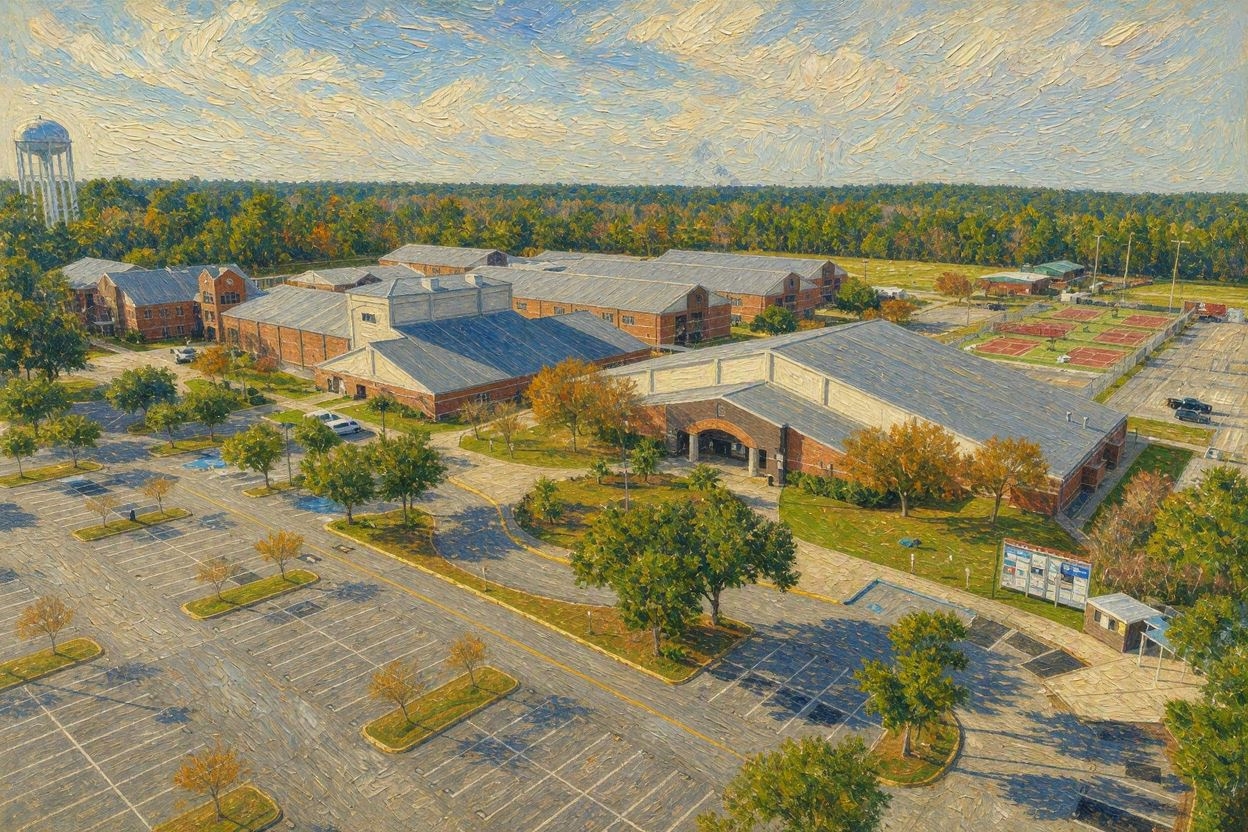
Tallahassee occupies an unusual place in Florida’s admissions landscape. Lawton Chiles High School, Leon High School, Lincoln High School, and the Florida State University Developmental Research School (FSUS) all compete for the region’s strongest applicants. None of them face the sprawling, magnet-heavy competition found in Miami-Dade or Orange County. According to U.S. News & World Report, Lawton Chiles ranks 67th among Florida’s public high schools. Notably, 67% of its seniors complete at least one AP course, and the school posts a 99% graduation rate. Importantly, Tallahassee’s real distinguishing feature is not test-score density but its proximity to power. The Florida Capitol, the Florida Legislature, and two research universities all sit within a few miles of the city’s public high schools. Consequently, students here have direct access to the machinery of state government. That access became the foundation of one student’s path to selective public policy programs.
Meet Harper
Harper grew up near Tallahassee’s Midtown, close enough to the Capitol that she could see its twin towers from her bus stop most mornings. Her mother worked for several years as a legislative committee staffer, and family dinners often turned into informal breakdowns of that week’s budget hearings. By middle school, Harper had started tagging along to public meetings just to watch how numbers turned into policy. That early exposure became the throughline for everything she built in high school.

1. Choosing a Major: Quantitative Public Policy
Harper, a junior at Lawton Chiles High School, began ninth grade assuming she would study political science in a traditional sense. However, a sophomore-year economics class reframed her thinking. She became fascinated not by campaign rhetoric but by the budget spreadsheets that determined which Florida schools received new funding. Harper decided to pursue quantitative public policy instead, a field that blends statistics, economics, and government. Above all, she wanted to measure policy’s effects on real communities rather than debate it in the abstract. Subsequently, that decision guided nearly every choice she made for the rest of high school.
Why This Major Made Sense
- Tallahassee is the seat of Florida’s state government, giving Harper direct access to legislative staff and public budget data
- Florida State University’s Askew School of Public Administration and Policy sits minutes from her high school
- The major connected her math coursework to a subject she could study firsthand rather than only in textbooks
2. Improving Test Scores
Harper’s early SAT practice scores sat at an unremarkable level for her target schools. She earned a 1290 on her first official attempt during sophomore spring. That score reflected strong reading skills but inconsistent math performance. She enrolled in a structured Saturday math program at her school. Additionally, she began working weekly through official College Board practice tests. From there, her score climbed steadily. By fall of junior year, she posted a 1470. Notably, nearly all of the gain came from the math section. Importantly, her practice with data interpretation questions paid direct dividends, given her policy-analysis ambitions.
3. Deepening Extracurriculars
Rather than joining every club available, Harper built a narrow, deliberate list of activities. She attended Florida Girls State, a weeklong mock-government program the American Legion Auxiliary holds each June on Florida State University’s campus. There, delegates elected her to a statewide committee position. She also founded a Model State Government club at Lawton Chiles. The club recruited classmates to simulate legislative committee hearings using real bills from the current session. Furthermore, she volunteered with the League of Women Voters of Tallahassee, helping compile nonpartisan summaries of local ballot measures. Ultimately, each activity reinforced the same underlying interest: how policy gets written, debated, and funded.
4. Adding Research
Harper’s research grew directly out of her Tallahassee address. Through a family connection, she secured a summer internship with the Florida Legislature’s Office of Program Policy Analysis and Government Accountability (OPPAGA). OPPAGA is the nonpartisan office that evaluates state programs for lawmakers. Under a staff analyst’s supervision, she built a regression model. It examined how Florida’s per-pupil education funding formula related to graduation outcomes across several counties. The project required her to request public budget datasets and clean years of inconsistent reporting formats. She then had to translate statistical output into plain language a legislator could use. Above all, the experience taught her that good policy research depends as much on careful data handling as on subject-matter knowledge.
Research Project Scope
- Analyzed five years of Florida Education Finance Program (FEFP) funding data across ten counties
- Built a regression model linking per-pupil funding levels to graduation rate changes
- Presented findings to OPPAGA staff analysts in a written policy brief
5. Entering Competitions
Harper’s Model State Government club became the training ground for a larger commitment. She joined her school’s team for We the People: The Citizen and the Constitution, a national competition in which student teams argue constitutional questions before judges. Subsequently, her team advanced from the school round to the Florida state competition. There, they placed among the top scoring units statewide. The competition sharpened skills she had already been building through her OPPAGA work. Above all, it strengthened her ability to defend a policy position with evidence rather than assertion. The experience reinforced her broader academic direction instead of distracting from it.
6. Writing a Personal Statement
Harper’s personal statement opened with a specific memory. She recalled walking past the Florida Capitol’s twin towers on a school field trip. For the first time, she wondered who actually decided how much money her school received each year. From there, she traced her path from that question to her OPPAGA internship. She described the moment she first saw her own regression output cited, in simplified form, in a legislative staff memo. The essay avoided abstract claims about changing the world and stayed close to specific numbers, specific meetings, and specific frustrations with incomplete datasets.
7. Using EA and ED Strategically
Harper applied Early Action to two programs known for rigorous, data-driven policy training. One was the University of Georgia’s School of Public and International Affairs. The other was Indiana University’s O’Neill School of Public and Environmental Affairs. She also applied Early Decision to Duke University’s Sanford School of Public Policy, her clear first choice. Duke’s emphasis on quantitative methods and its Washington-based internship network made it a natural fit. She was admitted to both EA programs in December, and her Duke acceptance came in mid-December, closing her process before regular decision deadlines even opened.
Why Harper’s Strategy Worked
- Every application reinforced a single, well-documented interest rather than a scattered profile
- Her OPPAGA research gave admissions committees concrete evidence of independent analytical work
- Every extracurricular, from Florida Girls State to Model State Government, reinforced the same policy-analytics interest

What This Means for Tallahassee Families
Harper’s path offers a broader lesson for families at Leon High School, Lincoln High School, James Rickards High School, and FSUS. A differentiated major does not require a specialized magnet program. Instead, it requires noticing what a specific place makes available and using it deliberately. Tallahassee families should consider the following:
- Identify a local institution, agency, or industry unique to the region and explore internship or shadowing opportunities early
- Choose one or two extracurriculars that reinforce a single academic interest rather than a long, unfocused list
- Treat research projects as evidence of independent thinking, not simply a resume line
- Align EA and ED choices around programs that genuinely fit the demonstrated interest, not just institutional prestige
College Transitions works with students throughout Leon County to identify these place-based opportunities and to build application strategies around them well before senior year begins.