
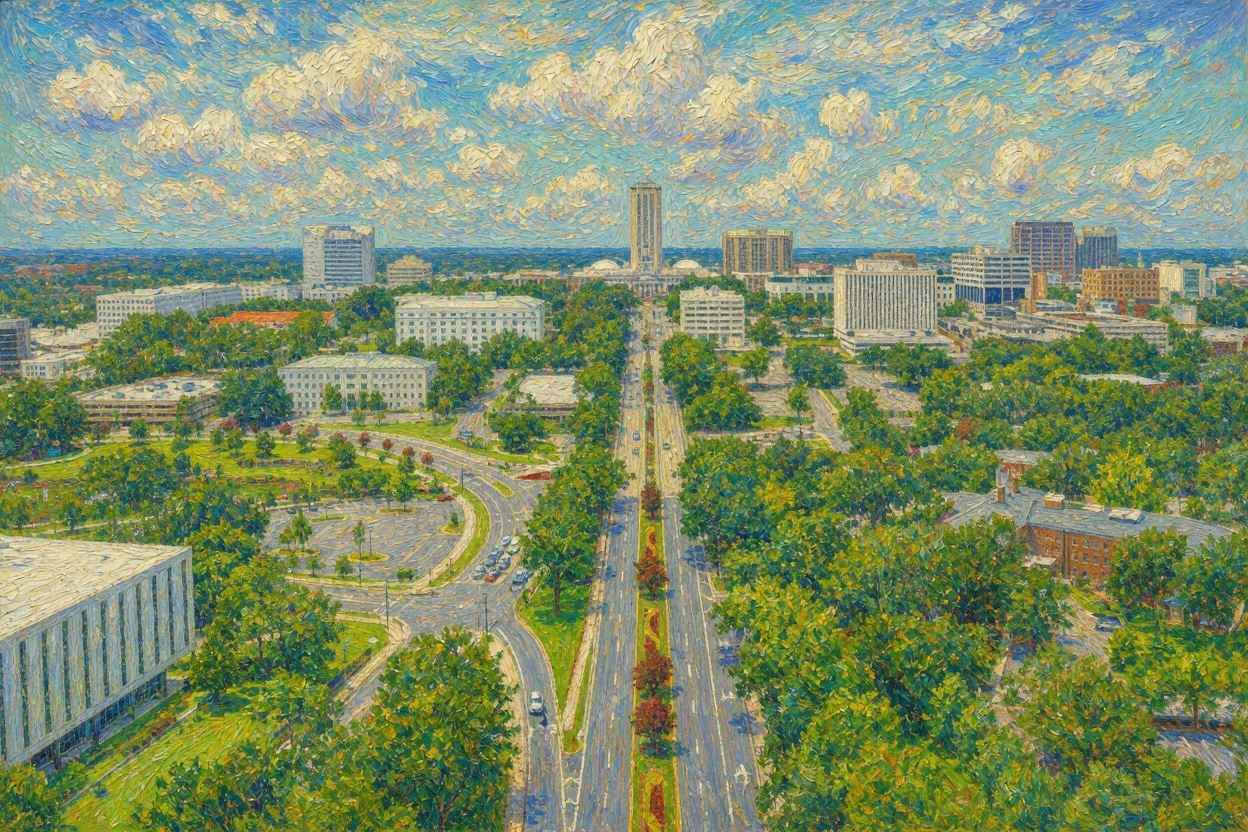
Tallahassee occupies an unusual spot on Florida’s education map. It is the state capital, a college town, and the seat of Leon County Schools. That combination shapes college admissions here in ways a beach town or a Miami suburb cannot replicate. Families weighing whether Tallahassee is a good place for college admissions should understand both what the city offers and where it falls short.
The public high school landscape centers on Leon County Schools. The district enrolls roughly 30,000 students. Its 14 campuses span comprehensive, magnet, and alternative models. Lawton Chiles High School anchors the top of the pack academically. Florida State University School, a K-12 charter run through FSU’s College of Education, follows closely behind. Leon High School, founded in 1831, is the oldest public high school in Florida, and it still draws strong enrollment from the city’s core neighborhoods.
Beyond the traditional zoned schools, Tallahassee offers alternative public models. SAIL High School runs on a self-directed, project-based structure with an enrollment of roughly 350 students. James Rickards High School recently launched an International Baccalaureate program, which adds rigor to a campus that has historically served a higher-need population. On the private side, Maclay School and North Florida Christian round out the independent options.
Top High Schools in the Tallahassee Area
The table below compares the leading high schools across Leon and the surrounding Big Bend counties. Rankings come from the most recent U.S. News & World Report cycle.
| School | FL Rank | National Rank | AP Rate |
|---|---|---|---|
| Lawton Chiles High School | #76 | #1,184 | 67% |
| Florida State University School | #97 | #1,423 | 64% |
| SAIL High School | #177 | #2,801 | 43% |
| Leon High School | #199 | #3,171 | 58% |
| Lincoln High School | #218 | #3,441 | 73% |
| James Rickards High School | #236 | #3,727 | 100% |
| Wakulla High School | #299 | #5,193 | 37% |
| Amos P. Godby High School | #419 | #11,649 | 77% |
| Florida A&M University Developmental Research School | #498 | #10,735 | — |
The Case for Tallahassee
Tallahassee’s biggest structural advantage is obvious on a map: three institutions of higher education sit inside the city limits. Florida State University, Florida A&M University, and Tallahassee State College give local students unusual access.
TSC’s dual enrollment program is genuinely free. Leon County students pay no tuition, fees, or textbook costs for courses taken on campus or online. Consequently, the credits transfer directly into a college transcript. That arrangement lets a motivated junior or senior arrive at a selective college with a semester or two of coursework already finished.
FSU adds another layer through the National High Magnetic Field Laboratory, home to the world’s strongest magnets. Its Center for Integrating Research and Learning places a handful of local students in research internships each year. The lab also opens its doors to thousands of K-12 students through classroom outreach and an annual public open house. A Tallahassee student with a genuine interest in physics or materials science has a research pathway that peers in most cities would need to travel for.
The city’s role as the seat of state government adds a civic dimension few other markets offer. Students can watch the legislative process unfold each spring. Additionally, internships tied to state agencies and advocacy organizations are a realistic option for juniors and seniors who plan ahead.
The Honest Challenges
Tallahassee’s public schools show a wide performance gap. Chiles and Leon post strong state assessment scores and healthy AP participation. Rickards and Godby, by contrast, lag well behind on the same measures. As a result, a student’s specific zoned school matters more here than in a district with more uniform quality across its campuses.
National visibility is another limitation. Even Chiles, the strongest performer in the Big Bend region, sits outside the national top 1,000 in the U.S. News rankings. It trails well behind Florida’s most competitive magnet programs in Miami-Dade, Sarasota, and Palm Beach counties. Admissions officers at highly selective colleges simply read fewer applications from Tallahassee than from those larger metro pipelines. In other words, a Tallahassee applicant has less built-in name recognition to lean on.
Finally, Florida’s generous Bright Futures scholarship creates a gravitational pull toward in-state public universities. That is a fine outcome for many families. At the same time, it can narrow a student’s college list before they have seriously explored options beyond Florida. Students aiming for the most selective national colleges need to counteract that pull on purpose.
Building a Strategy from Tallahassee
Course rigor should be the first priority. Chiles, Leon, and FSUS all offer a reasonably deep AP catalog. Rickards’ new IB program adds a second rigorous track for students who want it. Whichever track a student chooses, admissions readers want to see them taking the most demanding courses their school actually offers, not just a comfortable handful of electives.
Testing strategy in Florida tends to favor the SAT, though the ACT remains a solid option for students who test better under its format. Either way, a first attempt in the fall of junior year leaves room for a second sitting before early applications are due.
The college essay carries extra weight for Tallahassee applicants. This is because their high school is less familiar to admissions offices outside the Southeast. A concrete, well-told story about a MagLab internship, a Capitol job shadow, or a TSC dual enrollment course can help explain who a student is and what they have pursued.
Early Decision deserves serious consideration for students with a clear first-choice school. It can meaningfully improve admit odds at need-blind private colleges. At the same time, families should build a national list that extends beyond the Florida public system Bright Futures makes so financially attractive. Starting that research in sophomore year, rather than waiting until junior fall, gives students time to visit campuses and identify genuine fits before deadlines arrive.
The Takeaway
Tallahassee is a good place for college admissions for the right kind of student. It rewards a student willing to build their own rigor and research opportunities, rather than one who leans on a single elite feeder school to do that work for them. The city’s university access, particularly the free TSC dual enrollment pathway and FSU’s research infrastructure, gives motivated students real tools. Few mid-sized cities can offer the same. On the other hand, the tradeoff is a public school system with real gaps between its strongest and weakest campuses. It also comes with a national profile that requires a more deliberate essay and list-building strategy to overcome.
Families navigating these decisions do not have to sort through Leon County’s mix of comprehensive, magnet, and alternative schools alone. College Transitions works with students throughout Tallahassee and the wider Big Bend region. Together, they build course plans, testing timelines, and college lists that reflect each applicant’s specific school, interests, and goals.

