
The Competitive Landscape in West Lafayette
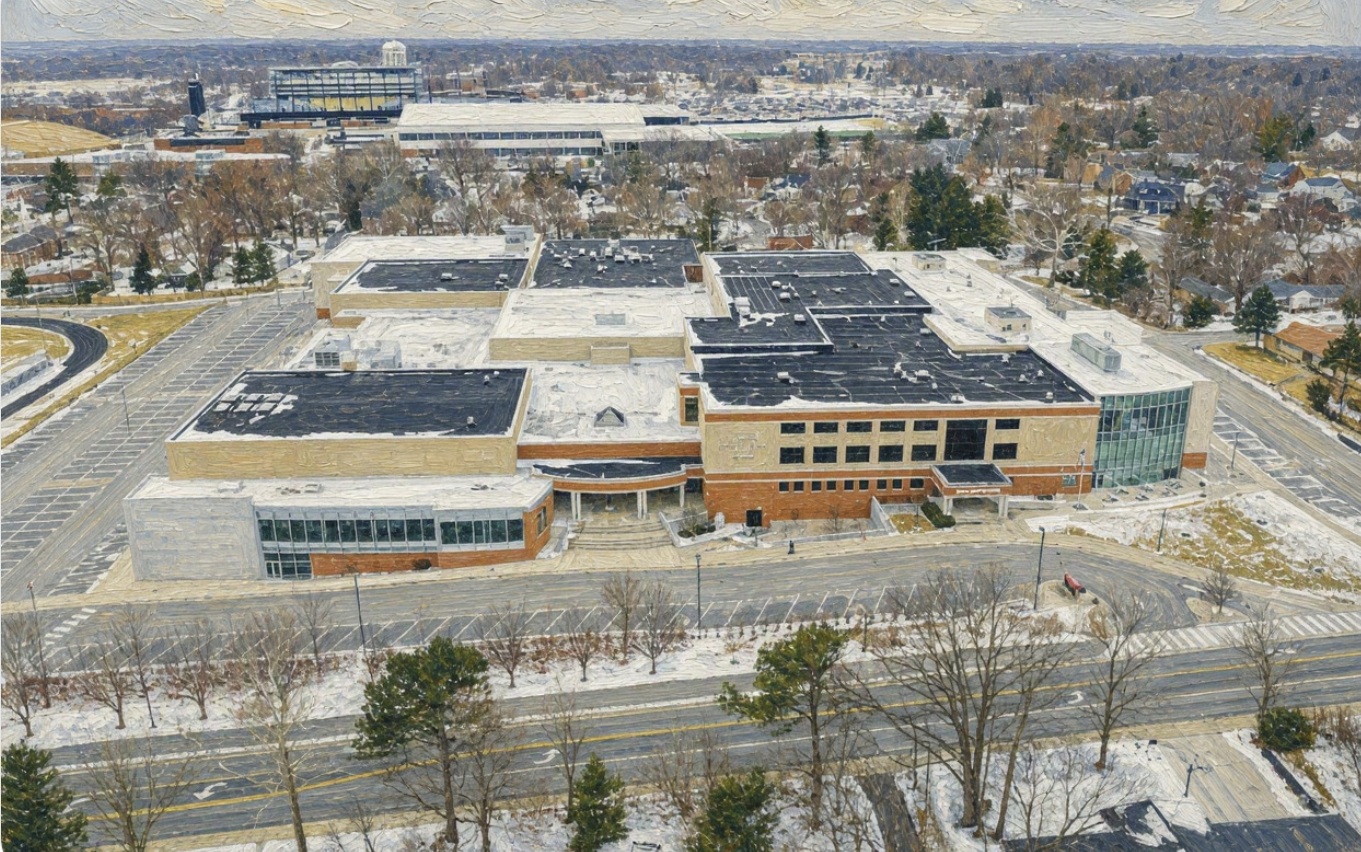
West Lafayette sits on the west bank of the Wabash River, and Purdue University shapes nearly every corner of it. In recent U.S. News rankings, West Lafayette Jr./Sr. High School places 2nd in Indiana and 170th nationally. Its AP participation rate reaches 76%, and 69% of students pass at least one AP exam. Across the county, William Henry Harrison High School and McCutcheon High School serve the Tippecanoe School Corporation. Meanwhile, Lafayette Jefferson High School anchors the east side of the river, and Central Catholic Jr./Sr. High School adds a private option.
However, West Lafayette’s greatest asset also creates its greatest challenge. Many students here are children of Purdue faculty and staff, and many apply with similar engineering and computer science profiles. Consequently, selective colleges see a steady stream of polished applicants from one small city. Students who stand out usually build something only this place could produce. Notably, Tippecanoe County also remains deeply agricultural. Purdue’s College of Agriculture sits about a mile from the high school, surrounded by farmland that stretches in every direction. That blend of land-grant research and working fields gives local students an advantage few suburban competitors can match.
Meet Layla
Layla grew up a short bike ride from Smith Hall, home to Purdue’s Department of Entomology. In fourth grade, she joined a Tippecanoe County 4-H club and pinned her first grasshopper into a collection box. Indiana’s 4-H entomology tradition runs deep; Purdue professor J. J. Davis organized the state’s first insect collecting club in 1924. By ninth grade, she had a shelf of county fair ribbons and a stack of field guides. Still, she worried that insects looked like a hobby rather than an academic direction.
Her school offered plenty of rigor to build on. West Lafayette Jr./Sr. High School lists 26 AP courses in its course guide and posts a 93% graduation rate. Additionally, students may take Purdue courses during the school day through campus-based dual credit. Layla’s family began working with College Transitions in the fall of her sophomore year. Together, she and her counselor set out to turn a childhood passion into a focused, research-driven application.

Step 1: Choosing a Specific Major in Entomology
Most West Lafayette applicants list engineering, computer science, or general biology as their major. Instead, Layla and her College Transitions counselor chose entomology, a field with far fewer applicants and deep roots in Indiana agriculture. Importantly, the choice matched what she had already done for six years. Her counselor then mapped which selective colleges offer a true entomology major rather than a minor or concentration.
Why This Major Made Sense
- Purdue’s Department of Entomology gave her local access to faculty, graduate students, and public outreach events
- Tippecanoe County’s corn and soybean fields made insect pest management a real, local issue
- Relatively few applicants declare entomology, so a strong profile stands out quickly
- Cornell, Wisconsin, and Purdue all offer dedicated undergraduate majors in the field (Purdue calls its version Insect Biology)
Step 2: Raising Her SAT Score
Like every Indiana junior, Layla took the SAT during the school day in March. Her first score was a 1280, solid but below the middle range at her target schools. Subsequently, her College Transitions counselor built a 10-week study plan focused on the math section, where she had lost the most points. Three evenings a week, she worked through timed practice sets. She also kept an error log and reviewed every missed question before moving on. Then she retook the digital SAT in August before senior year. Her score rose to 1490, which placed her comfortably within range at every school on her list.
Step 3: Deepening Her Extracurriculars
Rather than adding new clubs, Layla deepened the activities she already loved. In 4-H, she moved into the advanced entomology level for grades 9-12. She also began mentoring younger members on pinning, labeling, and identifying specimens. Furthermore, she volunteered each April at Purdue’s Bug Bowl, the free campus festival that began as a cockroach race more than 30 years ago. At her table, families learned how to tell a beetle from a true bug. Meanwhile, she took Zoology and AP Biology at school. Her counselor encouraged her to track every hour and role carefully. After all, sustained commitment would matter far more than a long list of activities.

Step 4: Adding Original Research
During her junior year, Layla designed a field study on the spotted lanternfly, an invasive planthopper first detected in Indiana in 2021. The insect strongly prefers the tree-of-heaven as a host. It can also travel long distances on rail cars and freight shipments. Therefore, she surveyed tree-of-heaven stands along rail corridors and Wabash River trails near West Lafayette. A Purdue entomology graduate student advised her on sampling methods. Separately, she used her school’s dual credit option to take an introductory entomology course on Purdue’s campus during the school day.
Research Project Scope
- Mapped tree-of-heaven stands at 40 sites using GPS coordinates and a shared spreadsheet
- Checked each site for egg masses, nymphs, and adults across two growing seasons
- Reported suspected sightings through Indiana’s invasive species reporting system
- Tested whether distance from rail lines predicted host-tree density
Step 5: Entering Competitions
The lanternfly study became the centerpiece of Layla’s competition strategy. First, she presented it at her regional science fair. From there, she advanced to the Hoosier Science and Engineering Fair, Indiana’s state-level competition held at IU Indianapolis. Although she did not reach the international level, her project earned a category award. In addition, her advanced-level insect collection moved from the Tippecanoe County 4-H Fair to the Indiana State Fair. Her College Transitions counselor helped her describe both results with concise, specific language. Above all, the two honors showed that her interest held up under expert judging.
Step 6: Writing the Personal Statement
Layla’s personal statement opened on a rail trail in late October as she scraped a gray smear off a tree trunk. At first, it looked like dried mud. However, she suspected a lanternfly egg mass, so she spent the next hour checking every tree nearby. The essay used that moment to explore a larger idea. In a town famous for rockets and engines, she had learned to pay attention to small things. Her College Transitions counselor pushed her to cut technical jargon and keep the focus on how she thinks. Consequently, the final draft read as personal rather than scientific. For supplements, she tied each school’s labs, collections, and courses directly to her lanternfly work and 4-H teaching.

Step 7: Using EA and ED Strategically
Layla applied Early Decision to Cornell University’s College of Agriculture and Life Sciences as an entomology major. Cornell is home to the country’s first entomology department, and its program offered the research depth she wanted. At the same time, she applied Early Action to Purdue’s Insect Biology major and to the University of Wisconsin–Madison’s entomology program. All three applications reinforced the same profile: a field researcher shaped by years of hands-on collecting. Her counselor made sure each supplement named specific faculty labs, insect collections, or courses. Ultimately, Cornell admitted her through Early Decision. Purdue and Wisconsin also offered admission through Early Action.
Why Layla’s Strategy Worked
Layla never tried to look like every other high-achieving applicant from West Lafayette. Instead, she built a profile around one subject and one place.
- Her major grew directly from six years of 4-H collecting rather than a last-minute choice
- Original research on a current invasive species gave her application timely, local relevance
- Results at the county fair, state fair, and state science fair confirmed her expertise
- Purdue’s entomology department served as a resource rather than a substitute for her own initiative
- Every essay and supplement reinforced the same specific academic identity
What This Means for West Lafayette Families
Students at William Henry Harrison High School, McCutcheon High School, Lafayette Jefferson High School, and Central Catholic Jr./Sr. High School can follow a similar path. Purdue’s presence benefits all of Greater Lafayette, not just one school district. Likewise, 4-H clubs, dual credit, and campus events remain open to students across Tippecanoe County. The real key is choosing a distinctive direction early and building depth around it.
- Choose a specific major early and connect it to a genuine, long-standing interest
- Take the most rigorous courses available, whether AP, IB, honors, or dual credit
- Leave room in the testing calendar for at least one SAT or ACT retake
- Pursue one sustained research or independent project rather than many short ones
- Seek competitions and recognition judged by experts in the chosen field
- Keep every essay and supplement focused on the same academic identity
College Transitions works with families across Greater Lafayette to identify distinctive majors, plan research, and shape essays. Our counselors help students turn local strengths into clear, compelling applications.

